Use AI for Industry Research and Company Analysis — Interview Prep Efficiency 5x
Company research before interviews takes too long? 3 steps for AI industry research, 4 dimensions for company analysis, interview question prediction, and personalized answer preparation — compress your interview prep from 3 days to half a day, 5x efficiency.
Have you ever had this experience — your interview is tomorrow, and you only start frantically searching for information about the target company tonight? You spend ages on the company website, skim a few press releases, scroll through some Zhihu answers, and then feel like you "understand" the company? Then when the interviewer asks "What's your view on our business?", you can only squeeze out "Your company is developing well and I'm very optimistic" — and the interview goes cold. The most time-consuming part of interview preparation is industry research and company analysis. Traditional methods might take 2-3 days, but with AI, you can compress that to half a day — 5x efficiency. The key isn't how smart AI is, but whether you know how to use AI for research. This article walks you through: 3 steps for AI industry research, 4 dimensions for AI company analysis, AI interview question prediction, and AI personalized answer preparation — a complete AI interview prep methodology.
Company Research Before Interviews Takes Too Long
Let's start with the pain points of traditional interview preparation. What do you need to understand before an interview? Industry trends, competitive landscape, company strategy, core products, latest developments, company culture, interviewer background... This information is scattered across dozens of channels — websites, annual reports, news, research reports, social media — just finding it takes 1-2 days, and organizing and analyzing it takes another day. Plus, the information you find is often fragmented — after reading 10 articles, you still can't piece together a complete picture.
What's even more frustrating is that the research you spend 3 days preparing might only be relevant to 1-2 questions in the actual interview. But you can't skip it — what if the interviewer asks about the one thing you didn't prepare? So interview prep becomes a "high input, low output" activity — you have to do it, but it feels like a loss.
AI changes this input-output ratio. With AI research, you can complete in 2-3 hours what traditionally takes 2-3 days, and the information is more systematic and the analysis deeper. AI isn't thinking for you — it's helping you quickly collect, organize, and analyze information, so you spend your time "thinking" rather than "searching."
3 Steps for AI Industry Research
Industry research is the foundation of interview preparation — without understanding the industry, you can't understand a company's strategic choices and business logic. These 3 steps help you quickly complete industry research with AI.
- Step 1: Industry Landscape Scan — Use AI to generate an industry overview. Prompt example: "Please generate an industry overview for [XX industry], including: 1. Industry size and growth rate (last 3 years data); 2. Value chain structure (upstream, midstream, downstream segments and representative companies); 3. Industry development trends (3-5 core trends); 4. Industry pain points and opportunities; 5. Policy environment and regulatory highlights. Present in structured format, with data sources noted." This Prompt helps you quickly build an industry认知 framework — from "knowing nothing" to "having a mental map" in just 10 minutes. Note: AI-generated content may contain outdated data or errors — you need to verify key data points with search engines
- Step 2: Competitive Landscape Analysis — Use AI to map out competitors. Prompt example: "Please analyze the competitive landscape of [XX industry], including: 1. Top 5 companies and their market share; 2. Each company's core competitive advantages and differentiation strategies; 3. Industry concentration (CR3/CR5); 4. Threat of new entrants and substitute risks; 5. Possible changes in competitive landscape over the next 1-2 years. Focus on [target company]'s competitive position." This Prompt helps you understand the competitive environment the target company faces. In an interview, if you can say "Your company faces YY competitive pressure in XX area, but ZZ advantage keeps you in the lead," interviewers will know you've done your homework
- Step 3: Trend and Opportunity Insights — Use AI to predict industry direction. Prompt example: "Based on the current state of [XX industry], please predict 5 key trends for the next 3 years and analyze each trend's impact on [target company] (opportunity/threat/neutral). For each trend, provide: 1. Trend description; 2. Driving factors; 3. Specific impact on [target company]; 4. Suggested response strategy for [target company]." This Prompt helps you form "industry viewpoints" — the most bonus-earning capability in interviews isn't "knowing facts" but "having insights." If you can say "I believe the key trend for XX industry over the next 3 years is YY, which means ZZ for your company," interviewers will be impressed
4 Dimensions for AI Company Analysis
Industry research is the "surface"; company analysis is the "point." These 4 dimensions help you deeply analyze the target company with AI.
- Dimension 1: Company Strategy and Business Layout. Prompt example: "Please analyze [target company]'s strategic direction and business layout, including: 1. Core business lines and revenue share; 2. Strategic priorities and resource allocation direction; 3. New business exploration and future growth drivers; 4. Strategic differences from competitors. Base analysis on public information (annual reports, financial statements, press releases, executive statements)." This dimension helps you understand "what this company is doing and where it's going." In an interview, if you can say "Your company is transitioning from XX to YY, and ZZ business is the future growth engine," interviewers will think you truly understand the company
- Dimension 2: Product and Technology Analysis. Prompt example: "Please analyze [target company]'s core products/services, including: 1. Main product lines and target users; 2. Core competitive advantages and differentiation; 3. Product technical architecture and tech stack (if publicly known); 4. User reviews and market reputation; 5. Potential improvement directions." This dimension helps you understand "whether this company's products are good and why." If you're applying for a product or tech role, this dimension's analysis is especially important — interviewers will ask "what do you think of our products," and you must be prepared
- Dimension 3: Company Culture and Organizational Characteristics. Prompt example: "Please analyze [target company]'s corporate culture and organizational characteristics, including: 1. Corporate values and cultural keywords; 2. Management style (flat/hierarchical, empowered/controlled); 3. Work pace and overtime culture; 4. Employee reviews (from platforms like Maimai, Zhihu); 5. Interview style and preferences (tech-oriented/culture-oriented/results-oriented)." This dimension helps you judge "whether this company fits me" and "how to present yourself appealingly in the interview." For example, if the company culture is "data-driven, results-oriented," you should use data in your interview; if it's "innovation, trial-and-error," showcase your creative thinking
- Dimension 4: Latest Developments and Hot Events. Prompt example: "Please compile [target company]'s important developments from the last 6 months, including: 1. Fundraising/IPO/M&A events; 2. New product launches or major updates; 3. Executive changes or organizational adjustments; 4. Negative news or controversies; 5. Industry awards or honors. For each event, analyze its potential impact on the company and the interview." This dimension helps you "stay current" — mentioning the company's latest developments in an interview is the best way to show you've "done your homework." For example, "I saw your company launched XX product last month, and I think this direction has great potential because YY" is 100x more persuasive than a generic "I'm very interested in your company"
Use AI to Predict Interview Questions
After completing your research, the next step is predicting potential interview questions. AI can generate highly targeted interview question lists based on the job description, company characteristics, and your resume.
- Prompt example: "Based on the following information, please predict 20 questions that might be asked in the interview, divided into 4 categories: 1. Self-introduction and background (5); 2. Professional skills and project experience (5); 3. Industry awareness and company understanding (5); 4. Behavioral and situational questions (5). For each question, indicate difficulty (basic/medium/difficult) and assessment intent. Information: Job description: [paste JD]; Target company: [company name]; My resume: [paste resume]."
- Value of question prediction: It's not about memorizing answers but being "prepared for the unknown." You don't need perfect answers for all 20 questions, but you need "approaches" for each — knowing which angle to answer from, what examples to use, what highlights to emphasize. About 80% of interview questions will fall within your predicted range; the remaining 20% relies on improvisation
- Advanced technique: Use AI to generate "follow-up questions" — after asking a basic question, interviewers typically follow up with 1-2 deeper questions. Prompt example: "For each of the above questions, please generate 2-3 possible follow-up questions and their assessment intent." This way you can prepare "one layer isn't enough, go deeper" — when interviewers follow up, you won't panic
Use AI to Prepare Personalized Answers
After predicting questions, the next step is preparing answers. AI isn't helping you "fabricate answers" — it's helping you "organize answers" using your real experiences to construct logical, data-supported, compelling responses.
- Prompt example (project experience questions): "The interviewer asks me 'Please introduce your most satisfying project.' Here is my project experience: [paste project description]. Please help me organize the answer using the STAR method, with these requirements: 1. Situation section concise (1-2 sentences); 2. Task section clearly states my responsibilities and goals; 3. Action section highlights my individual contributions and innovative methods; 4. Result section quantifies achievements with data; 5. Summary section distills 1 core takeaway. Answer duration: 2-3 minutes."
- Prompt example (industry awareness questions): "The interviewer asks me 'What's your view on the industry our company is in?' Here is my AI industry research summary: [paste research summary]. Please help me organize a 2-minute answer with these requirements: 1. Start with a core viewpoint (don't be generic); 2. Support with 2-3 facts/data points; 3. Connect to the target company's specific business; 4. End with your judgment on industry prospects. Style: professional but not academic, opinionated but not extreme."
- Prompt example (behavioral questions): "The interviewer asks me 'Describe a time you handled team conflict.' Here is my real experience: [brief description]. Please help me organize the answer using the STAR method, emphasizing: 1. How I understood each party's concerns; 2. How I found a solution acceptable to all; 3. Final results and my reflections. Note: Don't fabricate experiences — only help optimize expression."
- Core principles for personalized answers: 1. Authenticity first — AI can optimize expression but can't fabricate experiences; 2. Data-driven expression — use data instead of adjectives whenever possible; 3. Highlight individual contributions — say "what I did" not "what we did"; 4. Reflection and growth — every answer should include "what I learned," demonstrating growth mindset
3 Precautions for AI Research
AI research is highly efficient, but there are pitfalls. These 3 precautions help you avoid common problems with AI research.
- Precaution 1: AI may generate outdated or incorrect information. AI training data has cutoff dates, and AI may "hallucinate" non-existent data. So all key data and facts generated by AI must be verified through search engines or official channels. Especially: company revenue data, market share, funding information, product launch dates — if these are wrong, interviewers will immediately notice you haven't done your homework. Recommendation: After AI generates the research report, spend 30 minutes verifying the 10 most important data points with search engines
- Precaution 2: AI analysis may be too generic, lacking depth. AI-generated industry analysis is often "correct but obvious" — saying a lot without unique insights. Interviewers don't want to hear conclusions anyone knows like "the industry is growing" — they want deep insights like "what's driving the growth," "is the growth sustainable," "which sub-segments are growing fastest." Recommendation: Build on AI-generated analysis by adding your own thinking and judgment — "AI gives me the framework, I fill in the substance"
- Precaution 3: Don't reveal you used AI for research in the interview. If you say "I used ChatGPT for industry research" in an interview, the interviewer might think you're lazy or lack independent thinking. The right approach: use AI for research, but internalize the results as your own understanding and express them in your own words. Don't mention AI in the interview — instead say "I've been following this industry recently and noticed some interesting trends..." — same content, different expression, completely different impression
Conclusion: AI Is a Super Assistant for Interview Prep, Not a Replacement
Using AI for industry research and company analysis can compress interview prep time from 3 days to half a day — 5x efficiency. The 3 steps for AI industry research — industry landscape scan, competitive landscape analysis, trend and opportunity insights — help you quickly build an industry认知 framework. The 4 dimensions for AI company analysis — company strategy and business layout, product and technology analysis, company culture and organizational characteristics, latest developments and hot events — help you deeply understand the target company. Using AI to predict interview questions and prepare personalized answers lets you "face the unknown with preparation." But remember 3 precautions: verify AI-generated data, add your own insights on top of AI analysis, and don't reveal AI usage in interviews. AI is a super assistant for interview preparation — it helps you quickly collect and organize information, but the final thinking, judgment, and expression must be your own. Interviewers want to hire "people who can think independently," not "people who know how to use AI."
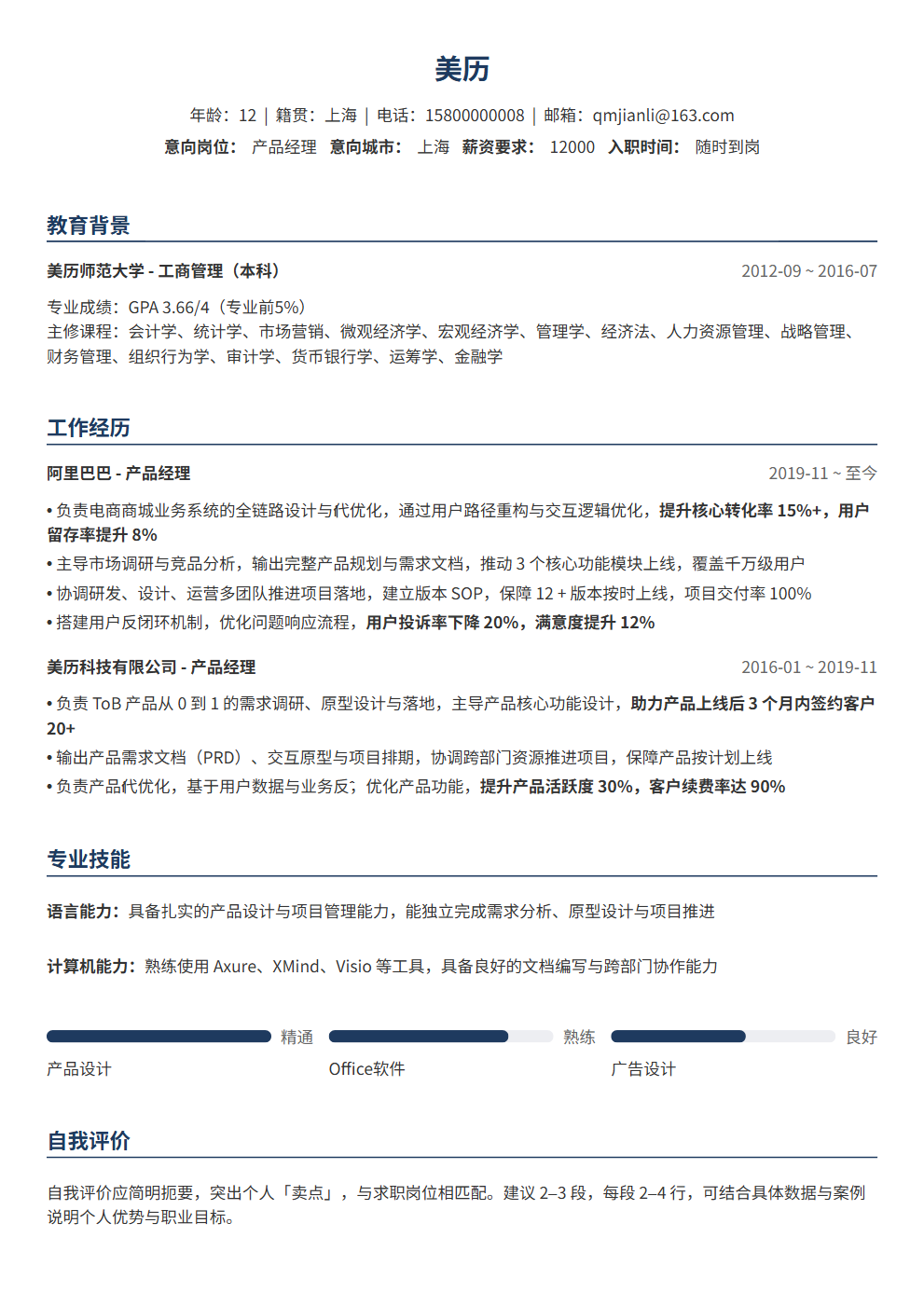
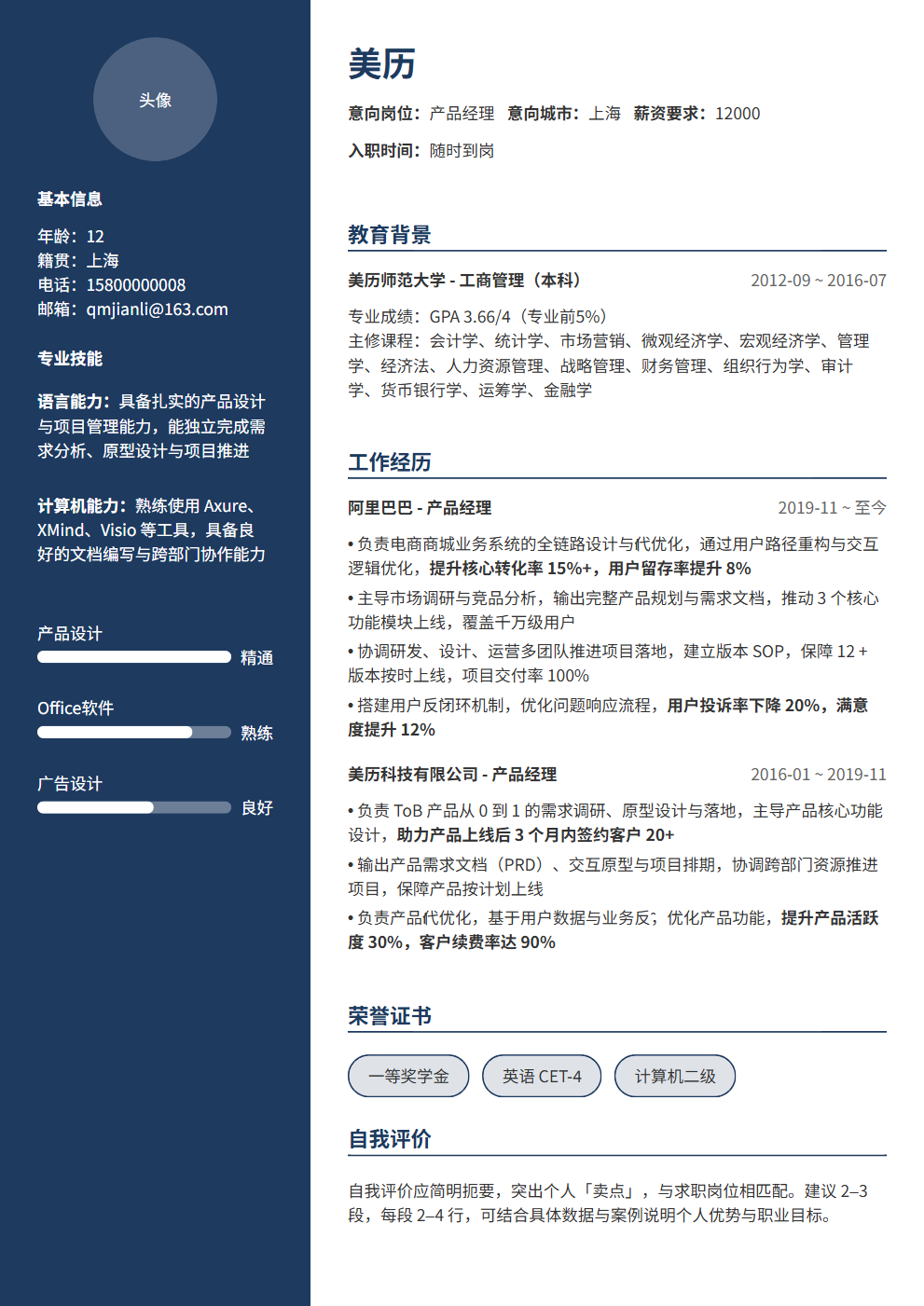
The first step in interview preparation is preparing a resume that makes interviewers' eyes light up. Use BeautyResume's resume editor to intelligently optimize resume content and keywords, making your professional capabilities and project achievements crystal clear — from resume to interview, excel at every step.