Best use cases
Two-column pro works well for experienced hiring, career changes. The information hierarchy is clear for job seekers who need a professional resume quickly.
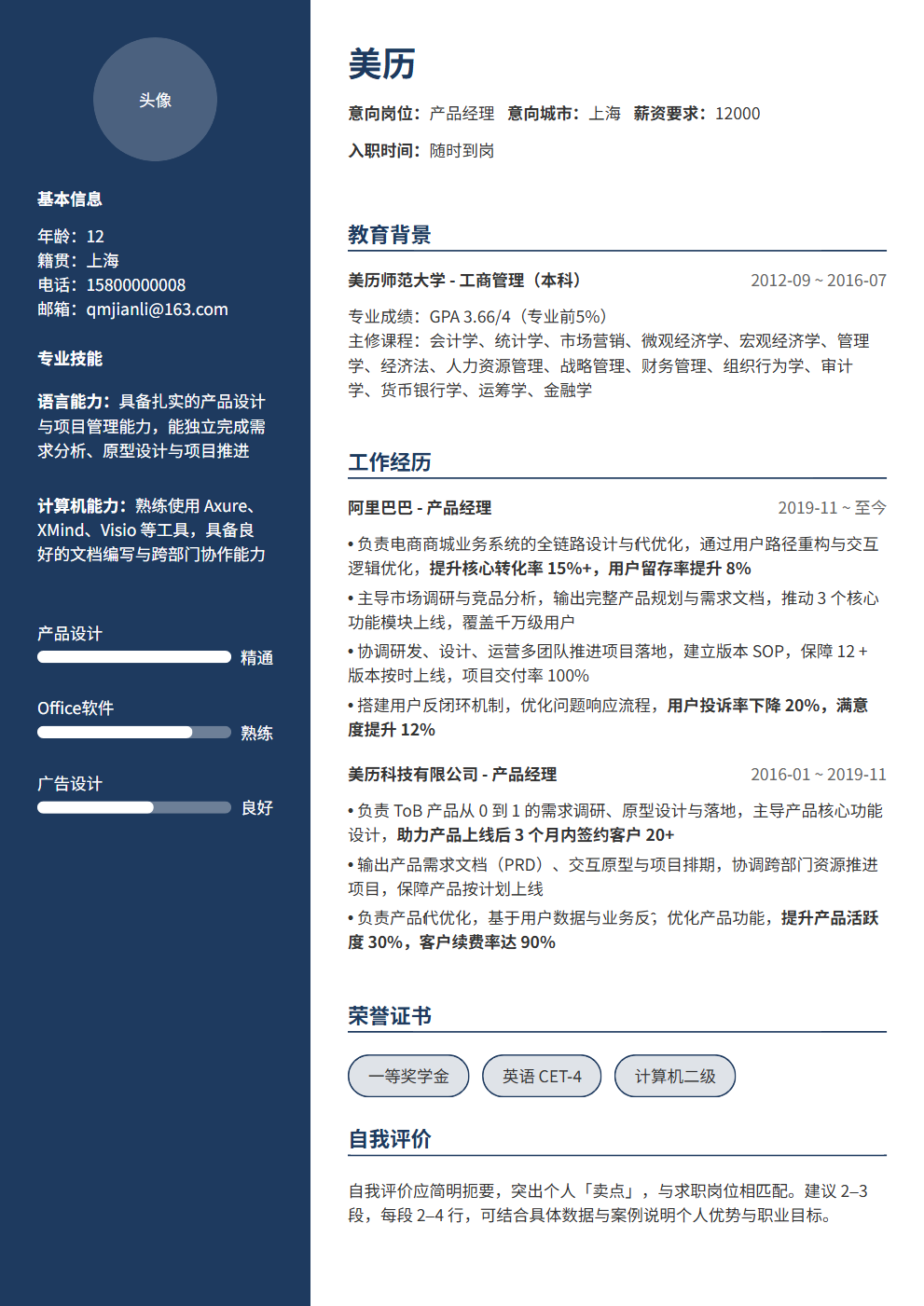
Narrow sidebar + wide body for dense resumes
Two-column pro works well for experienced hiring, career changes. The information hierarchy is clear for job seekers who need a professional resume quickly.
Two-column pro uses a two-column structure with high information density and a business tone, making experience, projects, education and skills easy to scan.
Two-column pro emphasizes visual presentation and content blocks. For strict ATS systems, keep decorative elements minimal and key fields complete.
Use it for roles matching its scenario tags, including campus, internships, experienced hiring, career changes or creative roles.
Yes. Open the editor to adjust theme color, font size and resume content, then export PDF.
It is better for human review and portfolio-facing roles. For ATS-heavy channels, prefer a single-column template.
Yes. After reviewing the content, export it as a PDF for job platforms or email applications. Check your contact details, file name and page breaks before sending.
With more AI resume tools available, which one should you choose? This article compares 5 tools — ChatGPT, Claude, BeautyResume, ResumeStar, and AI Resume Assistant — covering their pros, cons, use cases, and pricing to help you find the best fit.
Always being dragged down in cross-department collaboration? 5 methods to shift from passive waiting to proactive driving — clarify needs before communicating, find mutual benefits, establish regular sync mechanisms, use written confirmations, and escalate when necessary, with strategies for 3 common scenarios and 3 taboos.