Top 5 Professional Certifications Worth Earning in 2026: High Value, Big Salary Boosts
Too many certifications and not sure which ones matter? This article selects the top 5 professional certifications worth earning in 2026 (PMP, CPA, Data Analyst, AI Application Engineer, Health Management Specialist), with detailed analysis of each certification's value, exam difficulty, salary impact, and suitable candidates, plus 3 pitfalls to avoid and how to list certifications on your resume.
You open your phone and see ads everywhere: "Earn this cert and make 10K a month!" "This certification is the most valuable!" Sound familiar? You spend thousands on registration, months studying, only to find out after passing—that it had zero impact on your salary or career. Honestly, 80% of professional certifications out there are a waste of money and time. But the other 20%? They deliver real salary bumps and career breakthroughs. Today I'll help you filter out the 5 certifications most worth earning in 2026, each one a proven "hard currency" in the job market.
Certification 1: PMP – The "Pass" for Career Advancement
PMP (Project Management Professional) is the world's most recognized project management certification, issued by the Project Management Institute (PMI). Whether you're in IT, manufacturing, finance, or consulting, project management skills are universally applicable. PMP doesn't teach you "how to be a boss"—it teaches you "how to get things done," from project initiation, planning, and execution to monitoring and closing, with a systematic methodology.
- Value: Recognized in over 200 countries and regions. Fortune 500 companies generally require project managers to hold PMP certification. In China, PMP holders earn 20%-30% more on average than non-holders. Many state-owned and large private enterprises list PMP as a hard requirement for project manager roles
- Exam difficulty: Moderate to high. Based on the PMBOK Guide, updated to the 7th edition in 2026 with more emphasis on agile and hybrid project management. 180 questions in 230 minutes, pass rate around 60%-70%. Requires 35+ hours of project management training to register
- Salary impact: Certified project managers earn an average of 180K-350K RMB/year, with senior PMs in tier-1 cities reaching 400K-600K. Non-certified peers in the same role typically earn 50K-100K less. PMP is especially valuable during job changes—many HR departments grant interviews on sight of a PMP
- Best for: Professionals with 3-5 years of experience who are currently or about to take on project management responsibilities. Especially suitable for IT project managers, product managers, tech leads, and engineering managers in traditional industries
- Cost: Initial exam 3,900 RMB, retake 2,500 RMB. Training costs 2,000-5,000 RMB. Total investment approximately 6,000-9,000 RMB
- Prep time: Typically 2-4 months. Studying 1-2 hours daily with extra weekend time for practice questions, about 3 months should suffice
PMP's greatest value isn't the certificate itself—it's the systematic project management mindset it helps you build. Many PMP holders say their perspective on projects completely changed after certification. Previously it was "treating symptoms," now it's "holistic planning, risk anticipation, resource coordination." This shift in thinking is PMP's true value.
Certification 2: CPA – The "Ceiling" of the Accounting World
CPA (Certified Public Accountant) is the most valuable certification in China's accounting field, bar none. It's not just a ticket into the Big Four accounting firms—it's a basic requirement for corporate finance executives. The CPA exam is called "one of China's hardest professional exams," with a pass rate of only 15%-20%. But precisely because it's hard, it's valuable.
- Value: China's only certification granting audit report signing authority. In the accounting world, CPA is the "ultimate credential." Whether at accounting firms, listed company finance departments, investment banks, or fund companies, CPA is top-tier
- Exam difficulty: Extremely high. 6 professional-stage subjects (Accounting, Auditing, Financial Cost Management, Economic Law, Tax Law, Corporate Strategy & Risk Management) + 1 comprehensive stage. Individual subject pass rates are about 20%-30%; you must pass all 6 within 5 years. Most candidates need 3-5 years to complete everything
- Salary impact: Big Four CPA holders earn 200K-400K/year; corporate CFOs earn 500K-1M+. Non-certified accounting staff average 80K-150K—doubling your salary after certification is the norm. CPA's salary premium in the accounting industry is the most direct
- Best for: Accounting graduates, working finance professionals, auditors, and career changers into finance. Especially suitable for those already in accounting who want to break through the career ceiling
- Cost: About 60-80 RMB per subject, roughly 400-500 RMB total for 6 subjects. But training is expensive: online courses 2,000-8,000 RMB/subject, in-person even more. Total investment about 10K-30K RMB
- Prep time: Professional stage typically 2-4 years, comprehensive stage 0.5-1 year. Taking 2-3 subjects per year is a reasonable pace
CPA's greatest value lies in its "scarcity"—fewer than 400,000 CPA holders nationwide, while market demand far exceeds supply. Especially after the registration-based IPO reform, audit demand for listed companies has surged, and CPA holders' market value continues to rise. If you're developing in accounting, CPA is virtually a must-have—the earlier you finish, the earlier you benefit.
Certification 3: Data Analyst – The "Essential Skill" of the Data Era
Data analyst certifications aren't issued by a single institution. The more recognized ones include CDA (Certified Data Analyst) and CPDA. Regardless of which you choose, the core is proving your ability in data collection, cleaning, analysis, and visualization. In 2026, when "everyone talks about data-driven," data analysis skills are no longer a bonus—they're a baseline.
- Value: CDA is issued by Jingguanzhijia (formerly RUC Economic Forum) and has high recognition among Chinese enterprises, especially in internet, finance, and retail. CPDA is issued by the China Business Association Data Analysis Professional Committee, leaning toward project-based practice. CDA emphasizes theoretical systems; CPDA emphasizes business application
- Exam difficulty: Moderate. CDA has three levels (I/II/III). Level I is basic, pass rate ~70%; Level II is practical, pass rate ~50%; Level III is advanced modeling, pass rate ~30%. Most professionals find Level II sufficient
- Salary impact: Certified data analysts average 150K-300K/year, 15%-25% more than non-certified peers. In the internet industry, data analyst is one of the most in-demand roles, and certification gives a clear competitive edge in job hunting
- Best for: Professionals in operations, marketing, product, finance, and other data-driven roles, plus career changers into data analysis. Especially suitable for those already familiar with Excel and SQL who want to systematically upgrade their data skills
- Cost: CDA Level I ~1,200 RMB, Level II ~1,800 RMB, Level III ~2,500 RMB. Training costs 1,000-5,000 RMB
- Prep time: Level I about 1-2 months, Level II about 2-3 months. Those with prior knowledge can move faster
The value of a data analyst certification lies in "skill verification"—it can't grant you audit signing authority like CPA, but it proves to employers that you have systematic data analysis capabilities. In the job market, "knowing data analysis" and "having a data analysis certification" are two different things—the former is self-claimed, the latter is third-party verified. Especially when transitioning into data analysis, certification is the fastest way across the threshold.
Certification 4: AI Application Engineer – 2026's Hottest New Certification
The AI Application Engineer certification emerged in 2024-2026, jointly launched by the Ministry of Industry and Information Technology's Talent Exchange Center and multiple AI companies. It doesn't teach you to train large models from scratch—it teaches you how to apply AI tools and technologies in your work: prompt engineering, AI workflow building, AI-assisted development, AI content generation, and more. As AI permeates every workplace in 2026, this certification's value is rapidly rising.
- Value: An emerging certification still building market awareness, but trending upward. Backed by the Ministry of Industry and IT + corporate joint certification, it's already being mentioned in government projects and SOE recruitment. In the internet and tech industries, AI application skills are now a high-frequency item in job descriptions
- Exam difficulty: Moderate to low. Divided into junior and intermediate levels. Junior focuses on AI tool usage and basic concepts; intermediate on AI workflow design and application implementation. Exam format is theory + practical (practical accounts for 60%+). Pass rate around 65%-75%
- Salary impact: Limited data so far, but job seekers with AI application skills generally earn 10%-20% more than peers in the same role. For AI-related positions (AI product manager, AI operations, AI content creation), certified candidates are prioritized
- Best for: All professionals who want to apply AI in their work—not limited to tech roles; operations, marketing, design, finance, and other positions can all benefit. Especially suitable for those looking to transition from traditional roles to AI-related positions
- Cost: Junior ~1,500 RMB, Intermediate ~2,000 RMB. Training costs 2,000-6,000 RMB
- Prep time: Junior about 1 month, Intermediate about 2 months. As a new certification, prep materials are relatively scarce, but the exam difficulty isn't high
The biggest value of the AI Application Engineer certification is "first-mover advantage"—few people hold it now, so once you get it, you'll be among the few with "AI application certification" in the job market. It's like getting PMP in 2015—in hindsight, those people made a wise choice. AI application skills will be essential for all professionals in the next 5 years. Get certified early, benefit early.
Certification 5: Health Management Specialist – A "Potential Stock" in the Silver Economy Wave
The Health Management Specialist is a national vocational qualification certificate issued by the Ministry of Human Resources and Social Security. As China rapidly enters an aging society, demand for health management specialists is growing explosively. It's not just a "wellness consultant"—it's a professional with comprehensive capabilities in health assessment, health intervention, chronic disease management, and health education. With the silver economy becoming a national strategy, this certification's value is being reassessed.
- Value: National vocational qualification certificate, recognized nationwide. Widely accepted in community health centers, medical checkup centers, insurance companies, elderly care institutions, and health management companies. Policy tailwinds continue as the "Healthy China 2030" strategy advances
- Exam difficulty: Moderate. Divided into theoretical knowledge and professional capability sections. Theory covers medical basics and health management knowledge; practical covers health assessment and intervention planning. Pass rate about 50%-60%. Non-medical majors can also register but must complete required training hours first
- Salary impact: Certified health management specialists average 100K-200K/year, reaching 250K-400K in tier-1 cities and premium health management institutions. Non-certified health consultants average 60K-100K. Salaries continue rising as the silver economy booms
- Best for: Medical and health graduates, working healthcare professionals, insurance practitioners, fitness coaches, nutritionists, and professionals looking to enter the silver economy. Especially suitable for those with medical backgrounds who want to expand their career directions
- Cost: About 300-500 RMB for the exam. Training costs 2,000-5,000 RMB (required training hours must be completed before registering). Total investment about 3,000-6,000 RMB
- Prep time: 2-3 months. Those with medical backgrounds can do it in 1-2 months; beginners need 3-4 months
The biggest value of the Health Management Specialist certification is "track dividend"—China's population aged 60+ has exceeded 300 million, and the silver economy market is projected to reach 30 trillion RMB by 2030. Health management is a core need of the silver economy, and certified specialists are standing at the风口. Getting this certification now is like getting an internet-related certification in 2010—you're standing at the entrance of a track about to explode.
3 Pitfalls to Avoid When Getting Certified
More certifications isn't better. Getting the wrong one wastes more time and money than not getting one at all. Here are 3 pitfalls to avoid.
- Pitfall 1: Don't get "bogus certifications." There are many certificates issued by training institutions themselves that sound impressive but employers don't recognize. Criteria for legitimacy: Is it a national vocational qualification (issued by Ministry of HR & Social Security)? Is it issued by an authoritative industry body (like PMI, CICPA)? Is it explicitly required in job descriptions? If none of these apply, it's likely a bogus certification
- Pitfall 2: Don't get certified just for the sake of it. Certification is a means, not an end. Before getting certified, think clearly: What problem can this certification help me solve? Is it a stepping stone for job changes, leverage for salary negotiation, or a new starting point for career transition? If you can't answer, you haven't figured out your career direction yet—figure that out first
- Pitfall 3: Don't neglect continuing education. Many certifications have ongoing education requirements—PMP needs 60 PDUs every 3 years, CPA requires annual continuing education credits, and health management specialists also need to update their knowledge regularly. Putting your certificate "on the shelf" after earning it doesn't work—continuous learning maintains its value
How to List Certifications on Your Resume
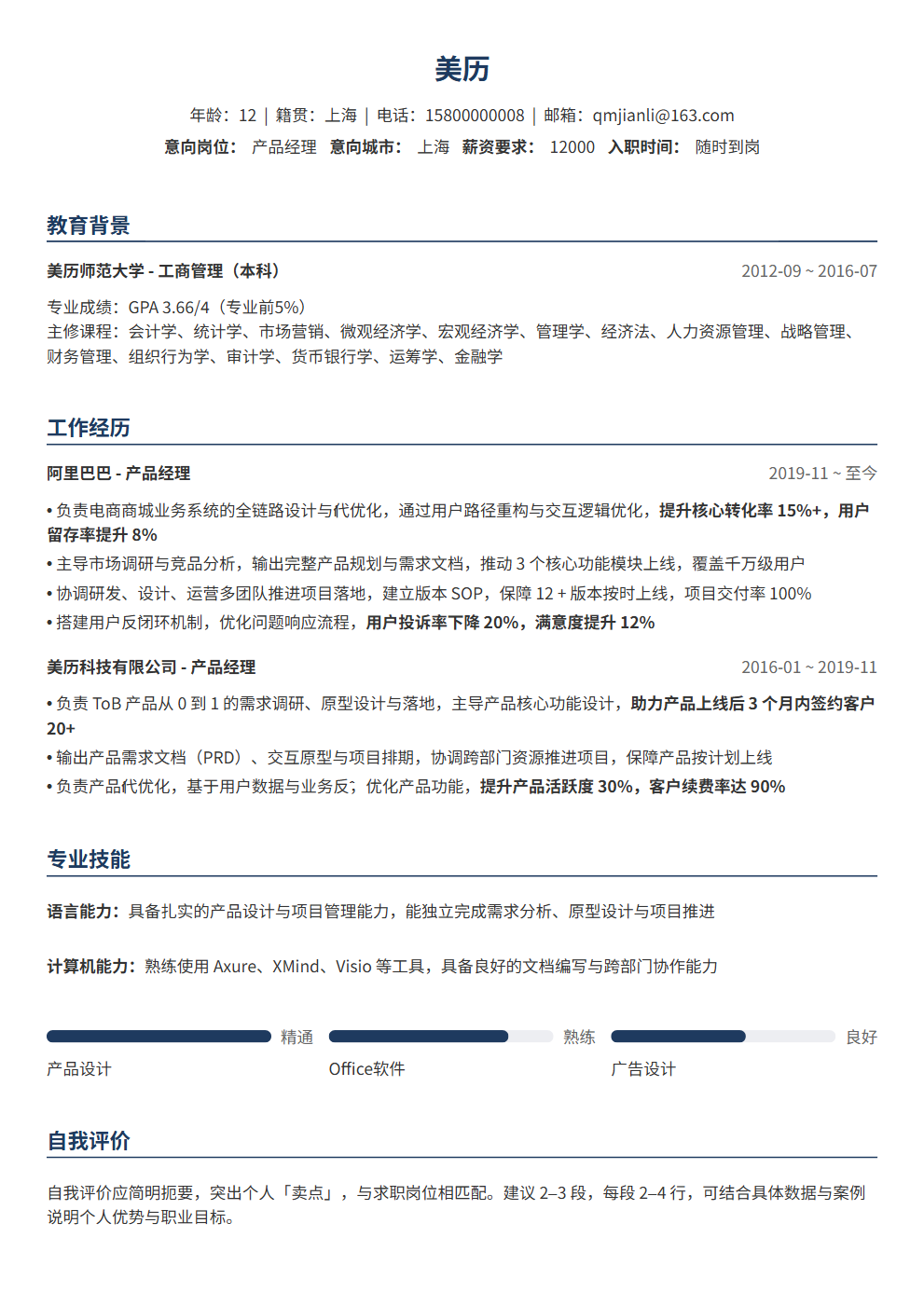
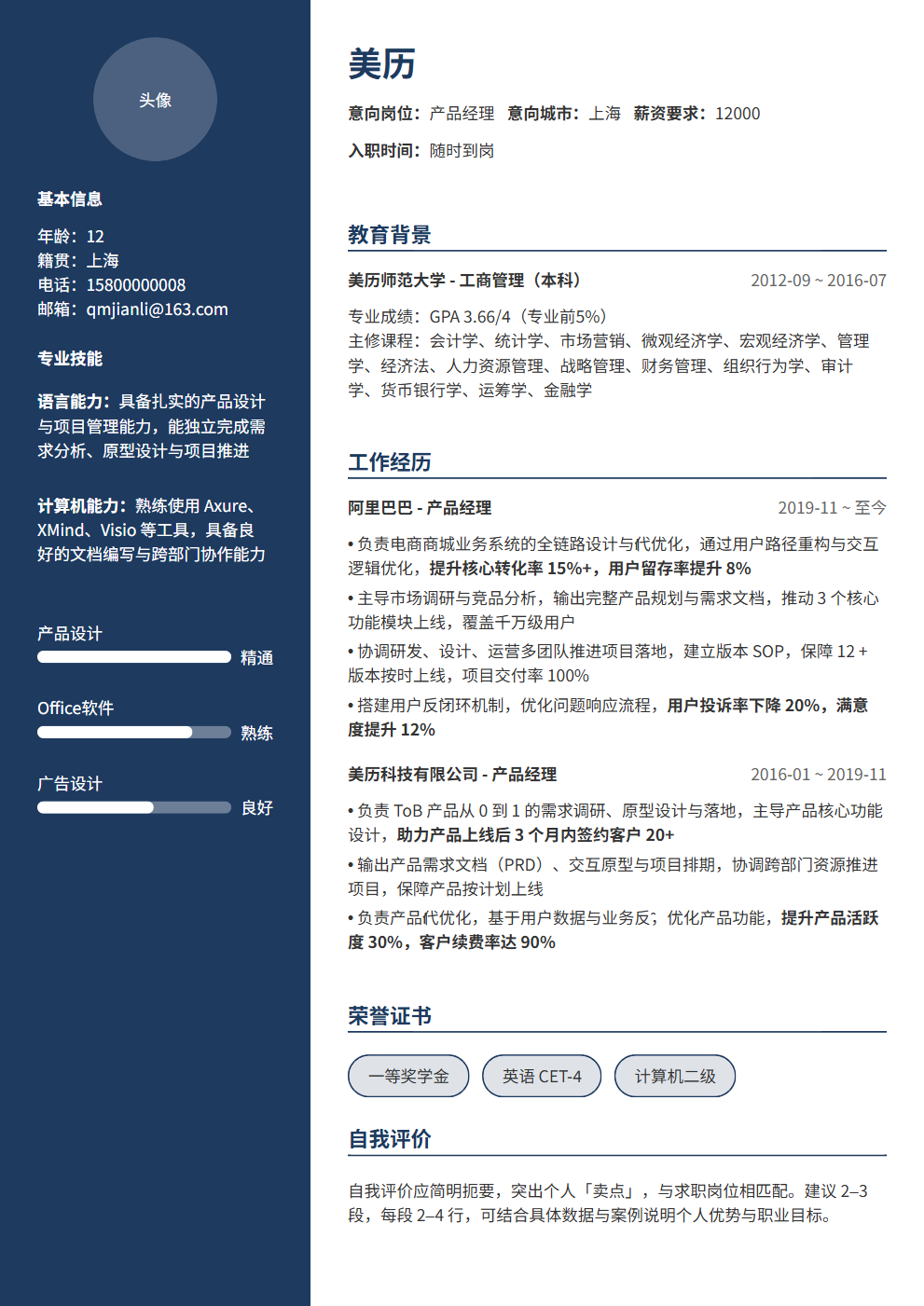
After earning a certification, how do you reflect its value on your resume? Many people just write "Hold PMP certification"—too simple, wasting the certificate's value. The right approach should demonstrate the actual results the certification helped you achieve.
- Approach 1: Certification + Application scenario. Example: "PMP certified, applied project management methodology to successfully deliver 3 projects worth 10M+, improving on-time delivery rate by 40%"—this shows both the certification and the results
- Approach 2: Certification + Professional capability. Example: "CPA certified with independent audit report signing authority, led annual audits for 5 listed companies"—certification + capability + results, all in one
- Approach 3: Certification + Industry impact. Example: "CDA Level II certified, data analysis work featured by industry media 3 times, invited to speak at data analysis summit"—certification isn't just personal proof, it's endorsement of industry influence
- Note: Don't list certifications unrelated to the position you're applying for. If you're applying for a data analyst role, listing "Health Management Specialist" only makes HR think you lack focus. Certifications should serve your career goals, not showcase how many you've earned
Conclusion: Certification Is an Investment, Not an Expense
The essence of getting certified is investment—you invest time, effort, and money, expecting returns in salary increases, career stepping stones, or transition opportunities. PMP builds systematic project management thinking, CPA gives you the highest credential in accounting, Data Analyst proves your data capabilities, AI Application Engineer puts you at the forefront of the AI wave, and Health Management Specialist lets you ride the silver economy boom. Five certifications, five directions—choose the one that best fits your career plan and focus on earning it. Don't be greedy—one high-value certification is worth far more than ten bogus ones. After earning it, make sure to write its value into your resume so HR can see your professional strength at a glance.
Finished your certification and want to maximize its impact on your resume? Use BeautyResume resume editor—professional templates + smart formatting that makes your certifications and achievements stand out. When job hunting, a great resume is your first "pass."