The Must-Have Skill for Your 2026 Resume: How to Turn AI Proficiency into a Job Search Advantage
Know how to use AI but don't know how to put it on your resume? 3 display methods (list AI tools in skills section, showcase AI applications in project experience, emphasize AI thinking in self-evaluation), resume writing tips for 5 types of AI skills, how to demonstrate AI abilities in interviews, and 3 pitfalls to avoid — helping you turn AI proficiency into a job search advantage.
It's 2026, and you've definitely used AI — ChatGPT for writing documents, Gamma for presentations, Midjourney for design, Cursor for coding. But when it comes to writing your resume, you don't know where to put these AI skills. The skills section feels too vague, the project experience section doesn't seem right, and the self-evaluation feels like padding. The result? You're clearly stronger than candidates who don't use AI, but your resume doesn't show it. This article solves one problem: how to write AI proficiency into your resume so it becomes a genuine advantage rather than awkward filler.
3 Display Methods: The Right Positions for AI Skills on Your Resume
AI proficiency isn't limited to the skills section. Depending on your depth of AI usage and job requirements, there are 3 different display methods, each suited to different situations.
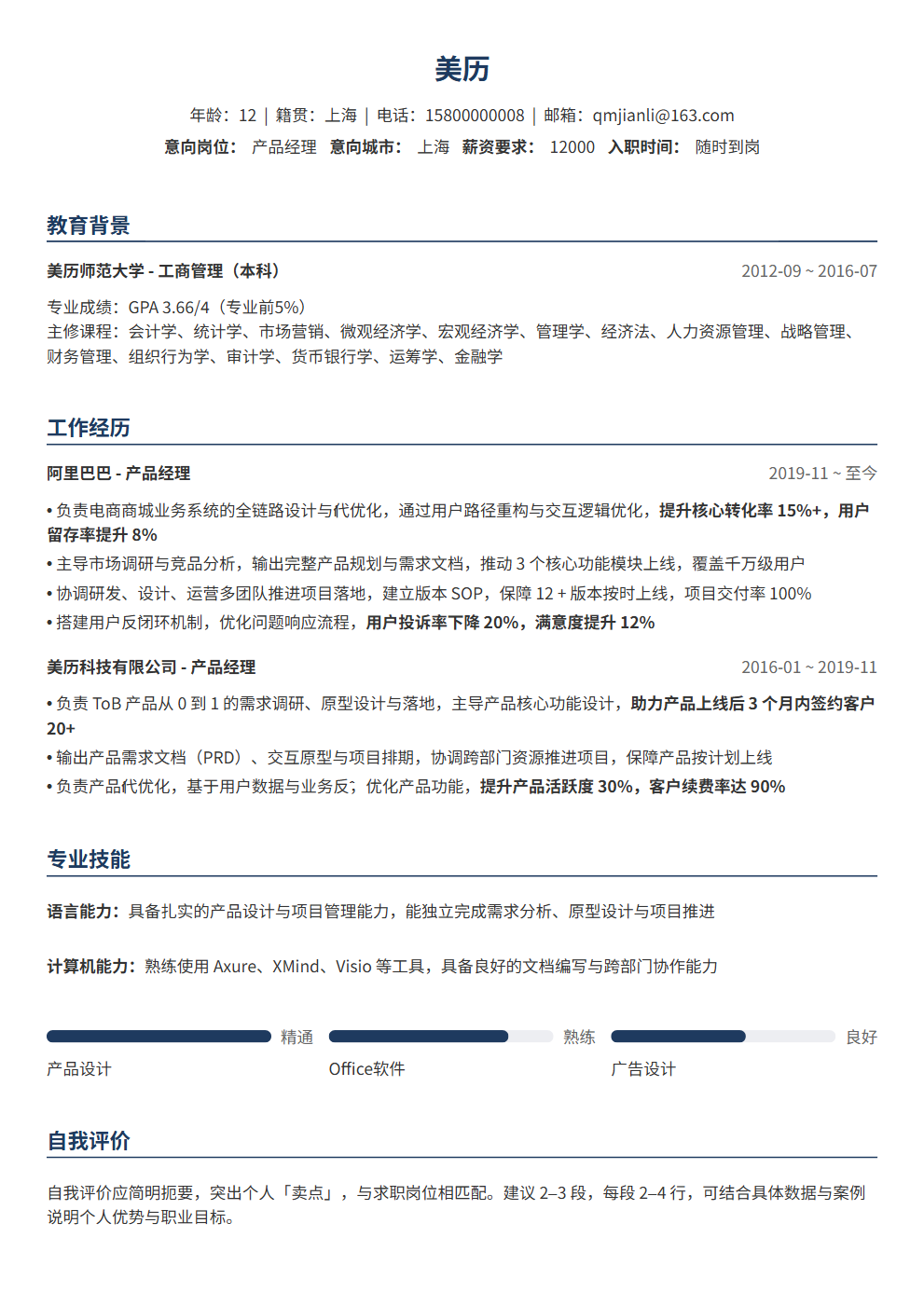
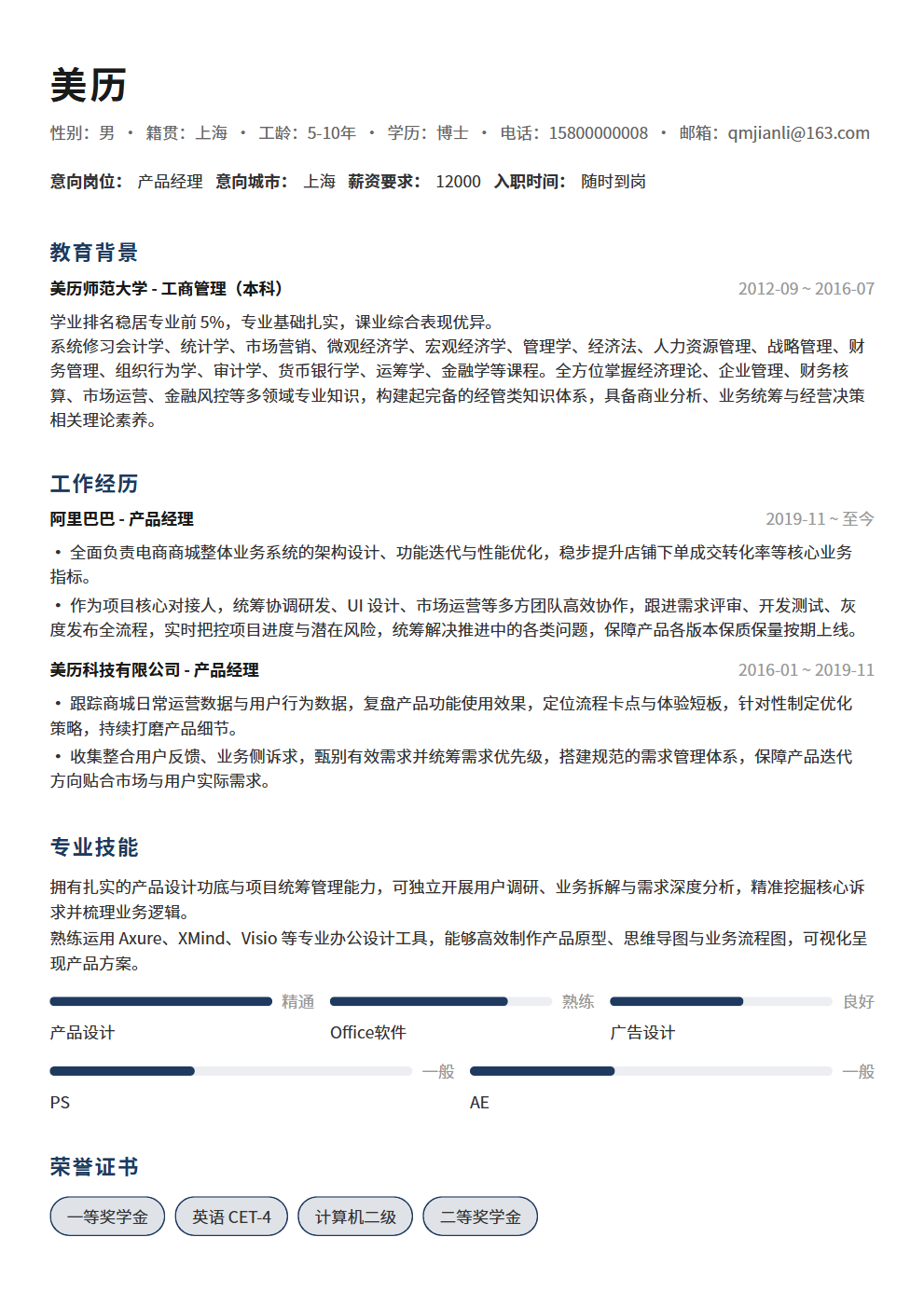
- Method 1: List AI tools in your skills section — suitable for job seekers who use AI frequently but it's not their core work content. Create a separate "AI Tools" category in the skills section, specifying which tools you use and your proficiency level. This approach is simple and direct — HR can see it at a glance
- Method 2: Showcase AI applications in project experience — suitable for job seekers who deeply use AI at work. Naturally integrate AI tool usage scenarios and results into project experience descriptions. This approach is more convincing than a skills list because you demonstrate "how you use it" and "what results you achieved"
- Method 3: Emphasize AI thinking in self-evaluation — suitable for job seekers whose AI capabilities have become integrated into their work habits. In your self-evaluation, emphasize that you possess "AI thinking" — the ability to leverage AI tools to improve work efficiency, optimize workflows, and solve complex problems. This approach demonstrates a capability mindset rather than a tool inventory
- Selection advice: If you only use AI occasionally, choose Method 1; if you frequently use AI to solve problems at work, choose Method 2; if you've already integrated AI into your work methodology, choose Method 3. The three methods can be combined, but avoid repeating the same content
Resume Writing for 5 Types of AI Skills: From Tool Usage to Methodology Output
AI proficiency isn't one monolithic thing — it encompasses at least 5 different capability levels. Each type has different resume writing approaches and different emphasis points.
- Skill 1: AI tool operation capability — which AI tools you can use and to what level. Writing example: "Proficient in using ChatGPT/Claude for copywriting and content optimization, Midjourney/Stable Diffusion for visual design assistance, and Cursor/GitHub Copilot for code development assistance." Note: Don't just list tool names — specify what you use these tools for
- Skill 2: AI prompt engineering capability — you can write high-quality prompts that make AI produce more precise outputs. Writing example: "Possess prompt engineering skills, able to design structured prompt templates for different business scenarios, improving AI output accuracy from 60% to over 90%." Note: Prompt engineering is one of the hottest AI skills in 2026 — if you have this capability, definitely include it
- Skill 3: AI workflow building capability — you can chain AI tools together to build automated workflows. Writing example: "Built an AI-powered content production workflow — using ChatGPT for first drafts, Claude for logic optimization, and Midjourney for illustrations, reducing single content production time from 4 hours to 1 hour." Note: Workflow building capability is more advanced than single-tool usage because it demonstrates systems thinking
- Skill 4: AI project implementation capability — you can apply AI technology to real business projects with measurable results. Writing example: "Led AI customer service system implementation project, building an intelligent Q&A system based on large language models, reducing customer service ticket volume by 40% and improving customer satisfaction by 15% after launch." Note: Project implementation capability is the most convincing AI skill because it's backed by real data and outcomes
- Skill 5: AI strategic planning capability — you can evaluate AI application scenarios from a business perspective and develop AI implementation strategies. Writing example: "Developed department AI implementation strategy, identifying 8 AI application scenarios, prioritizing 3 high-ROI scenarios for implementation, saving the team 30% of repetitive work time within 6 months." Note: Strategic planning capability suits senior professionals — junior positions shouldn't claim this level
How to Demonstrate AI Skills in Interviews: 3 Key Techniques
If you list AI skills on your resume, you'll definitely be asked about them in interviews. How should you answer so the interviewer feels you "truly know how to use AI" rather than "just talking theory"?
- Technique 1: Speak with specific cases, not generalities. When the interviewer asks "How do you use AI?" don't answer "I often use AI to improve efficiency." Instead, say "Last month I needed to produce an industry analysis report. The traditional approach would take 3 days, but I built an AI analysis workflow — first using AI to scrape and organize industry data, then using AI to generate the analysis framework, and finally manually reviewing and supplementing — the entire process took 6 hours, a 4x efficiency improvement"
- Technique 2: Demonstrate your judgment, not AI's capability. Interviewers care about whether you can judge when to use AI and when not to — not how powerful AI is. You can say "AI excels at handling structured, repetitive work but struggles with tasks requiring creativity, judgment, and interpersonal communication. In my work, I delegate the former to AI and focus my energy on the latter"
- Technique 3: Proactively mention AI's limitations to show maturity. Interviewers' biggest fear is the "AI can do everything" mindset. By proactively mentioning AI's limitations, you actually demonstrate deep understanding. For example: "AI-generated code needs manual review, AI-written copy needs manual polishing, AI-produced analysis needs manual verification — AI is an assistant, not a replacement"
3 Pitfalls to Avoid: Common Mistakes When Writing AI Skills on Resumes
Many people make common mistakes when writing about AI skills. Here are the top 3 errors.
- Pitfall 1: Only listing tool names without application scenarios. "Proficient in ChatGPT" — this carries as little information as "proficient in Word." HR wants to know what you used ChatGPT for and what results you achieved. Correct approach: "Used ChatGPT to assist with technical documentation writing, improving documentation output efficiency by 50% while maintaining professionalism and accuracy"
- Pitfall 2: Exaggerating AI's impact. If you write "used AI to improve efficiency 10x," the interviewer will definitely ask for details — how did you calculate that? Where does 10x come from? If you can't answer, it actually hurts your credibility. The right approach: use conservative but real data — "improved 2-3x" is more believable than "improved 10x"
- Pitfall 3: Making AI skills your core selling point while neglecting professional skills. AI proficiency is a bonus, not a core competency. If you're applying for a product manager role, your core competencies are product thinking and user insight — AI skills are just "icing on the cake." If AI skills take up more than 50% of your resume space, HR will suspect your professional skills aren't solid enough
AI Skill Display Strategies for Different Roles
Different roles value AI skills differently, so your display strategy should adjust accordingly.
- Technical roles (development, data, algorithms): AI skills are hard skills that can be placed prominently in the skills section. Focus on AI tool applications in the development process — code assistance, automated testing, data analysis. You can discuss technical details in depth during interviews
- Product roles: AI skills are a bonus — focus on demonstrating AI thinking — how you use AI to optimize product processes, evaluate AI feature value, and collaborate with technical teams to implement AI features. Don't over-emphasize technical details; the product perspective matters more
- Operations roles: AI skills are efficiency tools — focus on AI applications in content production, data analysis, and user operations. Speak with data — how much time AI saved you, how much output it increased
- Design roles: AI skills are creative accelerators — focus on AI applications in design inspiration exploration, asset generation, and design iteration. Emphasize that AI is an auxiliary tool and core creativity still comes from you
- Management roles: AI skills represent strategic vision — focus on your understanding of AI trends, AI applications in team management, and AI project implementation experience. Don't write too many tool details; the macro perspective is more appropriate
Conclusion: AI Proficiency Is a 2026 Workplace Standard, But How You Write It Determines Whether It's a Plus or a Minus
In 2026, AI proficiency is no longer a "bonus" — it's a "standard," just like Office skills in 2010 or data analysis skills in 2015. But "knowing how to use AI" and "knowing how to write AI skills on your resume" are two different things. 3 display methods (skills list, project experience, self-evaluation), resume writing for 5 types of AI skills (tool operation, prompt engineering, workflow building, project implementation, strategic planning), 3 interview demonstration techniques, and 3 pitfalls to avoid — master these, and your AI skills can transform from "a word on your resume" into "a highlight in your interview." Use BeautyResume resume editor with smart templates that place your AI skills in the most appropriate position — letting HR see your AI advantage at a glance.