Must-Have for 2026 Job Search: 5 AI Tools to Help You Find Jobs Efficiently, Saving Time and Effort
In 2026, AI is no longer optional for job seekers — it's essential. This article recommends 5 must-have AI job search tools — AI resume optimization, AI interview simulation, AI job matching, AI salary lookup, and AI job search assistant, each with specific usage methods and effectiveness comparisons to help you boost your entire job search process with AI.
Must-Have for 2026 Job Search: 5 AI Tools to Help You Find Jobs Efficiently
It's 2026. If you're still job hunting with the "spray and pray" approach—mass-applying to hundreds of postings and hoping for the best—you're already falling behind. AI has shifted from a "nice-to-have" to an essential weapon in every job seeker's arsenal. Those who leverage AI enjoy higher resume pass rates, better interview preparation, and more confident salary negotiations—doubling their overall job search efficiency. Meanwhile, those who don't are still manually tweaking resumes, blindly applying, and losing sleep before interviews. That's how the gap widens. Today, I'm sharing 5 AI job search tools that will save you time and effort, transforming your job hunt from grunt work into a strategic operation.
Tool 1: AI Resume Optimization Tools — From "Passable" to "Outstanding"
Your resume is the first gate in any job search, and it's also the step most people get wrong. The issue often isn't a lack of experience—it's poor presentation. Weak phrasing, missing ATS keywords, and messy formatting can get your resume rejected before a human ever reads it. AI resume optimization tools solve all three problems at once.
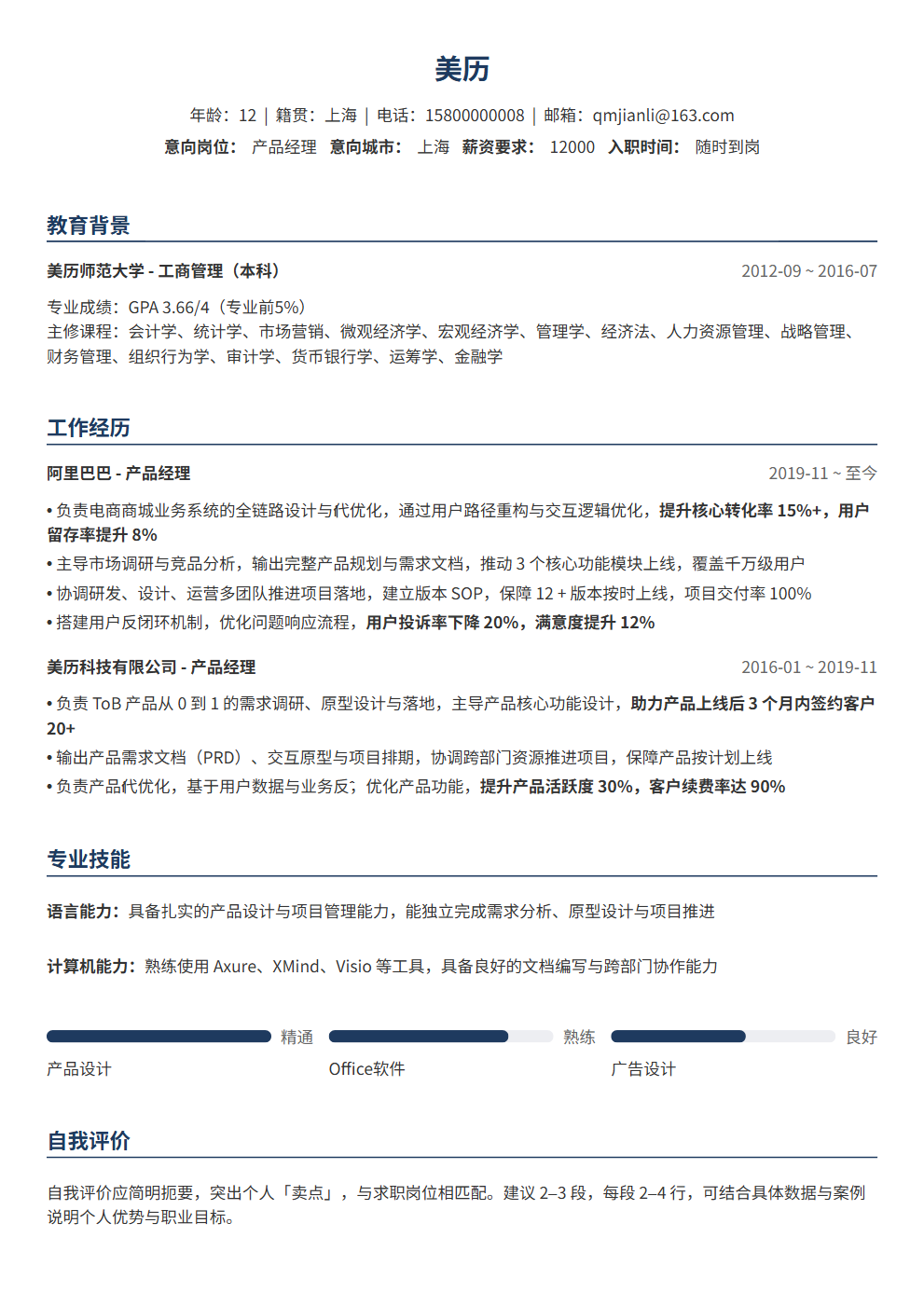
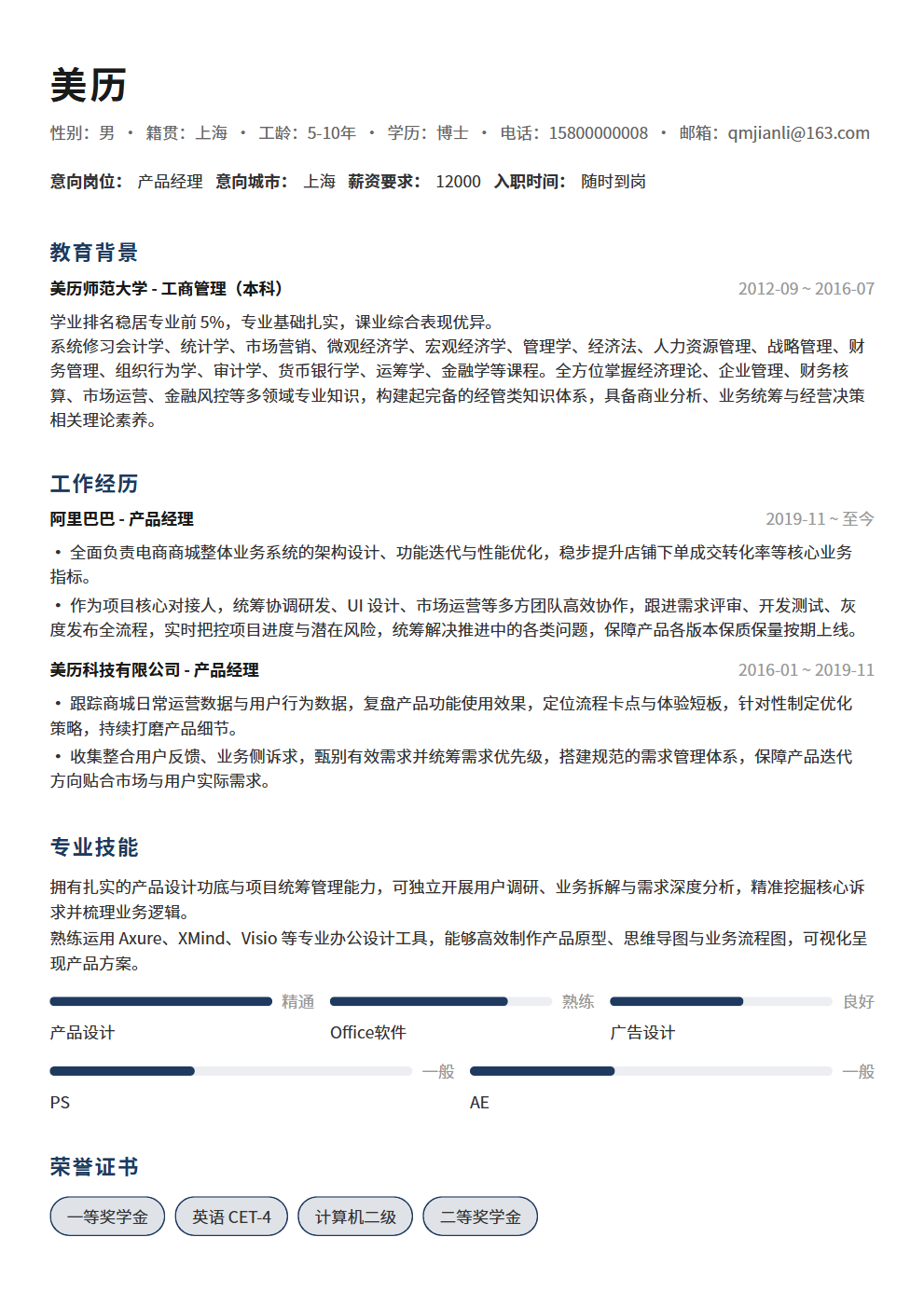
- Purpose: Optimize resume phrasing to make every bullet point more professional and impactful; match ATS (Applicant Tracking System) keywords so your resume survives automated screening; smart layout design so your resume visually outperforms 80% of competitors
- Recommended tools: ChatGPT/Claude for resume writing—paste the job description (JD) along with your raw resume, and let AI optimize phrasing and keywords; BeautyResume smart formatting—professional templates + intelligent layout engine that generates ATS-friendly, visually polished resumes in one click
- How to use: Step 1—find the JD for your target role and copy it; Step 2—send both the JD and your current resume to ChatGPT or Claude with a prompt like: "Please optimize my resume based on this job description. Focus on matching keywords, improving phrasing for professionalism, and highlighting quantifiable achievements"; Step 3—paste the AI-optimized content into BeautyResume, choose an appropriate template, format, and export as PDF
- Real results: Optimized resumes see a 30%+ increase in ATS pass rates and noticeably higher HR response rates. The reason is simple—AI helps you hit the core keywords from the JD, your phrasing aligns with what HR expects to see, and the formatting is professional and easy to read
- Common mistakes: Don't copy-paste AI-generated content without reviewing it—always adjust to match your real experience; don't use one resume for every application—each role deserves a targeted AI optimization; don't ignore formatting—even the best content gets rejected if the layout is chaotic
The core value of AI resume tools: presenting your real experience in a more professional way. AI doesn't fabricate experience—it helps you express what you've already done more effectively. The same content, presented differently, can lead to vastly different outcomes.
Tool 2: AI Interview Simulation Tools — No More Freezing Up Under Pressure
Interviews are the most anxiety-inducing part of job hunting, period. Many candidates write great resumes but fall apart in interviews—blanking out, rambling, giving disorganized answers. The root cause is lack of practice, especially "realistic" practice. Practicing in front of a mirror feels nothing like facing a real interviewer. AI interview simulation tools create near-authentic interview environments for you to rehearse in.
- Purpose: Simulate realistic interview scenarios so you can practice repeatedly in a safe environment; AI generates targeted interview questions based on your target role; real-time evaluation of your answer quality with actionable improvement suggestions
- Recommended tools: Interview Duck—China's leading AI interview practice platform covering tech, finance, consulting, and other popular industries; AI Interviewer—simulates structured interviews with both voice and text modes
- How to use: Step 1—select your target role type (Product Manager, Java Developer, Marketing, etc.); Step 2—AI generates a series of interview questions, including behavioral questions ("Tell me about a time you solved a complex problem") and technical questions ("How would you design a recommendation system?"); Step 3—you respond via voice or text, and AI evaluates your answer in real time—assessing logical clarity, key point coverage, and fluency—then provides specific improvement suggestions
- Real results: After 3-5 AI mock interview sessions, interview anxiety drops significantly, answers become more structured, and the "say whatever comes to mind" chaos disappears. Many users report that AI mock interviews are more effective than practicing with friends—because AI won't hold back from pointing out your weaknesses
- Advanced tips: After each mock interview, record AI's feedback and focus on your weakest question types; for behavioral questions, prepare 3-5 STAR method stories (Situation-Task-Action-Result) in advance and have AI help you refine them; do one mock session the day before your real interview to stay sharp
An interview is essentially a "performance"—you need to present the best version of yourself, and performances require rehearsal. AI interview simulation tools are your rehearsal partner, ensuring you've practiced every question before stepping onto the real stage.
Tool 3: AI Job Matching Tools — Stop Wasting Time on Mismatched Applications
What's the biggest pain point of traditional job hunting? Wasted applications. You spend 30 minutes applying to a position, only to discover the requirements don't match you at all, the salary is insultingly low, or the company isn't even actively hiring. You apply to 10 jobs a day, 8 go into a black hole—terrible efficiency. AI job matching tools solve this at the root by recommending positions that genuinely fit your profile and preferences.
- Purpose: Intelligently match the most suitable positions based on your resume content, work experience, and skill tags; filter out mismatched positions based on your preferences (city, salary, industry, company size); reduce wasted applications and improve application-to-interview conversion rates
- Recommended tools: BOSS Zhipin Smart Recommendations—recommends the best-matching positions based on your resume and browsing behavior; Liepin AI Matching—precisely recommends mid-to-senior positions based on your professional profile
- How to use: Step 1—complete your resume profile in detail—the more detailed your work history, skill tags, and project experience, the more accurate the matching; Step 2—set your job preferences—desired city, salary range, industry, company size, etc.; Step 3—AI recommends positions with the highest match scores, and you can filter for positions with 80%+ match rates to apply directly
- Real results: After using AI matching, irrelevant applications drop by 60%+, and interview invitation rates increase noticeably. Because every position you apply to is highly matched, HR reviewing your resume will also think "this person is a great fit"
- Important notes: AI matching accuracy depends on how complete your resume is—more detailed information leads to better recommendations; don't rely solely on match scores—review the actual job content, as AI matching is just a reference; update your resume and preferences regularly so AI can continuously optimize its recommendations
The core value of AI job matching tools: turning "finding a needle in a haystack" into "precision targeting." Rather than wasting time applying to 100 mismatched positions, you're better off precisely targeting 10 highly matched ones—the latter actually gives you a higher chance of landing an offer.
Tool 4: AI Salary Research Tools — Negotiate with Confidence, Don't Get Lowballed
Salary negotiation is one of the most critical stages in the job search, and also where most people lose the most money. Why? Because you don't know your "market rate." HR negotiates salaries with dozens of candidates daily—they know the market inside out. Meanwhile, you only know your own expectations and have zero data on what peers at the same level are earning. That information gap is HR's leverage for lowballing. AI salary research tools help you close that gap.
- Purpose: Understand the real salary range for your target role in your target city, including salary differences across experience levels; compare salary levels across companies and industries to make more informed decisions; provide data-backed support for salary negotiations so you can negotiate with evidence, not just feelings
- Recommended tools: Kanzhun—the most comprehensive salary research platform in China, with data from anonymous employee submissions; Maimai Salary Search—richest salary data for the tech industry, showing salary distributions for specific companies
- How to use: Step 1—enter the target job title (e.g., "Product Manager," "Java Developer," "Marketing Director"); Step 2—select the target city and your years of experience; Step 3—review the salary distribution—median, 25th percentile, 75th percentile—to understand different salary tiers
- Real results: Knowing the real salary range means you no longer "quote based on gut feeling" during negotiations—you have data to back you up. For example, if you know the median salary for a Product Manager with 5 years of experience in Beijing is 25K, when HR says "our budget for this role is only 18K," you can respond with evidence: "Based on market data, the median salary for this level is around 25K—18K is significantly below market rate"
- Advanced tips: Don't just look at the median—examine the full distribution. Some roles have a modest median but a much higher 75th percentile, indicating room for growth; factor in company size—large companies typically pay more, but smaller ones may offer equity; never reveal your number first in negotiations—let them make the first offer, then negotiate with data
The key to salary negotiation is information parity—the more data you have, the stronger your negotiating position. AI salary research tools ensure you're no longer at an information disadvantage at the negotiation table, so every dollar is negotiated with clarity.
Tool 5: AI Job Search Assistant — Your Free Career Consultant
Job hunting is a complex system with countless questions at every stage—from resume editing to interview prep to salary negotiation. "Should I change jobs in this situation?" "What's the interviewer really asking with this question?" "How do I choose between two offers?" These questions used to require hiring a career consultant. Now, AI serves as your free, always-available career advisor.
- Purpose: Full-process job search consulting—resume revision advice, interview preparation strategies, salary negotiation tactics, career planning guidance, offer comparison analysis. Essentially a 24/7 career consultant ready to answer your questions anytime
- Recommended tools: ChatGPT/Claude—used as a career consultant, the key is how you frame your questions. Describe your specific situation clearly, and AI will provide targeted advice
- Usage Example 1 (Resume Revision): "I'm a Java developer with 3 years of experience looking to move to a major tech company. Here's my current resume—please analyze: 1) Which experiences should I highlight? 2) Which descriptions need improvement? 3) What keywords am I missing?"
- Usage Example 2 (Interview Prep): "I have an interview tomorrow for a Product Manager role at a tech company. Please help me: 1) Predict 5 likely interview questions; 2) Provide answer frameworks for each; 3) How should I showcase my strengths?"
- Usage Example 3 (Salary Negotiation): "I received an offer at 18K/month, but my expectation is 22K. Here's my background—please help me develop a negotiation strategy: 1) How should I bring up a higher salary? 2) What arguments should I use? 3) What if HR says the budget is fixed?"
- Usage Example 4 (Offer Comparison): "I have two offers—Company A at 20K/month but heavy overtime, Company B at 16K/month but great work-life balance. Please analyze from three perspectives: career development, quality of life, and long-term value—which should I choose?"
- Real results: It's like having a free career consultant. While AI advice can't fully replace the nuanced judgment of a human consultant, it's practical enough for most job search questions. The best part—you can ask repeatedly, anytime, with no time or usage limits
The greatest value of an AI job search assistant: it never gets tired of your questions, never judges you for asking something "obvious," and is available 24/7. Any question you encounter during your job search, ask AI first, then combine its advice with your own judgment. With this free consultant at your side, your job search journey becomes significantly smoother.
3 Important Precautions When Using AI Tools
AI job search tools are powerful, but misuse can backfire. These three precautions are each critically important.
- Don't rely entirely on AI: AI is an assistant, not a replacement. AI can optimize your resume, but it can't fabricate your experience; AI can help you prepare for interviews, but it can't perform for you on the spot; AI can analyze salary data, but it can't make your final decision. Your core abilities are always what matter—AI just helps you present them better
- Protect your privacy: When using AI tools, never send sensitive information like ID numbers, phone numbers, or home addresses. Replace specific company names with generic descriptions like "a major tech company," and round salary figures. Protecting your privacy is a prerequisite for using AI tools safely
- Always review AI-generated content: AI-generated resume content, interview answers, and negotiation scripts must be carefully reviewed before use. AI may produce inaccurate information, suggestions that don't match your actual situation, or phrasing that sounds unnatural. Review against three criteria: Is it truthful? Is it accurate? Does it sound natural? Never use anything untrue—an interviewer will catch on with one follow-up question
Summary: Job Seekers Who Use AI Are Already Ahead of the Game
In the 2026 job market, AI is no longer optional—it's essential. AI resume optimization tools take your resume from "passable" to "outstanding," AI interview simulation tools eliminate interview anxiety, AI job matching tools end wasted applications, AI salary research tools give you negotiation confidence, and AI job search assistants serve as your free career consultant. Five tools covering the entire job search process, each saving you time and effort. The key is to start using them now—not "after I've learned how." Because your competitors already have.
The first step in job hunting is your resume, and the first step in resume creation is formatting. Use BeautyResume's resume editor—professional templates plus smart formatting ensure your resume visually outperforms 80% of competitors. AI optimizes your content, BeautyResume optimizes your presentation—together, the offers will come naturally.