A New Job Search Skill for the AI Era: How to Put Prompt Engineering on Your Resume
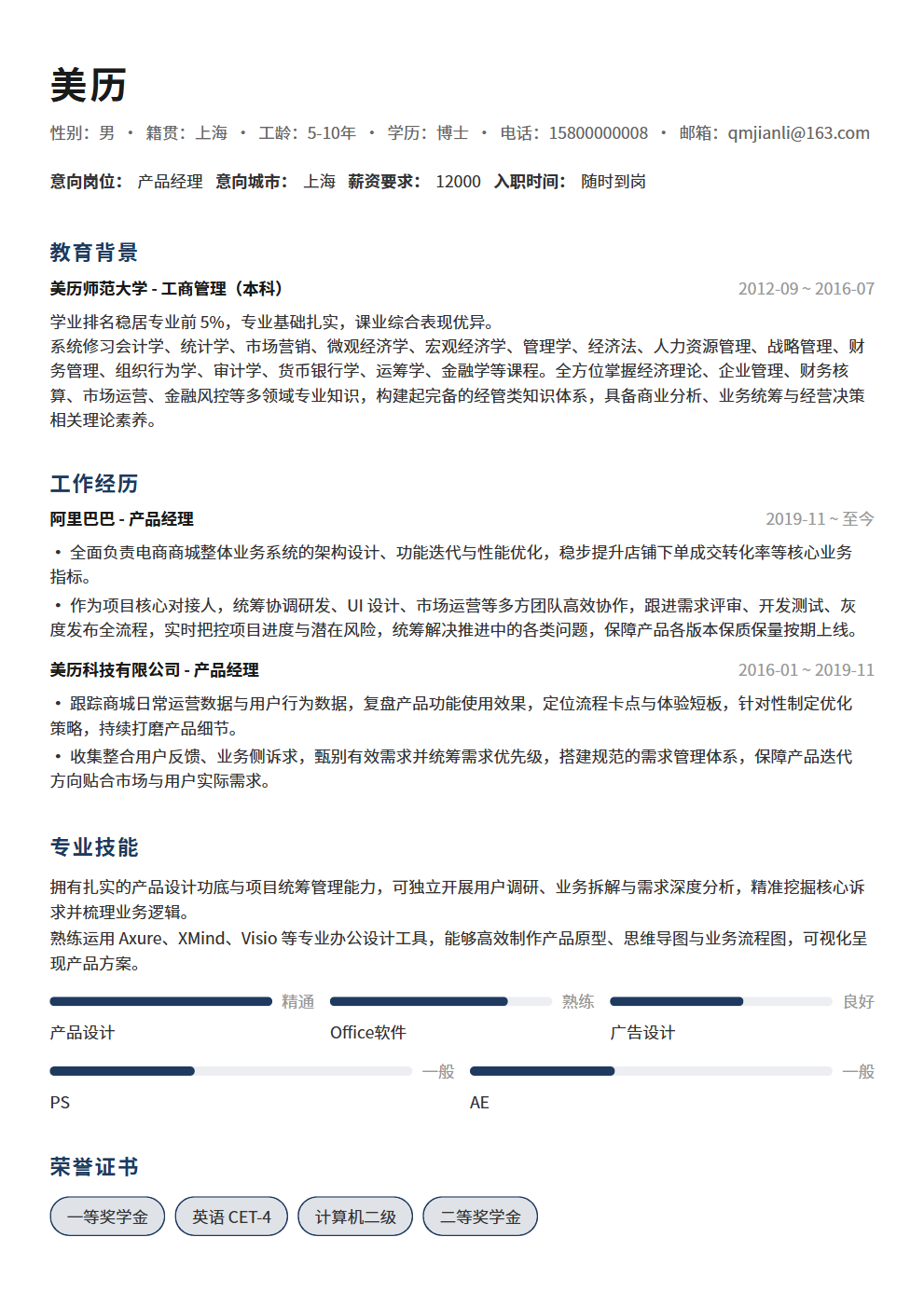
Prompt engineering is one of the hottest new skills in 2026 — this article explains what prompt engineering is, 3 methods to showcase AI skills on your resume (skills list, project experience, self-evaluation), a prompt engineering resume template, and how to demonstrate AI capabilities in interviews, helping you turn AI skills into resume boosters.
Have you noticed that a term keeps appearing more and more in job descriptions — "Prompt Engineering"? From product managers to operators, designers to programmers, more and more positions are starting to require "experience with AI tools" or "familiarity with prompt engineering." In 2026, prompt engineering is no longer an exclusive skill for programmers — it's a "new fundamental" that all professionals need to master. But here's the problem: you know how to use ChatGPT, you know how to write Prompts, but how do you put this skill on your resume? Writing "knows how to use ChatGPT" feels too basic, and writing "proficient in prompt engineering" feels risky if interviewers probe deeper. This article gives you a complete solution — from what prompt engineering is, to 3 methods for showcasing AI skills on your resume, to how to demonstrate AI capabilities in interviews — walking you through turning AI skills into resume boosters.
Prompt Engineering Is a Hot Skill in 2026
Let's start with some data: in 2026, job postings containing "Prompt Engineering" keywords on LinkedIn increased 320% year-over-year; "AI tool proficiency" has become a top-10 skill requirement on Indeed; on major Chinese recruitment platforms, over 30% of job descriptions mention "AI tools" or "prompt" related requirements. Why is prompt engineering so hot? Because in 2026, companies have moved past the hesitation phase of "should we use AI" and entered the execution phase of "how to use AI well." And the core of "how to use AI well" is prompt engineering — using the same ChatGPT, some people only get generic responses, while others get professional-grade content through precise Prompts. That gap is the gap in prompt engineering capability.
The essence of prompt engineering: using precise, structured language instructions to guide AI models in generating high-quality output. It's not a simple skill where "knowing how to type is enough" — it's a composite skill requiring understanding of AI model capability boundaries, mastery of structured expression methods, and iterative optimization capabilities. A good prompt engineer is like a good product manager — not doing the work themselves, but precisely telling the "executor" (AI) what to do, how to do it, and what standards to meet.
What Is Prompt Engineering
Before teaching you how to write it on your resume, let's make sure you truly understand prompt engineering — interviewers will definitely probe deeper.
- Definition of prompt engineering: Prompt Engineering is the technique and methodology of designing and optimizing instructions (Prompts) input to AI models to obtain high-quality output. It includes: understanding AI model capabilities and limitations, designing effective instruction structures, improving output quality through iterative optimization, and evaluating output accuracy and practicality
- Core capabilities of prompt engineering: 1. Task decomposition — breaking complex requirements into steps AI can understand; 2. Context construction — providing AI with enough background information for more precise output; 3. Format specification — using structured formats to constrain AI's output form; 4. Iterative optimization — continuously improving Prompts through multi-round dialogue to enhance output quality; 5. Evaluation judgment — determining whether AI output is accurate, useful, and needs manual correction
- Common application scenarios for prompt engineering: Content creation (using AI to generate marketing copy, product descriptions, social media content), data analysis (using AI for data cleaning, trend analysis, report generation), programming development (using AI to assist with code writing, debugging, refactoring), product design (using AI to generate design drafts, user research plans, competitive analysis), customer service (using AI to build intelligent customer service systems, auto-reply templates)
- Misconceptions about prompt engineering: Misconception 1 — "Knowing how to use ChatGPT means knowing prompt engineering." Wrong. Using ChatGPT is basic; designing structured Prompts, iteratively optimizing, and evaluating output quality — that's prompt engineering. Misconception 2 — "Prompt engineering is a programmer's skill." Wrong. Prompt engineering is a universal skill for all roles that require AI collaboration. Misconception 3 — "Prompt engineering is just writing Prompt templates." Wrong. Templates are just tools; the core is the ability to understand AI models, design instructions, and iteratively optimize
3 Methods to Showcase AI Skills on Your Resume
Now that you understand prompt engineering, here's the key question: how do you put this skill on your resume? These 3 methods, from light to heavy, suit job seekers at different levels.
- Method 1: Skills List — suitable for AI beginners. In the "Skills" section of your resume, add AI-related skill entries. But don't just write "ChatGPT" or "Prompt Engineering" — be specific and professional. Example: "AI Tools & Skills: ChatGPT/Claude (structured Prompt design and iterative optimization), Midjourney/Stable Diffusion (AI-assisted visual design), Copilot (AI-assisted programming), Notion AI (AI-assisted knowledge management)." Note: add parentheses after each tool explaining your specific capabilities, not just the tool name. This way, interviewers can tell you're not just "heard of it" but "actually know how to use it"
- Method 2: Project Experience — suitable for job seekers with hands-on AI experience. In your project experience, integrate AI tool usage into project descriptions, showing how you used AI to improve efficiency or create value. This is the most persuasive display method, because interviewers want to see not "what tools you know" but "what results you achieved with those tools." Example 1 (Operations): "Led XX product launch campaign, designed structured Prompts using ChatGPT to generate 50+ marketing copy pieces, published after manual review and optimization, content production efficiency improved 3x, customer acquisition cost reduced 25%." Example 2 (Product): "Responsible for XX feature user research, designed multi-round dialogue Prompts using Claude for user needs analysis, combined with quantitative survey validation, completed in 2 weeks what previously took 1 month, research report adopted by product committee." Example 3 (Development): "Participated in XX system refactoring, used Copilot for code writing and debugging assistance, personal code output efficiency improved 40%, bug rate reduced 15%"
- Method 3: Self-Evaluation — suitable for job seekers whose AI capability is a core competitive advantage. In your self-evaluation, position AI capability as your differentiating highlight. But note: every statement in your self-evaluation must be expandable for 3 minutes in an interview. Example 1: "3 years of operations experience, skilled in AI-driven marketing content creation. Independently designed 20+ structured Prompt templates covering product promotion, user growth, and brand communication scenarios, improving team content production efficiency by 2.5x overall. Continuously exploring innovative AI applications in operations, with experience building AI workflows from 0 to 1." Example 2: "5-year product manager, AI-native product practitioner. Led 3 AI features from 0 to 1 launch, with dual capabilities in prompt engineering and AI product design. Skilled at translating business requirements into structured AI instructions, driving deep integration of AI capabilities with product experience."
Prompt Engineering Resume Template
Here's a complete prompt engineering resume snippet template you can modify based on your actual situation.
- Skills section template: AI Tools & Skills — LLM Applications (ChatGPT/Claude/Gemini, skilled in structured Prompt design, multi-round dialogue optimization, output quality evaluation); AI Visual Tools (Midjourney/Stable Diffusion/DALL-E, skilled in style control, iterative optimization, batch generation); AI Development Tools (GitHub Copilot/Cursor, skilled in code completion, refactoring suggestions, debugging assistance); AI Workflow Building (Zapier+AI/Make+AI, skilled in automated workflow design and implementation)
- Project experience template: [Project Name] | [Your Role] | [Time] — Project background: [One sentence describing project goal]. AI application: Designed and implemented Prompt solution for [XX] scenario, including [specific Prompt strategy, such as "three-layer structured Prompt using role-setting + task-decomposition + format-constraints"]. Key results: [Quantified results, such as "content production efficiency improved X times," "research cycle shortened X%," "customer acquisition cost reduced X%"]. Iterative optimization: Through [XX] rounds of Prompt iteration, improved AI output usability rate from [X%] to [Y%], established [XX] reusable Prompt templates
- Self-evaluation template: [X years] [role] experience, deep AI tool user. Skilled at translating business requirements into structured AI instructions, cumulatively designed [XX] reusable Prompt templates covering [XX] business scenarios. In [XX] project, achieved [quantified results] through AI assistance. Capable of building AI workflows from 0 to 1, driving team AI tool adoption rate from [X%] to [Y%]
How to Demonstrate AI Capabilities in Interviews
AI skills on your resume are just the "entry ticket" — how you demonstrate them in the interview is the "decisive round." Here are 4 techniques for showcasing AI capabilities in interviews.
- Technique 1: Prepare 1-2 "Prompt Design Case Studies." Interviewers will definitely ask "Can you give an example of how you designed a Prompt?" You need to prepare a specific case including: what the original requirement was, what structure your Prompt had, how many rounds you iterated, what you optimized each round, and what the final output quality was. The case should be specific enough to "demonstrate live" — if the interviewer says "can you write one on the spot?" you must be able to do it immediately
- Technique 2: Show your "AI Collaboration Mindset." Interviewers want to see not "you can use AI" but "how you collaborate with AI." You can describe it like this: "My working approach is — first clarify task objectives and quality standards, then design Prompts for AI to generate first drafts, then manually review and optimize. AI handles the '0 to 60 points' first draft generation, and I handle the '60 to 90 points' refinement and decision-making." This "human-AI division of labor" description is more persuasive than "I used AI to do XX"
- Technique 3: Show your understanding of AI limitations. People who truly understand AI don't just praise AI — they know AI's boundaries. You can say: "AI excels at generating structured content but isn't good at original thinking and emotional expression. So in my work, AI handles data organization and first draft generation, while creative strategy and final decisions are mine." This clear-eyed awareness of AI limitations makes interviewers feel you "truly know how to use AI" rather than "blindly worship AI"
- Technique 4: Show quantifiable results from AI. Interviewers care most about "what value did AI bring you." Don't just say "I used AI to improve efficiency" — say "I used AI to improve content production efficiency by 3x, saving 40 hours of manual time per month, while content quality scores improved from 7.2 to 8.5." Quantified results are the most powerful proof of AI capability
Conclusion: Prompt Engineering Is the "Second Language" of the AI Era
In 2026, prompt engineering is no longer a "bonus" but a "must-have" — just like "knowing how to use Excel" was a must-have 10 years ago. The 3 methods for showcasing AI skills on your resume — skills list (for beginners), project experience (for those with hands-on experience), self-evaluation (for those whose AI capability is a core competitive advantage) — cover different levels from entry to mastery. The prompt engineering resume template is provided, interview demonstration techniques are shared — now it's up to you how to use them. Remember: writing "knows how to use ChatGPT" versus writing "designed 20+ structured Prompt templates, improved AI output usability rate from 40% to 85%" creates completely different impressions on interviewers. The former says "can use a tool"; the latter says "can create value." In the AI era, everyone can use tools, but people who can use them well and create value with them are what companies truly need.
Want to make your AI skills look more professional on your resume? Use BeautyResume's resume editor to intelligently optimize skill keywords and project descriptions, upgrading your prompt engineering capability from "can use tools" to "can create value" — AI-era resumes need AI-era tools to build.