10 AI Tools You Need for Interview Prep in 2026: Boost Your Preparation Efficiency
Reviews 10 essential AI tools for interview preparation in 2026, covering mock interviews, resume optimization, algorithm tutoring, salary research, and more, each with features, use cases, pros/cons, and ratings.
Background
It's 2026, and AI tools have permeated every aspect of interview preparation. When I changed jobs last year, I used AI assistance throughout — from resume optimization to mock interviews — and my efficiency was several times higher than my previous purely manual preparation. Honestly, using AI doesn't guarantee an offer, but not using it will definitely leave you behind those who do. I've reviewed all the AI tools I've used over the past six months and selected these 10 that helped the most with interview preparation. Every one of them is something I've personally used — not just theoretical.
1. AI Mock Interview Tool
Features: Simulates real interview scenarios where AI plays the interviewer asking questions. You can respond via voice or text, and AI provides real-time feedback and scoring. Supports technical interviews, behavioral interviews, system design interviews, and more.
Use Cases: Intensive practice 1-2 weeks before interviews, especially effective for those with social anxiety or who get nervous during interviews. I always practice 3-5 rounds with AI before each interview to release the tension.
Pros & Cons: Pros — unlimited practice, no psychological pressure, instant feedback; Cons — can't fully simulate real interviewer follow-up rhythm and facial feedback, AI evaluations can be overly formulaic.
Rating: ★★★★★
2. AI Resume Optimization Tool
Features: Upload your resume and AI analyzes content quality, keyword matching, and layout issues, providing specific modification suggestions. Supports optimizing resumes for specific JDs (job descriptions) to improve ATS (Applicant Tracking System) pass rates.
Use Cases: Must-use before sending out resumes. I once submitted a resume to 20+ companies with no response. After AI optimization adjusting keywords and quantified descriptions, my response rate doubled. The key is transforming vague descriptions like "responsible for user system development" into "led user system refactoring, increased QPS from 500 to 2000, improved user registration conversion by 15%."
Pros & Cons: Pros — specific actionable suggestions, catches issues easily overlooked; Cons — sometimes suggestions are too "formulaic," requiring personal judgment on applicability.
Rating: ★★★★★
3. AI Algorithm Problem Tutor
Features: Input a LeetCode problem or description, and AI provides solution approaches, code implementation, and complexity analysis. Importantly, it doesn't give answers directly — it guides you step by step: first asking your approach, then giving hints, and finally showing reference solutions.
Use Cases: Use when hitting a wall while practicing problems. I could never find state transition equations for dynamic programming problems. AI guided me from brute force to optimized solutions step by step — much deeper understanding than just reading solutions. Practicing 5-8 problems daily with AI tutoring, you can master medium-difficulty problems in a month.
Pros & Cons: Pros — tutorial-style guidance is more effective than reading answers directly, supports multiple languages; Cons — for rare problems, AI solutions may not be optimal, requiring personal verification.
Rating: ★★★★☆
4. AI Technical Q&A Assistant
Features: Input technical questions and AI provides structured answers including core concepts, principle analysis, practical cases, and interview follow-up predictions. Supports mainstream tech stacks like MySQL, Redis, networking, OS, Java, Go, etc.
Use Cases: Last-minute review of technical fundamentals before interviews. When preparing for MySQL interviews, I went through all 20 high-frequency questions with AI — each answer was well-structured, far more efficient than browsing blogs. AI also simulates interviewer follow-ups to help identify gaps.
Pros & Cons: Pros — structured answers, broad coverage, realistic follow-up simulation; Cons — some answers lack depth, senior positions require additional source-code-level understanding.
Rating: ★★★★☆
5. AI System Design Assistant
Features: Input a system design problem (like "design a URL shortener"), and AI guides you through the complete process: requirements analysis, capacity estimation, high-level design, detailed design, and scalability discussion. It points out things you missed, like "you considered caching but not cache consistency."
Use Cases: Preparing for big tech system design interviews. System design is a weak point for many engineers since daily work rarely involves designing complete systems from scratch. The AI assistant helps fill design blind spots to ensure you don't miss key areas during interviews.
Pros & Cons: Pros — complete guided process, identifies design blind spots; Cons — generated solutions tend to be generic, lacking domain-specific depth, requiring supplementation with your own project experience.
Rating: ★★★★☆
6. AI Salary Research Tool
Features: Based on position, city, years of experience, and tech stack, AI provides salary range references and negotiation advice. Integrates data from major recruitment platforms and can analyze specific company salary ranges.
Use Cases: Use when negotiating salary after receiving an offer. This tool helped me understand my market value, giving me much more confidence during salary negotiations. It also tells you which benefits are negotiable and how to争取 signing bonuses.
Pros & Cons: Pros — relatively comprehensive data, practical negotiation advice; Cons — data has latency, latest salary trends may not be reflected timely, small company data samples are limited.
Rating: ★★★★☆
7. AI Interview Recording Transcription
Features: Start recording during interviews (with prior interviewer consent), AI transcribes conversations in real-time, and automatically organizes structured notes after the interview, highlighting key questions and your response points.
Use Cases: Use during online interviews. After an interview, my mind goes blank — I can't remember what was asked or how I answered. With transcription records, review efficiency improves dramatically. After a ByteDance second round, I found through transcription that I answered two questions off-target and specifically addressed them in the third round.
Pros & Cons: Pros — frees up attention, documented records for review; Cons — some companies don't allow recording, inconvenient for in-person interviews, dialect recognition accuracy needs improvement.
Rating: ★★★★☆
8. AI Interview Review Analysis
Features: Input interview records or transcribed text, and AI analyzes your answer quality, expression logic, and technical depth, providing improvement suggestions. It can also compare performance trends across different interviews to identify recurring issues.
Use Cases: Must-use after every interview. I failed 5 consecutive interviews, and AI review revealed a common problem: my answers lacked structure, jumping from point to point. After deliberately using a "overview-details-summary" structure, interview feedback improved significantly.
Pros & Cons: Pros — identifies personal blind spots, tracks improvement trends; Cons — analysis depends on input quality, incomplete interview records lead to compromised analysis results.
Rating: ★★★★☆
9. AI Cover Letter Generator
Features: Input target company and position, and AI automatically generates a cover letter based on your resume. Supports adjusting tone (formal/lively/professional) and can generate different versions for different companies.
Use Cases: Applying for positions requiring cover letters, especially foreign companies and overseas positions. I once applied to a US company — the AI-generated cover letter was much more professional than what I could write by hand. HR later said the cover letter was a plus.
Pros & Cons: Pros — efficient, professional format, multi-language support; Cons — generated content may lack personal flair, requiring manual adjustment to add personal stories.
Rating: ★★★☆☆
10. AI Career Planning Assistant
Features: Input your current skills, experience, and career goals, and AI provides development path suggestions, skill improvement priorities, and industry trend analysis. It can also simulate 3-5 year development trajectories under different choices.
Use Cases: Use when uncertain about career direction or choosing between multiple offers. I was torn between two offers, and AI helped me analyze the possible 3-year development for both directions. While it couldn't decide for me, it provided a great thinking framework.
Pros & Cons: Pros — provides systematic thinking framework, industry data support; Cons — advice tends to be conservative, can't predict industry black swan events, insufficient consideration of personal interests and values.
Rating: ★★★☆☆
Key Takeaways
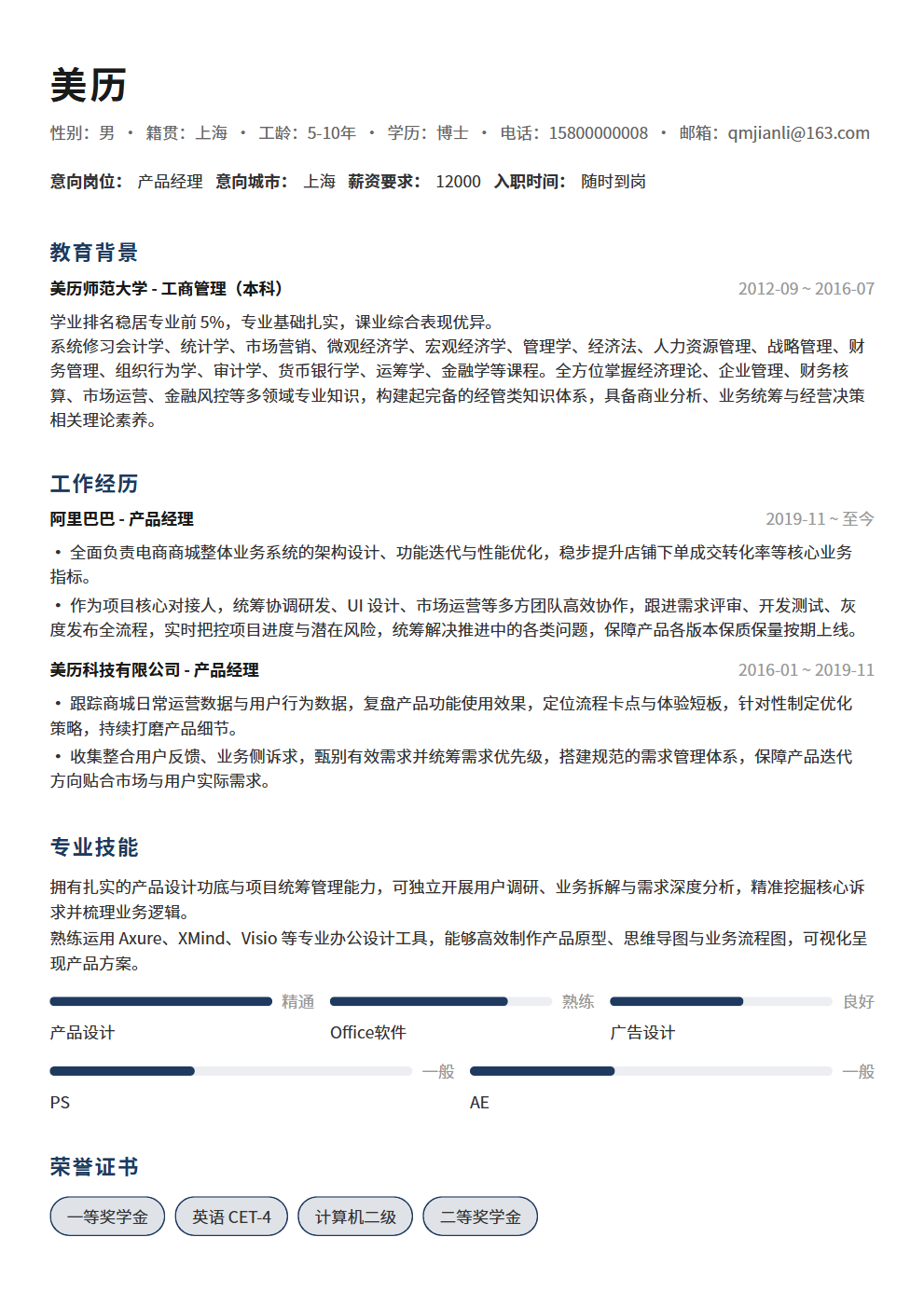
AI tools are accelerators for interview preparation, not replacements. My principle: AI helps me improve efficiency, but doesn't think for me. Use AI for resume optimization to find keywords and quantified expressions, but project experience must be genuinely yours; use AI mock interviews to practice expression, but technical depth must be earned through your own study; use AI to organize technical fundamentals frameworks, but understanding must be internalized personally. Additionally, using a professional resume generator can help you more efficiently organize your interview highlights, presenting your project experience and technical capabilities in the clearest way possible, helping you stand out during the resume screening stage.
FAQ
Q: Will AI tools lead to homogeneous interview answers?
Possibly, so always add your own project experience and understanding on top of AI suggestions to avoid being generic.
Q: Can interviewers tell I used AI to prepare?
If you just copy AI answers, follow-up questions will easily expose you. The key is understanding, not memorizing — express in your own words.
Q: Do these tools require payment?
Most have free versions, but advanced features usually require payment. I recommend prioritizing investment in mock interview and resume optimization tools — highest ROI.