Year-End Bonus Negotiation Guide: 3 Steps to Get the Bonus You Deserve
Your year-end bonus isn't just what the company decides — follow 3 steps (prepare performance data in advance, master negotiation timing, speak with facts), plus scripts and common traps to avoid, to get the bonus that matches your contributions.
Your year-end bonus comes in well below expectations, and you're frustrated but don't know how to bring it up. You hear a colleague got more and feel it's unfair — your year-end bonus isn't just what the company decides. It's a formal salary negotiation. A 3-step strategy (prepare performance data in advance, master negotiation timing, speak with facts), plus script templates and pitfall avoidance, will help you get the bonus that matches your contributions.
1. Step One: Prepare Performance Data in Advance — No Data, No Leverage
The biggest mistake in year-end bonus negotiation is relying on "feelings" — "I feel like I did a good job this year" or "I feel like I should get more." Feelings aren't leverage; data is. You need to prepare a comprehensive performance data sheet before the negotiation and let the numbers speak for you.
- Quantify your achievements: Turn "did a good job" into specific numbers — not "I handled a few major projects" but "I managed 3 major projects generating $5M in revenue, up 30% year-over-year." Not "I improved team efficiency" but "I optimized the X process, boosting team efficiency by 25% and saving 200 hours per month." Not "I landed big clients for the company" but "I independently secured 3 clients with annual contracts exceeding $1M each, accounting for 40% of the department's new revenue." Every achievement needs numerical backing — numbers are the most persuasive negotiation leverage
- Organize your contribution list: Rank by importance — put your most impressive achievements first so your manager immediately sees your core value. Distinguish between "expected duties" and "extra contributions" — completing your job is expected, but contributions beyond your scope are negotiation boosters. Examples: voluntarily taking over a departing colleague's workload, cross-departmental coordination that solved critical problems, proposing and implementing cost-saving solutions. Record key milestones — when you did it, how long it took, what results you achieved. A clear timeline helps your manager feel the continuity of your contributions
- Compare your goals with actual performance: What were your KPIs at the start of the year? What was your actual completion rate? If you exceeded targets, the excess is your negotiation core — "The annual target was X, I actually achieved Y, exceeding the target by Z%." If goals were adjusted, document why and your performance against the adjusted targets — "Mid-year, the target was adjusted from X to Y due to Z, and I still exceeded the adjusted target by W%."
A practical tip: Starting now, spend 30 minutes each month recording that month's key achievements and data. Don't wait until year-end to rely on memory — memories fade, data doesn't. Build an "achievement tracker" and update it monthly; at year-end, it's ready to use in negotiations.
2. Step Two: Master the Timing — Wrong Timing, Wasted Effort
Year-end bonus negotiation can't happen anytime — the right timing doubles your results; the wrong timing backfires. Mastering the correct negotiation timing is a crucial step.
- Best timing: 1-2 weeks before the year-end review: The year-end review is the critical decision point for bonuses — review results directly affect the bonus amount. Talking to your manager 1-2 weeks before the review ensures your achievements and expectations are factored into their evaluation. If you wait until after the review results are out, your manager has already "submitted the grade" and there's little room for changes
- Second-best timing: After completing a major project: If you've just finished an important project with significant results — this is the best negotiation window. Your manager feels your contributions most acutely right now, and reasonable requests have the highest success rate. Note: don't wait until the project's impact has cooled; ideally, bring it up within 1 week of the project review or results presentation
- Worst timing: After the bonus has been paid: Negotiating after the bonus is paid is basically closing the barn door after the horse has bolted — the money has been distributed, and the company is unlikely to add more. Even if you negotiate, it only sets the stage for next year with no real impact on this year's bonus. So, always negotiate before the bonus is finalized
- Avoid these timings: During company downturns or layoffs — negotiating bonuses now has an extremely low success rate and may give the impression of being "out of touch with reality." When your manager is especially busy or under pressure — your negotiation will be seen as "adding to the chaos." If you've been at the company less than 3 months — you don't have enough accumulated performance to make a persuasive case
A key principle: The timing window for year-end bonus negotiation is narrow — typically only 2-4 weeks. Miss it and you wait another year. Plan your negotiation timing in advance; don't wait until the last minute to scramble.
3. Step Three: Speak with Facts — The Core Logic of Negotiation
The core logic of year-end bonus negotiation isn't "I want more" but "my contributions are worth more." Speaking with facts, supporting with data, and persuading with logic — this is the most effective negotiation approach.
- Three levels of negotiation: Level 1: State the facts — "This year I completed Project X, contributing Y in revenue / saving Z in costs." This is the foundation, making your manager aware of your achievements. Level 2: Comparative illustration — "Compared to last year, my performance grew by X%; compared to the average for my role, my contributions are Y% higher." Comparisons make your performance more persuasive. Level 3: Value argument — "Based on my contributions, I believe the bonus should be in the X range, which matches my effort and output." Clearly state your expectation with reasonable justification
- Negotiation script framework: Opening — "Manager, I'd like to discuss my year-end work summary and bonus. Do you have a moment?" (Ask permission first; don't ambush.) State achievements — "This year I was primarily responsible for X work, achieving Y goals. Specifically..." (Speak with data and facts.) Express expectations — "Based on this year's contributions, I'm hoping for a bonus in the X range. I'd like to hear your thoughts." (State a specific expectation, not a vague "a bit more.") Listen to feedback — "I understand the company's considerations. Could you share what criteria are used to evaluate bonuses?" (Understand the company's logic to find negotiation room.) Negotiate options — "If the bonus amount is constrained, could we explore adjustments in other areas? Such as additional PTO, training budget, or a salary adjustment plan." (Think total package, not just the bonus number.)
- Negotiation mindset: Don't bring emotions — "Why is my bonus less than X's?" This confrontational opening makes your manager defensive. Don't threaten — "If you don't increase my bonus, I'll consider leaving." Threats only damage the relationship; even if effective short-term, you lose trust long-term. Don't compare — "X got more bonus than me, that's unfair." Everyone's contributions differ; comparisons are pointless. The right attitude: rational, professional, fact-based — "I'd like to discuss my bonus because I believe there's a gap between my contributions and my bonus."
A practical tip: Before the negotiation, write down your performance data, expected amount, and talking points — written material is clearer and more logical than what's in your head. Bring this "negotiation memo" to the meeting to ensure every key point is covered.
4. Year-End Bonus Negotiation Script Templates
Many people don't avoid bonus negotiation because they don't want to — they avoid it because they don't know how to start. Here are script templates for common scenarios you can adapt to your situation.
- Scenario 1: Bonus significantly below expectations: "Manager, thank you for the recognition in the year-end review. Regarding the bonus, I'd like to discuss it. This year I completed Project X, contributing Y in revenue, up Z% from last year. I understand this year's bonus is A, and frankly, there's a gap from what I expected. Based on this year's contributions, I was hoping for a bonus in the B range. Could you share what factors primarily drive the bonus evaluation? What areas can I improve in?" — Key points: acknowledge first, then state achievements, then express expectations, then understand the criteria
- Scenario 2: Significant bonus disparity among same-level peers: "Manager, I'd like to understand the bonus evaluation criteria. This year I achieved X goals and contributed Y in performance. I want to confirm — what dimensions primarily drive bonus differences? This would help me clarify my focus areas for next year." — Key points: don't directly say "why did someone else get more"; instead, understand the evaluation criteria and indirectly express your concerns
- Scenario 3: Bonus doesn't match effort, want to negotiate an adjustment: "Manager, this year I made extra investments in X areas — took over departing colleague Y's work, coordinated cross-departmental project Z, and voluntarily handled task W. Are these extra contributions reflected in the bonus? If there's room for adjustment, I'd hope it could reflect these additional efforts. If that's genuinely difficult, could we explore compensation in other areas, such as a salary adjustment or extra PTO?" — Key points: emphasize extra contributions, state specific expectations, offer alternatives
A key principle: Scripts are just frameworks — your performance data is the core. Beautiful scripts without data backing are empty talk. So, return to Step One — prepare your performance data first.
5. Common Pitfalls in Year-End Bonus Negotiation
There are many traps in bonus negotiation. A moment of carelessness and you're in one. Here are the 5 most common pitfalls and how to avoid them.
- Pitfall 1: Comparing bonuses with colleagues: Many companies have salary confidentiality policies; publicly discussing bonuses may violate company rules. More importantly, the "someone else got more" you see may be superficial — their base salary might be lower with a higher bonus ratio; they may have responsibilities you're unaware of; their tenure and level may differ from yours. The right approach: focus on whether your contributions and compensation match, not on comparing with others
- Pitfall 2: Using resignation as a threat: "Give me more or I quit" — this is the worst negotiation strategy. Even if it works short-term, your manager will see you as someone who "uses resignation as leverage," and the trust foundation is destroyed. If you truly want to leave, just leave — don't use resignation as a bargaining chip. If you don't want to leave, definitely don't threaten it — once your manager says "you're welcome to explore other opportunities," you're stuck
- Pitfall 3: Only discussing the bonus amount, not the total package: The bonus is just one part of total compensation. If the bonus truly can't be adjusted, negotiate other terms — the magnitude and timing of annual salary adjustments, next year's promotion plan, training budget, extra PTO, flexible work arrangements. Total package thinking gives you more room to maneuver in bonus negotiations
- Pitfall 4: Discussing bonuses in public: Bonuses are a sensitive topic. Discussing them in public settings (team meetings, group chats, lunch) makes your manager very uncomfortable. The right approach: schedule a private 1-on-1 — "Manager, could we find some time to chat? There's something I'd like to discuss with you privately."
- Pitfall 5: Negative attitude after negotiation: If the negotiation result isn't ideal, don't lose your temper on the spot, and don't slack off afterward — that only proves "they were right to give you less." The right approach: accept the result, understand where the gap is, create an improvement plan for next year, and position yourself before the next review. Bonus negotiation isn't a one-time deal — it's an ongoing process
A key principle: The purpose of bonus negotiation is "getting compensation that matches your contributions," not "winning an argument." Maintaining a professional, rational, fact-based attitude yields the best negotiation results.
6. Special Case: What to Do When the Bonus Is Zero or Significantly Reduced
In some years, poor company performance may mean the bonus is drastically reduced or eliminated. How should you respond?
- First, determine the cause: Industry downturn — the entire industry is cutting jobs and salaries; this isn't something you can change individually. Company management issues — poor decisions or mismanagement caused the revenue decline; this isn't your fault either. Individual performance issues — if your performance genuinely didn't meet standards, a lower bonus is reasonable. Distinguishing the cause matters — industry and company problems aren't your fault, but personal performance issues require self-reflection
- Understand the company's bonus policy: Is the bonus "contractual" or "discretionary"? If it's explicitly stated in your employment contract (e.g., "year-end bonus equals X months' salary"), the company can't unilaterally cancel it. If it's "floating based on company performance and individual results," the company has the right to adjust. Understanding the policy tells you your rights' boundaries
- Response strategies: If the bonus is zero and it's not your fault — talk to your manager to understand the reasons and expectations for next year. If the company promises to make it up next year, request written confirmation. Meanwhile, update your resume and start exploring external opportunities — a zero bonus may signal deteriorating company health. If the bonus is significantly reduced — understand the reduction percentage and reasons, and compare with colleagues in your department. If only your bonus was drastically cut, it may be an individual evaluation issue worth contesting. If the entire company's bonuses were cut, that's a macro environment no individual can change
A key principle: A zero or drastically reduced bonus may be a signal that "it's time to leave." If the company's bonuses have been significantly below industry average for two consecutive years with no signs of improvement — it's time to seriously consider changing jobs.
7. Conclusion: Bonuses Are Negotiated, Not Waited For
The 3 steps of year-end bonus negotiation — prepare performance data in advance (no data, no leverage), master negotiation timing (wrong timing, wasted effort), speak with facts (contributions are worth more, not "I want more") — help you shift from "passive acceptance" to "active advocacy." Script templates solve the "I don't know how to start" problem, and common pitfalls help you avoid "good intentions, bad outcomes." Remember: bonuses are negotiated, not waited for. Your contributions deserve matching compensation — if you don't advocate for yourself, no one else will. But the way you advocate must be professional, rational, and fact-based — not emotional outbursts, not comparisons, not threats, but proving your value with data and logic.
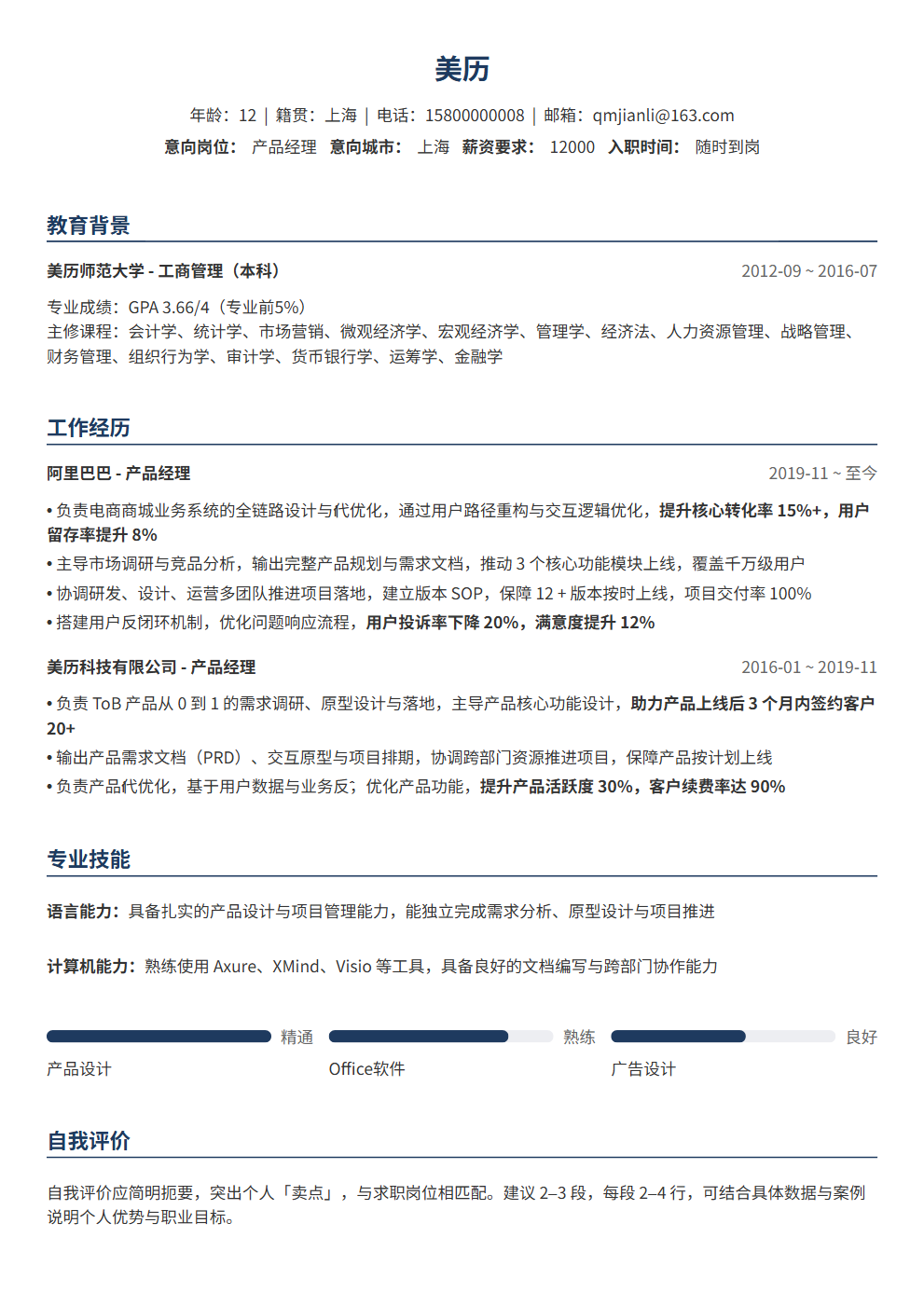
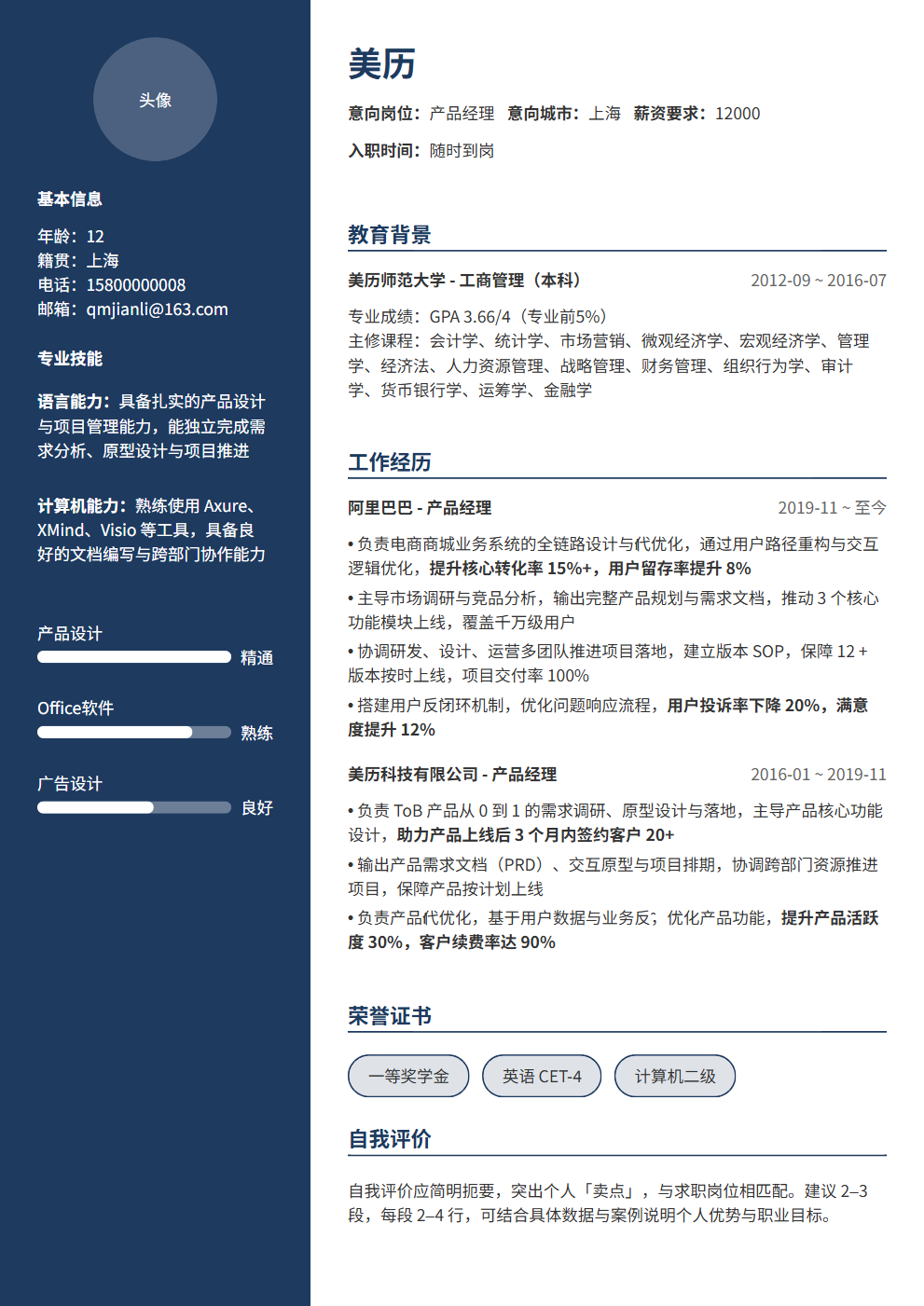
The confidence for bonus negotiation comes from your performance — and your resume is the best way to present it. BeautyResume Editor provides professional templates and smart optimization to help you quantify every achievement with data, giving your negotiation a solid foundation. Whether it's bonus negotiation or salary negotiation for a new job, a resume that speaks with data and results is your most powerful weapon — use BeautyResume to write out your contributions and make every bit of effort visible!