Year-End Bonus Negotiation Guide: How to Talk to Your Boss About Raises and Bonuses at Year-End
Year-end is the best time to negotiate salary! This article provides 3 prerequisites for year-end bonus negotiation, a 4-step negotiation method (prepare performance data, choose timing, present your request, negotiate a plan), 3 negotiation scripts, and strategies for handling rejection, helping you secure a satisfying raise and year-end bonus.
It's year-end. You look at your hard work over the past year and wonder: how much will my year-end bonus be? Should I talk to my boss about a raise? But most people end up choosing to say nothing and just wait for the notification. The result: your year-end bonus comes in well below expectations; the raise notice shows the same percentage as last year. You feel wronged, but it's too late. Year-end is actually the best time of the entire year to negotiate salary — because the company is doing annual budgets and performance reviews, your request is most likely to be heard. Miss this window, and you'll wait another year.
Year-End Is the Best Time to Negotiate Salary
Why is year-end the optimal time? Because there are several unique favorable conditions that don't exist at other times.
- Annual performance review period: Year-end is when companies conduct annual performance reviews. Your work achievements are being formally assessed. This is the "official window" to showcase your value and make requests. Miss it, and the next formal review is a year away
- Annual budget planning period: The company is setting next year's budget, including labor cost budgets. If you raise your salary request before the budget is finalized, it might be included in next year's budget. Once the budget is set, adding headcount becomes much harder
- Year-end bonus allocation period: Year-end bonus distribution plans are being formulated. If you don't proactively express your expectations, your bonus may be "averaged" — not too high, not too low
- When leaders are busiest but most results-focused: Leaders are busy at year-end, but precisely because they're busy, they focus more on results than process. When you speak with data, leaders are more easily persuaded — they don't have time to debate details
- Before the job-hopping peak: After Chinese New Year is the peak job-hopping season, and companies know many people are观望. If you raise salary requests at year-end, companies are more likely to accommodate you to retain talent
The year-end negotiation window typically falls between November and January — too early and leadership hasn't started thinking about it; too late and the budget is already allocated. The optimal time is early December to mid-January, around performance reviews.
3 Prerequisites for Year-End Bonus Negotiation
Not everyone is suited for year-end salary and bonus negotiation. Before speaking up, confirm you meet these 3 prerequisites.
- Prerequisite 1: You have demonstrable achievements. The confidence to negotiate comes from performance — if you don't have standout results from the past year, raising salary talks will backfire. You need at least 2-3 quantifiable work achievements as support
- Prerequisite 2: You've been at the company for at least 6 months. Asking for a raise after just 3 months makes leadership think you're "asking for more before proving yourself." At least 6 months of tenure provides a reasonable basis for negotiation
- Prerequisite 3: You understand the company's salary adjustment rules. Different companies have different rules — some only adjust during annual reviews, some allow mid-year adjustments, and some adjust based on title promotions. Understanding the rules lets you make requests at the right time in the right way
If you don't meet these prerequisites, focus on building your track record and wait for the next window. But if you do meet them, don't hesitate — the year-end window is fleeting.
Step 1: Prepare Performance Data — Your Ammunition Depot
The first step in year-end bonus negotiation is preparing performance data. This isn't writing a year-end summary — it's building a "negotiation ammunition depot" that presents your value in the most distilled form.
- Core achievement list: Identify 3-5 most important work results, each presented in a "Project/Task → Your Contribution → Quantified Result" structure. For example, "Led [Project] → Responsible for overall solution design and team coordination → Project delivered 2 weeks early, 95% client satisfaction, generated [X] million in revenue for the company"
- Comparative data: Your performance vs. last year, vs. team average, vs. targets. For example, "This year's sales grew 35% YoY, 1.8x the team's average growth rate, exceeding targets by 20%"
- Extra contributions: Work outside your job description that you proactively took on. For example, "Volunteered to mentor new hires — 3 new employees each became independently responsible for projects within 2 months" or "Cross-departmental coordination resolved [X] long-standing issue"
- Market salary data: Salary ranges for the same role in the same city, and the gap between your current salary and market rate. This is the objective basis for a raise
- Growth trajectory: Your salary changes, title changes, and responsibility changes since joining. If you've been at the company 2 years with no salary adjustment but significantly increased responsibilities, that's a strong case for a raise
Organize this data into a 1-2 page document to bring to the negotiation. Don't rely on memory — you might forget key data points when nervous. Written materials are both professional and persuasive.
Step 2: Choose the Right Timing — Right Timing Doubles Your Effectiveness
Timing is critical for year-end salary negotiation. The right timing makes leadership more receptive; the wrong timing can backfire.
- Best timing 1: During the performance review meeting. This is the most natural time — leadership is evaluating your performance, and you顺势 raise salary expectations. It's perfectly logical
- Best timing 2: Right after completing a major project. You just delivered a big project when leadership's impression of you is at its peak — raise requests are most likely to be accepted now
- Best timing 3: When leadership asks about your development expectations. Some managers ask "What are your expectations for next year?" during year-end meetings — this is a gift-wrapped negotiation opportunity. Don't waste it
- Timing to avoid: When leadership is handling urgent matters, right after a department problem, when the company just announced layoffs or hiring freezes, or right after you've made a noticeable mistake
- Scheduling approach: Don't show up unannounced. Send a message to schedule: "Boss, I'd like to chat about my development and salary adjustment. What day this week works for you?" Scheduling gives the boss mental preparation and avoids making them feel ambushed
The core principle of timing: Speak up when leadership is most willing to listen. Year-end leaders are busy, but performance review and budget planning periods are when they're most focused on "people" — seize this window.
Step 3: Present Your Request — Clear, Specific, Well-Reasoned
With timing set and data prepared, the next step is formally presenting your request. How you present it determines the negotiation's trajectory.
- Opening approach: Express gratitude first, then transition. "Boss, thank you for your guidance and support over the past year. I'd like to discuss my work achievements and some thoughts about salary adjustment." Don't lead with money — establish a positive dialogue atmosphere first
- Demonstrate value: Speak with performance data. "Over the past year, I was primarily responsible for [Project], achieving [results]. I also took on [additional responsibilities], with team feedback being [positive]." Let leadership recognize your value before discussing salary
- Present your request: State your expectations clearly. "Given the above, I'm hoping for a [X]% raise in this adjustment, and [X] months for the year-end bonus." Don't be vague — "Can you give me a bit more?" is the worst way to make a request
- Provide supporting evidence: Market salary + performance contribution + increased responsibilities. "Based on my research, the market salary for the same role is in the [range], and there's a gap with my current salary. Also, my performance contributions and responsibilities this year have exceeded the role requirements." Triple evidence makes it hard for leadership to refuse
- Leave room: Don't paint yourself into a corner. "Of course, I'd also like to hear your thoughts and suggestions." Give leadership room to negotiate — don't turn the conversation into an ultimatum of "meet my demands or I leave"
Core principles of presenting requests: clear, specific, well-reasoned, leaving room. You're not issuing an ultimatum — you're having a professional salary conversation.
Step 4: Negotiate the Plan — Be Flexible, Pursue the Optimal Outcome
After presenting your request, leadership may accept, reject, or propose a compromise. You need to respond flexibly based on the situation.
- Scenario 1: Leadership fully accepts. Congratulations! But don't forget to confirm details — when does the raise take effect? How much is the year-end bonus exactly? Is there written confirmation? Verbal promises are unreliable — always get it in writing
- Scenario 2: Leadership partially accepts. For example, the raise percentage is lower than expected, but the year-end bonus meets expectations. You can ask "Can the raise be a bit higher? Or can the year-end bonus be one more month?" Build on their partial acceptance to push for more
- Scenario 3: Leadership says "I need to think about it." Don't press with "how long?" Instead say, "Sounds good. I'll follow up with you in two weeks." Give them time, but have a follow-up plan
- Scenario 4: Leadership says "Budget is tight this year." Acknowledge the difficulty, but emphasize your special circumstances. "I understand the budget is tight, but my performance contributions and the market salary gap are objective facts. Can I get a larger share of the limited budget? Or can I get a written commitment to prioritize my adjustment next year?"
- Scenario 5: Leadership completely refuses. Don't lose your temper on the spot, and don't give up on the spot. Say "I understand. Can I learn the specific reasons? And what are the possibilities and timeline for future adjustments?" Understanding the reasons prepares you for the next negotiation
Core negotiation principles: flexible, pragmatic, confident but respectful. Negotiation is two-way — you make a concession, and the other side should too. If they make zero concessions, you need to reassess whether it's worth continuing to wait.
3 Negotiation Scripts
Different scenarios require different scripts. Here are 3 scripts covering the most common year-end negotiation situations.
- Script 1: Performance-driven. "Boss, over the past year I achieved [specific results] on [Project], and also took on [additional responsibilities]. Based on my research, the market salary for the same role is in the [range], and there's a gap with my current salary. I hope the company can give me a [X]% raise in this adjustment based on my performance contributions and market levels." — Best for those with outstanding performance and clear market salary gaps
- Script 2: Responsibility-driven. "Boss, since joining, my responsibilities have grown from [X] to [Y], and my scope of work has expanded significantly, but my salary hasn't been adjusted accordingly. I hope the company can adjust my salary to a reasonable level based on my current scope of responsibilities." — Best for those with increased responsibilities but lagging salary
- Script 3: Year-end bonus expectation. "Boss, this year I completed [Project] and achieved [results]. For the year-end bonus, I'm hoping for [X] months. Of course, I'd also like to understand the company's overall year-end bonus plan." — Best for those primarily negotiating the year-end bonus
Choose your script based on your core request and strongest evidence. Outstanding performance? Use Script 1. Increased responsibilities? Use Script 2. Primarily about the bonus? Use Script 3. Don't mix them — focusing on one core request per negotiation is more persuasive.
What to Do If You're Rejected
Getting rejected in year-end salary negotiation is the most frustrating outcome. But rejection doesn't mean the end — you need to respond correctly and prepare for the next opportunity.
- Understand the rejection reason: Don't give up on communication just because you were rejected. Ask "What are the specific reasons?" "What are the possibilities and timeline for future adjustments?" "What do I need to improve to qualify for a raise?" Understanding the reasons lets you address them
- Secure a written commitment: If the boss says "we'll adjust next year," try to get it in writing. "Can we confirm that next year's raise will be no less than [X]%? A written record would give me more peace of mind." Verbal promises can be forgotten; written commitments are more secure
- Develop a Plan B: If internal raises are unlikely, start preparing external opportunities. Update your resume, contact headhunters, check the market. People with external options have more leverage in internal negotiations
- Don't slack off: The worst thing to do after rejection is to slack off. This only worsens your performance, gives you less grounds for future raises, and leaves a "immature" impression on leadership. Continue doing your job well while seeking better opportunities
- Set a timeline: Give yourself a deadline — for example, "If there's no salary adjustment within 6 months, I'll start looking externally." Having a timeline prevents you from waiting indefinitely
Rejection isn't the end — it's a new beginning. Understanding reasons, securing commitments, preparing a Plan B, and setting a timeline — these 4 steps help you stay proactive even after rejection.
Conclusion: Year-End Salary Negotiation Isn't Haggling — It's Value Confirmation
Year-end is the best time to negotiate salary — performance reviews, budget planning, and year-end bonus allocation all converge in this window. But negotiation isn't "haggling" — it's "value confirmation." Use performance data to prove you're worth more, market data to show your salary is below market rate, and increased responsibilities to demonstrate your contributions haven't been fairly compensated. The 4-step negotiation method (prepare performance data, choose timing, present your request, negotiate the plan) plus 3 script templates give you solid grounds and confidence. Even if rejected, don't give up — understand the reasons, secure commitments, prepare a Plan B, and set a timeline for the next opportunity. Remember: if you don't ask, the company won't voluntarily give you more; if you do ask, there's at least a 50% chance of getting more. The year-end window is fleeting — prepare and go negotiate.
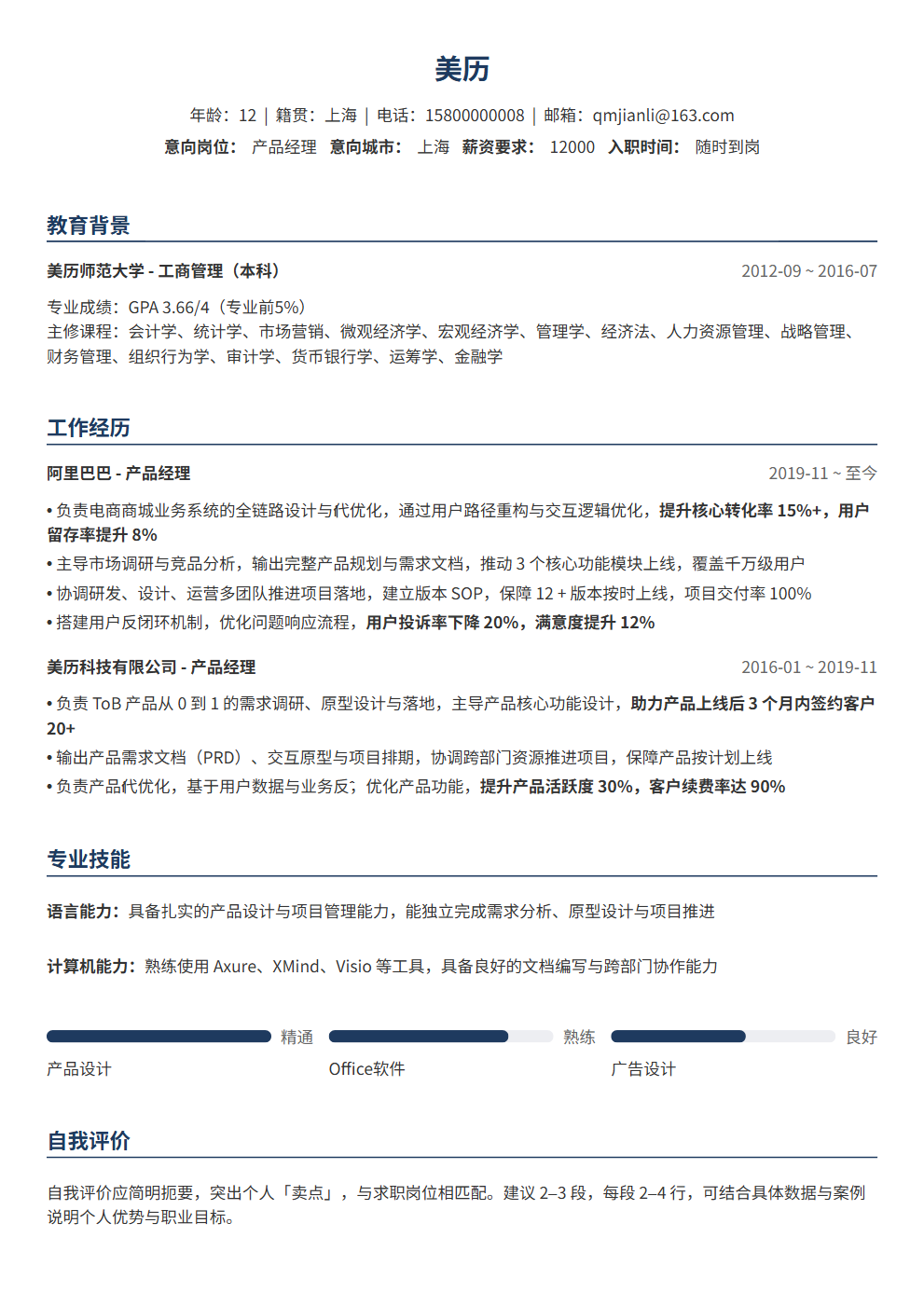
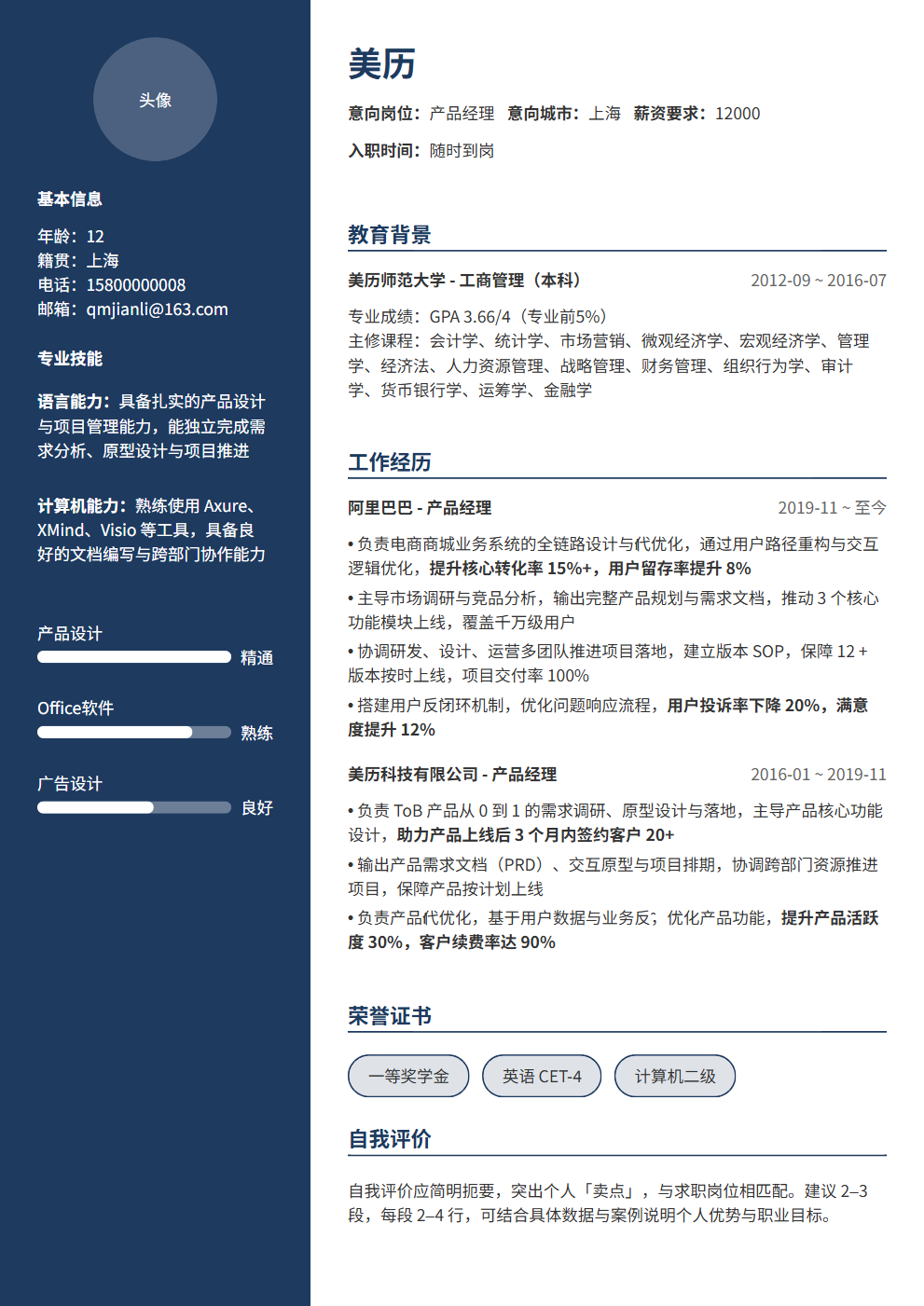
Before year-end salary negotiation, get your achievements and value organized first. Use BeautyResume's resume editor to compile your project experience and achievement data, making your value crystal clear — whether for internal negotiations or external job searches, a professional resume is your most powerful weapon.