Workplace Writing Skills: 5 High-Frequency Document Templates to Take You from Clueless to Competent
Always getting your writing sent back by your boss? 5 high-frequency workplace document templates (weekly reports, project proposals, meeting minutes, performance reviews, post-mortem summaries) with writing tips, 3 workplace writing principles, and 3 common mistakes to help you go from struggling to skilled.
Have you ever stared at your computer for half an hour trying to write a weekly report, only to submit three lines and get told "too brief, rewrite it"? Or written a 5,000-word project proposal only to hear "where's the key point?" Or documented every word spoken in a meeting, only to be told "this isn't a transcript"? Getting your writing sent back by your boss is a recurring nightmare for many professionals. But workplace writing isn't literary creation — it follows patterns and templates. Master the templates for these 5 high-frequency documents, and you'll go from "can't write" to "write well."
Document 1: Weekly Reports — Speak with Data, Lead with Conclusions
Weekly reports are the most common workplace document and the most complained about — writers see them as busywork, readers find them information-poor. But a good weekly report is a powerful tool for managing upward. Your boss doesn't have time to watch what you do every day; the weekly report is their window into your work's value. The core principle: conclusions before process, data over adjectives, problems paired with solutions.
- Weekly report template: Part 1 "Key Achievements This Week" (3-5 items, each using the "what I did + what result I achieved" format, e.g., "Completed user growth strategy design, projected Q3 new user increase of 15%"); Part 2 "Key Progress and Data" (present progress with data, e.g., "Requirement review pass rate improved from 60% to 85%"); Part 3 "Issues and Risks" (every issue must include your solution or recommendation, e.g., "API integration delayed 2 days, coordinated with dev team for Saturday overtime, launch timeline unaffected"); Part 4 "Next Week's Plan" (3-5 items, each with priority and expected completion date)
- Writing tips: Start titles with verbs ("completed," "advanced," "optimized" — not "regarding" or "about"), quantify achievements with data ("increased by 30%" is more convincing than "significantly increased"), pair problems with solutions (raising problems without solutions is complaining; raising problems with solutions shows thinking), avoid chronological lists (organize by importance, not timeline)
- Common mistakes: Writing a diary ("Monday: meeting, Tuesday: document, Wednesday: client call" — this is a log, not a report), focusing on process over results ("Communicated with 3 departments about requirements" — what was the result?), only reporting good news (hiding problems until they explode is worse)
- Advanced tip: Add a "one-sentence summary of the week" at the top (e.g., "Core achievement this week: completed user growth strategy, Q3 target path clarified"), letting your boss grasp the key point in 3 seconds. Bold or highlight key data to reduce reading effort
A weekly report isn't a chore to check off — it's your weapon for showcasing achievements and managing your boss's expectations. A good weekly report communicates your work's value even without a conversation.
Document 2: Project Proposals — Explain Why Before How
Project proposals are the "highest-value" workplace documents — write well and your boss approves immediately; write poorly and you'll revise endlessly or get rejected. The biggest mistake people make: jumping straight into "how" without explaining "why." Your boss's first reaction isn't "how will you do this?" but "is this worth doing?" So the core logic: prove value first, then explain the approach.
- Proposal template: Part 1 "Background and Objectives" (Why this project? What problem does it solve? What goal will it achieve? Use 1-2 paragraphs, objectives must be quantifiable); Part 2 "Current Situation Analysis" (What problems exist? What data supports this? How do competitors/industry handle this?); Part 3 "Solution" (What's the core approach? How many phases? What are the milestones and deliverables for each phase?); Part 4 "Resources and Timeline" (How many people? What budget? What are the deadlines?); Part 5 "Risks and Mitigation" (What risks might occur? What are the contingency plans?); Part 6 "Expected Returns" (What value will this create if successful? Estimate with data)
- Writing tips: Use SMART objectives (Specific, Measurable, Achievable, Relevant, Time-bound), include a Plan B (one option isn't really a choice), build buffer into timelines (actual time is typically 1.5x your estimate), pair risks with mitigations (listing risks without responses means you haven't really addressed them)
- Common mistakes: Background section too long (your boss doesn't need an essay — 2 paragraphs suffice), solution too abstract ("optimize user experience" — how exactly? what specifically?), no data support ("the market is huge" — how huge? what's the source?), ignoring risks (only presenting the upside means you take full blame when problems arise)
- Advanced tip: Add an "Executive Summary" page at the beginning, summarizing the entire proposal's core content in 3-5 sentences. Many bosses make decisions based solely on the executive summary; the detailed content is for the execution team
The essence of a project proposal is persuasion — persuading your boss it's worth doing, persuading the team it can be done. The clearer and more logical your proposal, the higher the approval probability.
Document 3: Meeting Minutes — Not Transcripts, but Decision and Action Item Summaries
Meeting minutes are among the most overlooked yet most valuable workplace documents. Many people treat them as transcripts of "who said what," but good meeting minutes should focus on two things: what decisions were made and who will do what by when. The core value isn't recording — it's driving execution. Meeting minutes are the bridge that turns discussion into action.
- Meeting minutes template: Part 1 "Meeting Basics" (time, location, attendees, topic); Part 2 "Key Decisions" (what consensus and decisions were reached? Summarize each decision in one sentence, e.g., "Confirmed Q3 user growth target of 15%, led by Marketing"); Part 3 "Action Items" (who will complete what by when, with what deliverable? A table format works best); Part 4 "Outstanding Issues" (what problems weren't resolved? When will they be discussed next?); Part 5 "Next Meeting" (time, topic, materials to prepare in advance)
- Writing tips: Decisions must be clear (not "everyone discussed XX" but "the meeting decided XX"), action items must be specific (not "Zhang will follow up" but "Zhang will complete the competitive analysis report by July 15 and email it to the product team"), minutes must be timely (send within 24 hours — after 48 hours, no one remembers the meeting)
- Common mistakes: Transcribing every person's words verbatim (minutes aren't audio transcription — extract core viewpoints), omitting action items (a meeting without action items might as well not have happened), action items without deadlines (tasks without deadlines never get completed), not tracking after sending (sending minutes is just the start — following up on action items creates the closed loop)
- Advanced tip: Use a table format for action items with columns: "Number, Task, Owner, Deadline, Deliverable, Status." At the start of each meeting, review the previous meeting's action items to create a closed loop
Good meeting minutes let non-attendees quickly grasp the core content and remind attendees of their next steps. Minutes aren't the end of a meeting — they're the beginning of execution.
Document 4: Performance Reviews — Prove Value with Achievements, Tell Stories with Data
Performance reviews are your most important annual "stage" — what you did, how well you did it, and whether you deserve a promotion or raise all depend on this document. Common mistakes: listing tasks without highlighting achievements, describing what you did rather than what you accomplished, using adjectives instead of data. The core logic: prove value with achievements, tell compelling stories with data.
- Performance review template: Part 1 "Core Annual Achievements" (3-5 items, each using "challenge + action + result" structure, e.g., "Facing slowing user growth, led the design of a viral growth strategy, achieving 40% YoY increase in Q3 new users"); Part 2 "Key Project Reviews" (select 2-3 most valuable projects, each covering: what was the goal, what did you do, what was the result, what did you learn); Part 3 "Professional Growth" (where did you improve this year? how specifically?); Part 4 "Shortcomings and Improvements" (1-2 genuine weaknesses, each with an improvement plan — don't write fake weaknesses like "my flaw is being too perfectionistic"); Part 5 "Next Year's Plan" (core objectives, key initiatives, support needed)
- Writing tips: Use data for achievements ("increased by 40%" is 100x more powerful than "significantly increased"), select your most valuable achievements (don't list everything — pick 3-5 with the most impact), tell stories (use "challenge-action-result" structure to make achievements vivid), be genuine about shortcomings (your boss isn't fooled by fake weaknesses)
- Common mistakes: Listing a task diary ("responsible for XX project, participated in XX meeting, completed XX report" — this is a job description, not a performance review), using adjectives instead of data ("achieved significant results" — how significant? where's the data?), only mentioning individual work without acknowledging the team (even for team achievements, clarify your specific contribution), writing fake shortcomings ("my weakness is being too dedicated and neglecting my health" — bosses are tired of hearing this)
- Advanced tip: Add a "Annual Highlights" page at the beginning (3-5 most impressive data points or achievements), giving your boss a judgment on your annual performance in 10 seconds. Use comparative data to strengthen your case ("40% YoY growth" or "industry average growth was 15%, we achieved 40%")
A performance review isn't a self-criticism document or a task diary — it's the file where you "price" yourself based on a year's achievements. Write it well, and promotions and raises follow naturally; write it poorly, and even great work may go unrecognized.
Document 5: Post-Mortem Summaries — Extract Reusable Methodologies from Experience
Post-mortem summaries have the most "compound interest" of any workplace document — a good post-mortem doesn't just review the past but guides the future. Many people write post-mortems as "summaries of what was done," which misses the point. The core is "extracting reusable methodologies from experience" — what succeeded, why, and how to replicate it; what failed, why, and how to avoid repeating it. A good post-mortem ensures no experience is wasted.
- Post-mortem template: Part 1 "Review Objectives" (what were the original goals? what were the key metrics?); Part 2 "Evaluate Results" (what were the actual results? what's the gap vs. objectives? data comparison); Part 3 "Analyze Causes" (why did things go well? why did things go poorly? each cause must be specific — not just "good team collaboration" but "daily 15-minute standups ensured information sync, problems resolved within 24 hours"); Part 4 "Extract Patterns" (what practices can be reused? what pitfalls should be avoided? form actionable methodologies); Part 5 "Action Plan" (based on the post-mortem, what adjustments will be made? who's responsible? when will they be completed?)
- Writing tips: Objectives must be specific (without original goals, there's no reference point for evaluation), causes must be deeply analyzed (don't stop at "poor communication" — dig to "requirement documents lacked standardized templates, leading to inconsistent understanding"), patterns must be reusable ("communicate better next time" isn't a pattern; "establish a requirement review checklist and confirm each item before every review" is), action plans must be closed-loop (specific tasks, owners, deadlines)
- Common mistakes: Only writing about successes (this isn't a post-mortem, it's an awards ceremony), surface-level cause analysis ("not enough time" — why not? was the timeline unrealistic or execution inefficient?), no extracted methodologies (after the post-mortem, you still don't know how to do it better next time), vague action plans ("improve communication" — how? who? when?)
- Advanced tip: Use the "5 Whys" to dig into root causes (e.g., project delayed → development slow → frequent requirement changes → insufficient requirement review → no standardized requirement template → action: establish requirement templates and review processes). Turn post-mortem conclusions into team SOPs, transforming individual experience into organizational assets
The value of post-mortem summaries lies not in reviewing the past but in guiding the future. A good post-mortem helps the team avoid detours and repeated mistakes. Build the habit of post-mortems, and every experience becomes wealth.
3 Core Principles of Workplace Writing
Beyond mastering the 5 document templates, you need to understand the underlying principles of workplace writing. These principles apply to all workplace documents and are the key to moving from "using templates" to "truly writing well."
- Principle 1: Reader-first thinking — Before writing, ask "Who will read this document? What do they care about? What information do they need to make decisions?" Documents for bosses need conclusions first with data support; documents for execution teams need clear steps and defined responsibilities. The same topic requires completely different writing for different audiences
- Principle 2: Pyramid structure — State conclusions first, then the evidence supporting them, then the details. Don't make readers guess your key point — tell them the conclusion in the first sentence, then elaborate. Your boss has limited time and needs to grasp your core point in 3 seconds, not discover it after reading 3,000 words
- Principle 3: One-page rule — Keep any document to one page (main body) whenever possible. If you can't explain it on one page, your thinking isn't clear enough yet. Being concise isn't about deleting content — it's about distilling core information. Use tables instead of text, data instead of adjectives, one sentence instead of a paragraph
3 Common Workplace Writing Mistakes
Even with templates and principles, many people still make these 3 mistakes. They seem small but seriously affect your document's professionalism and persuasiveness.
- Mistake 1: No core viewpoint — You've written a lot, but readers finish without knowing what you're trying to say. Every document should have one core viewpoint, with all content supporting it. If you can't articulate the core viewpoint, your readers certainly won't understand it
- Mistake 2: Using vague language instead of specific information — "Achieved good results," "Showed significant improvement," "Team collaboration became smoother" — these statements say nothing. Replace vague descriptions with specific data: "User retention rate increased from 35% to 52%," "Requirement review pass rate improved from 60% to 90%," "After implementing daily standups, issue response time decreased from 48 hours to 4 hours"
- Mistake 3: Raising problems without solutions — "There's currently a communication issue," "Project schedule has delay risks" — raising problems without solutions is just complaining in your boss's eyes. Every problem should be followed by your solution or recommendation. Even an imperfect solution is better than none. Problem + solution = thinking ability; problem alone = complaining ability
Conclusion: Workplace Writing Is a Skill, Not a Talent
Many people think they "can't write" because they lack writing talent. But workplace writing is completely different from literary creation — it doesn't require eloquence, just clear logic, accurate information, and reader-friendliness. The 5 high-frequency documents (weekly reports, project proposals, meeting minutes, performance reviews, post-mortem summaries) cover over 80% of workplace writing scenarios. Master their templates and key points, and you can handle most writing tasks. The 3 core principles (reader-first thinking, pyramid structure, one-page rule) are the underlying logic of workplace writing — using templates is just the first step; understanding principles lets you adapt flexibly. The 3 common mistakes (no core viewpoint, vague language, problems without solutions) are pitfalls many people fall into — avoiding them will elevate your document quality significantly. Workplace writing is a skill, not a talent — with deliberate practice, anyone can go from "can't write" to "write well."
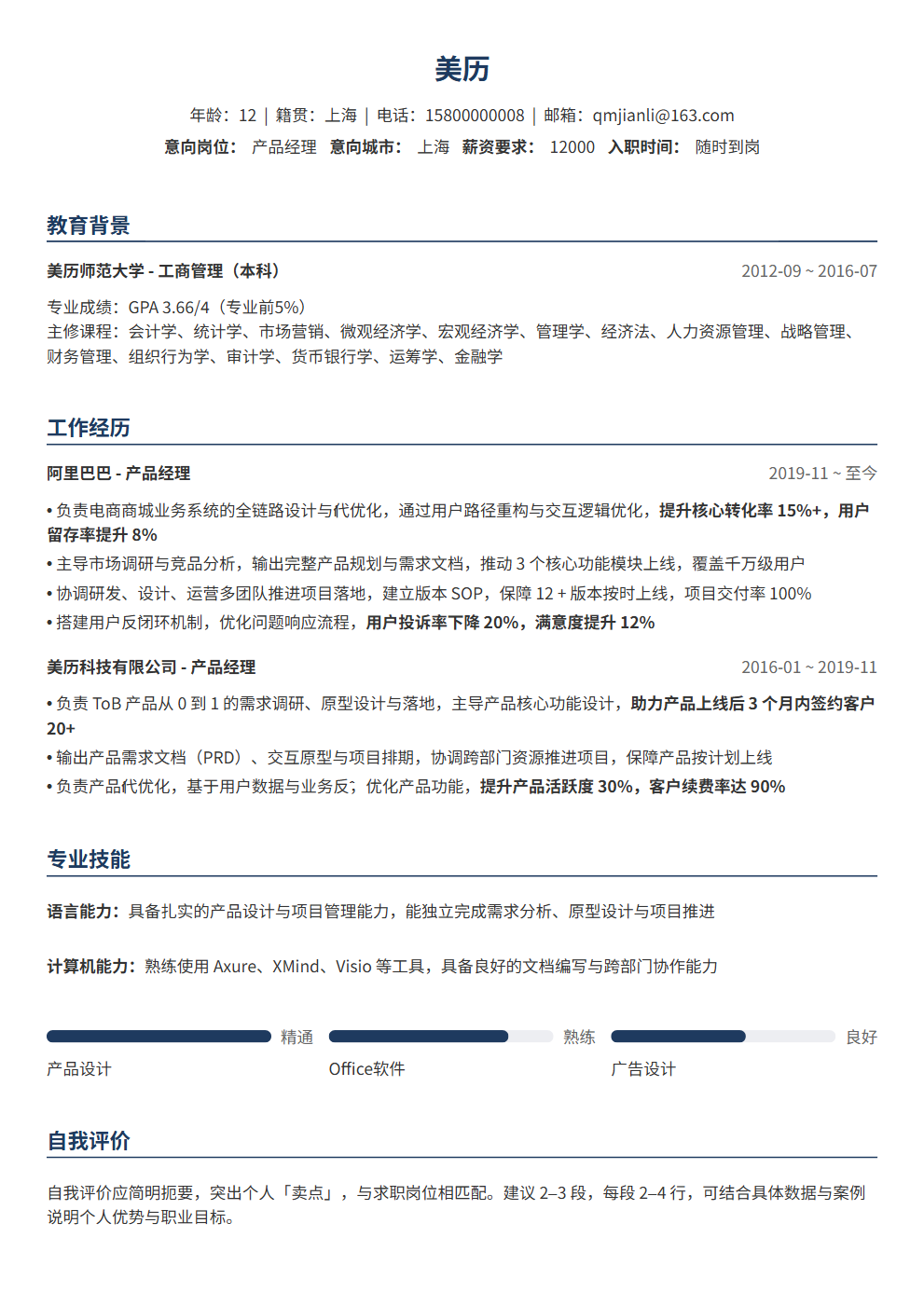
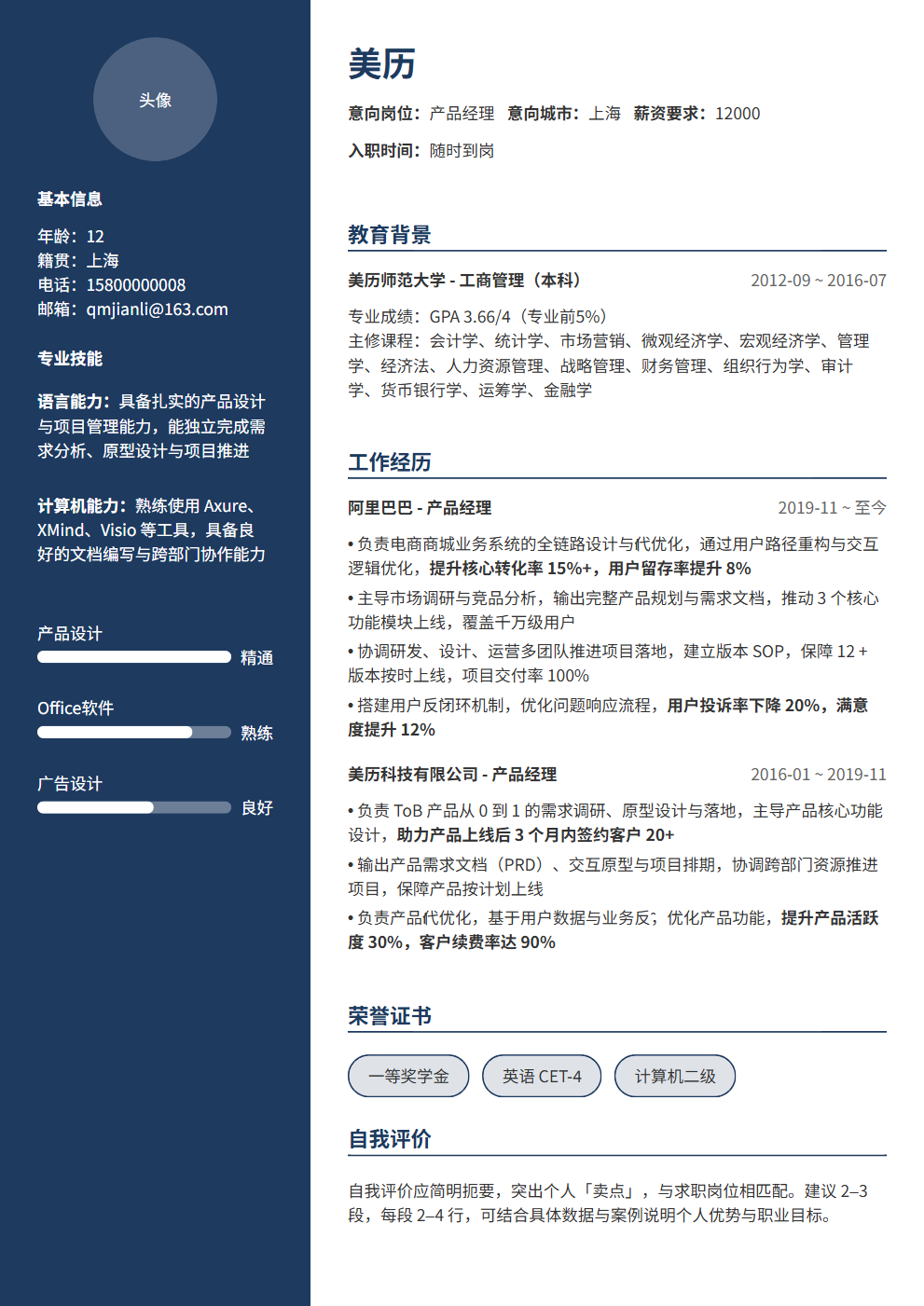
The first step in workplace writing is letting others see your professional capabilities. Use BeautyResume's resume editor to craft a well-structured, focused professional resume that makes your workplace skills crystal clear in writing — good writing starts with a good resume.