Workplace Knowledge Management: 3 Methods to Stop Your Accumulated Experience from Slipping Away
Doing a lot but not retaining experience? 3 knowledge management methods (build a personal knowledge base / regularly organize and output / use the Feynman Technique), 3 knowledge management tools, 3 principles, and 3 steps to transform knowledge into capability.
Do you ever feel like you've completed many projects, yet every new one starts from scratch? You step into the same traps twice? Things you learned fade away after a while? When sharing experiences, you can only say "it's roughly like this" and forget the details? Doing a lot without accumulating experience is the biggest waste for professionals. The experience, pitfalls, and methods you accumulate daily at work will slip through your fingers like sand if you don't actively manage them. Here are 3 knowledge management methods to stop your accumulated experience from slipping away.
Method 1: Build a Personal Knowledge Base — Give Your Experience a Home
The first reason your experience slips away is that there's "nowhere to store it." Today you learn an Excel trick, tomorrow you read an industry analysis, the day after you summarize a project experience — this knowledge scatters across chat logs, emails, and corners of your brain. When you need it, you can't find it; after a while, you forget it. Building a personal knowledge base gives your experience a "home" where every valuable piece of knowledge has a place.
- Knowledge base setup principles: One center, clear categorization, regular maintenance. "One center" means all knowledge ultimately converges in one place (don't take notes in a notebook today, save to phone memos tomorrow, write on sticky notes the day after — scattered knowledge equals no knowledge base). "Clear categorization" means building a category system based on your work scenarios (e.g., "Project Management," "Data Analysis," "Industry Knowledge," "Personal Growth" as major categories, with subcategories under each). "Regular maintenance" means spending 30 minutes weekly organizing new knowledge into appropriate categories
- Knowledge base content sources: Work notes (meeting minutes, project post-mortems, problem solutions), learning notes (reading notes, course notes, industry article summaries), inspiration records (sudden good ideas, insights about specific problems), templates and tools (self-summarized work templates, useful tools and usage methods). Don't only record "success experiences" — also record "failure lessons." Pitfalls you've encountered are the most valuable knowledge
- Knowledge base recording format: Each piece of knowledge should contain at least three elements — "What" (the knowledge itself), "Why" (why this knowledge is valuable), "How to use" (in what scenarios it can be applied). For example: "Excel's VLOOKUP function can look up data across tables (What), it's 10x more efficient than manual lookup (Why), use it when you need to match data from two tables (How to use)"
- Knowledge base common pitfalls: Pursuing a perfect categorization system (categories don't need to be perfect from the start — use them first, then adjust based on actual usage), collecting without organizing (saving 100 articles without reading them equals zero — collecting ≠ knowledge), recording too much detail (a knowledge base isn't a book — keep each entry to 3-5 lines; the key is quick retrieval and understanding)
The essence of building a personal knowledge base is "making tacit knowledge explicit" — the experience in your head is tacit knowledge that others can't see and you easily forget; writing it down makes it explicit knowledge that can be retrieved, reused, and iterated on anytime. A knowledge base isn't a diary — it's your "second brain."
Method 2: Regularly Organize and Output — From "Storing Knowledge" to "Using Knowledge"
Many people build knowledge bases but only "store" — never "use." The knowledge base becomes a digital warehouse where knowledge gathers dust. The second step in knowledge management is regular organization and output — reviewing, distilling, and outputting the content in your knowledge base, transforming knowledge from "stored" to "used." Feynman said: "If you can't explain something simply, you don't really understand it." Output is the best way to test whether you truly understand knowledge.
- Regular organization rhythm: 30 minutes weekly to organize new knowledge (categorize, supplement, delete outdated content), 2 hours monthly for deep organization of one topic (connecting scattered knowledge points into a system), half a day quarterly for a comprehensive review (examining the knowledge base's overall structure, adjusting categories, clearing redundancy). Organizing isn't "moving" — it's "decluttering." Keep what's truly valuable; delete what's outdated or no longer relevant
- Output formats: Write articles (organize knowledge on a topic into a complete article, published on blogs, Zhihu, or company intranet), give presentations (15-30 minute knowledge shares within the team, covering core points of a topic), create mind maps (connect knowledge in a domain using mind maps for a bird's-eye view), make templates (turn frequently used knowledge into templates for direct reuse). Choose the output format you're most comfortable with — the key is "output," not "format"
- Output value: First, test understanding (writing/speaking reveals whether you truly understand), second, deepen memory (the output process is repeated memorization), third, build influence (consistent output makes you a "mini-expert" in a domain), fourth, receive feedback (others will supplement and correct your output, helping you refine your knowledge system)
- Output common pitfalls: Waiting for perfection before outputting (finish first, then perfect — a rough first version is fine, you can iterate later), outputting without engaging (after outputting, pay attention to feedback — others' supplements and challenges are opportunities to improve your knowledge system), only outputting content you're certain about (uncertain content can also be output with a "to be verified" note — output is a thinking process, not a display of conclusions)
The essence of regular organization and output is "knowledge internalization" — stored knowledge is still "someone else's." Only after your organization and output, when it becomes something you can explain in your own words and apply in actual work, does it become "your" knowledge. Between "storing" and "using" lies "output."
Method 3: Use the Feynman Technique to Deepen Understanding — Teaching Is the Best Learning
The Feynman Technique, named after physicist Richard Feynman, has a core idea: if you can't explain a concept in simple language, you don't truly understand it. The steps are simple: choose a concept → explain it in simple language → find what you can't explain clearly → go back and study → explain again → repeat until you can explain it simply and clearly. The Feynman Technique is the most powerful "understanding accelerator" in knowledge management.
- Feynman Technique's 4 steps: Step 1, choose a concept you want to deeply understand (e.g., "What is the AARRR model for user growth"); Step 2, explain this concept in the simplest language, pretending you're explaining to someone who knows nothing about it ("The AARRR model divides user growth into 5 stages: Acquisition, Activation, Retention, Revenue, Referral, each with different optimization goals and methods"); Step 3, find what you can't explain clearly ("What's the difference between retention and activation? How do you specifically optimize the referral stage?"); Step 4, go back and study these unclear areas, then explain again until you can simply and clearly explain the entire concept
- Feynman Technique's power: It forces you from "thinking you understand" to "truly understanding." Many people feel they understand after learning something, but when they try to explain it to others, they find many points they can't articulate clearly — these "unclear points" are where your understanding is shallow. The Feynman Technique helps you precisely locate these weak spots and then study them specifically
- Feynman Technique's workplace applications: After learning a new skill, try explaining it to a colleague (if you can't explain it clearly, you haven't truly mastered it); when writing proposals, try explaining the core logic in the simplest language (if you can't write it clearly, the proposal logic has gaps); during project post-mortems, try summarizing experience into "beginner-friendly" documentation (if you can't summarize it, the experience hasn't truly been captured)
- Feynman Technique caveats: Don't use jargon to fool yourself (if you can only explain a concept using technical terms, you haven't truly understood it — true understanding means explaining in plain language), don't skip the "finding what you can't explain clearly" step (this step is the Feynman Technique's core value — finding your knowledge blind spots), don't only explain "what" without explaining "why" and "how to use" (complete understanding includes what, why, and how to use)
The essence of the Feynman Technique is "learning through teaching" — the process of teaching others is the process of your own deep learning. When you can explain a concept clearly in simple language, that concept truly belongs to you.
3 Knowledge Management Tools
To do good work, you need good tools. Here are 3 of the most common knowledge management tools, each with different features and use cases. Choose the one that suits you best.
- Tool 1: Notion — All-in-one knowledge management tool. Notion's advantage is "all in one" — notes, databases, kanban boards, calendars, wikis can all be done in one tool. Suitable for people who need multiple content formats and like high customization. Notion's database feature is especially powerful, allowing you to create relationships between knowledge. The downside is a steep learning curve — too many features can be overwhelming. Usage tip: Start with simple notes and gradually explore advanced features; don't pursue a complex system from day one
- Tool 2: Obsidian — Local-first bidirectional linking note tool. Obsidian's advantages are "local storage + bidirectional links" — all data is stored locally, so you don't worry about privacy or platform shutdowns; bidirectional links let you easily create relationships between knowledge, forming a knowledge network. Suitable for people who value data privacy, like writing in Markdown, and pursue knowledge connections. The downside is a mediocre mobile experience and plugin ecosystem that requires some technical门槛. Usage tip: Master the core bidirectional linking feature first, then add plugins as needed
- Tool 3: Feishu Docs / Yuque — Team collaboration knowledge management tools. Feishu Docs and Yuque's advantage is "team collaboration" — multi-person simultaneous editing, commenting, and sharing are all convenient, making them suitable for team knowledge management. If your team is already using Feishu or Yuque, using them for personal knowledge management is also convenient — work and personal knowledge can be managed on the same platform. The downside is that personal knowledge management flexibility is less than Notion and Obsidian. Usage tip: If your team is already using one, use it directly; if your team doesn't have a unified tool, prioritize Notion or Obsidian
3 Principles of Knowledge Management
Beyond methods and tools, you need to understand 3 underlying principles of knowledge management. These principles determine whether your knowledge management is "sustainable" or "a three-minute passion."
- Principle 1: Input must have output — Input without output is like a pool that only fills and never drains, eventually becoming stagnant water. For every new piece of knowledge you learn, do at least one output: write a note, give a share, draw a mind map. Output doesn't need to be perfect, but it must exist. Input without output equals no input
- Principle 2: Knowledge must be retrievable — A knowledge base's value isn't in "how much is stored" but in "whether you can find it when needed." Each piece of knowledge should have a clear title, tags, and category, ensuring you can find any piece within 3 minutes. If you can't find it, that knowledge effectively doesn't exist. Retrieval capability is the core capability of knowledge management
- Principle 3: Knowledge must be iterable — Knowledge isn't static; it updates as your experience grows. Each piece of knowledge should have a "last updated" date, and you should regularly review and update outdated content. A knowledge base that's never updated eventually becomes a "digital dump." Knowledge management is dynamic, not static
3 Steps to Transform Knowledge into Capability
The ultimate goal of knowledge management isn't "storing knowledge" but "building capability." Knowledge is raw material; capability is the finished product. Transforming knowledge into capability requires 3 steps.
- Step 1: From "knowing" to "understanding" — Knowing a piece of knowledge and understanding it are different things. "Knowing" means you can repeat it; "understanding" means you can explain it in your own words and apply it to different situations. The Feynman Technique is the bridge from "knowing" to "understanding" — if you can explain it simply, you understand it
- Step 2: From "understanding" to "applying" — Understanding knowledge but not using it equals not learning it. The best way to apply is to use it in actual work — learned a project management method? Try it on the next project; learned a data analysis technique? Try it on the next analysis. Application is the only test of understanding
- Step 3: From "applying" to "internalizing" — Using something once isn't internalization; repeated use, continuous optimization, and forming your own methodology is internalization. The sign of internalization: you no longer need to deliberately recall this knowledge — it has become part of your thinking and actions. For example, you learn a communication framework — at first you need to deliberately apply it, but after using it enough, it becomes your instinctive response. That's internalization
Conclusion: Knowledge Management Is the Compound Interest Investment for Professionals
Doing a lot without accumulating experience is the biggest waste for professionals. 3 knowledge management methods help you solve this: build a personal knowledge base to give experience a home, regularly organize and output to move from "storing knowledge" to "using knowledge," use the Feynman Technique to deepen understanding so knowledge truly belongs to you. 3 knowledge management tools (Notion, Obsidian, Feishu Docs/Yuque) each have their strengths — choose the one that suits you best. 3 knowledge management principles (input must have output, knowledge must be retrievable, knowledge must be iterable) ensure your knowledge management is sustainable. The 3 steps from knowledge to capability (knowing → understanding → applying → internalizing) make knowledge truly your competitive advantage. Knowledge management is the compound interest investment for professionals — every piece of knowledge stored today, every output made, every understanding deepened will generate returns at some point in the future. The earlier you start, the greater the compound effect.
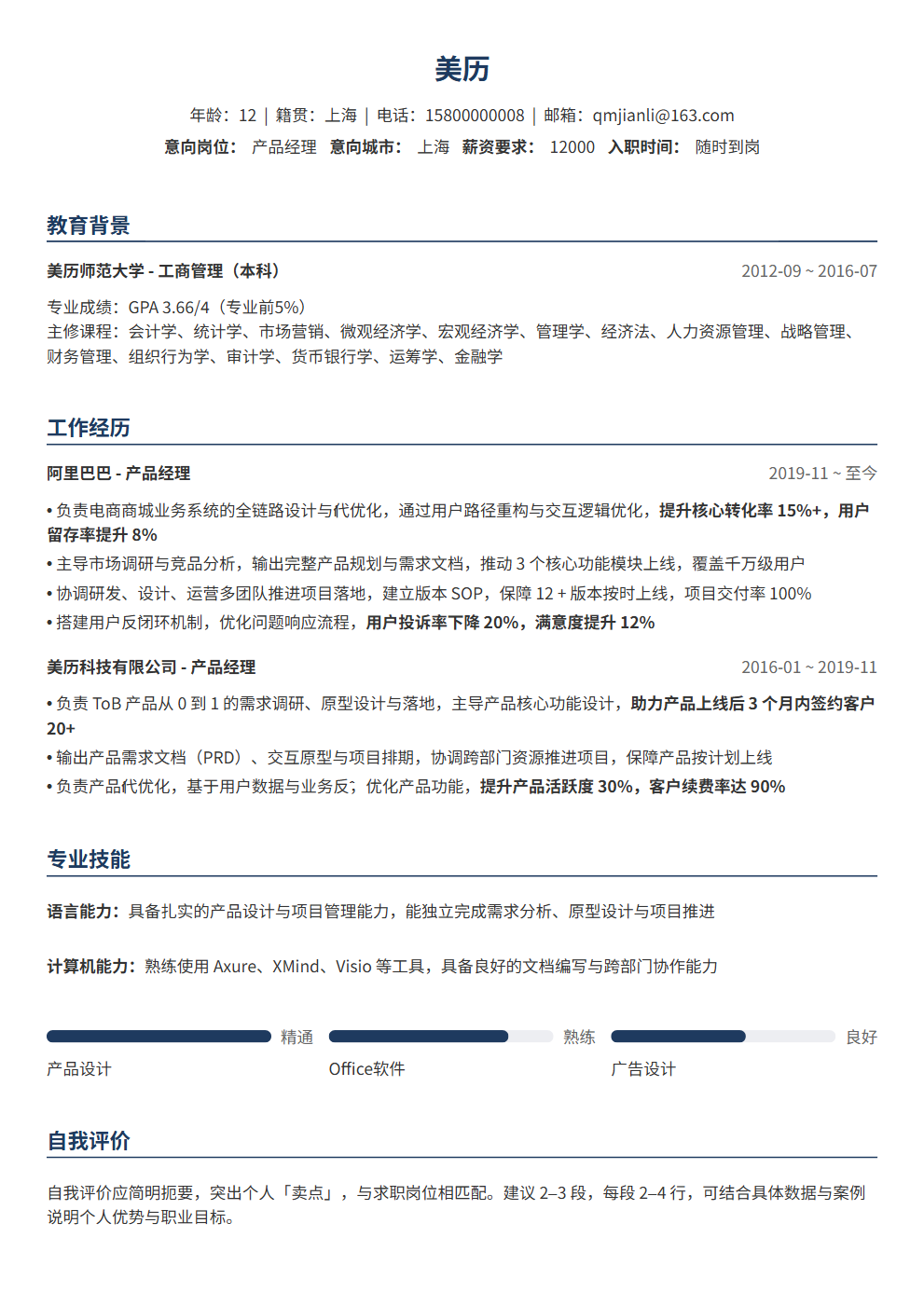
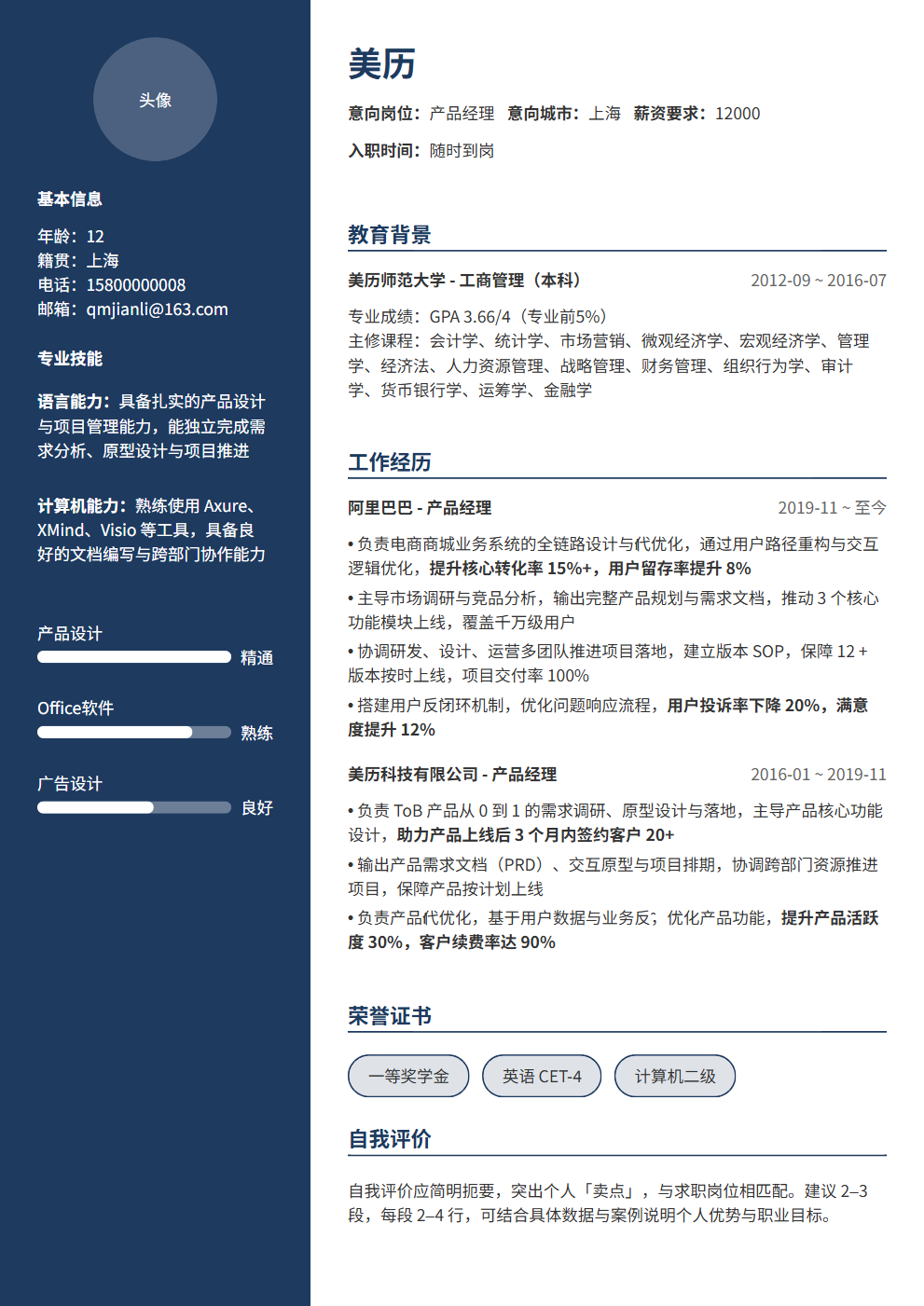
The first step in workplace knowledge management is showing others you're someone who accumulates. Use BeautyResume's resume editor to distill your knowledge achievements and professional accumulation into a professional resume — a person with depth starts being seen from their resume.