Workplace Email Writing Guide: 5 High-Frequency Templates to Never Struggle with Emails Again
Poor workplace emails affect more than communication efficiency — they impact your professional image. 5 most common high-frequency email templates, plus email etiquette and common mistake checklists, help you write professional and appropriate workplace emails.
1. Why Workplace Emails Matter So Much
Many people underestimate the weight of workplace emails. An email isn't just information transfer — it's your professional image card. Managers judge your logical thinking through emails, colleagues sense your collaborative attitude, and clients evaluate your professionalism. Well-written emails make everything easier; poorly written ones lead to inefficient communication at best, and offending people without realizing it at worst.
Core principles of workplace emails: Clear, concise, appropriate. Clear means the recipient understands your intent at a glance; concise means conveying complete information with minimal words; appropriate means following workplace etiquette — neither too submissive nor too aggressive.
2. Email Structure: Every Part Matters
A standard workplace email includes these elements:
- Subject line: Use "[Action] + Topic + Deadline" format, e.g., "[Approval Needed] Q3 Marketing Budget Proposal - By June 20"
- Salutation: Choose based on relationship closeness — "Dear Mr./Ms. X," "Dear Manager X," "Hi X"; when unsure, use "Hello"
- Body: State conclusion before background, state request before reasons
- Action items: Specify who needs to do what by when
- Sign-off: Standard signature block with name, title, and contact information
The most common mistake is writing vague subject lines. "Some thoughts on the project" tells the recipient nothing about what you need. A good subject line should convey the email's purpose and urgency without opening it.
3. Template 1: Request/Approval Emails
This is the most frequent email type in the workplace. The core is helping the approver quickly understand and make a decision:
- Open with the direct request: "Requesting approval for XX proposal/budget/business trip"
- Middle: Brief background and rationale, using bullet points for key information
- End: Specify deadline and consequences of non-approval
Key technique: Put what the approver cares about most first — how much money, how much time, what risks. Don't make them read three paragraphs before knowing what you're asking them to approve.
4. Template 2: Follow-up/Reminder Emails
Reminder emails test your workplace emotional intelligence — you need to push progress without offending anyone:
- First confirm they received the previous email ("I wanted to check if you received last week's email about XX")
- Explain the impact of delay ("Since XX depends on your feedback, downstream work is currently on hold")
- Provide a specific timeline ("If convenient, could you reply by this Wednesday?")
- Offer ways to reduce their workload ("If a complete response is difficult, replying with just the key points would work")
The core of follow-ups: Transform "why haven't you done this" into "how can I help you complete this faster". The tone should always be supportive, not accusatory — make the recipient feel you're advancing the task, not pressuring them.
5. Template 3: Apology/Explanation Emails
Mistakes happen at work. A well-written apology email can turn a crisis into an opportunity:
- Step 1: Directly admit the mistake without excuses ("The XX project experienced a delay; the responsibility is mine")
- Step 2: Explain the impact and remedial measures ("I've contacted relevant parties to adjust the schedule; expected completion by X date")
- Step 3: Propose prevention measures ("I've established an XX review mechanism to ensure this type of issue doesn't recur")
Apology email taboo: Never use "but" to shift blame. "Although there was a problem, but because of XX reason" — this makes the recipient feel you're making excuses, not apologizing. Apologize first, explain second, provide solutions last. The order matters.
6. Template 4: Report/Summary Emails
Report emails are an important channel for showcasing your work achievements. Well-written ones let leadership see your value:
- Opening: One-sentence summary of core results ("This week completed XX project launch, user growth of 30%")
- Middle: Structured expansion — completed items, in-progress items, items needing support
- End: Next week's plan and questions requiring leadership decisions
Golden rule for report emails: Leaders only care about results and risks. Describe processes briefly; emphasize achievement data and unresolved blockers. If you write 500 words and leadership remembers 3 data points, the email succeeded.
7. Template 5: Resignation/Handover Emails
Your resignation email is your last formal communication at the company. Write it well to leave a positive impression:
- Express gratitude for the company and team's support (be specific and genuine, not generic)
- State your last working day and handover arrangements (list handover contacts and document inventory)
- Leave contact information ("Feel free to reach out anytime; I'm happy to help answer related questions")
Bottom line for resignation emails: Never complain or criticize in a resignation email. Regardless of why you're leaving, only express gratitude and handover details. The professional world is small — leaving on good terms shows maturity.
8. 5 Common Workplace Email Mistakes
- Replying all without checking the recipient list — sending private information to the entire company
- Forgetting to attach files — writing "see attached" without actually attaching anything
- Cramming too many topics into one email — the recipient doesn't know which question to answer
- Tone too casual or too stiff — workplace emails aren't chat messages or legal documents
- Only sending emails for urgent matters without following up — for truly urgent issues, call after sending the email
Summary
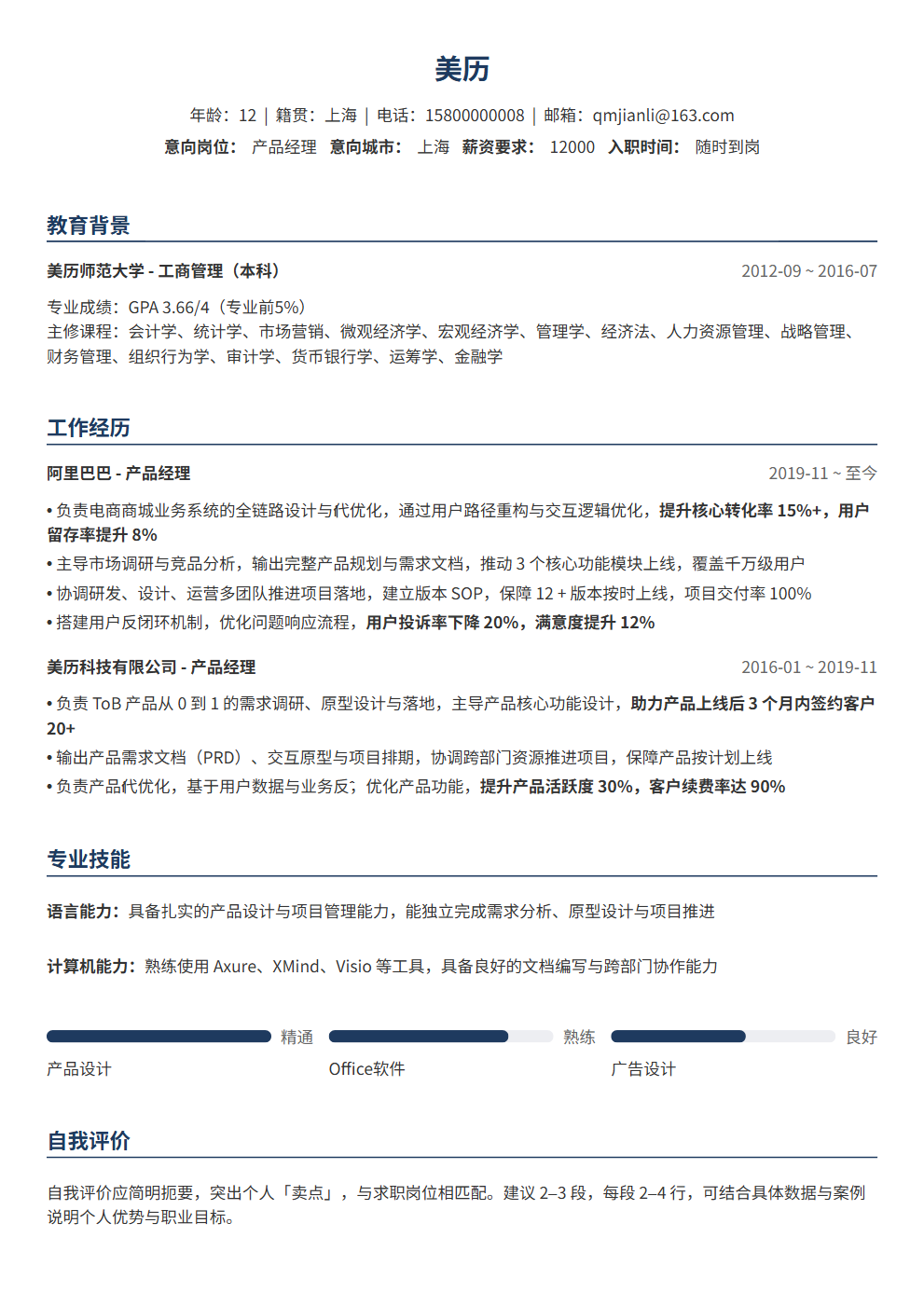
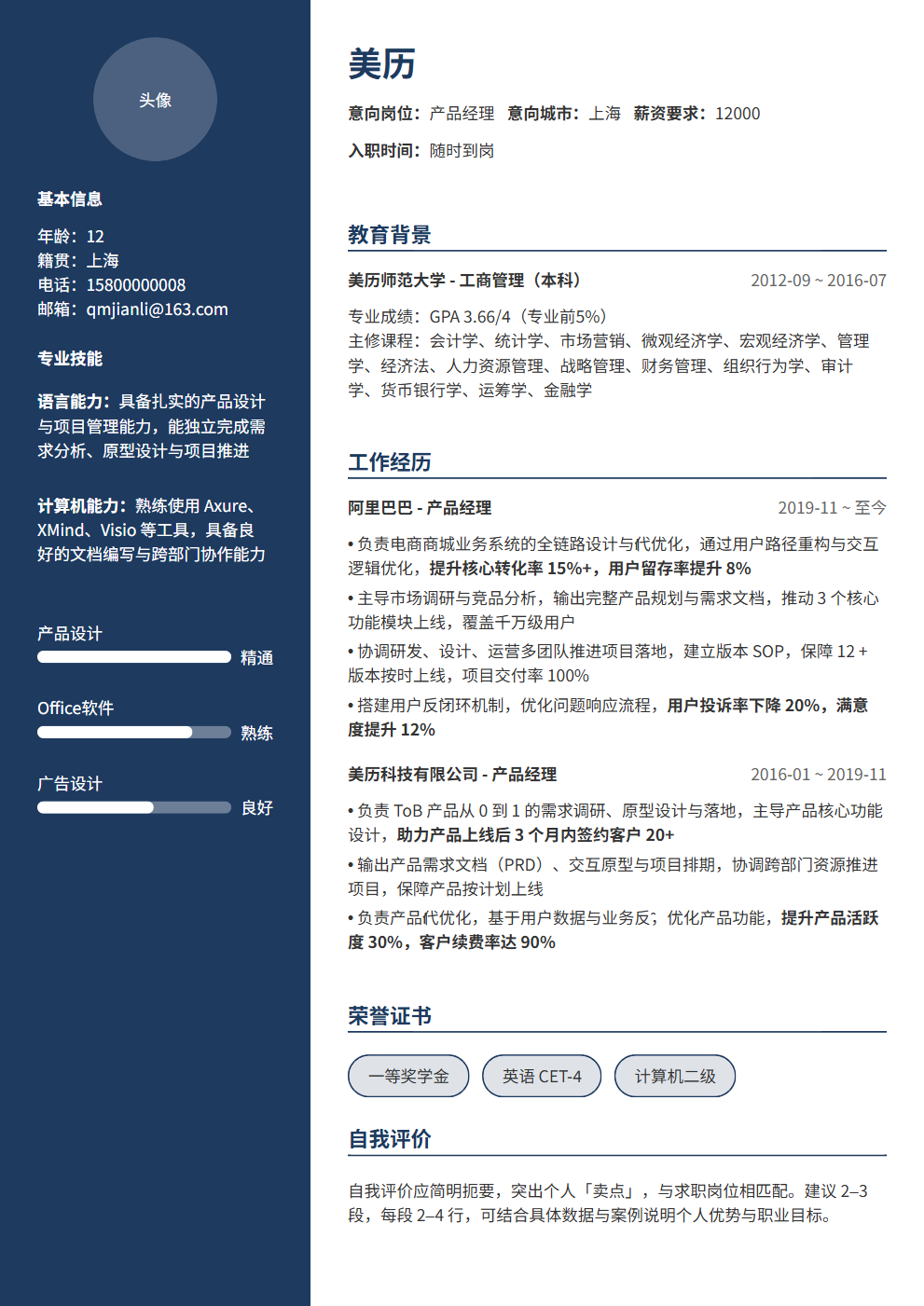
Workplace email writing is a structured skill that can be quickly improved through templates. 5 high-frequency email templates cover over 80% of workplace communication scenarios — master them and you'll never struggle with "how to write this email" again. The logic of writing good emails mirrors the logic of writing good resumes — clear objectives, structured presentation, data-driven arguments, and reader-oriented information organization. A good email and a good resume both maximize the value you convey within limited space.