How to Write Professional Work Emails: Templates for Updates, Approvals, Meetings, Feedback, and Confirmation
Do you also do this: spend 10 minutes just on the opening of an email — "Dear" or "Hi"? Then agonize over the closing — "Sincerely" or "Best regards"?
Writing Emails Matters More Than You Think
Do you also do this: spend 10 minutes just on the opening of an email — "Dear" or "Hi"? Then agonize over the closing — "Sincerely" or "Best regards"? After sending it, you re-read it repeatedly, feeling the wording isn't polished enough, the logic isn't clear enough, the key points aren't prominent enough. Writing emails seems simple, but it's actually the most underrated core skill in the workplace — a good email can make your manager see you in a new light, a bad email can make colleagues lose respect for you. This article gives you 5 high-frequency email templates, each with writing tips and examples, to help you say goodbye to the embarrassment of "can't write emails."
Template 1: Work Report Email — Let Your Manager See the Key Points at a Glance
Work report emails are the most frequent email type in the workplace and the one that best demonstrates your professionalism. Your manager receives dozens of emails daily — if your report doesn't let them see the key points within 30 seconds, it will likely be skimmed and closed. The core principles: lead with conclusions, support with data, structure clearly.
- Subject line: [Work Report] Project Name + Date + Key Conclusion. Example: [Work Report] Q2 User Growth Project - June 15 - Target Achievement Rate 112%. Don't just write "Work Report" — your manager won't know what you're reporting on, when, or the results
- One-sentence summary at the start: Summarize the core conclusion of the entire report in one sentence. Example: "The Q2 user growth project has been completed on schedule, with 123K new users, a 112% achievement rate, exceeding the target." Your manager knows the result from this one sentence and can read details if they have time
- Body structure: Project goal → Execution process → Core data → Key findings → Next steps. Each section separated by subheadings so your manager can quickly jump to what interests them
- Data visualization: Use tables instead of text, charts instead of tables. Managers dread reading long paragraphs of data description — one table or chart is more intuitive than 1,000 words of description
- Example subject: [Work Report] Website Redesign Project - June 15 - Launched, Conversion Rate Up 23%
- Example body: Hello leaders, the website redesign project went live on June 14. Here's the report. 1. Project goal: Increase website registration conversion rate from 3.2% to 4.0%. 2. Execution: Requirements research started in March, design and development completed in April, A/B testing in May, official launch in June. 3. Core data: New version conversion rate 3.94%, up 23% from old version; page dwell time increased 18%; bounce rate decreased 12%. 4. Key finding: Simplifying the registration flow was the biggest contributor to conversion improvement, contributing about 60% of the increase. 5. Next steps: Continue monitoring data for 2 weeks, optimize mobile experience. For detailed data report, see attachment.
The highest level of work report emails: your manager reads only the subject line and opening sentence and knows what you did, the results, and what's next. They can make decisions without reading the full email — that's efficient reporting.
Template 2: Approval Request Email — Give Your Manager Multiple Choice, Not Open-Ended Questions
The worst thing in approval request emails is just writing "Please approve" — your manager doesn't know what you're requesting, why, what the options are, or which you recommend. A good approval request email helps your manager make a decision rather than throwing the problem at them. Core principles: clear background, option comparison, clear recommendation.
- Subject line: [Approval Request] Item + Your Recommended Option. Example: [Approval Request] Server Expansion Plan - Recommend Option B. Let your manager know from the subject what you're requesting and what you recommend
- Background: Use 2-3 sentences to explain why approval is needed. Example: "Due to projected 50% user growth in Q3, current server capacity will reach its limit in August, requiring early expansion to ensure system stability."
- Option comparison: List 2-3 options with pros, cons, costs, timelines, and risks for each. A table is the clearest format — your manager can compare at a glance
- Recommended option: Clearly state which option you recommend and why. Don't make your manager guess — you're the person who knows the situation best, so your recommendation is most valuable
- Deadline: State when the approval decision is needed by. Example: "To ensure expansion is completed before August 1, please approve by June 20 at the latest."
- Example subject: [Approval Request] Q3 Server Expansion Plan - Recommend Option B
- Example body: Hello, due to projected 50% user growth in Q3, current server capacity will reach its limit in August, requiring early expansion. Two options: Option A: Vertical expansion, upgrade existing server specs. Pros: Fast implementation (1 week), low risk. Cons: Limited scalability, cost 80K/month. Option B: Horizontal expansion, add 3 servers. Pros: Strong scalability, can handle 2x growth, cost 60K/month. Cons: 2-week implementation, requires load balancer reconfiguration. Overall recommendation: Option B — stronger scalability, lower long-term cost, and the 2-week timeline is within our window. Please approve by June 20 at the latest to ensure completion before August 1. See attached comparison table for details.
The core of approval request emails: help your manager make a decision, not set an exam question. You provide background, options, comparison, and recommendation — your manager only needs to say "approved" or "go with Option A." That's efficient requesting.
Template 3: Meeting Invitation Email — Make People Want to Attend
The worst meeting invitation is "Meeting at 3pm tomorrow" — what meeting? Why? What do I need to prepare? How long? A good meeting invitation lets attendees know the purpose, agenda, and preparation needed in advance, so the meeting itself can be efficient.
- Subject line: [Meeting Invitation] Meeting Topic + Time. Example: [Meeting Invitation] Q3 Product Roadmap Discussion - June 18, 14:00-15:30. Recipients know at a glance what meeting and when
- Meeting purpose: Use 1-2 sentences to explain why the meeting is needed and what result you hope to achieve. Example: "Discuss and determine the priority ranking of the Q3 product roadmap, with the goal of producing a team-consensus Q3 iteration plan."
- Meeting agenda: List each discussion topic and estimated time. Example: 14:00-14:15 Q2 review and data recap; 14:15-14:45 Q3 requirement pool review and priority discussion; 14:45-15:15 Resource assessment and timeline confirmation; 15:15-15:30 Action items confirmation and assignment
- Attendee roles: Specify each attendee's role in the meeting. Example: "Zhang: Q2 data recap; Li: Requirement pool review; Wang: Resource assessment."
- Pre-meeting preparation: Clearly list what attendees need to prepare in advance. Example: "Please read the attached Q2 data report in advance and prepare your module's Q3 requirement list."
- Example subject: [Meeting Invitation] Q3 Product Roadmap Discussion - June 18, 14:00-15:30
- Example body: Hello everyone, I'd like to schedule a Q3 product roadmap discussion on June 18, 14:00-15:30 in Meeting Room 3. Purpose: Discuss and determine Q3 product roadmap priorities, producing a team-consensus Q3 iteration plan. Agenda: 14:00-14:15 Q2 review and data recap (Zhang); 14:15-14:45 Q3 requirement pool review and priority discussion (Li); 14:45-15:15 Resource assessment and timeline confirmation (Wang); 15:15-15:30 Action items confirmation and assignment. Preparation: Please read the attached Q2 data report and prepare your module's Q3 requirement list. Please let me know if there are time conflicts. Thank you.
The core of meeting invitation emails: let attendees know "why, what, and what I need to do" in advance — so the meeting can get straight to the point instead of spending 30 minutes "aligning."
Template 4: Problem Feedback Email — Raising Problems Isn't Complaining, It's Driving Solutions
The worst problem feedback emails only state the problem without proposing solutions — "The system crashed again" "The customer complained again" — and then what? What do you want the recipient to do? Good problem feedback emails describe the problem + impact + proposed solution, driving the problem toward resolution rather than simply complaining.
- Subject line: [Problem Feedback] Problem Summary + Urgency Level. Example: [Problem Feedback] Payment Module Response Timeout - High Priority. Recipients know at a glance what the problem is and how urgent
- Problem description: Use objective, specific language — not subjective, vague descriptions. Don't write "the system is slow," write "Between 14:00-16:00 on June 15, the payment module's average response time was 8.5 seconds, 183% above the normal 3-second threshold"
- Impact scope: Explain what the problem affects, who it affects, and how much. Example: "Affected approximately 2,000 users' payment experience, of which about 150 users did not retry after payment failure, estimated impact on transaction volume of approximately 30K yuan."
- Actions already taken: Describe what you've already done. Example: "Temporarily added server resources, response time reduced to 5 seconds, but still not at normal levels."
- Proposed solutions: Present your solution recommendations. Example: "Recommendations: 1. Short-term: Optimize payment interface timeout retry logic, estimated 1 day to complete; 2. Long-term: Upgrade payment module architecture, estimated 2 weeks to complete."
- Example subject: [Problem Feedback] Payment Module Response Timeout - High Priority
- Example body: Hello tech team, between 14:00-16:00 on June 15, the payment module experienced response timeout issues. Details: Problem: Average response time 8.5 seconds, 183% above the normal 3-second threshold. Impact: Approximately 2,000 users affected, about 150 users did not retry after payment failure, estimated 30K yuan impact on transactions. Actions taken: Temporarily added server resources, response time reduced to 5 seconds, but still not normal. Proposed solutions: Short-term — optimize payment interface timeout retry logic (1 day); Long-term — upgrade payment module architecture (2 weeks). Please evaluate and arrange handling as soon as possible. Thank you.
The core of problem feedback emails: you're not complaining about problems — you're driving solutions. Problem + impact + actions taken + proposed solutions — this email communicates "I'm actively working on solving this and need your support," not "there's a problem, you figure it out."
Template 5: Thank-You and Confirmation Email — The Bonus Points of Workplace Etiquette
Thank-you and confirmation emails are the most easily overlooked but most bonus-earning email type in the workplace. Someone helped you — say thank you; a meeting ended — send a summary confirming action items; a project completed — thank the team for their effort. These may seem like "small things," but they're key to building workplace goodwill. In the workplace, people remember those who reciprocate.
- Subject line: [Thank You / Confirmation] Item + Key Information. Example: [Thank You] Marketing Team's Support in Q2 Campaign or [Confirmation] June 18 Product Roadmap Meeting Minutes
- Thank-you email key points: Specifically state what you're thanking them for, why, and what value it brought. Don't just write "thanks" — write "Thank you for providing XX support in the XX project, which helped us achieve XX results in XX area." Specific thanks are 100x more sincere than generic thanks
- Confirmation email key points: Confirm meeting minutes, action items, responsible persons, and deadlines. Example: "Confirming June 18 meeting action items: 1. Zhang — complete Q3 requirement priority ranking — by June 22; 2. Li — output resource assessment report — by June 25."
- Timeliness: Send thank-you emails within 24 hours of the event, confirmation emails within 4 hours of the meeting ending. Delayed thanks and confirmations lose much of their impact
- Example subject: [Confirmation] June 18 Q3 Product Roadmap Meeting Minutes
- Example body: Hello everyone, below are the meeting minutes from the June 18 Q3 product roadmap discussion. Please confirm. Meeting conclusion: Q3 will prioritize user retention feature optimization, postponing new user acquisition feature development. Action items: 1. Zhang — complete Q3 requirement priority ranking — by June 22; 2. Li — output resource assessment report — by June 25; 3. Wang — develop technical plan — by June 28. If there are any omissions or corrections, please reply today. Thank you all for your active participation and discussion!
Thank-you and confirmation emails may seem like "small things," but they reflect workplace soft skills — they communicate "I value your contribution," "I follow through on things," and "I'm trustworthy." These small emails accumulate into your workplace reputation over time.
3 Universal Email Principles — Applicable to All Types of Workplace Emails
No matter what type of email you're writing, these 3 principles apply. Master them and your email professionalism will surpass 80% of workplace professionals.
- Principle 1: Subject line as summary. The subject should include: email type + key information + key conclusion/action. Example: "[Approval Request] Q3 Budget Plan - Recommend Option B - Please Approve by June 20." A good subject lets recipients know the core content without opening the email
- Principle 2: Lead with conclusions. The first sentence of the email body should be the core conclusion or core request — don't spend paragraphs setting context before getting to the point. Your manager's time is precious — they need to know "what you want me to do" first, then decide whether to read the details
- Principle 3: One email, one topic. Don't report work, request approval, and provide feedback all in one email — the recipient won't know which to handle first. One email, one task, so the recipient can respond quickly
The essence of these 3 principles: respect the recipient's time. A good email lets the recipient get the most critical information and make the most accurate decision with minimal time. The more efficient your emails, the more trusted you become in the workplace.
3 Email Taboos — Never Make These Mistakes
Some email mistakes, once made, are worse than not writing the email at all. These 3 taboos are the "red lines" of workplace emails.
- Taboo 1: Emotional emails. Emails written in anger or frustration are regretted 99% of the time. If you're emotional, write a draft but don't send it — look at it again 2 hours later and you'll find many phrases need revision. Workplace emails are work documents, not emotional outlets
- Taboo 2: BCC and forward abuse. BCC and Forward are the most easily misused features in the workplace. Don't BCC your manager's manager to "apply pressure," don't forward private emails to third parties — once discovered, the trust relationship is permanently damaged
- Taboo 3: CCing too many people. Every additional CC recipient reduces the email's "importance" by one degree. Only CC people who genuinely need to know — those who need to act go in To, those who need to be informed go in CC, those who don't need to know don't get CC'd. CCing the whole company isn't "transparency" — it's "noise"
The essence of these 3 taboos: emails are the most important written records in the workplace — they can be forwarded, screenshotted, and archived. Every email you send represents your professional image. Treating every email carefully means treating your professional reputation carefully.
Conclusion: Writing Good Emails Is the Lowest-Cost Way to Stand Out in the Workplace
Writing emails seems simple, but it's the most underrated core workplace skill. A good email makes your manager see you in a new light; a bad email makes colleagues lose respect for you. 5 high-frequency email templates — work reports let managers see key points at a glance, approval requests help managers make decisions, meeting invitations let attendees come prepared, problem feedback drives solutions, thank-you confirmations build goodwill. 3 universal principles — subject as summary, lead with conclusions, one email one topic. 3 taboos — no emotional emails, no BCC/forward abuse, no excessive CCing. Master these, and your email professionalism will surpass 80% of workplace professionals. Writing good emails is the lowest-cost way to stand out — it requires no talent, no resources, just method and practice.
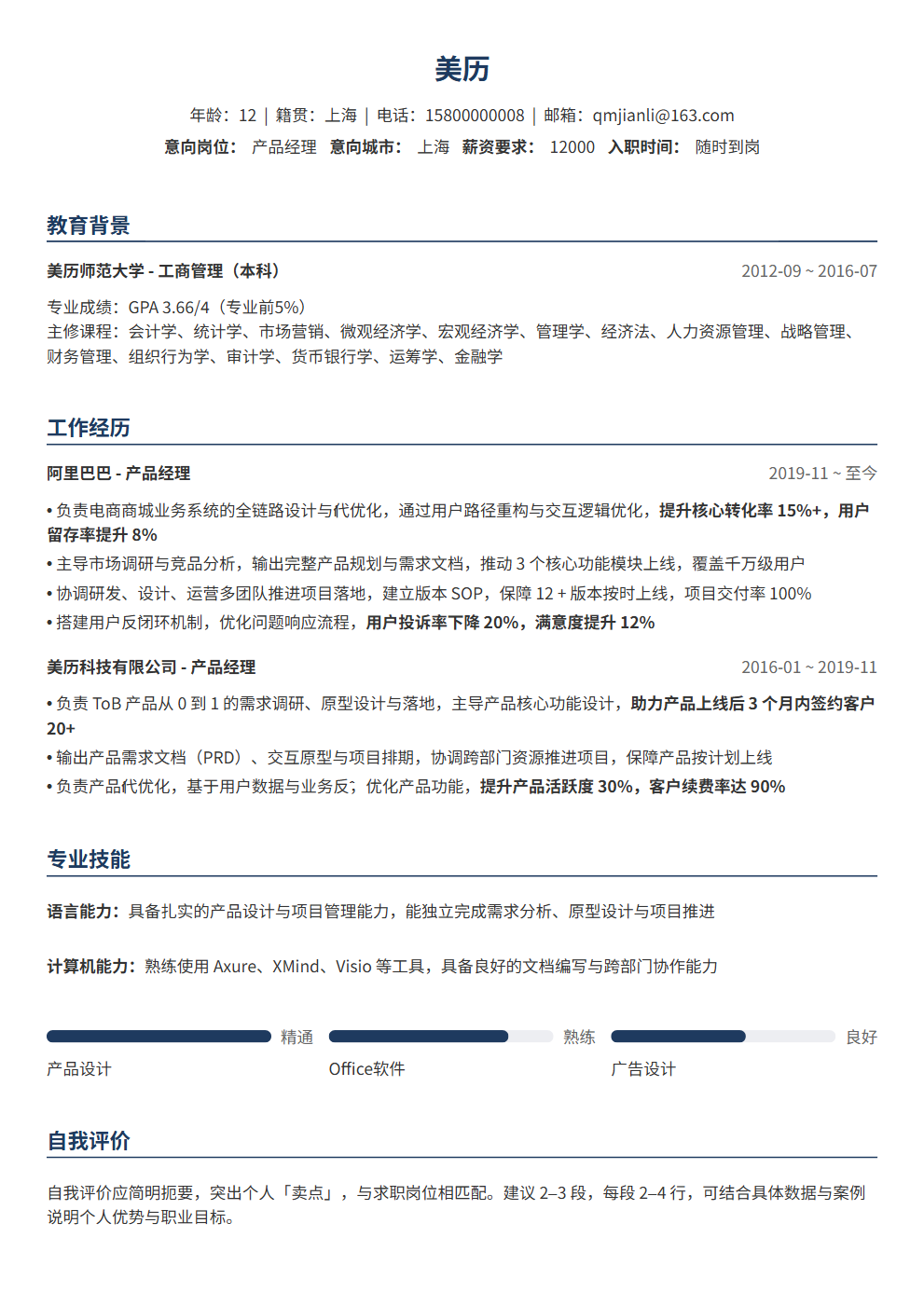
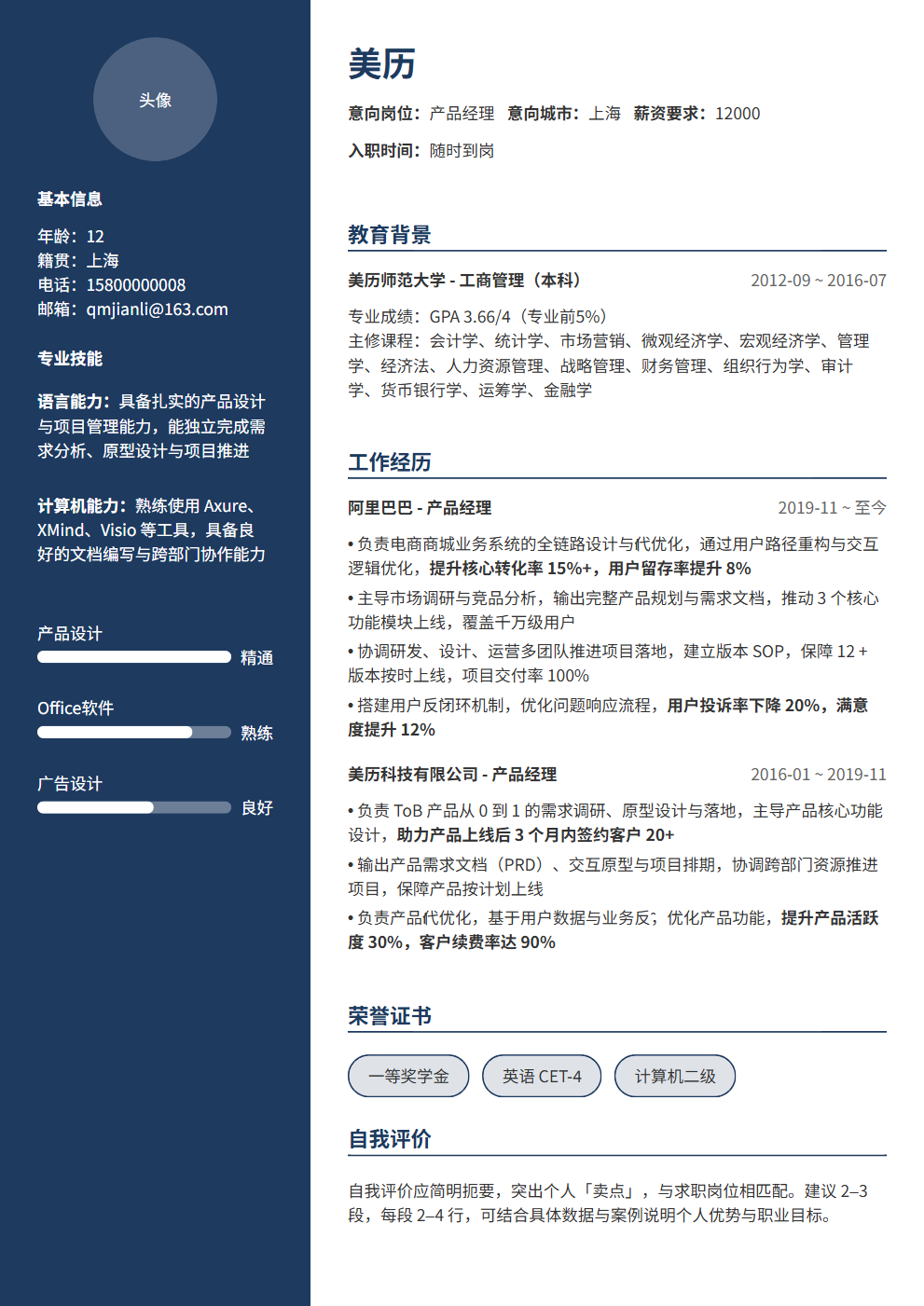
Want to elevate your professional image? Start with a professional resume. Use BeautyResume to create a professional resume that makes your skills and achievements clear at a glance — just like a good email: professional, clear, and focused on key points.