Will HR Find Out If You Use AI for Job Hunting? 3 Bottom Lines and 5 Correct Ways to Use AI
Worried HR will find out you used AI for job hunting? 3 bottom lines (don't fabricate experience, don't invent data, don't replace personal thinking) and 5 correct uses (optimize wording, match keywords, practice simulations, do research, check errors), plus 3 wrong uses and HR's real attitude toward AI in job hunting — helping you use AI without crossing the line.
You used AI to revise your resume, prepare interview answers, and write cover letters — and now you're worried: will HR find out? Will they reject you if they do? This anxiety is completely normal. In 2026, nearly every job seeker uses AI, but almost no one dares to admit it publicly. The truth is, using AI for job hunting itself isn't the problem — how you use it is. Just like using a calculator for math is fine, but using a calculator to pretend you're a mental math genius is not. Here are 3 bottom lines and 5 correct ways to use AI, helping you leverage AI without crossing ethical boundaries.
3 Bottom Lines: The Ethical Red Lines of AI-Assisted Job Hunting
There are 3 absolute red lines you must never cross when using AI for job hunting — crossing them isn't about "using AI for efficiency," it's about "lacking integrity."
- Bottom Line 1: Don't fabricate experience. AI can help you optimize wording, but it cannot help you invent experiences that don't exist. Every experience on your resume must be real — you actually worked at that company, you actually worked on that project, you actually achieved those results. If you ask AI to "invent a project management experience" or "add a big tech internship," that's fabrication — it has nothing to do with AI and everything to do with character
- Bottom Line 2: Don't invent data. AI can help you change "improved a lot" to "improved by 35%," but only if you actually have that 35% data point. If you don't have data to back it up and ask AI to "come up with a reasonable number," that's fabrication. During interviews, HR may ask "how was this 35% calculated? What was the baseline? What was the measurement period?" — if you can't answer, not only is this offer gone, but you might be blacklisted
- Bottom Line 3: Don't replace personal thinking. AI can help you analyze positions, optimize resumes, and simulate interviews, but it cannot replace your independent thinking about career development. If you need AI to answer "why do you want to join this company" or "what's your career plan," then even if you get the offer, you'll be exposed quickly after joining. AI can help you express yourself, but it can't think for you
- Why these are bottom lines: Because they concern not "efficiency" but "integrity." Using AI to improve efficiency is smart; using AI to fabricate is foolish. HR can accept you using AI to optimize wording, but they will never accept you using AI to invent experiences and data. The consequences of being caught are far worse than having a mediocre resume
5 Correct Uses: Legitimate Applications of AI in Job Hunting
Above the 3 bottom lines, there are many completely legitimate and even HR-recognized ways to use AI in job hunting.
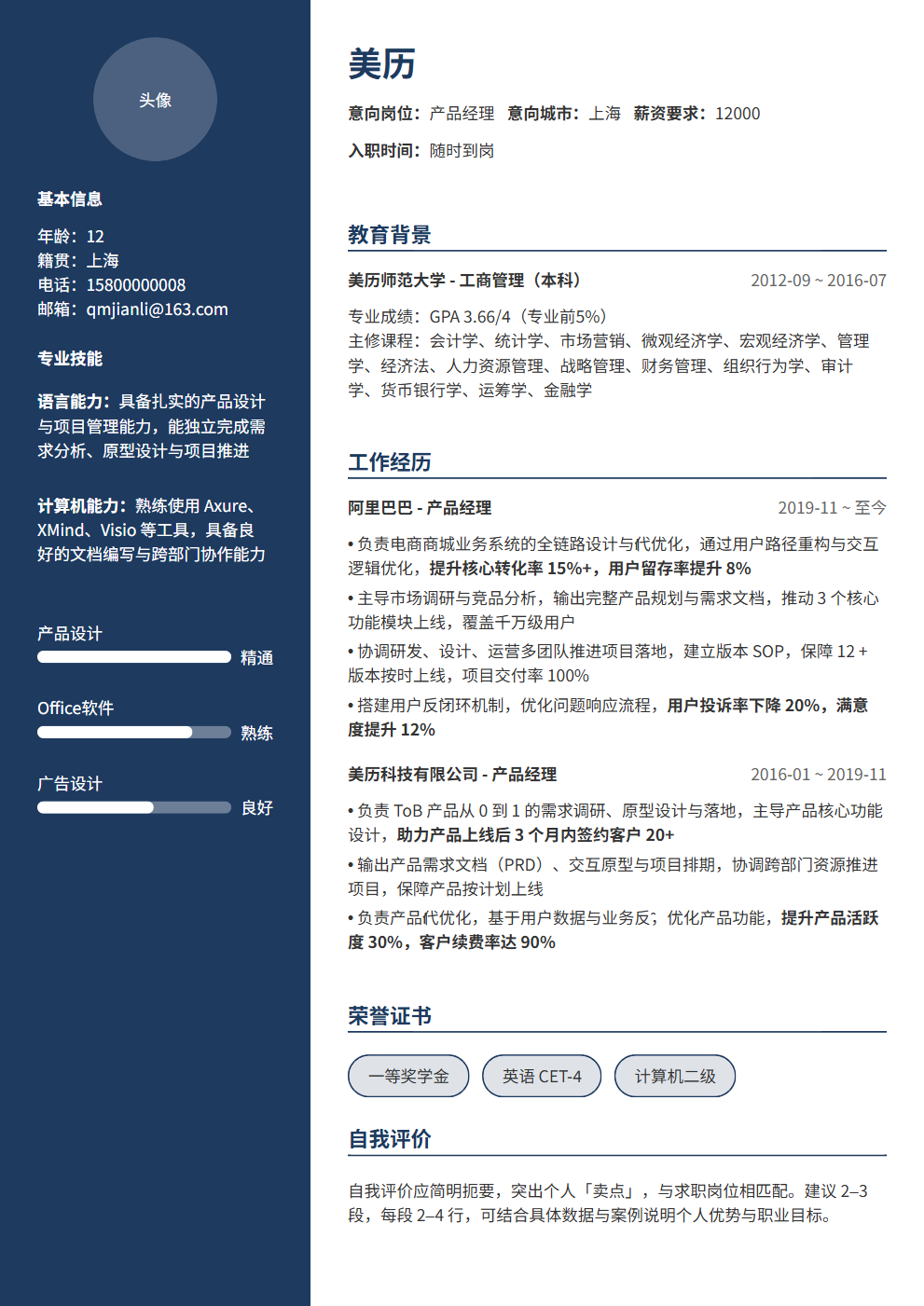
- Correct Use 1: Use AI to optimize wording. You wrote an experience description: "Did user growth, results were decent." AI helps you optimize it to: "Led user growth strategy development and execution, adding 20,000+ new registered users within 3 months, increasing DAU by 35%, and reducing customer acquisition cost by 20%." The prerequisite is that all this data is real — AI just helped you turn "decent results" into specific, professional expression. This is the same nature as asking a friend to review your resume, except AI is faster and more convenient
- Correct Use 2: Use AI to match keywords. Many companies use ATS (Applicant Tracking Systems) to automatically screen resumes. If your resume doesn't contain keywords from the job description, you might never reach HR's desk. AI can help you analyze JD keywords and suggest how to naturally incorporate them into your resume. This isn't "cheating" — it's "making your resume visible to the system," just like SEO optimization makes web pages discoverable by search engines
- Correct Use 3: Use AI for practice simulations. Using AI for mock interviews, salary negotiation practice, and group interview simulations — these are all completely legitimate. Just like athletes use video playback to analyze their performance, using AI for practice is an effective way to improve interview performance. No HR will penalize you for "practicing for interviews"
- Correct Use 4: Use AI for research. Using AI to research target companies, analyze industry trends, and understand salary benchmarks — these are all information gathering activities, no different in nature from searching the web yourself, except AI is faster and more comprehensive. HR won't penalize you for "doing company research" — they'll actually reward you for demonstrating company knowledge during the interview
- Correct Use 5: Use AI to check for errors. Typos, grammatical errors, and formatting inconsistencies in your resume — these basic mistakes severely damage HR's first impression. AI can help you quickly check for these errors, just like using Grammarly for English writing. This is the most basic and necessary use of AI
3 Wrong Uses: What HR Dislikes Most About AI in Job Hunting
While using AI for job hunting is fine in itself, these 3 approaches will make HR very unhappy — not because you used AI, but because you used it wrong.
- Wrong Use 1: Having AI write a complete resume and submitting it directly. AI-generated resumes typically have perfect wording but lack personal character, and HR can spot them immediately. Worse, if you're not familiar with the AI-generated content, you'll be exposed the moment they ask follow-up questions in the interview. The right approach: AI builds the framework, you fill in the content, and you review every sentence
- Wrong Use 2: Using AI to batch-generate identical cover letters. Some job seekers use AI to generate a cover letter template and then mass-submit — only changing the company and position names while everything else stays the same. HR can immediately tell this is a mass mailing, and it's worse than not writing a cover letter at all. The right approach: customize every cover letter for the specific company and position
- Wrong Use 3: Reciting AI-written answers during interviews. AI helping you prepare interview answers is fine, but if you recite them word for word during the interview, the interviewer will feel you're "reading a script." Real interview responses should have pauses, thinking, and personal emotion. The right approach: use AI to prepare answer frameworks, then express yourself naturally in your own words during the interview
HR's Real Attitude Toward AI in Job Hunting: Don't Not Use It, Just Don't Make It Obvious
You might be curious: what does HR really think about AI-assisted job hunting? I interviewed over a dozen HR professionals, and their real attitudes were surprisingly consistent.
- Attitude 1: Using AI to optimize resumes is fine, just don't overdo it. An HR manager at an internet company says: "I understand candidates using AI to optimize wording — I use AI myself when writing things. But if every sentence in the resume is AI's 'standard output,' I feel this candidate lacks independent thinking ability. I'm hiring a person, not an AI operator"
- Attitude 2: AI-generated content needs manual review. An HR professional at a foreign company says: "I'm not opposed to AI assistance, but I expect candidates to take responsibility for every word on their resume. If they can't answer questions about their resume content during the interview, that's worse than having a poorly written resume — because it shows not only inadequate ability but also untrustworthiness"
- Attitude 3: AI capability itself is a plus. An HR manager at a startup says: "If a candidate can demonstrate they're skilled at using AI to improve efficiency in their resume or interview, I actually give them bonus points. It shows learning ability and tool awareness. The key is — they need to demonstrate 'their ability to use AI,' not 'what AI did for them'"
- Attitude 4: The most offensive thing is fabrication, not using AI. An HR director at a major company says: "I use AI to write JDs, candidates use AI to write resumes — that's fair. But I can't accept using AI to fabricate experiences and data. AI optimizing wording is efficiency improvement; AI fabricating content is fraud — these are two completely different things"
- Summary: HR's attitude is "not opposed, not encouraging, but don't go overboard." Using AI to optimize wording, match keywords, and practice is fine, but having AI write your entire resume, mass-generating cover letters, and reciting AI answers in interviews is not. The core principle: AI is your tool, not your substitute
Conclusion: Using AI for Job Hunting Is Smart; Crossing the Line Is Foolish
Will HR find out if you use AI for job hunting? The answer is: if you only use AI to optimize wording, match keywords, practice, do research, and check errors — HR won't find out, and even if they do, they won't care. But if you use AI to fabricate experiences, invent data, or replace personal thinking — HR will not only find out but will blacklist you directly. The 3 bottom lines (don't fabricate experience, don't invent data, don't replace personal thinking) are red lines; the 5 correct uses (optimize wording, match keywords, practice simulations, do research, check errors) are green channels. Using AI for job hunting is smart; crossing the line is foolish — the difference lies in whether you take responsibility for every word on your resume. Use BeautyResume resume editor to help you write a professional yet authentic resume — AI boosts efficiency, you ensure authenticity, making every statement withstand scrutiny.