Why Do You Only Get a 5% Raise When Others Get 30%? 4 Underlying Logic Principles of Salary Negotiation
Why does the same job hop yield a 6x difference in raises? 4 underlying logic principles (scarcity premium, information asymmetry premium, track premium, negotiation ability premium), specific applications of each, 4 practical methods to increase your raise, and 3 bottom lines for negotiation — helping you understand the essence of salary increases and achieve 30%+ raises.
You and a colleague both job-hopped around the same time. They got a 30% raise; you only got 5%. Your abilities are similar, so why is there a 6x difference in raises? Many people think salary increases from job-hopping depend on luck, connections, or "being bold enough to ask for more." None of these are true. There are 4 underlying logic principles behind salary increases from job-hopping. Understand these principles, and you too can achieve 30%+ raises.
Logic 1: Scarcity Premium — The Harder You Are to Replace, the Higher Your Salary
There's a fundamental principle in economics: price is determined by supply and demand. In the workplace, this principle applies equally — your salary depends on your scarcity. The harder you are to replace, the more a company is willing to pay; the easier you are to replace, the less they're willing to offer.
- What scarcity means: Scarcity isn't "you're very capable" — it's "very few people can do what you do." An ordinary Java developer? Hundreds of thousands of people can do that — very low scarcity. An expert in a niche technology? Maybe only a few hundred people in the market can do that — extremely high scarcity
- Three dimensions of scarcity: Skill scarcity (mastering in-demand technologies like LLM fine-tuning, chip verification, quantitative strategy development), experience scarcity (having unique industry experience like overseas market expansion or building a business line from scratch), resource scarcity (possessing scarce client resources, networks, or channel resources)
- How to increase scarcity: Don't just do work "anyone can do" — proactively move toward things "few people can do." For example, in operations, if you can independently run a project from 0 to 1, your scarcity is far higher than someone who only executes existing plans
- How scarcity premium manifests: Scarce talent can commonly get 30%-50% raises when job-hopping, while ordinary talent typically gets 5%-15%. The same job hop, but scarcity determines your "ceiling"
- A real case: A senior algorithm engineer at a major tech company job-hopped and received a 60% raise because they specialized in a niche algorithm area (fewer than 200 people in the market could do it). A regular algorithm engineer at the same level only got a 15% raise. The difference wasn't ability — it was scarcity
Scarcity is the first logic of salary increases from job-hopping — the scarcer you are, the higher your premium. So rather than agonizing over "how to negotiate," first think about "how to make yourself more scarce."
Logic 2: Information Asymmetry Premium — The More You Know, the More You Get
Information asymmetry is the oldest profit-making logic in the business world — knowing more than others lets you earn more. In salary negotiation during job-hopping, information asymmetry plays an equally decisive role. The more salary information you have, the closer your expected salary will be to the true market level, and the higher the offer you'll receive.
- How information asymmetry manifests in negotiations: If you don't know the market rate for your position, you might lowball your expected salary, and the company happily accepts — you could have gotten 15,000 but quoted 12,000 yourself. Another candidate who knows the market rate directly quotes 16,000 and ultimately negotiates to 15,000. Same position, they earn 3,000 more
- Information you need to master: 1) Market salary ranges for similar positions in your city (minimum, median, maximum); 2) Target company's salary structure and benefits (base salary, performance bonuses, equity, housing fund rate); 3) What peers at the same industry and level earn (obtained through headhunters, industry communities, workplace forums); 4) Your own market scarcity (how many companies are hiring for your position)
- How to eliminate information asymmetry: Build relationships with 3-5 headhunters who know market conditions best; search salary data for similar positions on platforms like Boss Zhipin and Lagou; join industry communities and exchange salary information with peers; interview at multiple companies and compare offers
- Another dimension of information asymmetry premium: During interviews, companies also use information asymmetry to push prices down. When HR asks "what's your expected salary?" if you state a number first, you've revealed your hand. The smart approach is to counter-ask "what's the salary range for this position?" and let them go first
- A real case: A product manager job-hopping first learned the target company's salary range (25K-35K) through a headhunter. When asked about expected salary during the interview, they said "Based on my understanding, the market rate for this position is 25K-35K. Given my experience and capabilities, I expect 30K or above." They ultimately received a 32K offer. Without knowing the market rate, they might have quoted 20K themselves
Information asymmetry is the second logic of salary increases — the more you know, the more confidence you have in negotiations. Never negotiate with insufficient information — that's like going into battle blindfolded.
Logic 3: Track Premium — Choose the Right Industry and Double Your Salary
Being a product manager in traditional manufacturing pays 15,000 RMB monthly; at an internet giant, 30,000 RMB; at an AI startup, 40,000+ RMB with equity. Same capability, different track, and salaries can differ by 2-3x. This is the track premium — when you choose an industry in its growth phase, the market is willing to pay higher salaries; when you choose an industry in decline, salaries only go lower.
- The essence of track premium: Capital and talent always flow toward the fastest-growing areas. When an industry is in a high-growth phase, massive capital pours in, companies compete fiercely for talent, and salaries rise accordingly. Conversely, when an industry enters maturity or decline, companies cut spending, and salary growth stagnates or even declines
- Current high-premium tracks: AI/LLMs (algorithm engineers, prompt engineers, AI product managers), new energy (battery R&D, autonomous driving, energy storage), semiconductors (chip design, EDA tools, advanced packaging), overseas expansion (cross-border e-commerce, overseas market operations, localization), biopharmaceuticals (innovative drug R&D, gene therapy, medical devices)
- Current low-premium tracks: Traditional real estate, traditional education, low-end manufacturing, traditional retail. These industries are in a downward cycle with slow or declining salary growth
- How to leverage track premium: 1) Follow capital flows — which industries have the most funding and hiring are in their high-premium phase; 2) Assess your skills' transferability — can your skills transfer to high-premium tracks? For example, a data analyst in a traditional industry can transition to an AI company as a data engineer; 3) Don't wait until your industry is completely dead to jump — plan ahead and switch tracks before the industry inflection point
- Risks of track premium: High-premium tracks often have fiercer competition, greater work intensity, and lower company stability. An AI startup might close in six months, turning your high-salary offer into worthless paper. When choosing tracks, balance premium against risk
Track premium is the third logic of salary increases — choose the right track and get twice the result with half the effort; choose the wrong track and all your effort is wasted. Job-hopping isn't just changing companies — it's changing tracks.
Logic 4: Negotiation Ability Premium — Good Negotiators Can Earn 20% More
Same background, same capability, interviewing at the same company — one person gets a 30% raise, the other only 10%. The difference isn't ability; it's negotiation skill. Negotiation ability is a learnable skill. Master the right negotiation methods, and you can earn 20% or more.
- Data on negotiation ability premium: Research shows that skilled negotiators earn an average of 10%-20% more than those who don't negotiate. At a 15,000 RMB monthly salary, 20% is 3,000 RMB — 36,000 RMB per year, 360,000 RMB over 10 years. And that's just the base salary gap, not counting compound effects
- Core negotiation principles: 1) Never state a number first — let the other side go first so you have negotiation room; 2) Leave 20%-30% negotiation room when stating expected salary — if you want 15,000, quote 18,000-20,000; 3) Use "ranges" instead of "fixed numbers" — "I expect between 15K-18K" is more flexible than "I want 15K"; 4) Don't only negotiate base salary — performance bonuses, equity, housing fund rate, year-end bonus, and signing bonus are all negotiable
- Common negotiation mistakes: 1) Being afraid to ask high — fearing rejection and lowballing yourself; 2) Revealing your hand — "I currently earn 12K and hope for a 30% raise" — the company will only give you 15.6K, nothing more; 3) Only looking at monthly salary, not total compensation — high monthly salary with 5% housing fund vs. lower monthly salary with 12% housing fund can result in very different total packages; 4) Rushing to accept the first offer — the first offer is usually the company's "trial price" with room for negotiation
- Advanced negotiation techniques: 1) Create a sense of competition — let the company know you're exploring other opportunities, but don't directly say "I have other offers" (unless you actually do); 2) Use "value anchoring" instead of "price anchoring" — don't say "I want XX salary" but "based on the value I can create for your company, I believe XX salary is reasonable"; 3) Negotiate in stages — discuss base salary first, then performance and equity, finally benefits. Don't lay out all conditions at once
Negotiation ability is the fourth logic of salary increases — with the same cards, a skilled player wins more. Negotiation isn't confrontation — it's a transaction where both sides are satisfied.
4 Practical Methods to Increase Your Raise — Turn Logic into Action
Understanding the 4 underlying logic principles is one thing; turning them into action is another. Here are 4 practical methods to convert logic into real salary increases.
- Method 1: Build a scarcity label. Review your skills and experience to find that "only you can do it, others can't" point. Turn it into your personal label and emphasize it repeatedly in your resume and interviews. For example, "3 years of LLM implementation experience, independently delivered 5 AI projects from 0 to 1" — this label is far more scarce than "3 years of AI product manager experience"
- Method 2: Do thorough information research before interviews. Spend 2-3 days before interviews collecting salary data: search salary ranges for similar positions on recruitment platforms, chat with headhunters about market conditions, read interview experiences and salary sharing on workplace forums. Negotiate with sufficient information so you don't lowball yourself
- Method 3: Choose high-premium tracks. Prioritize companies in high-premium tracks when job-hopping — AI, new energy, semiconductors, overseas expansion. The same capability can earn 30%-50% more in high-premium tracks. If you can't switch tracks immediately, stay informed about high-premium track developments and prepare in advance
- Method 4: Practice negotiation scripts. Find friends to simulate interview and negotiation scenarios, practicing techniques like "not stating numbers first," "using ranges instead of fixed numbers," and "value anchoring." After 3-5 practice sessions, your performance in real interviews will improve significantly
The core of the 4 practical methods: make yourself more scarce, make information more sufficient, make your track higher-premium, and make your negotiation more professional. Each step paves the way for your 30%+ raise.
3 Bottom Lines for Negotiation — Some Things Cannot Be Compromised
Pursuing high raises is fine, but some lines cannot be crossed. These 3 bottom lines must be firmly maintained during salary negotiations.
- Bottom line 1: Never accept below market rate. No matter how you negotiate, your final salary should not be below the market rate for similar positions in your city. If a company offers below market rate, it means they either don't understand the market or are deliberately lowballing — neither is a good sign
- Bottom line 2: Never accept below your opportunity cost. Job-hopping has costs — forfeited year-end bonuses, accumulated relationships, familiar work environments. If the salary increase from job-hopping doesn't cover these costs, the move isn't worthwhile. Generally, a raise of at least 15% is needed to justify job-hopping
- Bottom line 3: Never accept "pie-in-the-sky" salary promises. "Low base salary but lots of equity" or "let's start lower and adjust in six months" — take these with a grain of salt. Only what's written in the contract is real; verbal promises are worthless. If a company won't specify salary in the contract, don't accept
These 3 bottom lines are your "red lines" in salary negotiation. The raise amount is negotiable, but bottom lines are not. Hold your ground, and you'll truly benefit from job-hopping.
Conclusion: Salary Increases from Job-Hopping Aren't Luck — They're Logic
4 underlying logic principles — scarcity premium (the harder you are to replace, the higher your salary), information asymmetry premium (the more you know, the more you get), track premium (choose the right industry and double your salary), negotiation ability premium (skilled negotiators can earn 20% more) — each one affects your job-hopping raise. 4 practical methods (build a scarcity label, do thorough information research, choose high-premium tracks, practice negotiation scripts) help you turn logic into action. 3 negotiation bottom lines (never below market rate, never below opportunity cost, never accept empty promises) help you hold your red lines. Salary increases from job-hopping aren't luck — they're logic. Understand the logic, and a 30%+ raise is within reach.
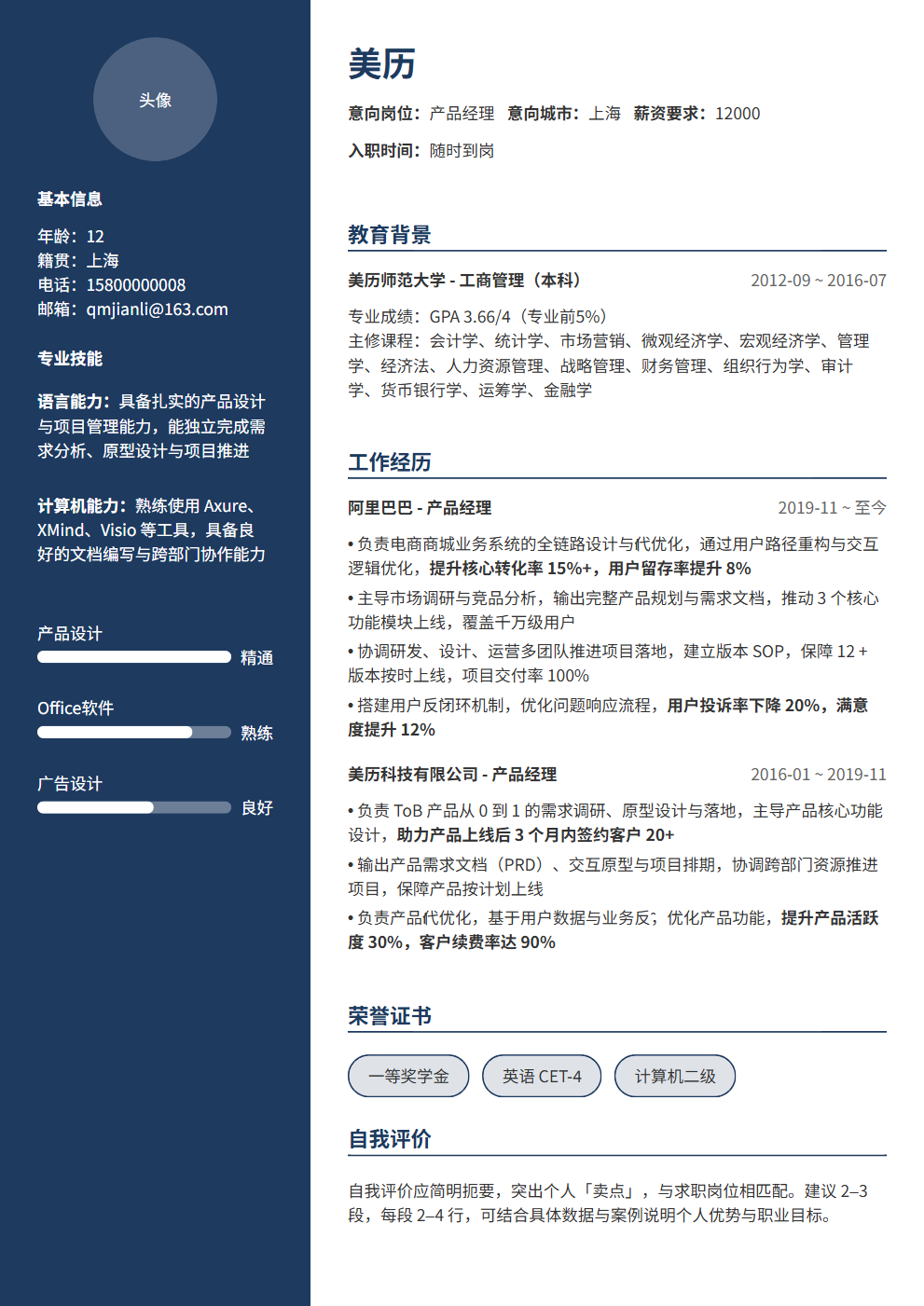
Want to land a high-salary offer when job-hopping? The first step is making companies see your scarce value. Use BeautyResume's resume editor to craft a professional resume that highlights your scarce skills and unique experience — letting HR see your "irreplaceable" value at first glance.