What's the Difference Between First and Second Interviews? 4 Dimensions to Ace Your Final Round
Second and final round interviews are fundamentally different from first rounds—focus shifts from ability to fit, interviewers from HR to business leaders, questions from standard to deep, decisions from screening to confirming. Plus 4 strategies to stand out in your final interview.
Many candidates perform well in first-round interviews only to stumble in the second round. The root cause? Using first-round strategies for a second-round game. The evaluation logic is fundamentally different—if you're preparing for a final interview the same way you prepared for the first one, you're playing the semifinals with the opening-match playbook. This article breaks down the essential differences across 4 dimensions to help you calibrate your approach precisely.
1. Dimension 1: Evaluation Focus—From "Can You Do It?" to "Are You a Fit?"
The core question in a first-round interview is "Can you handle this role?"—evaluating hard skills: professional expertise, work experience, and project outcomes. Interviewers use standardized questions to verify whether your resume is accurate and whether you possess the basic competencies for the role.
In the second round, the core question shifts to "Are you a fit for our team?"—evaluating soft skills and cultural alignment: Do your values match? Is your working style complementary? Can you integrate into the team culture? Is your long-term commitment strong? The interviewer already knows you can do the work—now they're assessing whether working with you feels right.
How to Adapt:
- Don't re-emphasize your hard skills in the second round—the first round already validated those. Focus on how you collaborate with teams, handle disagreements, and drive projects to completion
- Research the company's cultural values in advance and weave them naturally into your responses. If the company emphasizes "user-first," frame your examples around user-centric thinking
- Demonstrate long-term intent. Final-round interviewers' biggest fear is "this person has the skills but won't stay." Express genuine interest in the industry and the company
2. Dimension 2: Interviewer—From HR to Business Decision-Makers
First-round interviewers are typically HR professionals or mid-level managers from the hiring department. They follow a structured interview guide, focusing on your basic qualifications and role fit. Their role is more "screener"—determining whether you're worth advancing.
Second-round interviewers are often department heads, directors, or even VP-level executives. They don't follow a script—questions are more spontaneous but more penetrating. They care about big-picture thinking, strategic mindset, and your potential ceiling. Their role is "decision-maker"—determining whether you ultimately get the offer.
How to Adapt:
- When facing executives, elevate your responses. Don't just say "what I did"—explain "why I did it that way, what business value it created, and how it impacted the team"
- Be prepared for deep follow-ups. Executives love to drill into one point—ensure you can articulate details and reasoning behind every experience
- Ask high-quality questions when given the chance. "What's the team's strategic focus for the next six months?" is 100x better than "Does the company provide free snacks?"
3. Dimension 3: Question Types—From Standardized to Deep-Dive
First-round questions are relatively standardized: "Tell me about yourself," "What are your greatest strengths and weaknesses," "Why do you want to work here?" These have well-established answer frameworks—solid preparation usually suffices.
Second-round questions are more open-ended, deeper, and less predictable. Interviewers might ask:
- "If you had to build this business from scratch, how would you approach it?"—testing strategic thinking and planning ability
- "What was your biggest failure in a previous project? What did you learn?"—testing depth of reflection and growth mindset
- "How do you handle disagreements with your manager?"—testing communication style and professional maturity
- "What's your take on industry trends over the next 3 years?"—testing industry insight and depth of thought
How to Adapt:
- Use a "thesis-support-conclusion" structure for open-ended questions: state your core point first, expand with 2-3 supporting arguments, then close. Avoid rambling
- Prepare "three layers of depth" for each experience: Layer 1 is what you did, Layer 2 is how you did it, Layer 3 is why you did it that way. Executives care most about Layer 3
- For "what-if" hypothetical questions, don't rush to answer—clarify the premises and boundaries first, then walk through a logical reasoning process
4. Dimension 4: Decision Logic—From "Eliminate the Unqualified" to "Confirm the Best Fit"
First-round decision logic is "subtraction"—eliminating clearly unqualified candidates from a large pool and keeping those with potential. The bar is relatively low; as long as you meet basic requirements, communicate clearly, and show a positive attitude, you'll likely advance.
Second-round decision logic is "selection"—choosing the best fit among several qualified candidates. The standard is extremely rigorous because by the final round, everyone is capable. What matters is who's the best fit, who has the most potential, and who gives the interviewer the most confidence.
How to Adapt:
- Your final-round competitors are at a similar level, so differentiation is key. Find your unique value proposition—cross-domain experience, a rare skill, or a distinctive industry insight
- Project certainty. Final-round interviewers' biggest concern is uncertainty about a hire. Your communication should be firm, confident, and decisive. Think before you speak—a 3-second pause is better than talking while thinking
- Create a "memorable moment." Interviewers see multiple candidates in a day—make yourself stick. A compelling story, a unique perspective, or a sincere question can become your signature moment
5. Four Strategies to Stand Out in Your Final Interview
Now that you understand the differences, here are 4 concrete strategies for final-round success:
- Strategy 1: Debrief your first round, anticipate the second. Immediately after your first interview, write down the questions you were asked and your responses. Analyze what the interviewer focused on and what they probed. The second round will likely dig deeper on the same themes—prepare deeper answers in advance so you're not caught off guard
- Strategy 2: Prepare 3 high-quality stories. Stories are your most powerful weapon in final rounds, not data points. Prepare 3 real stories on different themes: one about solving a complex problem, one about driving team collaboration, and one about growing from failure. Use the STAR method for each, keeping them under 2 minutes
- Strategy 3: Proactively demonstrate business understanding. Final-round interviewers want to see that you "get" their business. Research the company's products, competitors, and industry dynamics beforehand, and reference this naturally in your responses. For example: "I noticed the company is expanding into the XX market, which is similar to a project I previously worked on"
- Strategy 4: Use questions to showcase depth of thinking. The reverse-interview portion of a final round is golden scoring time. Don't ask about salary and benefits (that's for HR discussions)—ask about business direction and team challenges. "What's the core problem this role needs to solve in the next six months?" or "What's the team's biggest challenge right now?" These questions show you're thinking seriously about the work
6. Common Final-Round Mistakes
- Overconfidence: Passing the first round doesn't mean you're home free. Final-round elimination rates can be higher than first-round ones because the competition is fiercer
- Repeating first-round content: Second-round interviewers may have reviewed your first-round feedback. Repeating the same examples and answers only signals inadequate preparation
- Afraid to express genuine opinions: Final-round interviewers appreciate independent thinkers. Always agreeing is actually a minus. Expressing a well-reasoned different perspective scores higher than nodding along
- Ignoring non-verbal signals: Final-round interviewers pay more attention to your overall presence—eye contact, body language, emotional regulation. Nervousness is understandable, but maintain composure and focus
Conclusion
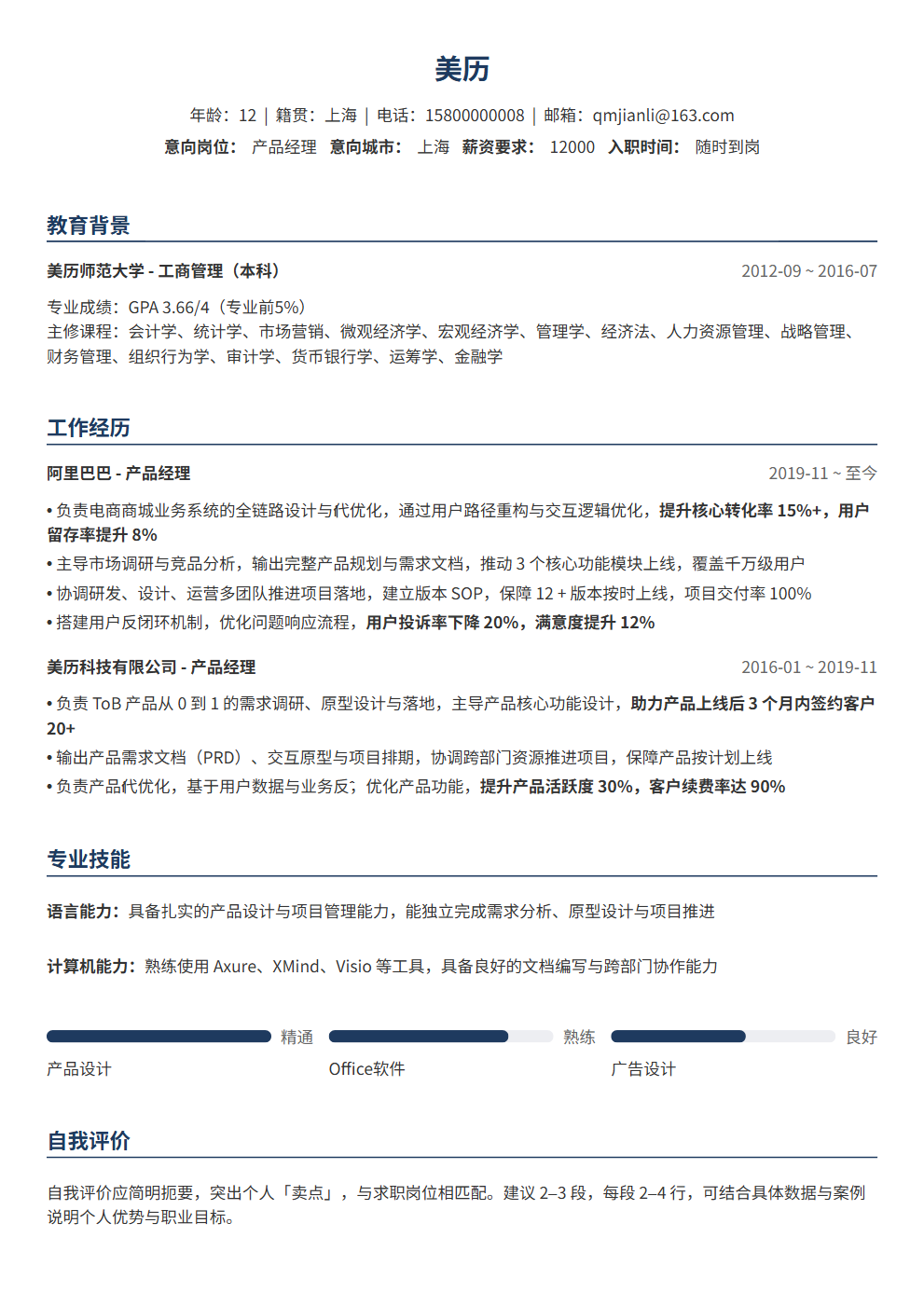
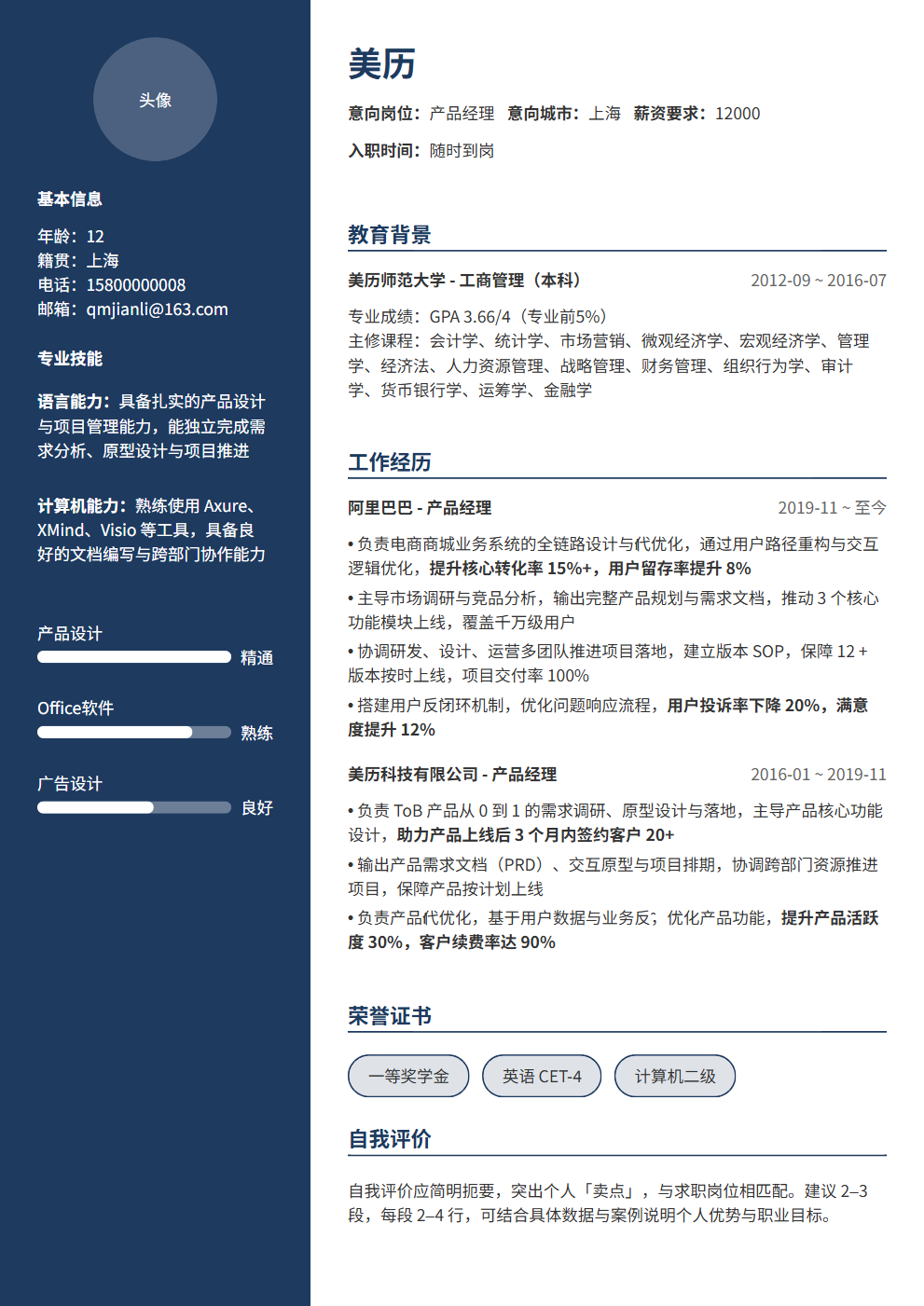
The second round isn't "doing it again"—it's an entirely different exam. First rounds test ability; second rounds test fit. First rounds screen; second rounds decide. Understanding this fundamental difference ensures you spend your limited preparation time on what actually matters. The core of a final interview is making the interviewer feel "you're the one"—which requires delivering clear signals across three dimensions: professional competence, team fit, and long-term commitment. And the starting point for all of this is a resume that gets you through the first round. Use BeautyResume's resume editor—professional templates and smart formatting help you create a resume that catches HR's eye. Pass the first round, then win the final battle.