What to Prepare Before Your First Job? 5 Categories of Documents + 3 Mental Preparations to Stay Calm
5 categories of essential documents for fresh grads before onboarding (ID, medical exam, bank card, degree verification, resignation certificate), 3 mental preparations (role transition, managing expectations, proactive integration), plus tips for your first day.
You got the offer and celebrated for three seconds, then suddenly realized — what do I need to bring on my first day? Where do I get a medical exam? How do I verify my degree? Does the company require a specific bank? Even more alarming, after starting you discover you're completely unprepared for the psychological shift from student to professional. Onboarding preparation goes far beyond "bringing your documents." Here are 5 categories of essential materials, 3 mental preparations, and first-day tips to help you start your new job without panicking.
1. Category 1: ID Documents — The Most Basic Pass for Onboarding
On your first day, ID documents are the most fundamental yet easily forgotten materials. Different companies have slightly different requirements, but the following items are requested by nearly every employer.
- National ID card (original and copies): Your ID card is essential for identity verification during onboarding. Typically, you'll need the original for HR to verify and copies to submit (front and back on the same A4 page). Prepare 5-8 copies since multiple departments may need them on day one. Your ID must be valid — if it's about to expire, renew it in advance, or it may affect social insurance and housing fund registration
- Household register (hukou) copies: Some companies (especially SOEs and public institutions) require copies of your household register's main page and personal page. If you have a collective hukou (at school or a talent center), you'll need a residency certificate from the relevant authority. Hukou information affects where social insurance is paid and housing fund accounts are opened, so confirm with the company in advance
- ID photos: Onboarding typically requires 1-inch or 2-inch ID photos for badges, employee files, and social insurance cards. Prepare 8-10 photos — half with a white background and half with a blue background, as different uses may require different colors. Have them taken professionally; don't use selfies or edited casual photos, as formal companies have specific requirements
- Passport (if applicable): If the company has overseas business or expatriate assignments, they may require a passport copy. Even if not immediately needed, getting a passport in advance is wise for future use
2. Category 2: Medical Exam Report — The Health Threshold for Onboarding
The vast majority of companies require new employees to provide a medical exam report before onboarding. Failing the medical exam could result in your offer being rescinded, so don't take this lightly.
- Confirm medical exam requirements: Different companies have different requirements — some only need a routine checkup, others require specific items (liver function, chest X-ray, ECG), some designate specific hospitals, and others accept reports from any top-tier hospital. Before onboarding, confirm the exact requirements and deadline with HR. Don't just assume and go get examined on your own
- Medical exam tips: Fast from food and water after 10 PM the night before — you need at least 8 hours of fasting, or blood sugar and lipid levels may be abnormal, requiring a retest. Avoid strenuous exercise and alcohol for 3 days before the exam, or liver enzyme levels may be elevated. Women should avoid scheduling during their period, as urine tests may show abnormal results. If you have chronic conditions or are taking medication, inform the examining doctor in advance
- Who pays for the exam?: Medical exam fees are typically paid by the employee first and reimbursed after onboarding. However, some companies designate specific medical institutions and settle directly. Clarify the cost arrangement in advance to avoid spending hundreds on an exam that can't be reimbursed
- What if you don't pass?: If your results show abnormal items, don't panic — many abnormalities are temporary (elevated liver enzymes from staying up late, for example) and may return to normal upon retesting. If you have a genuine health issue that could affect onboarding, communicate with HR promptly to see if there's a grace period or room for negotiation. By law, except for special positions, employers cannot reject candidates solely for being carriers of infectious diseases
3. Category 3: Bank Card — The Essential Tool for Salary Disbursement
You must set up your salary card before onboarding, or your first month's salary may not be disbursed. Getting a bank card seems simple, but there are details that can trip you up.
- Confirm the designated bank: Many companies specify which bank to use for salary disbursement — for example, "salary must be paid to a Bank of China account" or "you must use an ICBC savings card." Ask about the designated bank before onboarding and open the appropriate card in advance. If you already have a card with that bank, confirm the card type — some companies require a Class I card (no transaction limits), as Class II cards may have limits that prevent full salary deposits
- Open the card early, not on onboarding day: Opening a card typically takes 1-3 business days (some banks issue cards on the spot), and activation takes another 1-2 business days. If you wait until your first day, your first month's salary may not go through. Open and activate your bank card at least one week before onboarding
- Double-check bank card information: Verify the account number you submit to HR multiple times — one wrong digit means your salary goes to someone else's account, and recovering it is extremely troublesome. Also confirm the branch information (down to the specific sub-branch), as some finance departments require the full branch name
- Check your card's status: Cards that haven't been used for a long time may be frozen or downgraded to dormant accounts — if you use such a card for salary, the deposit may fail. Confirm your card is active before onboarding; if there are issues, visit the bank to resolve them
4. Category 4: Degree Verification — Your Education Must Withstand Scrutiny
Degree verification is one of the core materials for fresh graduate onboarding. Many think a graduation certificate is enough, but the actual documents required go far beyond a single certificate.
- Graduation and degree certificates (original and copies): These are the most basic education materials. Originals are for HR verification; copies go into your employee file. If your degree certificate hasn't been issued yet (some universities issue them in late June), communicate with HR in advance to see if you can provide a CHSI verification report first and submit the certificate later
- CHSI (China Higher Education Student Information) verification report: An increasing number of companies require a CHSI verification report. Simply log in to CHSI and apply — the PDF version is typically generated the same day. Also request a paper version, as some companies require it for filing
- Academic transcripts: Some companies (especially foreign enterprises and consulting firms) require university transcripts stamped by the academic affairs office. Transcripts need to be requested from the university in advance, typically taking 1-3 business days. If you've already left campus, contact the academic affairs office for mail delivery or online application
- Overseas degree verification: If you have overseas study experience, you need a Foreign Degree Verification Certificate from the Chinese Service Center for Scholarly Exchange under the Ministry of Education. This process is lengthy (typically 1-2 months), so apply well in advance — don't wait until just before onboarding
5. Category 5: Resignation Certificate — Proof of a Clean Break from Your Previous Job
Fresh graduates typically don't have resignation certificates from previous employers, but if you've had an internship that converted to full-time, part-time work, or a previous formal employment relationship, your new company may require one.
- When is a resignation certificate needed?: If you previously had a formal employment relationship (signed a labor contract, paid social insurance), the new company will usually require a resignation certificate from your previous employer. This confirms that your previous employment relationship has been terminated, avoiding the legal risks of dual employment. If it was just a regular internship (no labor contract, no social insurance), a resignation certificate is generally not needed
- How to obtain a resignation certificate: When leaving, proactively request a resignation certificate from your previous company's HR department — this is your legal right, and the company cannot refuse. The certificate typically includes: name, ID number, start date, end date, reason for leaving, and company seal. If the previous company refuses, you can file a complaint with the labor inspection authority
- What if you don't have one?: If the previous company has been deregistered and can't issue a certificate, you can provide social insurance payment records as supplementary proof. If the company refuses to issue one, try negotiating first; if that fails, file a complaint with the labor inspection authority. If you truly have no resignation certificate, communicate honestly with the new company's HR to see if signing a "no labor dispute declaration" is an acceptable alternative
- Special case for first-time hires: It's completely normal for fresh graduates on their first formal job to not have a resignation certificate — the new company won't hold it against you. However, if you had an internship that converted to full-time and that company paid your social insurance, it's best to prepare the relevant documentation in advance
6. Mental Preparation 1: The Role Shift from Student to Professional
Document preparation is only part of onboarding readiness — the more important preparation is psychological. The biggest shock for many fresh graduates isn't the difficulty of the work but the role shift — from "a student being served" to "an employee delivering value."
- Mindset shift: from "learning" to "output": As a student, your primary task was learning — attending lectures, taking exams, earning credits, with the school providing resources and services. But in the workplace, the company pays you to deliver value, not to learn. Of course, new hires have a learning period, but learning is a means to faster output, not an end in itself. After onboarding, shift from "what do I need to learn" to "what can I contribute" as quickly as possible
- Communication style shift: from "peer-to-peer" to "professional": Student communication is equal and casual, but workplace communication requires consideration of hierarchy, efficiency, and outcomes. When reporting to your manager, state conclusions before processes — don't ramble without getting to the point. When collaborating with colleagues, clarify roles and deadlines — don't be vague. When facing problems, think of solutions before asking for guidance — don't just dump problems on your manager. These communication habit shifts are the first hurdle to overcome after onboarding
- Evaluation criteria shift: from "grades" to "results": In school, your performance was measured by grades — scoring 90 meant excellence. But in the workplace, the evaluation standard is results — what you accomplished, what you contributed, what impact you made. Effort without output equals zero in the workplace. After onboarding, adapt to the "results-oriented" evaluation system as quickly as possible, focusing your energy on output rather than the self-gratification of "I'm working hard"
7. Mental Preparation 2: Lower Your Expectations — Reality and Imagination Always Diverge
Many fresh graduates feel disappointed after onboarding — the work isn't as interesting as imagined, colleagues aren't as friendly, and the salary isn't as high. This disappointment isn't the company's fault — it's the result of inflated expectations. Lowering expectations isn't pessimism; it's facing reality more rationally.
- Work content: the first 3 months may be all grunt work: Many fresh graduates discover that the first few months consist of organizing documents, making spreadsheets, and running errands — nothing like the "core projects" described during interviews. This isn't the company "tricking you" — new hires need to familiarize themselves with the business and processes first. A 3-month "grunt work" period is normal; the key is to actively learn and proactively seek more valuable work while doing it
- Interpersonal relationships: colleagues aren't classmates: Student friendships are pure, but workplace relationships are more often based on mutual interest and cooperation. Don't expect every colleague to be as warm as a classmate — maintaining politeness, professionalism, and boundaries is the best strategy for workplace relationships. Don't overthink it either — most colleagues are simply work partners; basic respect and cooperation suffice
- Salary: take-home pay is always less than expected: The salary on your offer is the pre-tax amount. After deducting social insurance, housing fund, and income tax, your actual take-home may only be 70-80% of the pre-tax figure. If you're not mentally prepared for this, seeing your first payslip will be disappointing. Calculate before onboarding: pre-tax salary - social insurance (employee portion) - income tax = actual take-home. Knowing the numbers in advance prevents a big letdown
8. Mental Preparation 3: Proactively Integrate — No One Is Obligated to Guide You
The most common complaint from fresh graduates after onboarding is "no one is guiding me" or "no one tells me what to do." The truth is: no one is obligated to guide you — your growth is your own responsibility. Proactively integrating is the most important survival skill after onboarding.
- Ask proactively, don't wait: When you encounter something you don't understand after onboarding, ask — ask colleagues, ask your manager, ask HR. Don't wait for someone to teach you, because no one will come to you voluntarily. Pay attention to how you ask: try solving it yourself first before asking; explain what you've already tried when asking; ask one question at a time, not a barrage. Good questioning gets you help quickly; poor questioning makes colleagues think you "can't do anything and won't even look it up"
- Take initiative, don't hide: In the early days, proactively take on manageable tasks — help colleagues organize data, assist with project follow-up, participate in meeting notes. These seemingly insignificant tasks are your entry point to understanding the business and building trust. Don't think "that's not my job" — in the early days, doing more isn't a loss; it's accumulation
- Proactively integrate into the team: Have lunch with colleagues instead of hiding at your desk alone; attend company team-building events instead of always making excuses to skip; remember colleagues' names and basic responsibilities, and greet them when you see them. These small gestures may seem trivial, but they help you quickly integrate into the team and build professional networks
9. Tips for Your First Day
Your first day is the critical moment for making a first impression. These tips will help you navigate it smoothly.
- Arrive early, don't be late: Arrive 15-20 minutes early on your first day. Being late creates a terrible first impression — before you've even started working, HR and your manager already think you're unreliable. Plan your commute in advance with buffer time, and notify HR immediately if unexpected delays occur
- Dress appropriately: Ask about the company's dress code before onboarding — formal, business casual, or casual. If unsure, business casual is the safest choice. Don't dress too casually (flip-flops, shorts, tank tops) or too formally (a suit and tie at a tech company would be awkward)
- Bring all your documents: The night before, organize all materials in a document folder — ID card original and copies, graduation and degree certificate originals and copies, degree verification report, medical exam report, bank card copy, ID photos, resignation certificate (if applicable). Cross-check against the company's onboarding document list to ensure nothing is missing
- Bring office supplies: Notebook and pen — your first day involves recording a lot of information (company policies, system accounts, colleague names, work assignments), and not having a notebook is awkward. USB drive — you may need to copy work files. Fully charged phone — you may need to download company apps and join work groups
- Smile and be polite: You'll meet many people on your first day — HR, direct manager, department colleagues, IT, admin. Maintain a smile and be polite to everyone, and introduce yourself proactively: "Hi, I'm the new hire starting today — nice to meet you." First impressions matter, and a smile plus a greeting can earn you a lot of goodwill
10. Conclusion: Prepare Thoroughly, Start Your Career Without Panic
For fresh graduate onboarding preparation, the 5 categories of materials are your hardware — ID documents, medical exam report, bank card, degree verification, and resignation certificate — all indispensable and should be prepared in advance. The 3 mental preparations are your software — role shift (from learning to output), lower expectations (reality differs from imagination), and proactive integration (no one is obligated to guide you) — getting your mindset right enables quick adaptation. On your first day, arrive early, dress appropriately, bring all documents, and smile — you only get one chance at a first impression. Onboarding isn't the finish line; it's the starting line. With both materials and mindset prepared, you can begin your career calmly and steadily.
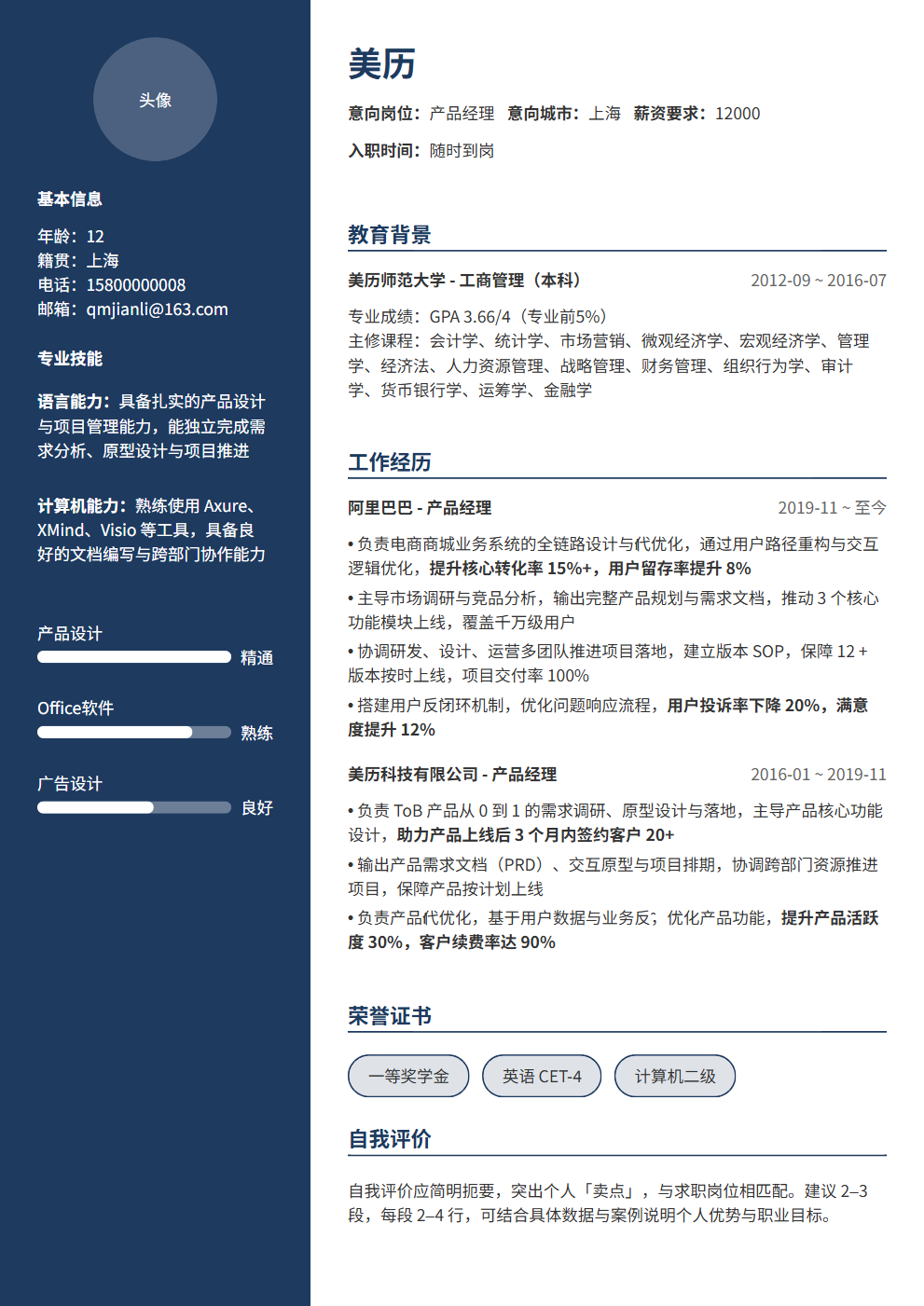
The first step in onboarding preparation is actually getting the offer — and the prerequisite for an offer is a professional resume. BeautyResume Editor provides professional templates and smart optimization to help you precisely present your educational background, internship experience, and project achievements, making HR certain at first glance that you're the right person. From resume optimization to onboarding preparation, BeautyResume supports you through every step of your job search — use BeautyResume to craft a great resume, land your dream offer, and start your new job with confidence!