What to Do When You're Blamed at Work? 4 Scenarios, 4 Strategies — Stop Being the Team Scapegoat
Always taking the blame? Strategies for 4 scenarios (clearly not your fault / partly your fault / unclear responsibility / boss shifting blame) + 3 habits to prevent being scapegoated + 3 things not to do — stop being the team's scapegoat.
When a project goes wrong, the boss's first reaction is to find you; when a colleague makes a mistake, you end up taking the blame; when work that clearly isn't yours goes sideways, they say you didn't follow up—if you experience these situations regularly, congratulations, you've become the team's "professional scapegoat." Taking the blame once or twice is bad luck; three or four times means it's your problem—not that you did something wrong, but that you haven't learned to protect yourself. Workplace blame isn't something you just endure—each instance erodes your professional credibility and your boss's trust. Here are strategies for 4 blame scenarios so you can stop being the scapegoat.
Scenario 1: Clearly Not Your Responsibility — Argue with Evidence
The most unjust blame is when "it's clearly not your responsibility, but the blame lands on you anyway." This typically happens in projects with long responsibility chains involving multiple departments—when things go wrong, nobody wants to claim it, and the blame falls on the most compliant person. Your first reaction shouldn't be "fine, I'll take it," but "present evidence and clarify the facts."
- Clarify immediately: Don't wait until things escalate—the later you clarify, the more passive you become. At the first sign of trouble, clearly state in the relevant group or email—"Regarding the XX issue, my part was A, which was delivered on time. Part B was handled by XX, and its current status is..." Speak with facts, not emotions
- Use written records: Verbal explanations are useless—"I remember it was said that..." is something anyone can say. You need written records: email confirmations, chat screenshots, meeting minutes, task assignment records. These are "hard evidence," far more persuasive than any verbal explanation. So develop the habit of confirming important matters via email—it can save you at critical moments
- Identify the actual responsible party: Don't just say "it wasn't me"—also say "who it was." Clearly identify the truly responsible party—"According to the project division, this module was handled by XX, with a delivery deadline of X date. The reason for the current delay is..." Note: identifying the responsible party isn't "blame-shifting" but "responsibility-attributing"—returning responsibility to the person who should bear it
- Maintain a professional attitude: When clarifying facts, avoid aggressive language—"It's all XX's fault," "XX didn't do it right at all"—this only makes you appear to be shirking responsibility. Use neutral, factual language—"According to the division of work, this module was handled by XX," "Delivery records show the module's deadline was X date"—let the facts speak for themselves
When it's clearly not your responsibility, your greatest weapon is "evidence"—emails, chat records, meeting minutes, task assignment sheets. Clarification without evidence equals no clarification. So develop the habit of keeping written records—you'll be able to "prove your innocence" when it matters.
Scenario 2: Partly Your Responsibility — Own Your Part, Draw Boundaries for the Rest
Sometimes the blame isn't entirely someone else's—you do bear some responsibility, but only a small portion, with most belonging to others. Many people make a mistake here: either take it all (appearing honest but easily exploited) or push it all away (appearing irresponsible). The right approach: own your part, draw clear boundaries for the rest.
- Admit your responsibility first: Proactively acknowledge your part of the problem—"In this project, I did underestimate the timeline. Work originally planned for 2 weeks took 3—that's something I need to improve." Proactive admission is far better than being called out—the former shows "accountability," the latter shows "being exposed"
- Then draw boundaries: After admitting your part, clearly state that other parts aren't your responsibility—"But another reason for the project delay was that requirements changed 3 times during development, each requiring 1-2 days of adjustment—this was outside my control." Admitting your problem doesn't mean you have to pay for all problems
- Propose improvement plans: After acknowledging the issue, immediately propose solutions—"For the timeline estimation issue, I'll build in a 20% buffer in future scheduling. For the requirement change issue, I suggest implementing a requirements freeze mechanism—no non-urgent changes after development starts." Admitting problems + proposing solutions = accountability; admitting problems + no solutions = capitulation
- Don't over-apologize: Admitting your share of responsibility is enough—no need for excessive apologies—"It's all my fault," "I'll definitely be more careful next time"—these only make people think you're guilty and encourage them to push more blame your way. Acknowledge appropriately, apologize appropriately, then focus on solving the problem
When you bear partial responsibility, the biggest mistake is "taking it all" or "pushing it all." Those who take everything are seen as "pushovers"—every future blame will land on them. Those who push everything are seen as "irresponsible"—no future opportunities will come their way. Own your part, draw boundaries for the rest—that's the mature approach.
Scenario 3: Unclear Responsibility — Proactively Clarify, Don't Accept by Default
The most common and tricky blame scenario is "unclear responsibility"—when something goes wrong, everyone says "that's not my responsibility," but nobody can clearly say whose it actually is. This typically happens in cross-department collaboration, unclear processes, or poorly defined project roles. When responsibility is unclear, "silence" equals "default acceptance"—if you don't speak up, the blame defaults to you.
- Don't stay silent: When responsibility is unclear, silence is the worst option. If you don't speak, others assume you've accepted it. State your position immediately—"The responsibility for this issue isn't clear. We need to clarify accountability before discussing solutions." Make "clarifying responsibility" a prerequisite for problem-solving
- Trace back the decision process: When responsibility is unclear, trace back the original decision-making—"How was this task assigned? Who confirmed it? Are there emails or meeting minutes?" If the original division of work was unclear, the responsibility shouldn't fall on one person but on the manager who failed to define roles clearly
- Propose a responsibility division plan: Don't just say "responsibility is unclear"—also propose "how to divide it." For example: "I suggest dividing responsibility by module: Module A by XX, Module B by XX, Module C by XX. Each module's delivery and acceptance criteria also need to be defined." Proactively proposing solutions is far better than passively waiting for assignments
- Request written confirmation: After clarifying responsibilities, request written confirmation—emails, meeting minutes, or project documents all work. Verbal confirmation doesn't count—"I remember it was said that..." will later become "you remembered wrong." Written confirmation is your last line of defense
Unclear responsibility is the high-risk zone for "taking the blame"—because nobody is clearly accountable, the blame most easily falls on the "most compliant" person. Your strategy for unclear responsibility should be "proactively clarify + get written confirmation"—don't let vague responsibility become your default responsibility.
Scenario 4: Boss Shifting Blame — Manage Upward, Don't Confront Head-On
The most frustrating blame scenario is "the boss shifting blame"—the boss made a poor decision or managed poorly, but ultimately pins it on a subordinate. This is the trickiest to handle because you can't confront them the way you would a colleague. But it's not impossible—the key is "managing upward" rather than "confronting upward."
- Don't contradict your boss publicly: When your boss shifts blame, the worst move is contradicting them publicly—"This isn't my problem, you made that decision!" This only makes your boss angmer and marks you as someone who "doesn't know the rules." If your boss blames you in a meeting, say "I need to verify the specific details—I'll report back to you after the meeting"—buying time for a private conversation
- Communicate with facts privately: Find your boss for a 1-on-1 conversation and explain the situation with facts—"Boss, regarding the XX project issue, I've put together a timeline: On X date, you directed us to proceed with Plan A; on X date, during Plan A's execution, we discovered XX issue, which I reported promptly, and your instruction was to continue..." Use timelines and facts, not emotions and accusations
- Give your boss a graceful exit: Bosses shift blame often because they don't want to admit their mistakes. You can help them "save face"—"The project's issues确实 had multiple causes. If we had made XX adjustments at the time, the outcome might have been different. I'll proactively flag such risks earlier in the future." This clarifies the facts without making the boss "lose face"
- Document key decisions: The root cause of bosses shifting blame is "verbal decisions with no paper trail." Going forward, when your boss gives verbal instructions, develop the habit of sending "confirmation emails"—"Boss, per our discussion, we'll proceed with the XX approach. Please confirm." One confirmation email turns a verbal decision into a written record—the boss can't shift blame later
- Extreme cases: If your boss frequently shifts blame and shows no sign of changing, you need to seriously consider whether to stay on this team. A leader who won't take responsibility isn't worth following. Update your resume and look for better opportunities—this isn't running away, it's cutting losses
Boss shifting blame is the scenario that most tests workplace wisdom—you can't confront head-on, and you can't take it all. Use facts, give your boss a graceful exit, and keep written records—this three-punch combination protects you without damaging the relationship. But if boss blame-shifting becomes routine, leaving is the best choice.
3 Habits to Prevent Being Scapegoated
- Document everything: Email confirmations, chat screenshots, meeting minutes, task assignment records—these written records are your best "body armor." Develop a habit: after every important communication, send a confirmation email—"Per our discussion, I'll handle XX with a delivery date of X. Please confirm." This email is your "liability waiver"
- Clarify division of work: When a project starts, spend 10 minutes writing out the division clearly—who handles what, what the delivery standards are, what the deadlines are. Send the division sheet to the project group for everyone to confirm. When problems arise, check the division sheet to see who's responsible. Projects without division sheets operate on "everyone's responsible = nobody's responsible," and the blame always falls on the most compliant person
- Flag risks early: When you spot project risks, flag them immediately—don't wait until things go wrong to say "I knew this would happen." Risk flags also need documentation—"I've noticed that Module XX may be delayed due to... I suggest taking XX measures." Once a risk flag email is sent, if the boss doesn't act, the responsibility isn't yours
3 Things You Must Not Do
- Don't take blame to "fit in": Some people think "taking the hit for a colleague shows I'm magnanimous." Wrong. The workplace isn't charity—you take the blame once, and they'll make you take it again and again. Plus, taking blame doesn't make you appear "magnanimous"—it makes you appear "easily exploited." Magnanimity is helping others solve problems, not taking on their responsibilities
- Don't complain behind people's backs: After taking blame, complaining behind someone's back—"It clearly wasn't my fault, but the boss insisted it was"—only makes things worse. If the person hears about it, you'll be seen as "talking behind people's backs"; if the boss hears, you'll be seen as "insubordinate." If you have grievances, express them directly, with facts, in writing—not behind people's backs
- Don't avoid doing things for fear of blame: Some people, afraid of being blamed, stop doing anything or making any decisions—"Do more, make more mistakes; do less, make fewer mistakes; do nothing, make no mistakes." This is the worst strategy. In the workplace, people who do nothing are more dangerous than those who make mistakes—the former have no value, while the latter at least create value. The right strategy is "do things + protect yourself," not "don't do things"
Conclusion: Being Blamed Isn't Fate — You Can Change It
Workplace blame isn't "bad luck"—it's that you haven't learned to protect yourself. 4 scenarios, 4 strategies—when it's clearly not your responsibility, argue with evidence; when you bear partial responsibility, own your part and draw boundaries for the rest; when responsibility is unclear, proactively clarify and don't accept by default; when your boss shifts blame, manage upward without confronting head-on. Combined with 3 preventive habits—document everything, clarify division of work, flag risks early—you can dramatically reduce how often you're scapegoated. Remember: the workplace isn't about who's more honest—it's about who's more professional. Protecting yourself isn't selfish—it's being responsible for yourself. You don't owe anyone a blame.
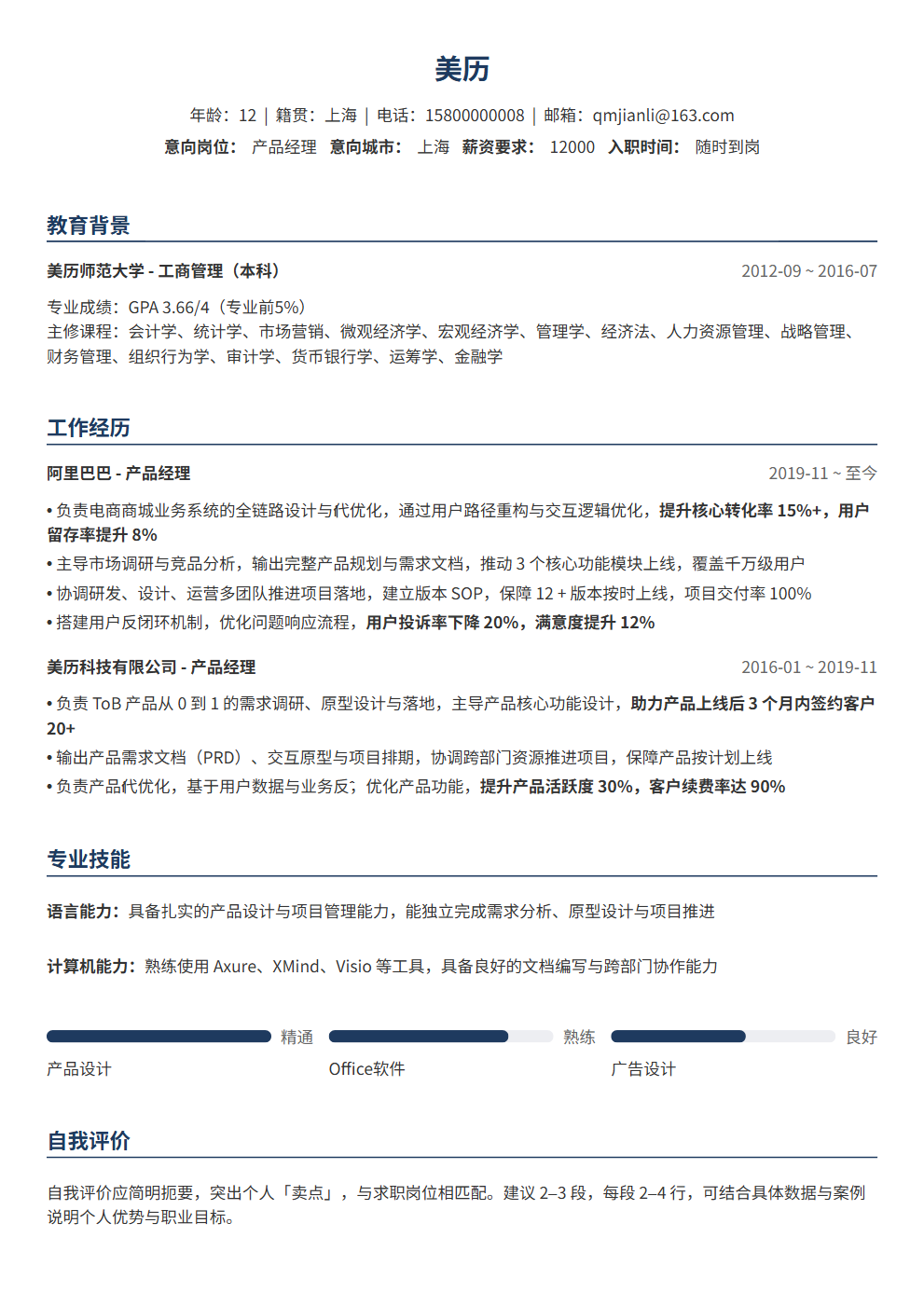
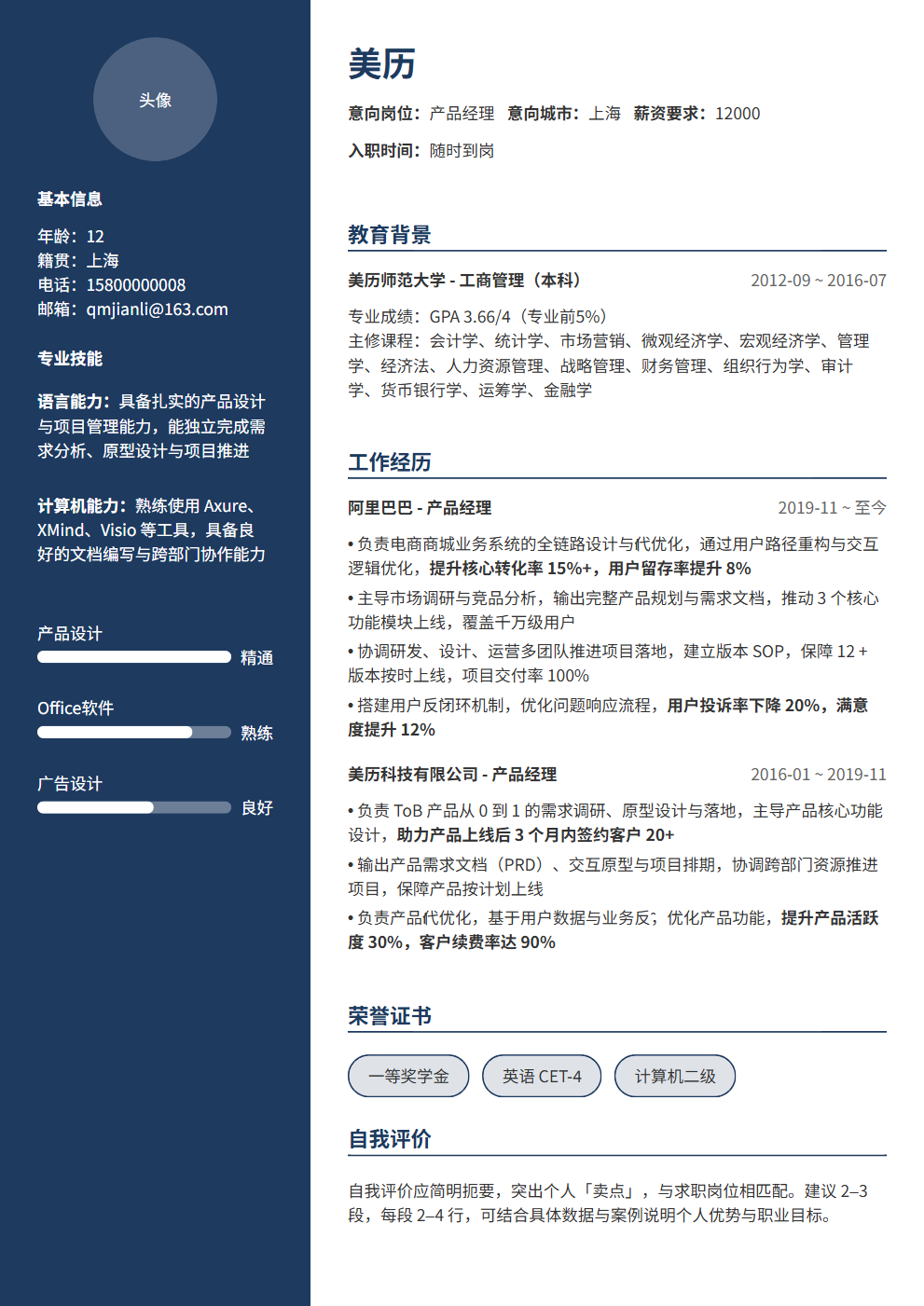
The first step to avoiding blame is making your work contributions and responsibility boundaries clearly visible. Use BeautyResume to clearly present your project contributions and professional capabilities—when your value is seen, your responsibilities will be correctly attributed.