Want to Change Careers After Working for Years? A 5-Step Plan to Avoid Disaster
Want to change careers after working for years? A 5-step plan — self-assessment, target industry research, skill gap analysis, transition plan, and resume restructuring — ensures your career change is strategic, not blind.
After three to five years of working, you suddenly realize you're in the wrong field — dreading every workday, hitting a salary ceiling you can see, and watching your industry's prospects narrow. What should you do about changing careers? Don't rush to hand in your resignation letter. A 5-step plan — from self-assessment to resume restructuring — ensures every move is strategic, so your career change doesn't end in disaster.
First, Figure Out: Do You Dislike the Job or the Industry?
Many people say they "want to change careers" when they actually just want to switch companies or roles. Before taking action, you must answer one question: do you dislike your current work content, or do you dislike the entire industry's direction? The solutions are completely different.
- Dislike the work content but the industry is fine: consider changing roles within the same industry first — moving from sales to marketing, or from operations to product — at a far lower cost than a cross-industry career change
- Dislike the industry direction but your role skills are transferable: for example, a traditional media editor moving to internet content operations — core skills (writing, editorial judgment, editing) are universal, making the transition relatively easy
- Dislike both the work content and the industry direction: this is the scenario that truly requires a cross-industry career change — also the costliest and riskiest, demanding the most systematic planning
A simple test: ask yourself, "If I switched to another company in the same industry doing the same role, would I be happy?" If yes, the problem isn't the industry. If no, that's the real signal for a career change.
Step 1: Self-Assessment — What Cards Do You Actually Hold?
The first step in career change planning isn't looking at how great the target industry is — it's taking stock of the cards you hold. Many career change failures stem not from a bad target industry, but from overestimating transferable skills and underestimating transition costs.
Your self-assessment needs to clarify three things:
- Hard skills inventory: What specific technologies or tools do you know? Data analysis, project management, programming languages, design software — these are your most direct leverage in a career change
- Soft skills inventory: How are your communication, teamwork, stress tolerance, and learning abilities? Soft skills are the most universally transferable assets across industries, but also the easiest to overestimate — "strong communication skills" isn't something you can just claim; you need concrete examples to back it up
- Industry experience accumulation: What insights have you built that others can't easily acquire? Industry connections, supply chain understanding, user demand insights — these may be completely useless in your target industry, or they may become your unique advantage
Core principle of assessment: honesty. Don't count "heard of" as "know," and don't count "did once" as "proficient." Overestimating yourself before a career change means getting exposed after you start the new job.
A practical tool: categorize your skills into three types — "directly transferable" (directly needed in the target industry), "indirectly transferable" (usable after repackaging or adaptation), and "non-transferable" (completely unnecessary in the target industry). The more directly transferable skills you have, the easier the transition.
Step 2: Target Industry Research — Don't Choose a Track Based on Feelings
Many people pick target industries purely on gut feeling — "I heard AI is hot" or "A friend says new energy is promising." But feelings are the least reliable basis for decisions. Target industry research must answer four key questions:
- Industry growth: Is this industry growing or shrinking over the next 3-5 years? Check industry reports, revenue growth of leading companies, and hiring demand trends. A shrinking industry offers limited upside no matter how hard you work
- Talent demand: Is hiring volume high for your target role? What's the salary range? Do they accept candidates from other industries? Search for target roles on job boards — the JD requirements and salary ranges are the most authentic market signals
- Barriers to entry: What qualifications or certifications are required? Is relevant industry experience mandatory? Some industries (healthcare, law, certain finance roles) have hard qualification requirements — you can't just decide to switch
- Real work conditions: What does the target role actually involve day-to-day? Not the glamorous version you imagine, but the real work content, overtime intensity, and interpersonal dynamics. Talk to 2-3 practitioners in the target industry — this is more valuable than reading 100 industry articles
Core principle of research: use data, not imagination. A common trap is "only seeing the industry's glamorous side, not the role's reality" — the tech industry may be booming, but that doesn't mean every tech operations role is great; new energy may have bright prospects, but not every position pays well.
Step 3: Skill Gap Analysis — How Far From Here to There?
Once you know what you have and what the target requires, the gap between them is what you need to fill. Skill gap analysis isn't just making a "learning list" — it's assessing the cost and time required to close each gap.
Specific steps:
- Collect 10-15 JDs for target roles: Extract high-frequency skill requirements and rank them by frequency. The most frequently mentioned are core skills you must master; less frequent ones are bonuses you can develop after joining
- Compare each skill against your current abilities: Rate yourself as "proficient / familiar / don't know." Going from "don't know" to "familiar" typically takes 1-3 months; from "familiar" to "proficient" usually requires 3-6+ months of practice
- Evaluate paths to close gaps: Which skills can you learn independently? Which require courses? Which must be developed through real projects? Self-study is cheapest but slowest; courses are fastest but cost money; project practice is most effective but requires opportunities
- Calculate total time investment: Add up all the skills you need to develop and estimate a total timeline. If it exceeds 12 months, consider adjusting your target — either lower the seniority level of your target role, or choose a direction with a smaller gap
An important reminder: the most overlooked element in skill gap analysis is "industry knowledge gaps." You might learn the hard skills for a target role, but lack industry common sense — unfamiliar with terminology, business logic, and professional networks. These soft gaps are often harder to fill than hard skills and more likely to expose you as an "outsider" in interviews.
Step 4: Transition Plan — Don't Quit Naked to Change Careers; Keep an Exit Route
The biggest risk in career change isn't "failing to transition" — it's "transitioning and finding it worse." So the core of your transition plan is: while still employed, prepare as much as possible for the target industry to reduce uncertainty.
Three transition strategies, ranked from lowest to highest risk:
- Strategy 1: Prepare while employed (lowest risk, recommended as first choice). Use your spare time to learn target role skills, earn relevant certifications, and do target industry side projects or volunteer work. Start applying to target industry roles simultaneously — resign only after receiving an offer. Drawback: limited time and divided energy; the transition may take 6-12 months
- Strategy 2: Internal transfer (moderate risk). If your current company has business lines or roles related to your target industry, pursue an internal transfer first. Internal transfer barriers are far lower than external job changes, and you're already familiar with the company's business and culture — higher success rate. Even if you eventually move to another company, the internal transfer experience is the most persuasive "career change evidence" on your resume
- Strategy 3: Full-time career change (highest risk, choose carefully). Quit your job to study full-time or attend training programs, focusing entirely on closing skill gaps. Suitable for those with ample financial reserves (at least 6 months of living expenses), clear goals, and exceptional learning ability. Drawbacks: significant financial pressure, employment gaps on your resume, and enormous psychological stress
Regardless of which strategy you choose, set a "stop-loss line" — for example, "if I don't get an offer in the target industry within 6 months, I'll return to my original industry or lower my target." A career change isn't gambling; a stop-loss line keeps you rational.
Step 5: Resume Restructuring — Package the "Outsider" as a "High-Potential Newcomer"
When job-hopping across industries, your resume is your most critical weapon. HR's first reaction when reading your resume is "this person's experience doesn't match our industry" — you must break through this bias within 3 seconds. The core logic of resume restructuring: don't change your experience — change your narrative.
Specific methods:
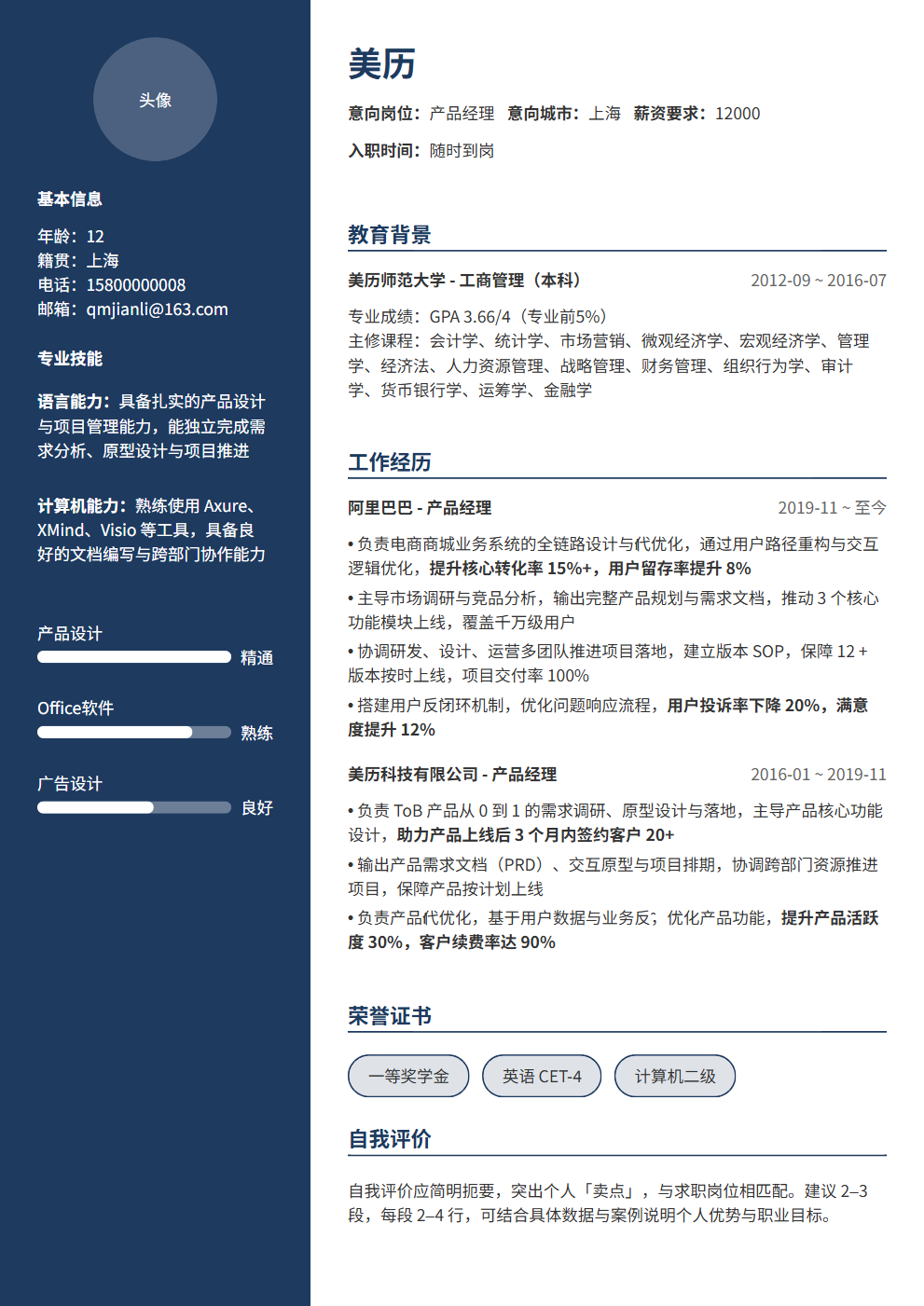
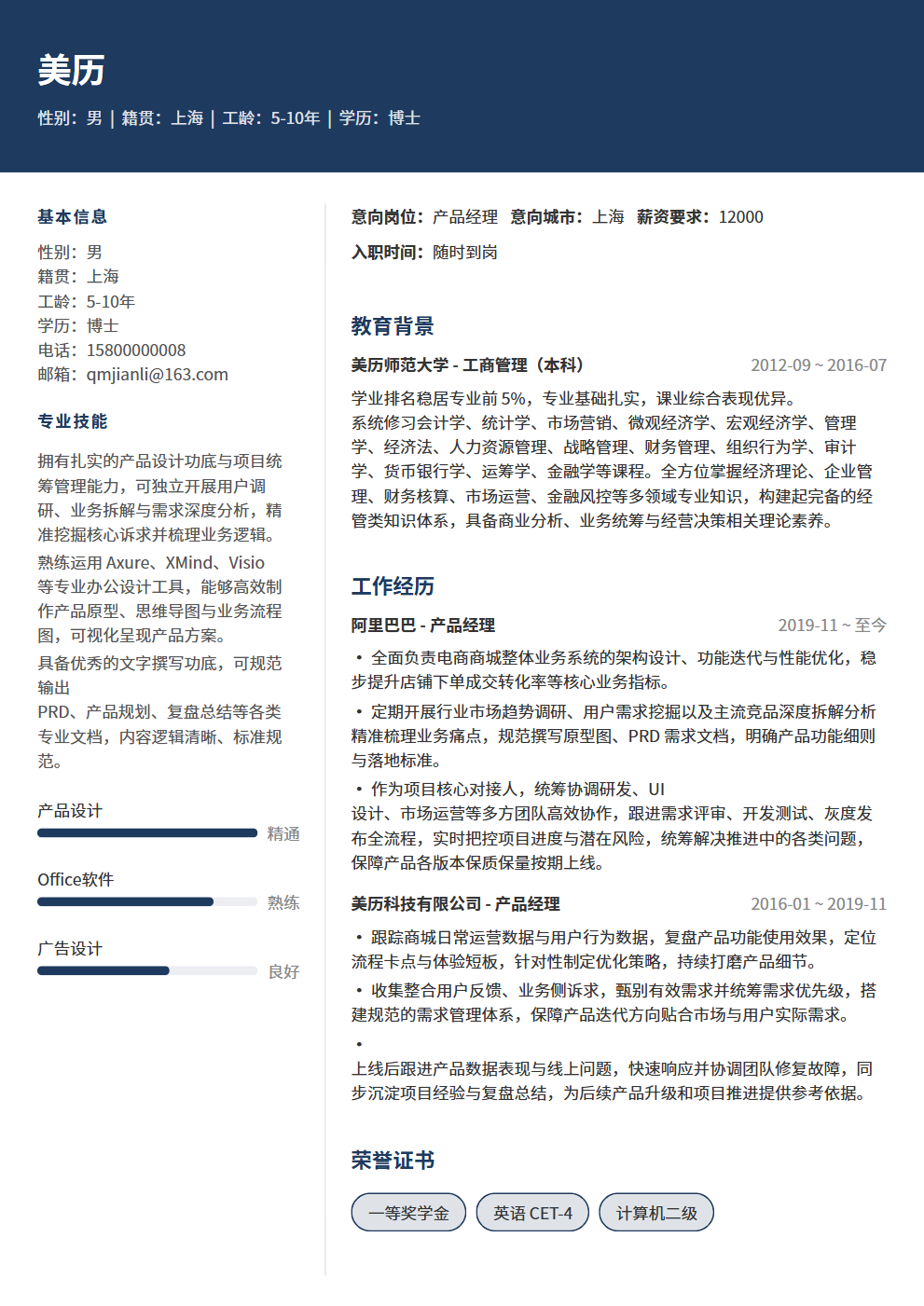
- Highlight transferable skills, downplay industry labels: Don't let HR's first impression be "X years in X industry." Instead, present "X years of X capability." For example, "5 years of data analysis experience" is more attractive across industries than "5 years of retail industry experience"
- Rewrite experience using the target industry's language: Every industry has its own terminology. Translate expressions from your original industry into the target industry's language — for example, "channel management" in traditional industries can be expressed as "partner operations" in tech
- Add practical evidence from the target industry: If you completed target industry projects, earned relevant certifications, or wrote relevant articles during your transition period, place these prominently on your resume. These are the most powerful evidence proving you're "not an outsider"
- Restructure your resume layout: Move the "Skills" section ahead of "Work Experience" — let HR see your capabilities first, then your industry background. This reduces the negative first impression of "industry mismatch"
A key insight: a cross-industry job search resume isn't an "experience list" — it's a "capability proof." HR doesn't need to know "what you've done" but "what you can do." Distill every experience into transferable capabilities, and your resume will impress cross-industry HR.
3 Practical Tips for Career Change Job Hunting
Once your resume passes, the interview is the next hurdle. Cross-industry job interviews are fundamentally different from same-industry job changes — you need different strategies:
- Proactively explain your career change motivation: Don't wait for the interviewer to ask "why are you changing careers." Address it in your self-introduction. Your motivation should be genuine and logical — "I've built X capability in the X industry and realized these skills could create greater value in the X industry" is a hundred times better than "I didn't like my old industry"
- Use analogies to counter "outsider" skepticism: Interviewers will definitely question your lack of industry experience. Don't be defensive — respond with analogies. "While I don't have direct experience in X industry, I've handled similar problems in X industry where the logic is the same — for example..." Then provide a specific analogous case
- Showcase learning speed, not existing knowledge: A cross-industry candidate can't possibly know more than industry insiders, but you can demonstrate faster learning ability. Prepare 1-2 real examples of "quickly learning a new field" to prove you can get up to speed in a new industry rapidly
Survival Rules for the First 6 Months After Changing Careers
Getting an offer is just the starting point of your career change, not the finish line. Many people who change careers give up within the first 6 months — not because they lack ability, but because the psychological gap is too large. Some survival rules:
- Accept your "newcomer" status: No matter how senior you were in your original industry, you're a newcomer in the new one. Check your ego and learn from the ground up
- Stop constant comparisons: Don't keep comparing your new job to your old one — the more you compare, the more anxious you become. Give yourself a 6-month adaptation period
- Find your "differentiated value": Your cross-industry background isn't a disadvantage — it's a unique perspective. Find insights and experiences you can bring that industry insiders lack
- Build a new professional network: Your old industry connections won't help you develop in the new industry. Proactively connect with peers in your new field
Conclusion: Career Change Isn't an Impulsive Resignation — It's a Systematic Project
What to do when you want to change careers after working for years? The core logic of the 5-step plan: a career change isn't an impulsive resignation — it's a systematic project. Self-assessment reveals what cards you hold. Target industry research helps you choose the right track. Skill gap analysis shows how far you need to go. A transition plan strategically reduces risk. Resume restructuring breaks through "outsider" bias in job hunting. Every step is essential, and every step deserves your time. The biggest enemy of career change isn't lack of ability — it's lack of preparation. Those who prepare well find that career change is an upgrade; those who don't find it's a downgrade. Don't let your career change turn into a disaster — use the 5-step plan for a strategic professional transition.
The critical step in career change is showing HR your transferable value, and a professional, precise resume is the best door-opener. BeautyResume offers smart formatting and industry templates to help you transform cross-industry experience into capability proof that HR can understand. Restructure your resume with BeautyResume first, then confidently take your first step toward career change!