Upward Networking at Work: 5 Methods to Get Senior Leaders to Notice You
Working hard but nobody notices? 5 upward networking methods (speak up at key moments, take on cross-department projects, regularly report to senior leaders, show up at industry events, build professional image through content), helping you gain senior attention and boost workplace influence.
Do you ever feel this way—you work incredibly hard, work more overtime than anyone, deliver better results than anyone, but when it comes to promotions and raises, it's never your turn? Meanwhile, that colleague who seems less capable than you keeps getting praised by leadership and entrusted with important responsibilities? You might think it's unfair, but the truth is: it's not that you're not doing well enough—it's that you're not doing enough to "be seen." There's a harsh reality in the workplace—working hard only ensures you won't be eliminated, but to be promoted and entrusted, you need the right people to see you. That's the value of "upward networking."
Why Does Hard Work Go Unnoticed?
Let's start with a truth many people don't want to admit: in the workplace, "doing well" and "being seen" are two different things. You might think "if I do well, leaders will naturally notice," but the reality is that leaders have too many things to handle every day—they can't possibly notice everyone's contributions. If you don't proactively make yourself visible, your efforts are like pouring water into the ocean—valuable, but nobody feels it.
- Information asymmetry: You know how much overtime you worked, how many problems you solved, how much extra work you took on—but your boss doesn't. Your boss only sees the final result, and the effort behind it, if you don't say it, nobody will say it for you
- Scarce attention: Senior leaders' time and attention are extremely limited. They handle strategic decisions, team management, cross-department coordination, and many other tasks daily, making it hard to proactively pay attention to every employee's performance. You need to proactively enter their field of vision
- The "silent contribution" cultural trap: Many people were taught from childhood to "contribute silently without seeking reward," thinking that proactively showcasing yourself is "claiming credit." But the workplace isn't school—nobody will proactively give you extra points for silent contributions. Showcasing your contributions isn't claiming credit—it's giving decision-makers the basis to make judgments
- Lack of exposure channels: There are often several layers between frontline employees and senior leaders, with almost no direct contact in daily work. If you don't proactively create exposure opportunities, leaders might not even know your name after three years
Understanding why hard work goes unnoticed, next are 5 specific upward networking methods. Not the "brown-nosing" or "backdoor" kind of shortcuts, but professional ways to let the right people see your value in appropriate settings.
Method 1: Speak Up at Key Moments
The first step in upward networking isn't finding leaders to chat with or attending dinner parties—it's making your voice heard at key moments. What are key moments? Company-wide meetings, cross-department meetings, review sessions with leadership, project kickoffs—any setting where senior leaders are present is an opportunity to showcase yourself.
- Pre-meeting preparation: Understand the meeting agenda in advance and prepare 1-2 in-depth insights or questions. Don't just speak for the sake of visibility—provide genuinely valuable perspectives. For example, at a product review, you can analyze competitor data in advance and propose differentiated feature suggestions
- Speaking technique: First affirm others' viewpoints, then supplement with your own perspective. "I agree with XX's point, and I'd like to add another angle..." This approach respects others while demonstrating your depth of thinking
- Questions are easier than statements: If you find speaking stressful, start with questions. A well-crafted question can showcase your thinking ability just as effectively. "Leader, regarding this strategic direction, I'd like to ask a question..." A good question is more valuable than a mediocre statement
- Control frequency and quality: Don't speak frequently just to be noticed—every contribution should have substance. Speaking 1-2 times per meeting, 1-2 minutes each time, but hitting the nail on the head every time, is far more effective than speaking 10 times with shallow comments
For example: Operations specialist Xiao Chen prepared an in-depth analysis of user growth data before the company's quarterly review. When the VP asked about "next quarter's growth direction," she raised her hand and clearly presented data insights and recommendations in 3 minutes. After the meeting, the VP specifically chatted with her for 20 minutes, and a month later she was transferred to the core growth team.
Method 2: Proactively Take On Cross-Department Projects
Cross-department projects are golden opportunities for upward networking—these projects are typically directly overseen by senior leaders, with few participants but high impact. In cross-department projects, you can showcase not only professional skills but also coordination, communication, and leadership abilities—exactly the qualities senior leaders value most.
- How to find cross-department projects: Pay attention to internal strategic projects, new business explorations, and process optimization initiatives—these typically require cross-department collaboration. Proactively express your interest to your direct supervisor, or contact the project lead directly
- Choose projects with visibility: Not all cross-department projects are worth investing in. Prioritize strategic projects directly driven by senior leaders, not marginal internal optimization projects. Judgment criteria: How high is this project's priority at the company level? Is there direct senior leadership involvement?
- Build influence within the project: Don't just be an executor—proactively take on coordination and driving roles. Organize cross-department meetings, push key decisions, resolve disagreements—this "invisible work" is exactly what leaders value most
- Quantify project outcomes: After the project ends, speak with data. "Project completed 2 weeks ahead of schedule," "cost savings of 30%," "customer satisfaction improved by 15%"—these quantified results are 100 times more convincing than "project completed successfully"
A real example: Financial analyst Xiao Wang proactively applied for the company's digital transformation project, responsible for cross-department data integration. Although this wasn't her primary job, through this project she established direct connections with the CTO and COO. After the project ended, the COO personally assigned her to build the data system for a new business, and she was promoted two levels.
Method 3: Regularly Report to Senior Leaders
Many people think "if the boss doesn't ask me to report, I won't proactively report"—this is one of the biggest misconceptions in the workplace. Proactive reporting isn't bothering the boss—it's helping them reduce the cost of obtaining information. Senior leaders lack not information, but key information that's been filtered and distilled. If you can provide this kind of information, you become the leader's "information source," and your value will be continuously noticed.
- Reporting frequency: Report to your direct supervisor at least once a month, and ensure higher-level leaders are aware of your work achievements at least once a quarter. A formal meeting isn't necessary—a well-structured email or a 15-minute 1-on-1 conversation works too
- Report content structure: Use the "Achievements-Challenges-Plans" three-part format. First state what results you achieved (with data), then state what challenges you encountered (demonstrating your depth of thinking), and finally state your upcoming plans (demonstrating your proactivity). Don't just say "what I did"—say "what results I produced"
- Timing of reports: Project milestones completed, major problems encountered, new opportunities discovered—these key moments are all good times to report. Don't wait for the boss to ask; proactive reporting demonstrates your sense of control and responsibility
- Upward reporting ≠ brown-nosing: Some people equate upward reporting with "kissing up," which is completely wrong. The essence of upward reporting is information communication—you relay key information to decision-makers, helping them make better judgments. This is professional behavior, not political behavior
For example: Product manager Xiao Zhao sends a brief monthly report to the VP every month, including core metrics, key progress, problems encountered, and next month's plans. Once she mentioned a user demand trend in her report, and the VP immediately arranged a special research project, which eventually led to a new product line worth tens of millions. Since then, the VP always asks "what does Xiao Zhao think" when discussing product direction.
Method 4: Show Up at Industry Events
Internal exposure is the foundation, but if you want to build influence at a higher level, industry events are channels you can't ignore. Industry summits, professional forums, tech salons, industry media interviews—these occasions not only let you be seen by company leaders (since senior leaders typically attend these events too) but also help you build a professional reputation in the industry.
- Choose the right events: Prioritize mainstream summits and forums in your industry, not small, unknown events. Before attending, check the guest list—are your company's senior leaders there? Are there industry KOLs? Potential clients or partners?
- Seek speaking opportunities: Speaking has 10x the impact of just attending. If you have good cases or insights, proactively submit speaking proposals to event organizers. Even if not selected, the act of submitting shows your initiative
- Networking technique: Don't sell yourself at industry events—provide value instead. Share your professional insights, introduce useful connections, offer problem-solving approaches—when you consistently provide value, others will naturally pay attention to you
- Post-event follow-up: After the event, promptly share your takeaways on social media, tagging relevant speakers and organizers. This not only expands your influence but also helps you build connections with key figures
A real example: Data engineer Xiao Lin gave a technical talk about real-time data processing at an industry big data summit. Although only 15 minutes, the content was very solid. After the talk, several executives from other companies added him on WeChat, and his own CEO saw the recording and praised him by name at an internal meeting. Six months later, he was promoted to head of the data team.
Method 5: Build Professional Image Through Content Creation
In the information age, the most lasting form of upward networking is content creation—consistently outputting your professional insights through articles, videos, podcasts, etc. The advantage of content creation is that it not only lets people inside your company see you but also lets the entire industry see you. When your content gains influence in the industry, senior leaders will naturally notice you.
- Choose content format: Writing articles (WeChat Official Account, Zhihu, Juejin), making videos (Bilibili, Douyin), doing podcasts (Xiaoyuzhou)—choose the format you're best at and most comfortable with. You don't need to do all formats; doing one well is enough
- Content topics: Extract from your work practice. Problems you've solved, pitfalls you've encountered, methodologies you've summarized—these are excellent content materials. "How to automate reports with Python," "How product managers do competitive analysis," "Building a data system from 0 to 1"—practical content like this is most popular
- Output frequency: At least 1 piece per week, persist for 3+ months. The biggest enemy of content creation is inconsistency. You don't need every piece to be a hit, but you need consistent output so readers form expectations
- Content quality > quantity: Better to write fewer pieces but ensure each has substance. One in-depth, quality article has far more impact than 10 shallow ones. Good content standard: readers can directly apply what they've learned after reading
- Let your company see your content: Publish your professional content on internal platforms (Feishu Docs, internal Wiki) simultaneously. This way, even before external influence is established, people inside the company can see your professional depth
For example: Frontend developer Xiao Zhou consistently wrote technical articles on Juejin, accumulating 20,000 followers in six months. One day the CEO shared one of his articles in the internal group, saying "our company has this kind of technical depth too." Since then, he's been invited to every technical review, and his career development has noticeably accelerated.
3 Common Upward Networking Mistakes
Upward networking isn't without risks. Here are 3 mistakes many people have made that you need to avoid.
- Mistake 1: Equating upward networking with brown-nosing. The core of upward networking is "providing value"; the core of brown-nosing is "pleasing the other person." The former is professional behavior; the latter is political behavior. You provide value through professional capabilities, key information, and solutions—not through flattery, gift-giving, or factionalism. The difference: if you leave this company, your professional skills still have value, but your "brown-nosing" is worthless
- Mistake 2: Only networking upward, ignoring peers and subordinates. Upward networking doesn't mean only building good relationships with senior leaders while neglecting peers and subordinates. The workplace is a network; your reputation is co-constructed by everyone. If you're all smiles to superiors but condescending to peers and subordinates, your "upward networking" quickly becomes a liability—because leaders will hear about your true behavior from others
- Mistake 3: Rushing for quick results. Upward networking is a long-term process; one meeting comment or one project participation won't do it. You need to consistently and steadily demonstrate your value, forming a "this person is reliable" impression with senior leaders. Rushing leads to distorted behavior and unprofessional actions
3 Things to Note in Upward Networking
- Note 1: Don't skip levels when reporting. Upward networking doesn't mean jumping over your direct supervisor to find senior leaders. Skipping levels is a major workplace taboo—it makes your direct supervisor feel disrespected and makes senior leaders think you don't understand protocol. Correct approach: communicate with your direct supervisor first and get their support for your upward visibility. If they don't support it, you can ask "how can I get higher-level visibility for my work achievements?" Turn the problem into a discussion
- Note 2: Speak with results, not effort. "How many hours I worked overtime," "how many things I did"—effort-based expressions are ineffective in upward networking. Senior leaders care about results, not process. "Project launched 2 weeks early," "revenue grew 30%," "customer satisfaction improved 20%"—speaking with results is convincing
- Note 3: Stay authentic, don't perform. Upward networking isn't acting; you don't need to pretend to be someone else. If you're not naturally articulate, you don't need to suddenly become a speaking expert—you can showcase your value through emails, documents, and data. Finding a method that suits you is more effective than imitating others
Conclusion: Upward Networking Is the Art of Making Effort Visible
The most regrettable thing in the workplace isn't that you didn't do well enough—it's that you did very well but nobody knew. Upward networking isn't opportunism; it's letting the right people see your efforts and achievements—this is being responsible to yourself and to the company. The 5 methods—speak up at key moments, proactively take on cross-department projects, regularly report to senior leaders, show up at industry events, build professional image through content creation—you don't need to do all of them. Pick 2-3 that suit you best, keep at it for 3 months, and you will definitely see changes. Remember, the essence of upward networking isn't "pleasing"—it's "providing value." When you consistently provide value, being seen is just a matter of time.
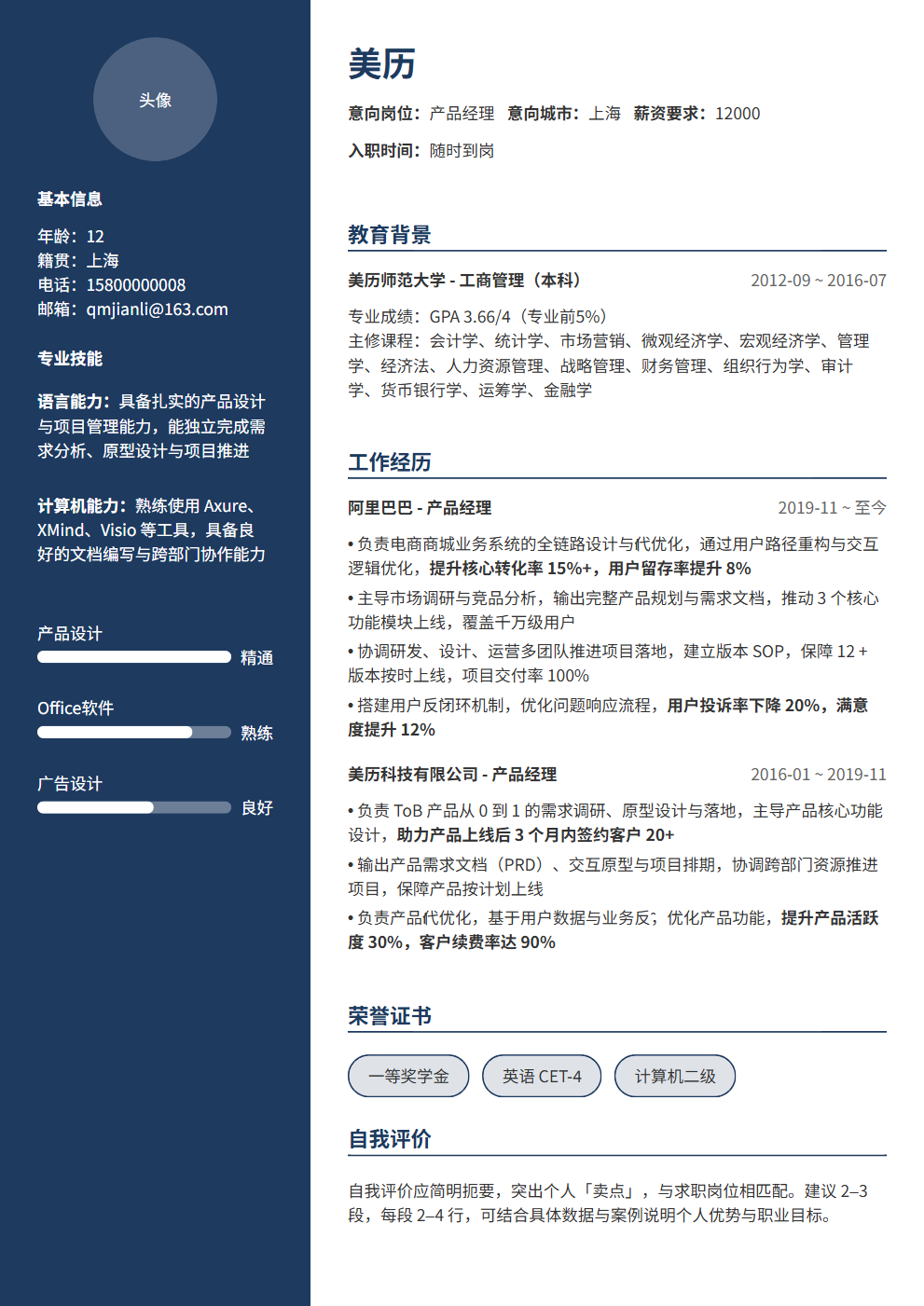
The first step in upward networking is letting others clearly see your professional value. Use BeautyResume to create a professional resume that makes your core capabilities and project achievements clear at a glance—whether for internal promotion or external opportunities, it's your starting point for upward networking.