4 Types of Interviewers: Use Different Strategies for Each to Score High
Different interviewers have vastly different styles — friendly, pressure-oriented, silent, and tangential. Using the same script for all of them? Too naive. A detailed guide to identifying and responding to 4 interviewer types, helping you quickly assess the interviewer in the first 5 minutes and adjust your strategy to score high.
You prepared your interview talking points carefully, but two interviews felt completely different — the first interviewer smiled and nodded throughout, chatting like a friend; the second kept a stone face, firing question after question, making you feel like you were being interrogated. Same you, same answers — why such different results? Because interviewers aren't all the same type. Using the same script for every interviewer is like using one key for every lock — too naive. Interviewers roughly fall into 4 types: Friendly, Pressure, Silent, and Tangential. Each type has different focus areas, communication styles, and expectations of you. Today, let's break down the identifying characteristics and response strategies for each of the 4 interviewer types, helping you quickly assess the interviewer in the first 5 minutes and adjust your strategy to score high.
Type 1: The Friendly Interviewer — A Pleasant Chat Doesn't Mean You're In
The Friendly interviewer is the type most likely to make you let your guard down. They smile, initiate small talk, nod at your answers, and occasionally say "Mm, nice" or "That's great experience" — you feel like you're chatting with an old friend, and the interview atmosphere is relaxed and pleasant. But a pleasant chat doesn't mean you're in — the Friendly interviewer's "warmth" may simply be their communication style, not a sign they're impressed. Many candidates are "fooled" by the Friendly interviewer's warmth, let their guard down, give casual answers, and then receive a rejection letter feeling completely confused.
- Identifying characteristics: Smiling, initiates small talk, gives immediate positive feedback on your answers, warm tone, slower interview pace, proactively shares information about the company or team. Friendly interviewers are typically extroverted and strong communicators who naturally build connections through warmth
- What they assess: Although Friendly interviewers are warm, their evaluation standards don't drop because of it. They focus more on your "soft skills" — communication ability, teamwork, cultural fit. They observe your natural-state performance through relaxed conversation rather than your reactions under pressure
- Strategy 1: Stay professional, don't over-relax — The Friendly interviewer's warmth easily makes you let your guard down, but remember this is an interview, not a casual chat. Keep your answers structured and professional even in a relaxed atmosphere. For example, when asked "How do you handle team conflicts?" don't say "Oh, team conflicts — everyone just sits down with some milk tea and talks it out." Use the STAR method to structure your answer
- Strategy 2: Use the friendly atmosphere to showcase soft skills — Friendly interviewers value soft skills, so highlight your communication ability, teamwork, and cultural fit in your answers. When describing project experiences, don't just say "what I did" — also say "how I collaborated with the team" and "how I communicated with stakeholders." Friendly interviewers appreciate candidates who can "work well with people"
- Strategy 3: Proactively ask questions, build connection — Friendly interviewers enjoy interaction, so you can proactively ask questions to build two-way communication. For example: "I noticed your company recently made moves in XX — could you tell me more?" This shows your interest in the company while satisfying the Friendly interviewer's preference for interaction
- Common mistake: Don't mistake warmth for "you're in" — Friendly interviewers are warm to every candidate; it doesn't mean you're exceptional. Don't start badmouthing previous companies or sharing personal information just because the atmosphere is relaxed — no matter how friendly, they're still the interviewer. Don't be overly optimistic after the interview — the warmth may make you feel "it went great," but the final result may tell a different story
The core strategy for Friendly interviewers: enjoy the warm atmosphere, but maintain professional boundaries. Treat warmth as an opportunity to showcase soft skills, not a reason to let your guard down.
Type 2: The Pressure Interviewer — It's Not Personal, It's Their Style
The Pressure interviewer is the type most likely to make you nervous. They show no expression (or even frown), give no immediate feedback (neither nodding nor shaking their head), fire follow-up questions one after another, speak in a cold tone, and maintain a fast pace — you feel like you're being interrogated. Many candidates panic when facing a Pressure interviewer, thinking they "performed poorly" or "the interviewer doesn't like me." But the Pressure interviewer's "coldness" may simply be their communication style, not a sign they're dissatisfied. Some Pressure interviewers are actually testing your stress tolerance this way.
- Identifying characteristics: Expressionless or serious, no immediate feedback, rapid follow-up questions, cold tone, fast interview pace, rarely proactively shares company or team information. Pressure interviewers are typically reserved and highly logical, accustomed to gathering information through direct, efficient means
- What they assess: Pressure interviewers focus more on your "hard skills" — professional competence, logical thinking, stress tolerance, problem-solving ability. They test your depth of thought through follow-up questions, your stress tolerance through lack of feedback, and your adaptability through fast pacing
- Strategy 1: Stay calm, don't let them set the pace — The Pressure interviewer's cold face and rapid questions easily make you nervous, but tell yourself "this is their style, not about me." Maintain your own pace — don't speed up just because the interviewer speaks fast. You can say "That's a great question — let me organize my thoughts," giving yourself 3-5 seconds to think, then answer with clear logic
- Strategy 2: Speak with data and logic — Pressure interviewers respond best to "data and logic." They don't care about your feelings or stories; they care about "can you prove what you're saying with facts and logic?" So make your answers as data-driven and structured as possible. Don't say "I have strong communication skills" — say "The cross-departmental project I managed involved 5 departments and over 30 people. By establishing a weekly report mechanism and bi-weekly alignment meetings, I reduced project delay rates from 30% to 5%"
- Strategy 3: When pressed, supplement rather than backtrack — Pressure interviewers love follow-up questions, and many candidates start backtracking or contradicting themselves. The right approach: stick to your core viewpoint, but supplement with supporting evidence and details. If the interviewer presses "Are you sure that data is correct?" don't say "Maybe not" — say "That data comes from the XX report, and my understanding at the time was XX. If the data has been updated, I'm happy to adjust my assessment based on the latest information"
- Common mistake: Don't interpret a cold face as "they don't like you" — Pressure interviewers treat every candidate this way; it doesn't mean you performed poorly. Don't speed up because you're nervous — the faster you go, the more mistakes you make; maintain your own pace. Don't be overly pessimistic after the interview — the cold face may make you feel "the interview was a disaster," but the final result may be different
The core strategy for Pressure interviewers: don't let them set the pace; speak with data and logic. Treat their follow-up questions as opportunities to showcase your depth of thinking, not as attacks.
Type 3: The Silent Interviewer — If You Don't Speak, the Room Goes Cold
The Silent interviewer is the type most likely to make you uneasy. They ask a question and then quietly listen — neither nodding nor shaking their head, neither following up nor commenting — you don't know if you answered well, whether you should continue, or what the interviewer is thinking. The Silent interviewer's "silence" may be because they're carefully considering your answer, or because they're observing how you perform "without feedback." Many candidates facing a Silent interviewer fall into two extremes: either talking too much (filling the silence with endless words) or too little (not daring to speak without feedback).
- Identifying characteristics: Quietly listens after asking questions, no immediate feedback, rarely follows up, calm expression that's hard to read, slower interview pace, you do most of the talking. Silent interviewers are typically introverted and observant, accustomed to gathering information through listening and observation
- What they assess: Silent interviewers focus more on your "expression ability and self-drive" — can you express your views completely and coherently without external guidance? Can you maintain confidence and stability without immediate feedback? Can you judge for yourself whether you've "said enough" or "need to add more"?
- Strategy 1: Control the pace yourself, don't wait for feedback — Silent interviewers won't tell you "that's enough" or "keep going," so you must judge the length of your answers yourself. A good standard: answer each question in 1.5-2 minutes, using the STAR method or "conclusion-details-summary" structure, then proactively wrap up. For example: "That's my answer to this question — if you'd like more details on any part, I'm happy to elaborate"
- Strategy 2: Proactively check understanding — Since Silent interviewers don't give you feedback, you can proactively check whether they understood your answer. For example: "Did my answer clearly express XX? If you have questions about the XX part, I can explain further" — this proactive check demonstrates your communication awareness while giving the Silent interviewer an opening to speak
- Strategy 3: Don't fill silence with fluff — The Silent interviewer's silence easily makes you nervous, leading you to say irrelevant things to fill the void. This is the worst response — fluff doesn't add points; it subtracts them. If you've said what needs to be said, quietly wait for the next question. Silence isn't scary; fluff is
- Common mistake: Don't be afraid to speak because of silence — the Silent interviewer's silence doesn't mean you answered poorly; they're just listening. Don't fill silence with fluff — fluff is more fatal than silence. Don't over-analyze after the interview — Silent interviewers treat every candidate this way; you can't judge the result from their expression
The core strategy for Silent interviewers: control the pace yourself, express completely, proactively check understanding. Treat silence as "free space to perform," not as a signal of "being ignored."
Type 4: The Tangential Interviewer — The Conversation Drifts Further and Further Off-Topic
The Tangential interviewer is the type most likely to take you off-topic. They ask a question, you start answering, and then they suddenly say "Oh, by the way, that reminds me..." — and launch into a completely unrelated topic. Or they latch onto a keyword in your answer and start diverging from it, and before you know it, you're miles away from the interview topic. The Tangential interviewer's "tangents" may stem from their active thinking and strong curiosity, or from particular interest in one of your experiences. But whatever the reason, if you follow the Tangential interviewer off-topic, you may end the interview without having answered the core questions.
- Identifying characteristics: Frequently goes off-topic in conversation, enjoys divergent thinking, gets particularly interested in specific details of your answers and digs deep, irregular interview pace (sometimes fast, sometimes slow), conversation frequently drifts from role-related topics. Tangential interviewers typically have active minds and strong curiosity, accustomed to gathering information through divergent exploration
- What they assess: Tangential interviewers focus more on your "breadth of thinking and curiosity" — can you keep up with their mental leaps? Do you have independent thinking? Do you have insights on various topics? They observe your thinking style and knowledge base through divergent conversation
- Strategy 1: Follow the tangent, but be able to pull back — When the Tangential interviewer goes off-topic, don't bluntly interrupt with "Let's get back on track" — this makes you seem inflexible. You can engage with their tangent briefly, showing you can keep up with their thinking, then naturally steer back. For example: "What you mentioned about XX is indeed interesting — it reminds me of a similar experience I had in the XX project..." — this responds to their tangent while naturally returning to the interview topic
- Strategy 2: Showcase your breadth of thinking during tangents — The Tangential interviewer's divergent conversations are actually great opportunities to show your breadth of thinking. If they bring up a field you're familiar with, you can demonstrate your knowledge and independent thinking. But remember: while showcasing breadth, don't forget to showcase your fit with the role. After every tangent, find a way to bring the conversation back to "what's my relevance to this role"
- Strategy 3: Watch the time, ensure core questions are answered — The biggest risk with Tangential interviewers is that interview time runs out before core questions are covered. If you notice the interview is mostly over and you're still off-topic, you need to proactively steer back. For example: "What we just discussed about XX was really insightful — I'd also love to discuss XX with you. Do we still have time?" — politely reminding the interviewer to return to core topics
- Common mistake: Don't bluntly interrupt tangents — "Let's get back on track" makes you seem inflexible. Don't follow tangents too far — getting so caught up in the chat that you forget the interview purpose is a major mistake. Don't expose areas you don't know during tangents — if the Tangential interviewer brings up an unfamiliar topic, honestly saying "I'm not very familiar with that area" is better than pretending to know
The core strategy for Tangential interviewers: follow the tangent, but be able to pull back. Treat tangents as opportunities to showcase breadth of thinking, while ensuring core questions are answered.
How to Quickly Identify the Interviewer Type — The First 5 Minutes Are Key
The first 5 minutes of an interview are the golden window for identifying the interviewer type. During these 5 minutes, the interviewer typically introduces themselves, makes small talk, and asks the first question — these behaviors are "signals" for determining their type.
- Signal 1: Small talk style — Friendly interviewers proactively make small talk and chat about light topics ("Did you have a smooth trip over?" "Nice weather today"); Pressure interviewers keep small talk brief or skip it entirely ("Let's begin"); Silent interviewers keep small talk brief and don't expand ("Hello, please sit down"); Tangential interviewers' small talk easily diverges ("You came from XX? I used to live there too — the XX there is amazing...")
- Signal 2: Questioning style — Friendly interviewers ask questions warmly with setup ("Could you tell me about your experience in XX?"); Pressure interviewers ask directly without setup ("What did you do in XX?"); Silent interviewers ask and then quietly wait for your answer; Tangential interviewers' questions easily diverge ("You said you did XX — what about XX? Oh wait, let me ask you something else first...")
- Signal 3: Feedback style — Friendly interviewers give immediate positive feedback ("Mm, nice"); Pressure interviewers give no feedback or challenging feedback ("And what else?"); Silent interviewers give almost no feedback; Tangential interviewers' feedback easily sparks new topics ("What you said about XX reminds me...")
- Signal 4: Interview pace — Friendly interviewers have a slower pace, giving you ample time; Pressure interviewers have a fast pace, question after question; Silent interviewers have a slower pace but you do most of the talking; Tangential interviewers have an irregular pace, sometimes fast, sometimes slow
The purpose of identifying the interviewer type isn't to "please" them, but to "adapt" — presenting your capabilities in the way the interviewer is most receptive to. The same achievement: emphasize teamwork for Friendly interviewers, data and logic for Pressure interviewers, complete expression for Silent interviewers, breadth of thinking for Tangential interviewers — same content, different presentation, dramatically different results.
Conclusion: Adapting to Your Audience Isn't Being Slick — It's Strategy
The 4 types of interviewers — Friendly (warm but don't let your guard down), Pressure (cold-faced but not targeting you), Silent (quiet but not ignoring you), and Tangential (off-topic but able to pull back) — each has different identifying characteristics and response strategies. For Friendly interviewers, showcase soft skills while maintaining professional boundaries; for Pressure interviewers, speak with data and logic without letting them set the pace; for Silent interviewers, control the pace yourself, express completely, and proactively check understanding; for Tangential interviewers, follow tangents but be able to pull back, showcasing breadth of thinking during tangents. Use the first 5 minutes to quickly identify the interviewer type through small talk style, questioning style, feedback style, and interview pace, then adapt your strategy accordingly. Adapting to your audience isn't being slick — it's strategy. Presenting yourself in the way the interviewer is most receptive to is what interview masters do.
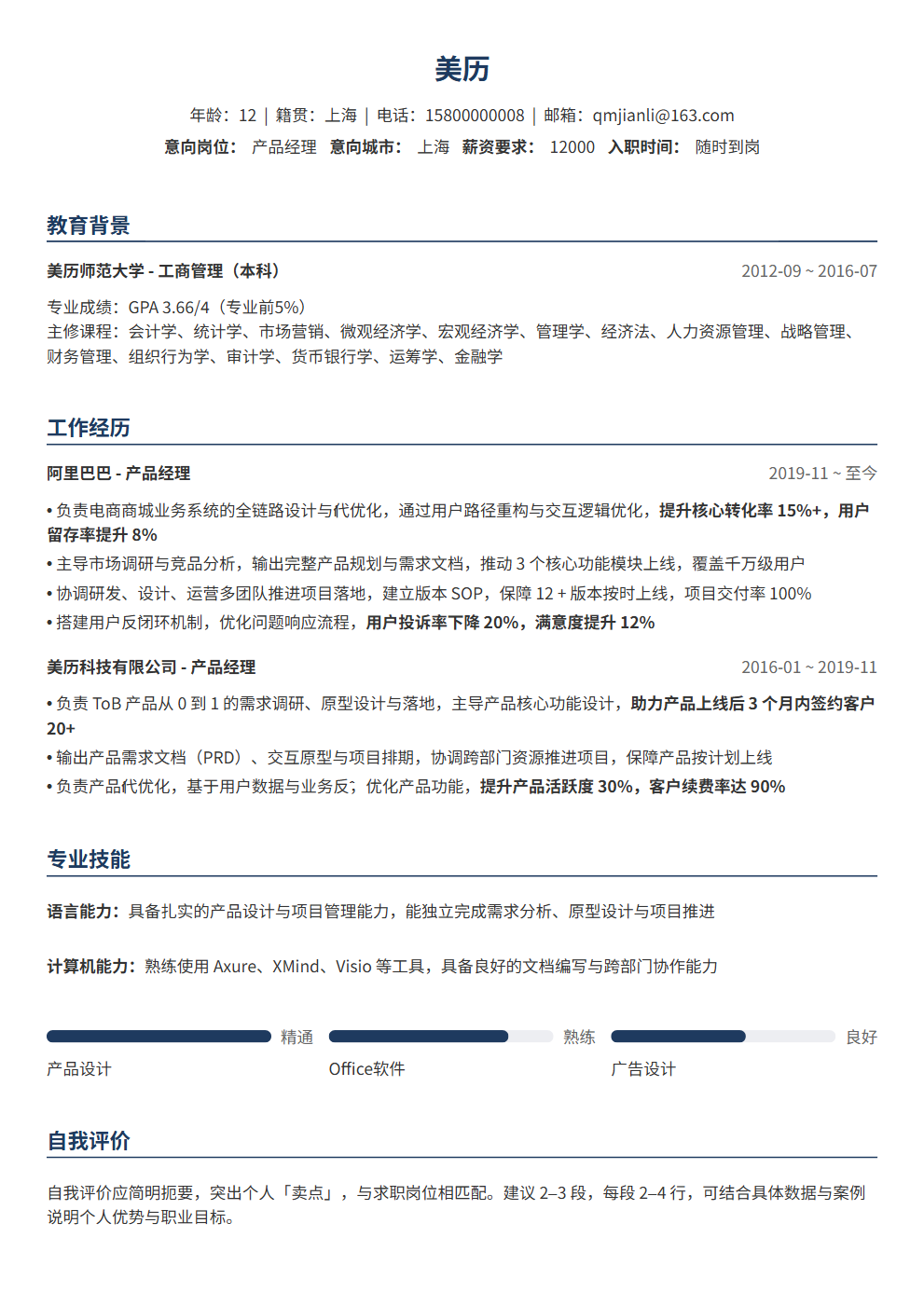
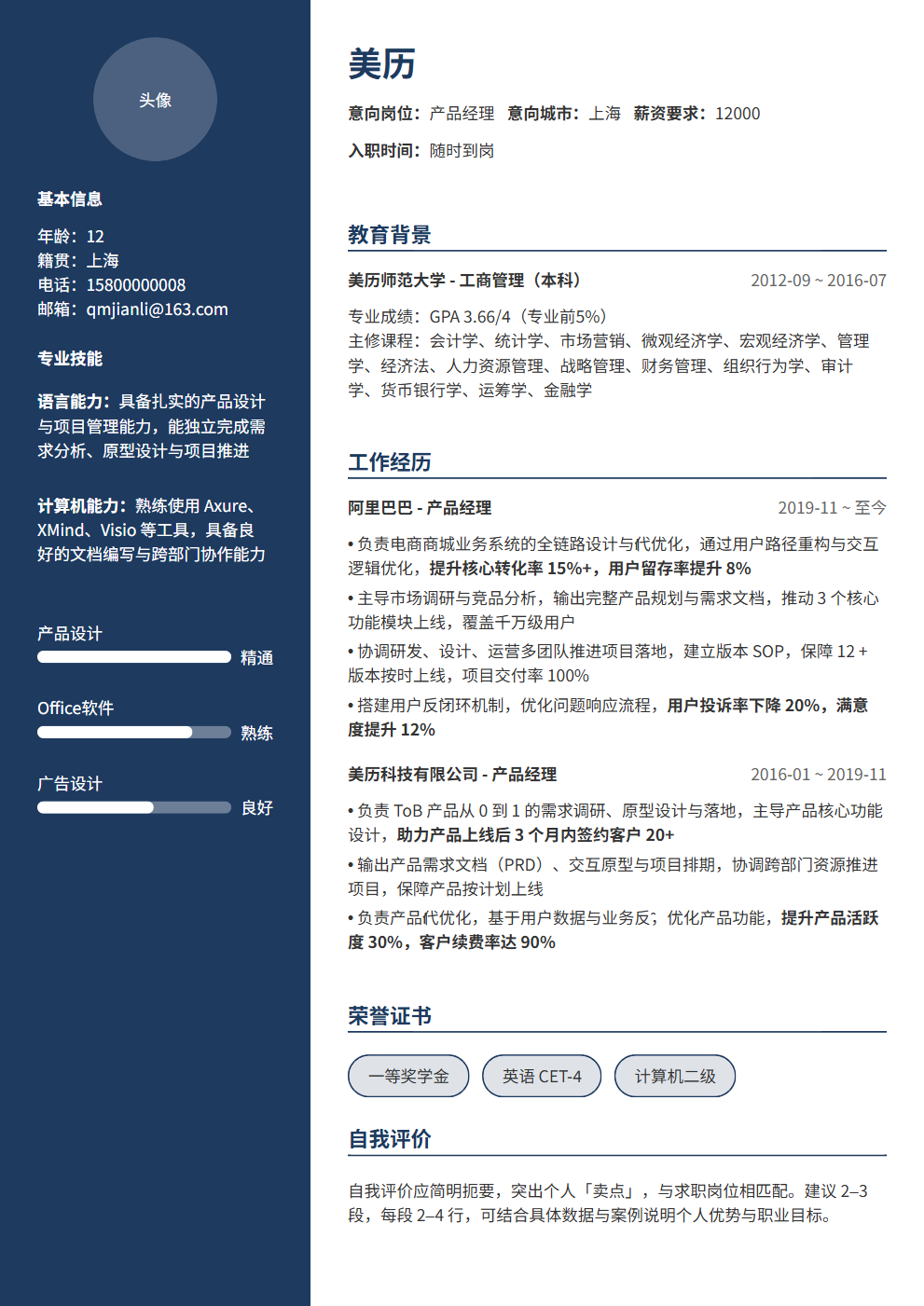
The first step in interview strategy is making a good impression before the interviewer even meets you. Use BeautyResume's resume editor to craft a professional and attractive resume — no matter what type of interviewer you face, a great resume is your ticket to landing the interview.