Top 5 Industries for Fresh Graduates in 2026: High Salary, Fast Growth, No Rat Race
Fresh graduates unsure which industry to choose? This article selects the top 5 industries worth entering in 2026 (AI applications, new energy, silver economy, cross-border e-commerce, smart manufacturing), with detailed analysis of each industry's advantages, hot positions, salary levels, and entry thresholds, plus 3 criteria for choosing an industry and advice for fresh graduates.
Graduation season is here, and you're standing at a crossroads with your resume: big tech companies are still laying off, finance is increasingly competitive, tutoring hasn't recovered, and manufacturing feels too traditional—which industry should you choose? Choosing the wrong industry could mean 3-5 years of low pay, high pressure, and no growth; choosing the right one means starting salary 50% higher and 3 years of experience worth 5 years elsewhere. Today I'll help you filter the top 5 industries worth entering as a fresh graduate in 2026—high salary, fast growth, no rat race, each one a proven "good track."
Industry 1: AI Applications—2026's Hottest Sector, High Pay Even for Fresh Grads
AI applications isn't about training large models—that's for algorithm engineers with extremely high barriers. AI applications means deploying AI technology into specific business scenarios: AI+customer service, AI+marketing, AI+education, AI+healthcare, AI+legal... These scenarios need people who understand both AI tools and business logic, and fresh graduates are the easiest group to "double-major" in both.
- Industry advantages: AI applications is one of the fastest-growing sectors in 2024-2026, with market scale growing 40%+ annually. Nearly every industry is "AI-ifying," and talent demand far exceeds supply. Fresh graduates' advantage is "no mindset baggage"—you don't need to "unlearn" traditional work methods because your work method is AI-native from the start
- Hot positions: AI Product Manager (productizing AI capabilities, suited for product-minded graduates), AI Operations (using AI tools to boost operational efficiency, suited for operations-minded graduates), AI Content Creation (batch-producing content with AI tools, suited for creative graduates), AI Solutions Consultant (helping clients implement AI solutions, suited for strong communicators), Prompt Engineer (designing and optimizing AI prompts, suited for logical thinkers)
- Salary levels: Tier-1 city fresh grad starting salary 8K-15K/month, typically rising to 12K-20K/month after 6 months. 1-2 years of AI application experience can reach 20K-35K/month, far above traditional internet roles at the same experience level. Some AI startups offer equity to fresh grads that may exceed their salary value
- Entry threshold: Relatively low. No need for a CS master's or algorithm background, but you need to genuinely know how to use AI tools (ChatGPT, Midjourney, Cursor, etc.), understand AI's capability boundaries, and can combine AI with specific business scenarios. These skills can be mastered through 1-2 months of focused learning
- Development prospects: AI applications is still in its early stages, with 5-10 years of growth ahead. Fresh graduates entering now will become "senior practitioners" in 3-5 years with first-mover advantage. Plus, AI application skills are cross-industry—experience in one industry transfers to others
AI applications' biggest appeal is "high salary + low barrier + bright prospects"—this impossible triangle in fresh graduate job hunting is simultaneously satisfied by AI applications. The key is genuinely knowing how to use AI, not just "opening ChatGPT to ask questions."
Industry 2: New Energy—National Strategic Track, Policy Dividends Continue
New energy isn't just "selling solar panels"—it encompasses the entire supply chain including photovoltaics, wind power, energy storage, new energy vehicles, charging infrastructure, and smart grids. China is the global leader in new energy, with the industry expected to exceed 10 trillion RMB in 2026. More importantly, new energy is a national strategic track with sustained policy dividends and highly certain industry growth.
- Industry advantages: National strategic track with strong policy support (subsidies, tax incentives, land preferences); global leadership position with Chinese companies holding 50%+ global market share in photovoltaics, wind power, and NEVs; long supply chain with diverse position types from R&D to manufacturing to sales to operations
- Hot positions: New Energy Product Manager (planning product roadmaps, suited for engineering backgrounds), Energy Storage System Engineer (designing storage solutions, suited for electrical engineering), NEV Smart Cabin Developer (developing smart cabin features, suited for software engineering), New Energy Project Operations (managing project lifecycles, suited for management/engineering backgrounds), ESG Consultant (helping companies with ESG reporting and carbon management, suited for finance/environmental backgrounds)
- Salary levels: Tier-1 city fresh grad starting salary 7K-12K/month, reaching 12K-25K/month with 1-2 years of experience. Salary growth is fast—because the industry is expanding rapidly and talent is scarce, companies are willing to pay premium. Some core roles (like energy storage system engineers) start at 15K-20K/month
- Entry threshold: Moderate. Technical roles require relevant backgrounds (electrical engineering, materials science, software engineering, etc.); non-technical roles have lower barriers. The industry is friendly to career changers—many practitioners came from internet, manufacturing, and finance
- Development prospects: At least 10-15 years of growth ahead (dual carbon goals: carbon peak by 2030, carbon neutrality by 2060). The industry is still in rapid expansion with many promotion opportunities—3-5 years of experience can lead to team leadership. New energy is also a globalized industry with overseas development opportunities
New energy's biggest appeal is "certainty"—national strategy + global leadership + long-term growth combined means the industry won't be bad for at least 10 years. For fresh graduates, choosing a "high certainty" industry is wiser than choosing a "high ceiling but uncertain" one.
Industry 3: Silver Economy—300 Million People's Essential Market, Massive Talent Gap
The silver economy isn't "selling health supplements"—it's an entire industry chain built around 300 million elderly people's needs: health management, elderly care services, age-friendly renovation, elderly education, elderly tourism, smart elderly care, and elderly finance. China's 60+ population exceeds 300 million, with the silver economy market projected to reach 30 trillion RMB by 2030. But practitioners are severely insufficient—especially young ones, creating a massive talent gap.
- Industry advantages: Essential needs market (aging is irreversible); strong policy support ("silver economy" first mentioned in government work report); low competition (industry is early-stage, few major players, many startup opportunities); high social value (helping elderly improve quality of life)
- Hot positions: Health Management Specialist (assessing and managing elderly health, suited for medical/nursing backgrounds), Elderly Care Operations Manager (managing care facility operations, suited for management/social work backgrounds), Age-Friendly Product Manager (designing age-friendly products and services, suited for product/design backgrounds), Elderly Content Operations (producing content for elderly audiences, suited for content/media backgrounds), Smart Elderly Care Tech Engineer (developing smart care systems, suited for tech backgrounds)
- Salary levels: Tier-1 city fresh grad starting salary 6K-10K/month, seemingly modest, but salary growth is fast—1-2 years reaching 10K-18K/month, 3-5 years reaching 18K-30K/month. Plus, silver economy has low startup barriers—3-5 years of experience can enable independent entrepreneurship
- Entry threshold: Relatively low. The silver economy doesn't strictly require specific professional backgrounds—service orientation, communication skills, and learning ability matter more. Medical, nursing, social work, and psychology graduates have advantages, but other majors can also enter
- Development prospects: Silver economy is a "long slope, thick snow" industry—the slope is long (aging continues for 30+ years), the snow is thick (30 trillion market). Fresh graduates entering now will become "founding generation" practitioners in 10 years. Plus, there are many startup opportunities—many sub-sectors don't yet have dominant players
The silver economy's biggest appeal is the "talent gap"—massive demand but insufficient practitioners, especially young ones. Fresh graduates aren't "doing grunt work" here—they're "scarce talent." And the social value is strong—your daily work helps elderly people improve their lives, a sense of achievement many industries can't provide.
Industry 4: Cross-Border E-Commerce—Chinese Supply Chain Goes Global, Globalization Dividends
Cross-border e-commerce isn't just "selling on Amazon"—it's the complete chain of exporting China's supply chain advantages to global markets: product selection, supply chain management, cross-border logistics, overseas marketing, localized operations, and cross-border payments. In 2026, China's cross-border e-commerce market is projected to exceed 3 trillion RMB with 20%+ growth. More importantly, it gives fresh graduates direct exposure to globalized business—rare in traditional industries.
- Industry advantages: China's supply chain is globally leading with clear cost advantages; TikTok Shop, Temu, SHEIN and other platforms are rising, lowering the barrier to going overseas; policy support (cross-border e-commerce pilot zones, export tax rebates); fast industry growth with new opportunities constantly emerging
- Hot positions: Cross-Border E-Commerce Operations (managing overseas store operations, suited for e-commerce/foreign language backgrounds), Overseas Social Media Marketing (marketing on TikTok/Instagram, suited for creative/foreign language backgrounds), Cross-Border Supply Chain Management (managing logistics from factory to overseas warehouse, suited for supply chain/logistics backgrounds), Product Selection Analyst (analyzing overseas market trends to select products, suited for data analysis/market research backgrounds), Localization Operations (adapting products and services for target markets, suited for foreign language/cross-cultural backgrounds)
- Salary levels: Tier-1 city fresh grad starting salary 7K-12K/month, reaching 12K-22K/month with 1-2 years of experience. Cross-border e-commerce has a high salary ceiling—top-performing operations can earn 30K-50K/month because many roles have performance commissions. Startup barriers are low—2-3 years of experience can enable trying independent store ownership
- Entry threshold: Moderate to low. Foreign language ability is a basic requirement (English essential, additional languages a plus); other skills can be learned on the job. The industry is very friendly to career changers—many practitioners came from traditional e-commerce, foreign trade, and internet
- Development prospects: At least 5-10 years of growth ahead. China's supply chain's global competitiveness is a long-term advantage that won't be replaced soon. Plus, cross-border e-commerce globalization experience is transferable—experience gained in China's cross-border e-commerce is valuable in any global market
Cross-border e-commerce's biggest appeal is "global perspective"—fresh graduates can access overseas markets, users, and cultures, experience that might take 5-10 years to gain in traditional industries. And the startup path is clear—from operations to independent store ownership, many successful sellers started as employees.
Industry 5: Smart Manufacturing—Core Engine of China's Manufacturing Upgrade
Smart manufacturing isn't "working on a factory assembly line"—it's upgrading traditional manufacturing with digitalization, automation, and intelligence: industrial robots, digital twins, smart production lines, industrial internet, predictive maintenance, and more. China is the world's largest manufacturing country, but manufacturing's digitalization rate is under 30%, leaving massive upgrade potential. In 2026, the smart manufacturing market is projected to exceed 5 trillion RMB, serving as the core engine of China's manufacturing upgrade.
- Industry advantages: National strategy ("Made in China 2025" and "New Industrialization"); massive market space (manufacturing digitalization rate under 30%); talent scarcity (compound talents who understand both manufacturing and digitalization are extremely rare); fast salary growth (industry is upgrading rapidly, talent value continues rising)
- Hot positions: Industrial Software Engineer (developing industrial control software, suited for software engineering/automation backgrounds), Digital Twin Engineer (building factory digital twin models, suited for simulation/modeling backgrounds), Smart Production Line Planner (planning smart production line solutions, suited for industrial engineering backgrounds), Industrial Internet Product Manager (designing industrial internet platform features, suited for product/tech backgrounds), Predictive Maintenance Engineer (using AI to predict equipment failures, suited for AI/mechanical engineering backgrounds)
- Salary levels: Tier-1 city fresh grad starting salary 8K-14K/month, reaching 14K-25K/month with 1-2 years of experience. Smart manufacturing salary growth is fast—because compound talent is scarce, companies pay premium to retain people. Some core roles (like industrial software engineers) start at 15K-20K/month
- Entry threshold: Moderate to high. Technical roles require relevant backgrounds (automation, mechanical engineering, software engineering, industrial engineering, etc.); non-technical roles have lower barriers. The industry is especially friendly to engineering graduates—your professional knowledge naturally matches the industry's digitalization needs
- Development prospects: Smart manufacturing is a "long slope" industry—China's manufacturing upgrade needs at least 15-20 years. The industry is still early-stage with many promotion opportunities—3-5 years of experience can lead to technical leadership. And smart manufacturing skills are "hard skills"—unlike internet industry skills that can become outdated, manufacturing digitalization skills retain long-term value
Smart manufacturing's biggest appeal is "hard skills + long cycle"—your skills won't become obsolete, your industry won't shrink, and your experience becomes more valuable with time. For engineering graduates, smart manufacturing is the best track to monetize professional knowledge.
3 Criteria for Choosing an Industry
Each of the 5 industries has its advantages, but you can't join all 5. How do you choose? These 3 criteria will help you make the best choice for yourself.
- Criterion 1: Industry growth rate. Choose industries with annual growth exceeding 15%—fast-growing industries mean more new opportunities, faster salary growth, and more promotion space. Among the 5, AI applications grows fastest (40%+), cross-border e-commerce and new energy are next (20%+), silver economy and smart manufacturing grow steadily (15%-20%)
- Criterion 2: Talent supply-demand ratio. Choose industries where talent demand exceeds supply—supply-demand imbalance means easier job hunting, stronger salary negotiation leverage, and easier job changes. Among the 5, AI applications and silver economy have the largest talent gaps, and smart manufacturing's compound talent is extremely scarce
- Criterion 3: Match with you. Choose the industry that best matches your professional background, skills, and interests—no matter how good an industry is, if you're completely uninterested or your major is completely unrelated, it's hard to excel. Among the 5, AI applications suits all majors (low barrier), new energy and smart manufacturing suit STEM backgrounds, cross-border e-commerce suits foreign language/e-commerce backgrounds, and silver economy suits service-oriented people
Advice for Fresh Graduates Entering These Industries
Once you've chosen an industry, how do you get in? These tips will help you quickly establish yourself in your target industry.
- Tip 1: Intern first, then join. If time allows, intern at a company in your target industry for 3-6 months. Internships are the most authentic way to understand an industry—you'll learn the real work content, salary levels, promotion paths, and work intensity, avoiding "it's not what I imagined" after joining. Many companies offer conversion opportunities—good internship performance can lead directly to an offer
- Tip 2: Let your work speak. Regardless of industry, having portfolio/project experience is more persuasive than having a degree. AI applications: build a small AI application project; cross-border e-commerce: try opening a small cross-border store; silver economy: conduct an elderly needs survey. These portfolio/project experiences are your most powerful proof in interviews
- Tip 3: Follow industry developments. Spend 15-30 minutes daily reading your target industry's news—industry media, WeChat accounts, podcasts, research reports. In interviews, being able to discuss the latest industry trends and developments shows you're "prepared," not just "mass-applying resumes"
Conclusion: Choose the Right Industry and You've Already Won Half the Race
For fresh graduates, choosing the right industry matters more than choosing the right company. AI applications puts you at the forefront of technological change, new energy lets you ride the national strategic wave, silver economy puts you in a talent-scarce essential market, cross-border e-commerce gives you global perspective and experience, and smart manufacturing monetizes your engineering background into long-term value. Five industries, five advantages—choose the one that best matches you and go all in. Remember: career is a marathon, not a sprint—choosing the right direction matters more than running fast. A slightly higher starting salary, faster growth, less rat race—3-5 years from now, you'll thank yourself for making today's choice.
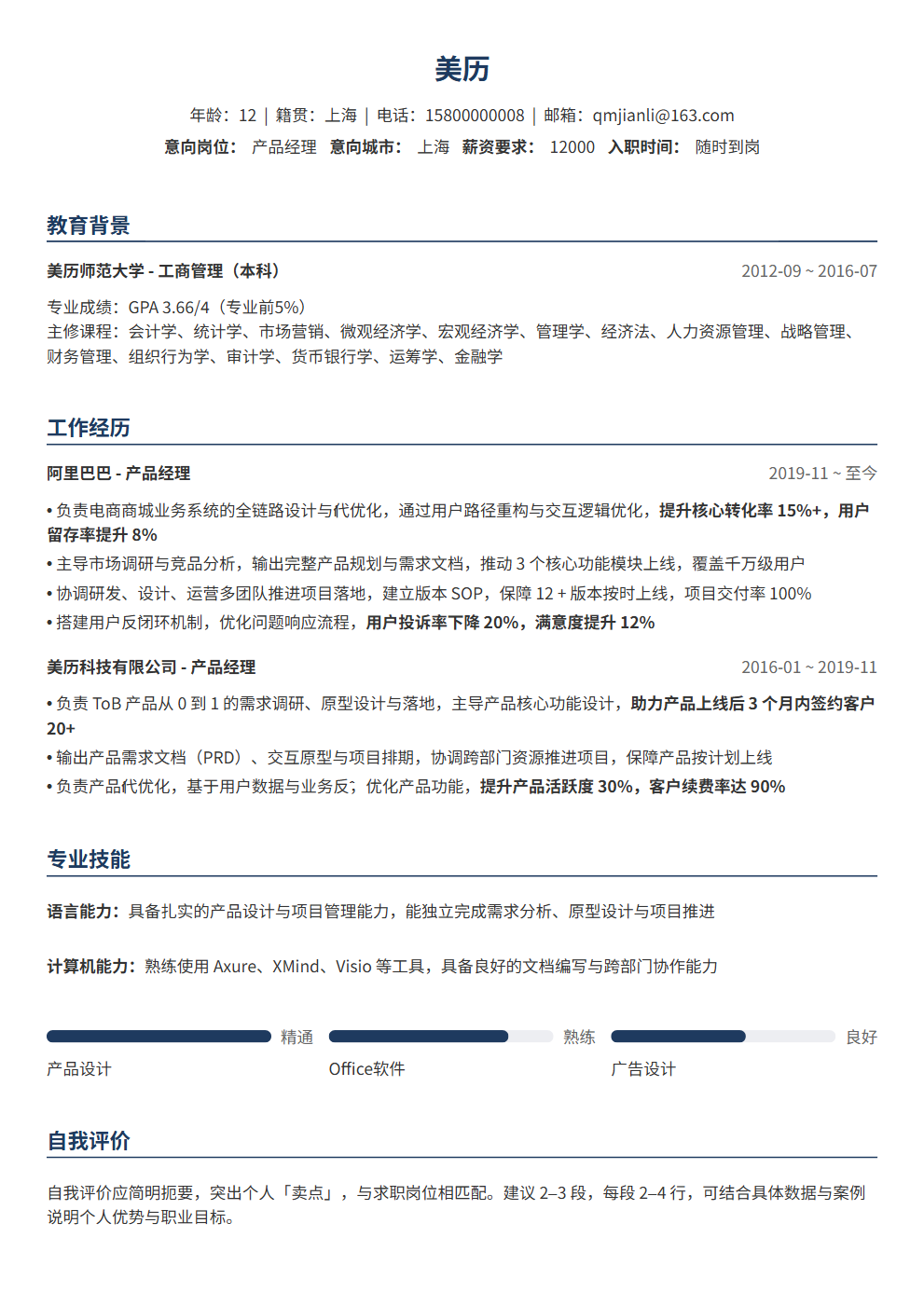
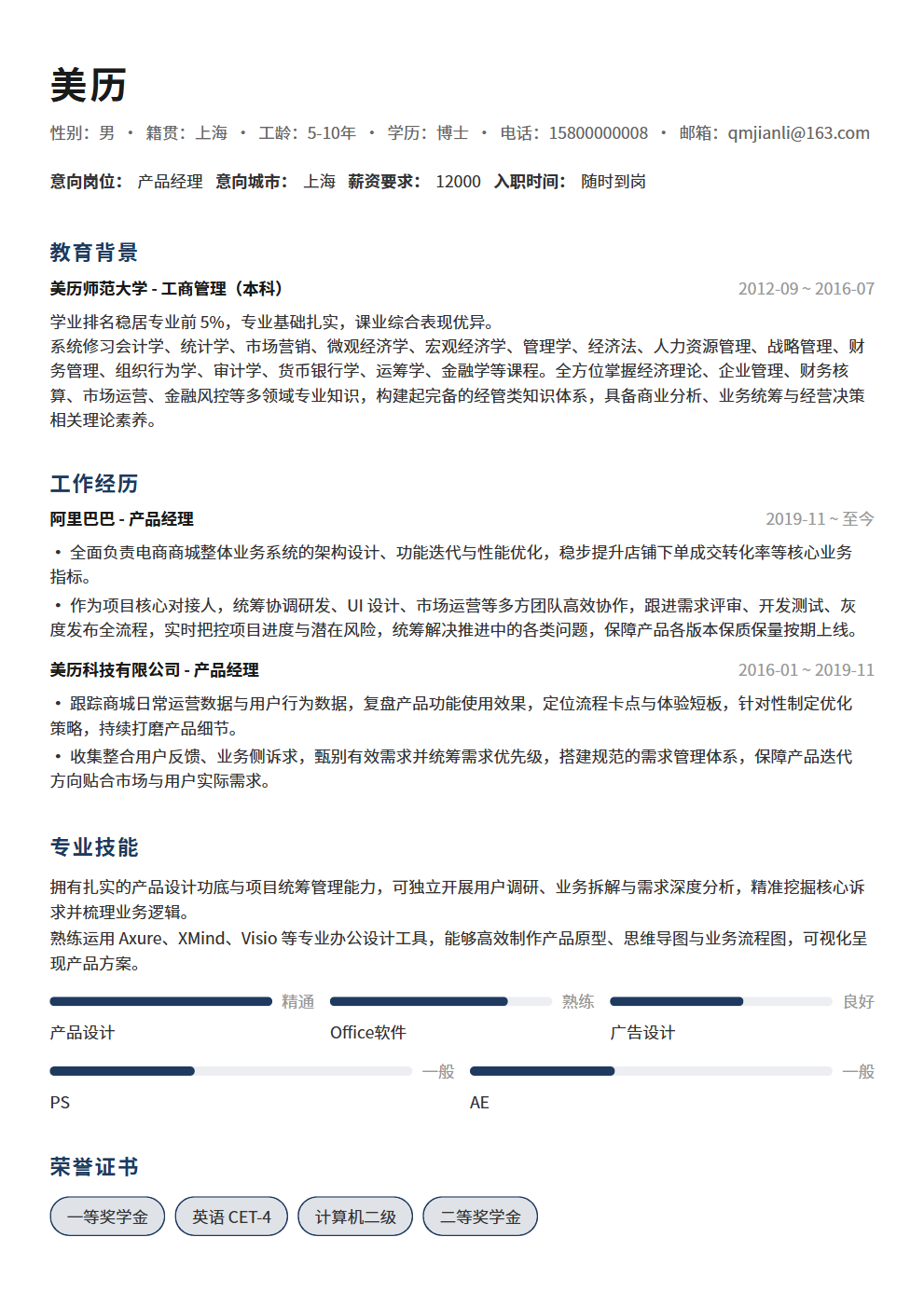
After choosing your industry, the next step is preparing a resume that makes HR take notice. Use BeautyResume resume editor—professional templates + smart formatting that makes your project experience and skill advantages stand out. For fresh graduate job hunting, a great resume is your first "admission ticket."