The One-Page Resume Rule: Why HR Throws Out Resumes Longer Than One Page
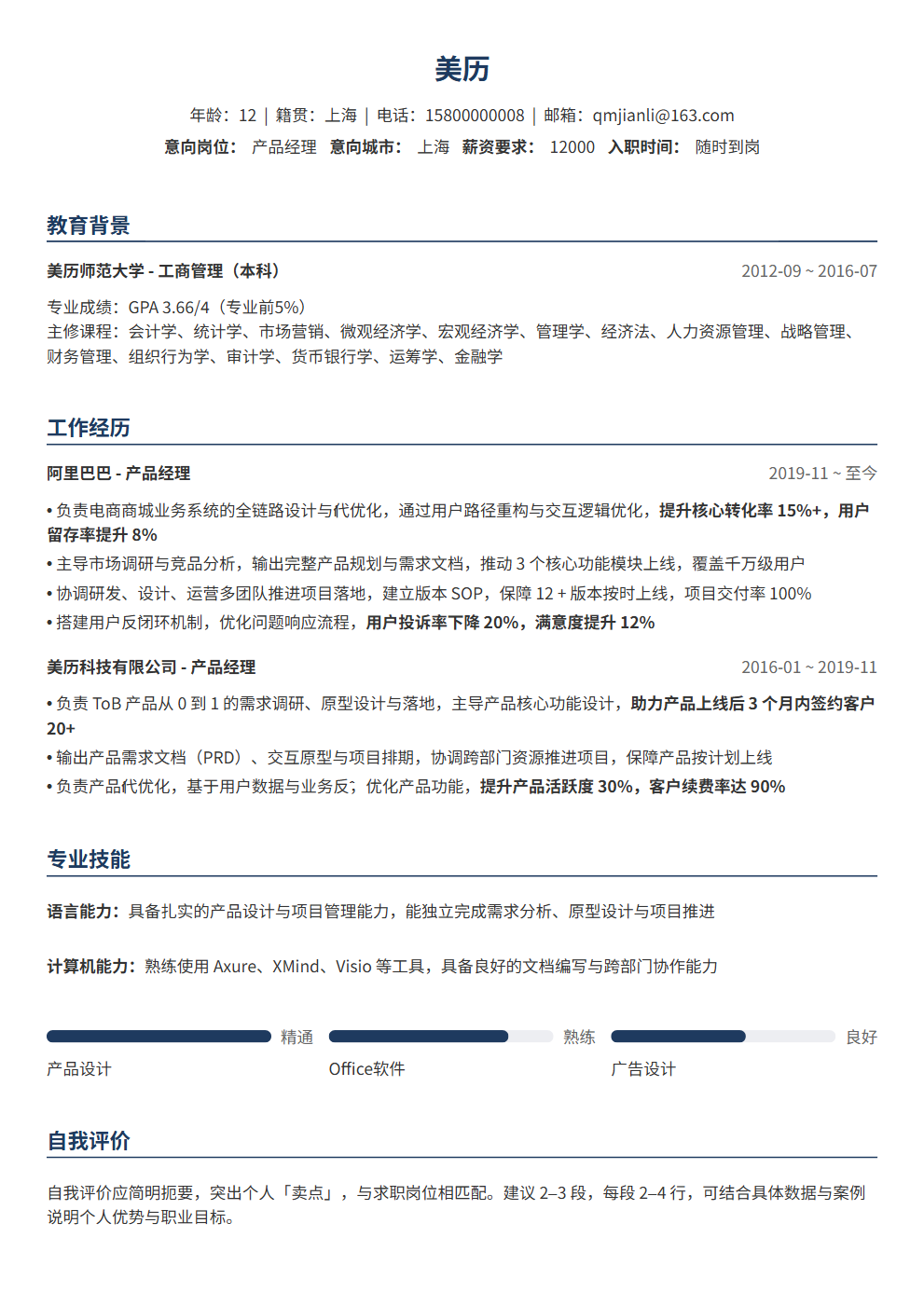
Think a 2-3 page resume shows how accomplished you are? HR only spends 6 seconds scanning — resumes over one page are likely discarded immediately. Learn how to condense your resume to one page while keeping all key highlights.
1. HR Spends 6 Seconds — Your Second Page Never Gets Read
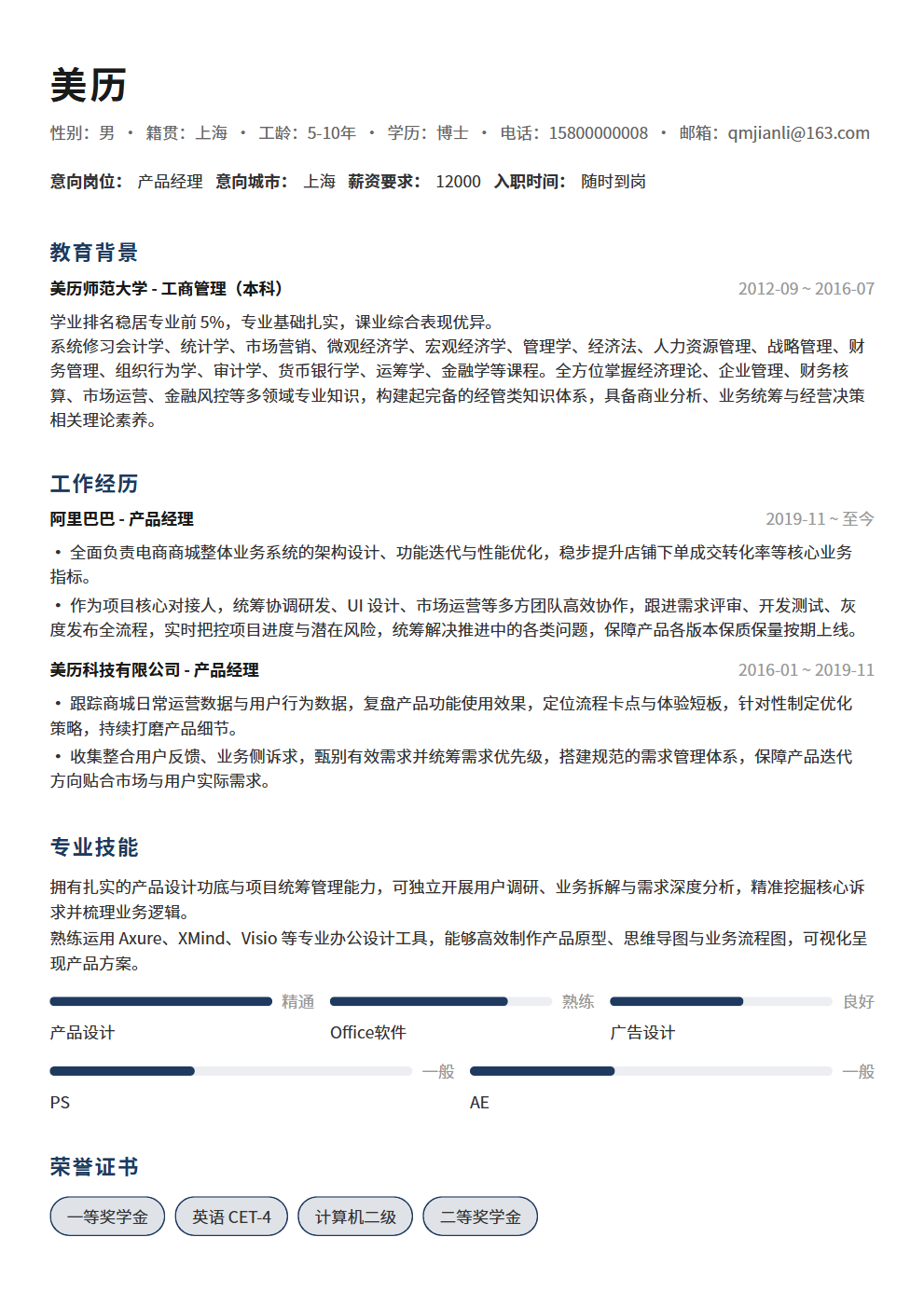
You spent 3 hours filling pages 2 and 3, thinking more content means a stronger resume. Here's the truth: HR spends an average of 6 seconds scanning a resume. In 6 seconds, they'll catch your name, your most recent job, and key skills. Page two? Most recruiters won't even flip to it. A resume exceeding one page doesn't say "accomplished" to HR — it says "can't prioritize." The one-page rule isn't a suggestion; it's a hard threshold.
2. Why One Page Is Actually More Competitive
Many people feel one page can't capture their experience. But one page is precisely what tests your ability:
- One page = distillation skills: Condensing 5 years into one page shows you can identify what matters — a core professional competency
- One page = higher information density: Every sentence carries weight, no fluff — HR reads more efficiently
- One page = stronger professionalism: A tight one-pager looks more polished and confident than a loose three-pager
- One page = better relevance: It forces you to include only what's relevant to the target role, automatically filtering out noise
Remember: a resume isn't an autobiography — it's an advertisement. The art of advertising isn't listing every feature; it's moving the reader with the fewest words possible.
3. Five Common Reasons Your Resume Exceeds One Page
Why does your resume spill onto a second page? Chances are you're making these mistakes:
- Trying to include everything: A part-time job from 10 years ago, irrelevant hobbies, childhood awards — delete them all
- Verbose descriptions: One experience takes 6 lines when 2 would suffice
- Overly long self-summary: 200 words of self-evaluation that HR barely glances at
- Loose formatting: Excessive line spacing, too much whitespace, oversized fonts — content for one page stretches to two
- Redundant information: The same skills and tools repeated across different experiences, wasting space
Check your resume — how many of these apply to you?
4. Four Practical Techniques to Condense Your Resume
Compressing a 2-3 page resume to one page isn't about blindly cutting content — it's strategic refinement:
- Cut irrelevant experiences: Keep only 2-3 core experiences directly related to the target role; summarize or delete the rest
- Consolidate duplicates: Skills and tools appearing across multiple roles should be listed once, presented as "Proficient in X, Y, Z"
- Compress descriptions: Limit each experience to 2-3 bullet points, each under 2 lines — use data instead of long sentences
- Optimize layout space: Set line spacing to 1.2-1.3x, reduce section gaps, use 10-11pt font, and tighten margins slightly
The core logic: remove everything that won't help you land an interview. Every remaining sentence must justify its existence.
5. One-Page Strategies by Experience Level
"I have 10 years of experience — how can I fit that on one page?" Different experience levels call for different strategies:
- 0-3 years: Focus on internships and first 1-2 jobs; education takes up 1/4 of the page; skills section can be slightly detailed
- 3-7 years: Only include the most recent 2-3 positions; early career gets one line; education compressed to a single line
- 7+ years: Highlight only the 2 most recent core roles + key achievements; everything else summarized as "Previously held positions at X as Y"
The more experience you have, the more you should focus on recent achievements. HR cares about what you can do now, not what you did a decade ago.
6. Golden Rules for One-Page Resume Formatting
Once content is streamlined, formatting must keep pace. Here are the golden rules for one-page layouts:
- F-pattern visual flow: HR's eyes scan in an F-pattern from top-left to bottom-right — place the most critical information in the upper-left zone
- Clear section separation: Use thin lines or whitespace to divide sections so HR can grasp the structure within 6 seconds
- Bold key information: Company names, job titles, and key metrics in bold to guide HR's eyes
- No large text blocks: Keep each bullet point to 1-2 lines; use bullets instead of paragraphs
- Consistent visual style: No more than 2 fonts and 2 colors — keep it clean and professional
Good formatting helps HR grasp your 3 core highlights in 6 seconds. Bad formatting gets your resume closed in 6 seconds.
7. Common Pitfalls of One-Page Resumes
In the pursuit of one page, it's easy to fall into these traps:
- Shrinking font to 8pt to fit everything: Text too small to read is an instant rejection. Minimum font size: 9pt
- Deleting important information to save space: Key achievements and data should never be cut — remove irrelevant experiences and empty phrases instead
- Cramming everything with no whitespace: A wall of text is worse than two pages. Whitespace provides visual breathing room
- Using tables to force content in: Multi-column layouts may seem space-efficient but offer a poor reading experience
The goal of one page is to improve reading efficiency, not to cram everything in. If it truly doesn't fit, you haven't finished filtering yet.
Summary
The one-page resume rule isn't a limitation — it's an exercise in presenting your core value in the most refined way possible. HR spends only 6 seconds; your resume must convey three things in that time: who you are, what you've done, and what you can deliver. Cut irrelevant experiences, compress redundant descriptions, and optimize layout space — one page can absolutely contain your full competitive edge. If you're still struggling with resume formatting and content refinement, try BeautyResume's optimization tools — smart layouts and one-click condensation help your resume deliver maximum value on a single page, ensuring every application counts.