The Difference Between Job-Hopping Resumes and Internal Promotion Resumes: One Resume Cannot Serve Both Purposes
Using the same resume for external job hunting and internal promotion? Big mistake. External interviewers don't know you and need a complete narrative; internal reviewers know you well and care about incremental impact. This guide breaks down the core differences in audience, focus, achievement framing, and risk handling.
1. Why the Same Resume Can't Serve Both Purposes
Many people think a resume is a resume — why not use the same one for job hunting and internal promotion? But the audiences are completely different, and so are their information needs. When job hunting, external interviewers know nothing about you and need a complete narrative; when seeking promotion, internal reviewers are intimately familiar with your daily work and want to see what you "can still do" rather than what you've "already done."
Using a job-hopping resume for promotion is like introducing yourself to an old friend with a product manual — misaligned information, diminished impact. Using a promotion resume for external interviews is like telling a stranger only about incremental changes without context — they won't understand what you're talking about.
2. Difference 1: Different Audiences — Strangers vs. Acquaintances
This is the most fundamental difference between the two types of resumes, and all other differences stem from it.
Job-hopping resume audience: External HR and interviewers who know nothing about you. They need to get to know you from scratch and determine whether you're worth interviewing and whether you match the position. Therefore, job-hopping resumes need to:
- Provide complete career background — start/end dates for each experience, company descriptions, role responsibilities
- Build a clear career narrative — let HR see your career development trajectory at a glance
- Use industry-standard language — different companies have different terminology systems; you must translate into expressions the other party can understand
Promotion resume audience: Direct managers and cross-departmental reviewers who are very familiar with your work. They don't need background introductions; they need:
- Highlighted incremental contributions — not "what I did" but "what I did additionally"
- Demonstrated capability leap — proving you already possess next-level abilities
- Reflected big-picture perspective — not just execution level, but strategic thinking and cross-team influence
3. Difference 2: Different Focus — Comprehensive Display vs. Precision Breakthrough
Job-hopping resumes need to comprehensively display your competitiveness, making HR interested in you within 10 seconds. Promotion resumes need to precisely break through promotion criteria, convincing reviewers you're ready for greater responsibility.
Job-hopping resume priority order:
- Core skills alignment with target position — place in the most prominent position
- Representative project achievements — every project needs quantified results
- Career development trajectory — showing a trend of continuous growth and progress
- Industry knowledge and professional depth — proving you're more than an executor
Promotion resume priority order:
- Contributions beyond current level — proactively taken extra responsibilities, cross-team collaboration leadership
- Impact on team and business — not just individual output, but driving force for others and the organization
- Evidence of next-level capabilities — already doing next-level work, not just "hoping" to
- Future plans — what you intend to do after promotion, what new value you'll bring to the team
4. Difference 3: Different Achievement Framing — "I Achieved" vs. "I Changed"
The same work results are framed completely differently in the two types of resumes.
Achievement framing in job-hopping resumes — emphasize results and scale:
- "Led XX project, serving 5 million users, revenue grew 30%" — numbers and scale are what external interviewers care about most
- Need to explain project context and your specific role — because interviewers lack context
- Each achievement must be independently complete — you can't assume interviewers know any background information
Achievement framing in promotion resumes — emphasize change and increment:
- "Automated XX process from manual to automated, improving team efficiency by 40%" — reviewers care more about what change you brought
- No need to explain project context — reviewers already know the context
- Focus on how and why you did it — proving your capability has surpassed the current level
A key distinction: job-hopping resumes can say "I was responsible for XX," but promotion resumes must say "Beyond XX, I also proactively did YY." Reviewers will think: "These were already your core responsibilities — why do they count as achievements?"
5. Difference 4: Different Risk Handling — Avoiding Weaknesses vs. Confronting Shortcomings
Job hunting and promotion face different types of risks, requiring completely different handling approaches.
Job-hopping resume risk handling:
- Downplay unfavorable information: frequent job changes can be consolidated, employment gaps can be filled with project experience
- Highlight strengths to cover weaknesses: if education isn't strong, emphasize project achievements; if projects aren't big, emphasize technical depth
- Avoid exposing shortcomings: no need to proactively mention failures — a resume showcases your best side
Promotion resume risk handling:
- Confront shortcomings directly: reviewers already know your weaknesses; avoiding them seems dishonest
- Show growth: transform past failures into learning experiences — "XX project fell short of expectations, but I summarized YY lessons and successfully applied them in the subsequent ZZ project"
- Proactively propose improvement plans: reviewers want to see not just that you recognize problems, but that you have solutions
Core difference: job-hopping resumes "play to strengths," while promotion resumes "play to strengths AND address weaknesses." External interviewers can't see your shortcomings, but internal reviewers can — and they'll bring them up during reviews.
6. Practical Comparison of the Two Resume Types
Using the same person's same work experience as an example, see how the two resumes differ:
Job-hopping version:
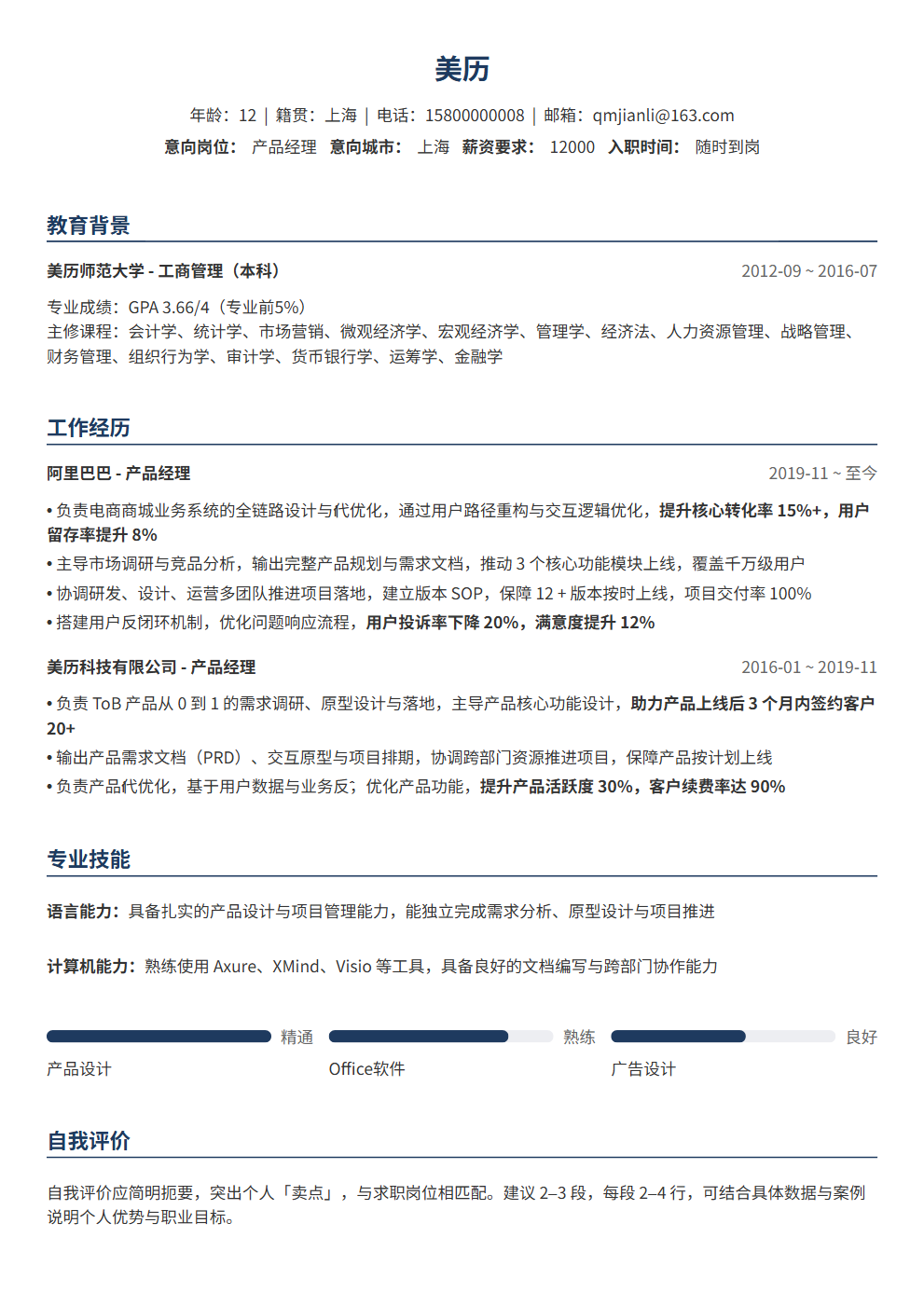
- XX Company, Senior Engineer, 2023.06 - Present
- Led core trading system architecture design, supporting 1 million daily transactions
- Spearheaded system microservices transformation, increasing deployment frequency from monthly to 3 times daily
- Established tech sharing program, organized 20+ sessions covering 80% of team members
Promotion version:
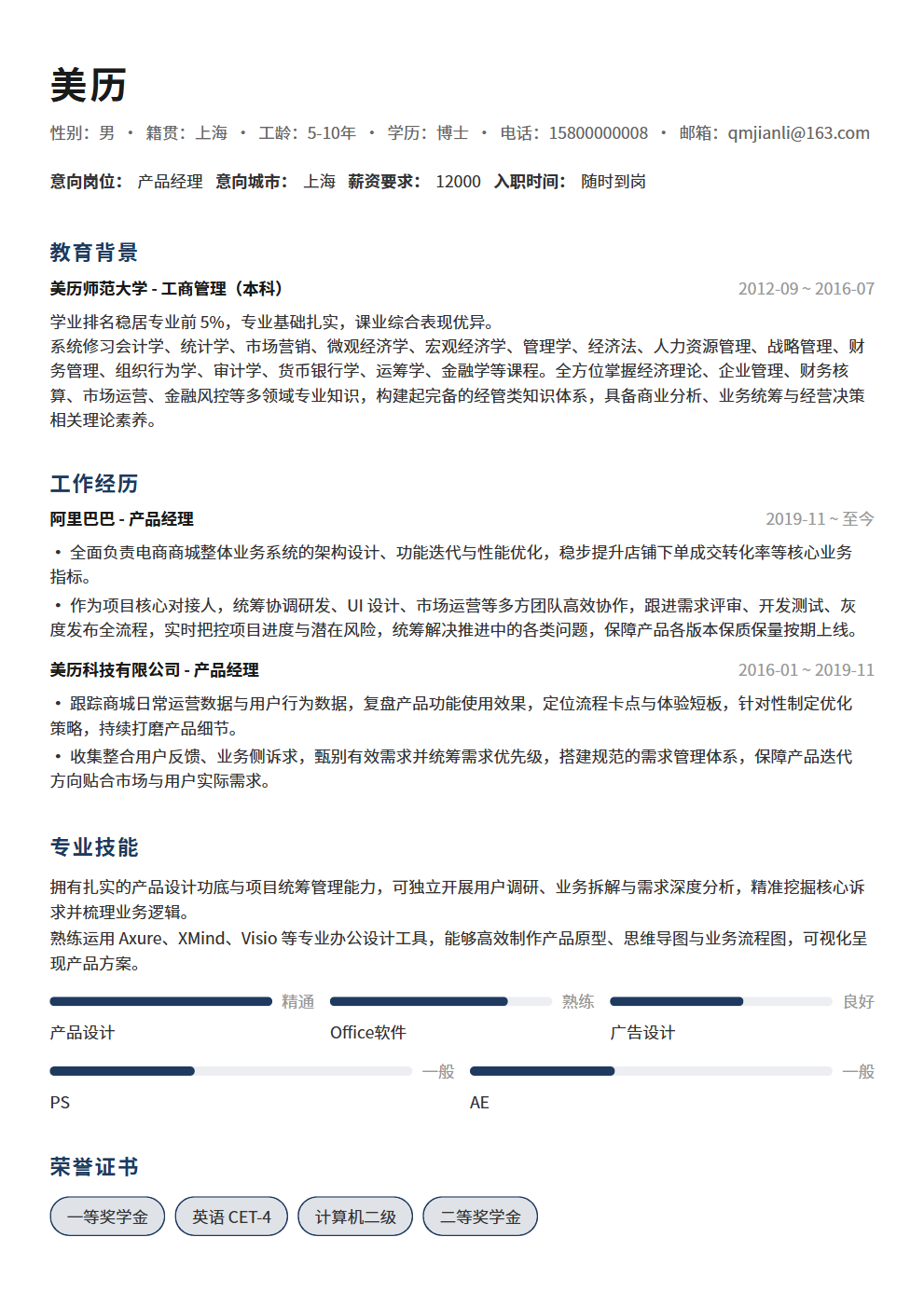
- Contributions beyond current level: Beyond senior engineer responsibilities, proactively served on architecture review committee, participating in architectural decisions for 3 core systems
- Team impact: The tech sharing program wasn't a KPI requirement but was self-initiated, transforming the team's tech culture from passive learning to proactive sharing
- Evidence of next-level capabilities: Already fulfilling partial Tech Lead responsibilities — leading new hire training program, participating in quarterly tech planning, coordinating resources across teams
7. Three Common Mistakes
- Mistake 1: Writing promotion resumes as work summaries — listing what you did without explaining why these warrant promotion
- Mistake 2: Being overly modest in job-hopping resumes — thinking "these don't count for much," resulting in a resume with no highlights
- Mistake 3: Mixing the two approaches — using job-hopping resume logic for promotion materials or vice versa, both leading to information misalignment
Summary
The fundamental difference between job-hopping and promotion resumes lies in how different audiences demand different information strategies. Job-hopping resumes target strangers and need complete narratives, comprehensive displays, and playing to strengths; promotion resumes target acquaintances and need precision breakthroughs, incremental presentations, and confronting shortcomings. The same resume can't serve both purposes, just as the same talking points can't work for both strangers and old friends. A resume is fundamentally a communication tool, and good communication is always "audience-specific." Once you understand this logic, you can tailor the most effective resume strategy for any occasion — whether you're looking outward for new opportunities or looking inward for a bigger stage.