The Complete Job Search Guide for New Graduates: From Resume to Signing, Navigate Graduation Season Without Detours
Graduation season is here — are you excited but also anxious? Excited to finally enter the professional world, but anxious about how to write your resume, where to…
Graduation season is here — are you excited but also anxious? Excited to finally enter the professional world, but anxious about how to write your resume, where to apply, how to prepare for interviews, how to negotiate salary, and what an employment agreement actually means? There are so many questions nobody teaches you, and you're left to figure everything out on your own — often learning the hard way. Statistics show that over 50% of new graduates make at least 3 avoidable mistakes during their job search. Today I'll walk you through the 5 major stages of the job search process, with specific action steps for each stage, so you can avoid detours and land your ideal offer.
Stage 1: Resume Preparation — Your First Impression
Your resume is your first "meeting" with the recruiter. A great resume helps you stand out from hundreds of applicants. But many new graduates' resumes are either too sparse (just basic info + education), too flashy (overly designed templates with distracting effects), or too careless (typos, messy formatting). So how should you write it?
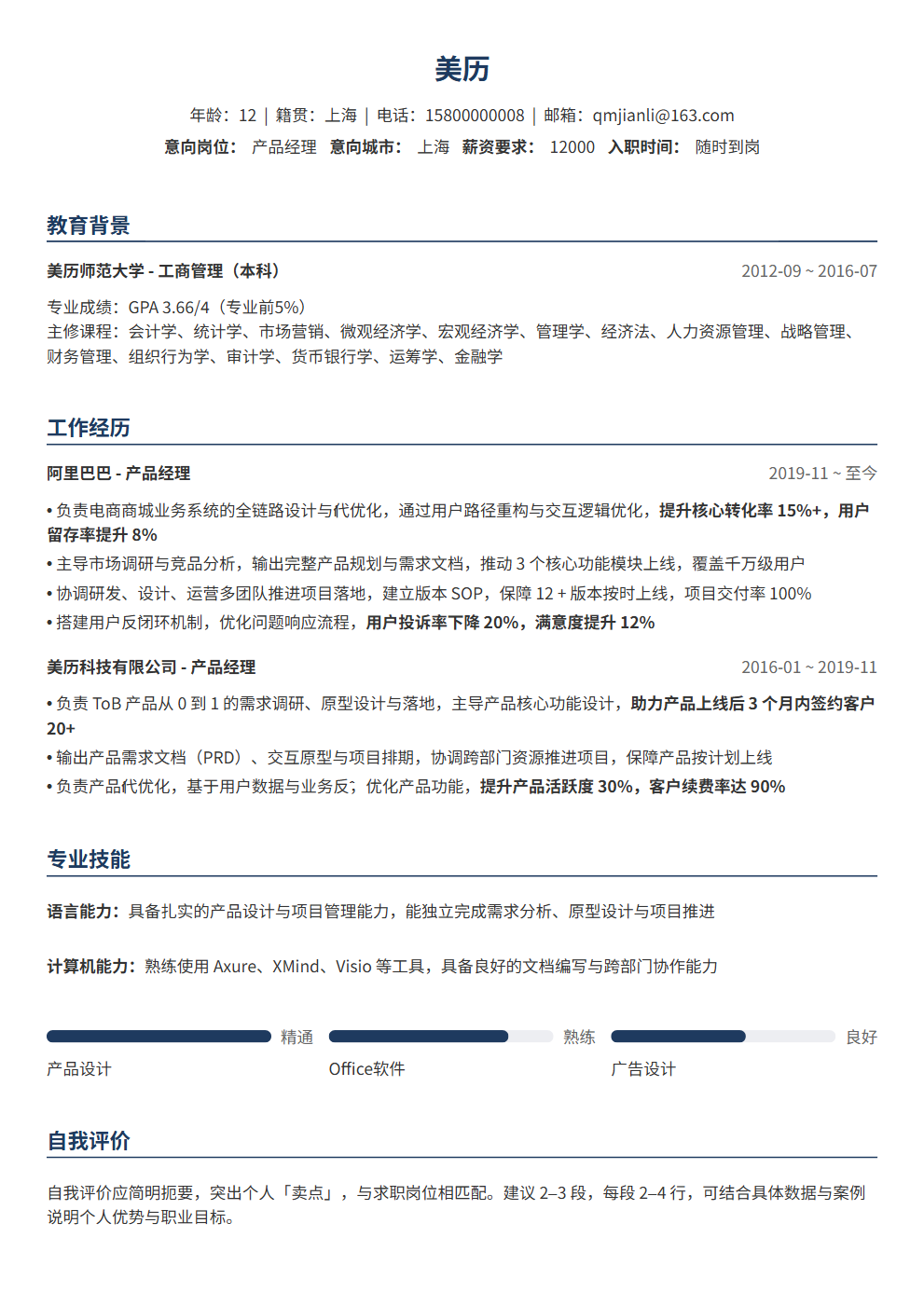
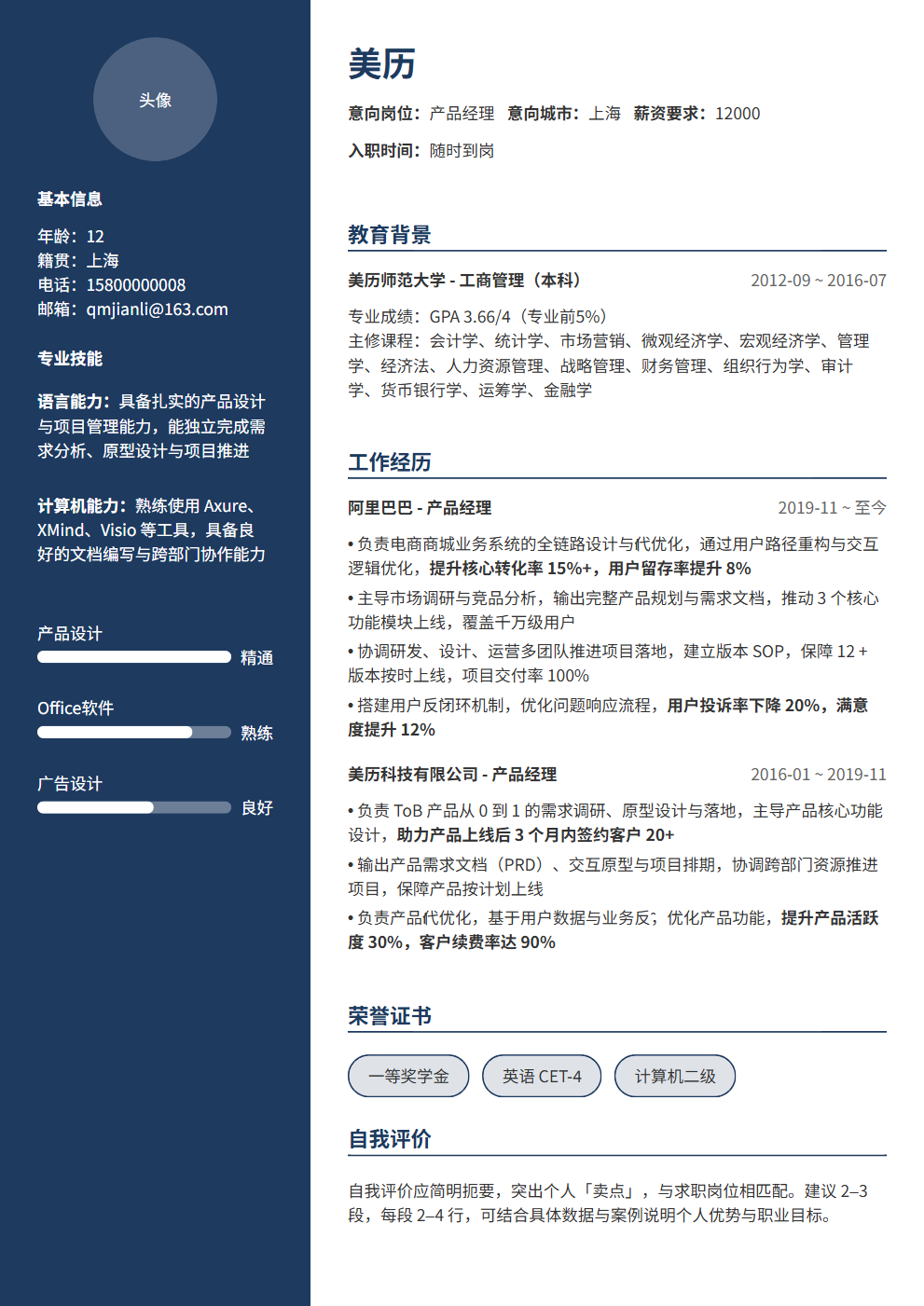
5 Must-Have Resume Sections for New Graduates
- Basic information: Name, phone, email, and target position. Note: Use a professional email address (e.g., yourname@domain.com), not a casual nickname email. Your target position should be specific, like "Product Operations Intern," not "anything is fine."
- Education: School, major, degree, and graduation date. If you attended a well-known school or your major is directly relevant, include your GPA, key courses, and honors. If not, keep it simple — don't overcompensate.
- Internship/Project experience: This is the core of a new graduate's resume. Use the "STAR method" — Situation, Task, Action, Result. For example: "During my internship at [Company] (Situation), I was responsible for [Project] (Task), and through [Method] (Action), I achieved [Result] (Result)." Emphasize results, ideally with quantifiable data.
- Skills and certifications: List skills and certifications relevant to the position. Don't list "proficient in Word" — everyone has that. Instead, list differentiating skills like "Python data analysis" or "CFA Level 2 passed."
- Campus activities and honors: Student government, clubs, competition awards, etc. These demonstrate leadership, teamwork, and overall qualities, but don't overdo it — 2-3 items are enough.
3 Fatal Resume Mistakes
- Mistake 1: Can't even fill one page. This means you have too little experience or don't know how to mine your experiences. Even small projects or internships can shine with the STAR method.
- Mistake 2: Typos and messy formatting. This is the #1 dealbreaker for recruiters. A resume with typos goes straight to the trash. Proofread at least 3 times before submitting.
- Mistake 3: Using one resume for every position. Different roles require different resumes. Applying for a product role? Highlight product-related experience. Applying for operations? Emphasize operations experience. Prepare at least 2-3 resume versions.
Stage 2: Application Strategy — Targeted Applications Beat Mass Applying
Many new graduates adopt a "spray and pray" approach — applying to dozens of positions daily and hearing nothing back. The problem: your resume doesn't match the role, and recruiters can tell it's a mass application at a glance. The right strategy is "targeted applying."
4 Steps for Targeted Applications
- Step 1: Define your goals. Decide what industry, role, and city you want. "Anything is fine" equals "nothing will work."
- Step 2: Filter companies. Based on your goals, identify 20-30 target companies. Categorize them into 3 tiers: Reach (5-8 companies that are a stretch but worth trying), Match (10-15 companies at your level), and Safety (5-8 companies where you have a strong chance).
- Step 3: Customize your resume. Adjust your resume's emphasis for each company's job requirements. Put the most relevant experience first and use keywords from the job description to optimize your resume.
- Step 4: Timing matters. The golden periods for campus recruiting are September-November (fall recruitment) and March-May (spring recruitment). Don't wait until after graduation — by then, the best positions are already filled.
Choosing Application Channels
- Campus information sessions: The most direct channel — you can interact face-to-face with recruiters, and some companies schedule interviews on the spot.
- Job platforms: Major job boards are suitable for both campus and experienced-hire positions.
- Company websites: Large companies typically have dedicated campus recruiting pages. Applying directly on their website is the most reliable method.
- Referrals: If you have alumni at target companies, ask them to refer you. Referred resumes have a 3-5x higher pass rate than regular applications.
- Social media: Follow target companies' official accounts to stay updated on recruiting information.
Stage 3: Interview Preparation — Never Go Unprepared
The interview is the decisive step in whether you get an offer. Many new graduates fail interviews not because they lack ability, but because they lack preparation.
5 Pre-Interview Preparations
- Research the company: Core business, recent news, company culture, and competitive landscape. Mentioning your knowledge of the company during the interview is a major plus.
- Understand the role: Read the job description carefully, understand the core requirements, and prepare corresponding experiences and examples.
- Prepare your self-introduction: Have both a 1-minute and 3-minute version. Don't recite your resume — tell a story about "who you are, what you've done, and why you're a great fit for this role."
- Prepare for common interview questions: "What are your strengths and weaknesses?" "Why did you choose our company?" "What's your greatest achievement?" "How do you handle challenges?" Prepare 2-3 examples for each question.
- Prepare questions to ask them: When the interviewer asks "Do you have any questions for me?" never say "no." Prepare 2-3 thoughtful questions, such as "What's the biggest challenge in this role?" or "How does the team typically work together?"
3 Interview Tips That Earn Bonus Points
- Tip 1: Use data to support your answers. Instead of saying "I improved the conversion rate," say "By optimizing [Process], I increased the conversion rate from 15% to 22%."
- Tip 2: Show your thinking process. You won't have perfect answers to every question, but you can demonstrate how you think. "I don't have direct experience with this, but I would approach it from [Angle]..."
- Tip 3: Be genuine. If you don't know something, say so. Interviewers appreciate honesty far more than someone who pretends to know everything.
Stage 4: Salary Negotiation and Signing — The Final Negotiation
Getting an offer isn't the finish line — salary negotiation and contract signing are the final negotiation. Many new graduates, unfamiliar with market rates, either don't dare to negotiate or sign unfavorable contracts without understanding them.
3 Key Points for New Graduate Salary Negotiation
- Know the market rate: Salary ranges for new graduates vary significantly by industry and city. Before negotiating, research the salary levels for the same industry, city, and role. Ask alumni, check salary reports, and review job postings.
- Look beyond monthly salary: The most common mistake new graduates make is focusing only on the monthly number. Compensation is a total package — monthly salary, annual bonus, benefits contributions, allowances, and stock options all count. A monthly salary of ,000 with a 3-month annual bonus may be better than ,000 with only a 1-month bonus.
- New graduates can negotiate too: Many think "I'm a fresh graduate, I have no negotiating power." Not true. If you have multiple offers or strong internship experience and skills, you can absolutely try to negotiate. You can say: "Thank you for this offer — I'm very excited about joining your company. Given my experience and skills in [Area], I'd like to know if there's room for adjustment on the compensation."
5 Contract Clauses You Must Review Before Signing
- Compensation clause: Monthly salary, annual bonus, performance bonus amounts and payment conditions must be clearly stated in writing. Verbal promises don't count.
- Probation clause: Probation duration (for contracts of 1-3 years, probation cannot exceed 2 months; for contracts of 3+ years or indefinite contracts, probation cannot exceed 6 months) and probation salary (must be at least 80% of the regular salary).
- Penalty clause: Penalties in employment agreements typically shouldn't exceed one month's salary. If the penalty is unreasonably high, negotiate to lower it. Note: Companies can only require penalty payments in two situations — they provided you with specialized training at their expense, or you signed a non-compete agreement.
- Work location clause: Confirm that the work location matches what was discussed during the interview. Some contracts include language like "subject to company arrangement," which could mean you'll be assigned to a different city.
- Non-compete clause: If the contract includes a non-compete clause, carefully review the scope, duration, and compensation. Non-compete periods cannot exceed 2 years, and the company must pay monthly non-compete compensation.
Stage 5: Pre-Onboarding Preparation — Transitioning from Student to Professional
After signing the contract and before your first day, there are important preparations to make. These will help you adapt to the workplace faster and successfully navigate your probation period.
5 Pre-Onboarding Preparations
- Complete graduation procedures: Make sure you receive your diploma and degree certificate on time. Without these documents, your start date may be delayed or your offer could be rescinded.
- Learn the company culture: Through the company website, social media, and current employees, learn about the company's culture, values, and work style so you can mentally prepare.
- Build role-related skills: Use the time before onboarding to learn the skills and tools required for your role. For example, if you're doing data analysis, study advanced Excel, SQL, and Python in advance.
- Prepare onboarding documents: ID, diploma, degree certificate, bank account info, health examination report, and any previous employment separation documents — have everything ready.
- Adjust your mindset: The biggest shift from student to professional is going from "passive learning" to "active responsibility." In school, professors chase you for assignments; at work, nobody will chase you — but your performance and growth depend entirely on you. Adjust your mindset early to adapt faster.
5 Common Mistakes New Graduates Make
Finally, here are the 5 most common pitfalls for new graduates. I hope you avoid every single one:
- Mistake 1: Waiting until graduation to start job hunting. This is the biggest mistake. Campus recruiting peaks the year before you graduate. By the time you graduate, the best positions are gone. Correct approach: Start preparing in your junior year (or second year of grad school), and go all-in during fall recruitment.
- Mistake 2: Only applying to top-tier companies. Top companies are great, but competition is fierce. Many new graduates apply only to big names and end up empty-handed. Correct approach: Apply to a mix of large companies, mid-size firms, and startups to diversify your risk.
- Mistake 3: Lying on your resume. To get interviews, some new graduates exaggerate or fabricate internship experience. If a background check catches this, the offer is immediately revoked. Correct approach: Honesty is the baseline. Use the STAR method to highlight the best aspects of your real experiences.
- Mistake 4: Only preparing for technical interview questions. Many new graduates spend all their time on technical problems and neglect behavioral questions (like "What's the biggest challenge you've faced?"). In reality, behavioral questions make up over 50% of most interviews. Correct approach: Prepare for both technical and behavioral questions.
- Mistake 5: Thinking signing the employment agreement means you're done. The employment agreement is just a statement of intent — it's not the employment contract. You'll still need to sign a formal employment contract when you start, and its terms may differ from the agreement. Correct approach: Review the agreement carefully before signing, and double-check everything when signing the employment contract.
Campus Recruiting vs. Experienced Hiring: Which Path Should New Graduates Take?
Many new graduates aren't clear on the difference between campus recruiting and experienced hiring, or which path they should follow. Here's a quick comparison:
- Campus recruiting: Targeted at new graduates, lower barriers to entry, companies value potential and learning ability, structured training programs, but limited role choices and relatively lower salaries.
- Experienced hiring: Targeted at candidates with work experience, higher barriers, companies value immediate productivity, relatively higher salaries, but more intense competition and less friendly to new graduates.
- Recommendation: Prioritize campus recruiting. It's an exclusive advantage channel for new graduates — once you miss it, it's gone. If you have rich internship experience, you can also participate in experienced hiring simultaneously, but campus recruiting should be your main battlefield.
Conclusion: Don't Panic During Graduation Season — Take It Step by Step
The new graduate job search may seem overwhelming, but broken down it's just 5 stages: resume preparation, application strategy, interview preparation, salary negotiation and signing, and pre-onboarding preparation. Each stage has clear goals and actionable steps — you just need to execute them systematically. Don't be anxious, don't be aimless, and don't settle. Remember: your first job doesn't need to be perfect, but you should take it seriously. Job hunting is a marathon, not a sprint — maintain your pace, keep moving forward, and you'll find your place. Good luck this graduation season!
Want to make your new graduate job search more efficient? Try BeautyResume — exclusive new graduate templates + one-click smart formatting to make your resume stand out from the very first glance.