Surviving Overtime Culture at Work — How to Thrive Without Burning Out or Falling Behind
Don't work overtime and your boss thinks you're lazy; do work overtime and your body can't take it. This guide offers survival strategies for workplace overtime culture: how to judge whether overtime is necessary, replace hours with efficiency, gracefully decline pointless overtime, and protect your health and growth time. Thrive without burning out.
Afraid of Falling Behind Without Overtime? Afraid of Burning Out With It? Here's What to Do
Leave at 6 PM and your boss gives you a funny look; stay until 9 PM and your body starts sending warning signals. Don't overwork and you get labeled "unmotivated"; overwork and your health takes the hit. This isn't just your problem — it's a systemic issue with workplace overtime culture. No inspirational fluff here — just practical strategies for surviving overtime culture without falling behind.
First, Understand: Not All Overtime Is the Same
Not all overtime is created equal. Figure out which type you're dealing with before you can address it:
- Genuinely Busy Overtime: Project deadlines, emergency requests — this type has a clear end point and is acceptable occasionally
- Performative Overtime: Nobody dares leave before the boss, and everyone competes to see who stays latest — completely pointless, pure waste
- Low-Efficiency Overtime: Meetings and slacking off during the day, actual work only starts at night — this is a personal time management problem
- Anxiety-Driven Overtime: Your work is actually done, but you're afraid to leave because you don't want to seem like you're not working hard enough — this is a psychological issue
The last three types of overtime are fundamentally not worth it. Your job is to recognize them and gradually reduce them.
Replace Hours With Efficiency — 3 Ways to Leave on Time
In an overtime culture, what gets recognized isn't "who stays the longest" — it's "who delivers the fastest." Replacing hours with efficiency is the smartest move:
- Time-Block Working: Divide your day into 4-5 blocks of 90 minutes, with each block dedicated to one task only. Turn off WeChat notifications, put away your phone, close irrelevant tabs. 90 minutes of focused output beats 3 hours of fragmented work
- Priority Matrix: Spend 5 minutes every morning categorizing tasks into four groups — important and urgent, important but not urgent, urgent but not important, neither important nor urgent. Do important and urgent tasks first, eliminate the neither-important-nor-urgent ones, and schedule fixed time for important but not urgent tasks
- Meeting Diet: A lot of overtime happens because the day is consumed by meetings. If it can be resolved by email, don't meet. If it can be done in 15 minutes, don't schedule an hour. If you don't need to be there, don't attend. Every hour of meetings saved is one less hour of overtime
How to Gracefully Decline Pointless Overtime
Saying no to overtime isn't as simple as "I'm not staying." You need to decline strategically so your boss sees you as reliable, not lazy:
- Let Results Speak: First, make sure your core work is completed with high quality. When your boss sees your output, they won't fixate on when you leave
- Set Expectations Upfront: When receiving a task, state clearly: "I estimate this will take 2 days — I'll deliver by end of day Wednesday," rather than silently accepting and then rushing through overtime
- Offer Alternatives: If your boss wants a proposal tonight, say: "I'll put together a framework tonight and refine the details tomorrow morning — full version by 2 PM." You've acknowledged the need while negotiating reasonable time
- Say "I Need to Prioritize": When multiple tasks pile on, don't accept everything. Ask your boss proactively: "Which is more urgent — Project A or Project B? Which should I handle first?" Let your boss make the choice instead of silently working overtime to do everything
Self-Protection in Overtime Culture — Hold 3 Bottom Lines
You can't completely opt out of overtime culture, but you can hold your own boundaries:
- Health Bottom Line: Guarantee at least 2 non-overtime days per week. This isn't a luxury — it's a basic physical need. Consistently working overtime 5+ days a week will cause your efficiency to plummet, which defeats the purpose
- Growth Bottom Line: Set aside at least 3 hours per week for learning and self-improvement. Overtime only helps you complete current work; learning gives you the capital to move on. If a job doesn't even give you time to learn, it's not worth staying long-term
- Life Bottom Line: Don't let work consume your entire life. Maintain at least one interest or social circle outside of work. This isn't "slacking off" — it's essential for maintaining your mental health
How to Judge Whether a Job's Overtime Is Worth It
Not all overtime is worthless — the key is what you're getting in return. Use this standard to evaluate:
- Overtime with Growth: The overtime work helps you learn new things and build core experience — worth it in the short term, but watch your hours
- Overtime with Pay: Fair overtime pay or substantial project bonuses — acceptable, but don't trade your health for money
- Overtime with No Growth or Pay: Pure performative, low-efficiency, or anxiety-driven overtime — this type is just draining you. Start planning your exit
A simple test: if you removed the overtime pay, would you still want this job? If the answer is no, the job itself has a problem — overtime just amplifies it.
Not Overworking ≠ Giving Up — Find Your Own Rhythm
Many people equate "not overworking" with "quiet quitting." They're not the same thing. Not overworking means refusing to participate in meaningless competition — not giving up on effort. Finding your own rhythm is true workplace wisdom:
- Work with intense focus, then fully disconnect after hours — this beats "half-working while pretending to be busy" a hundred times over
- Spend your energy on core output, not on "looking busy"
- Regularly assess your market value — your worth isn't determined by how many hours you worked, but by what problems you can solve
Survive First, Then You Can Win
The workplace is a marathon, not a sprint. Those who work overtime every night aren't necessarily going further than you — many burn out after 3 years: their health collapses, their passion fades, and their thinking becomes rigid. Stay healthy, keep growing, and stay sharp — that's how you go the distance.
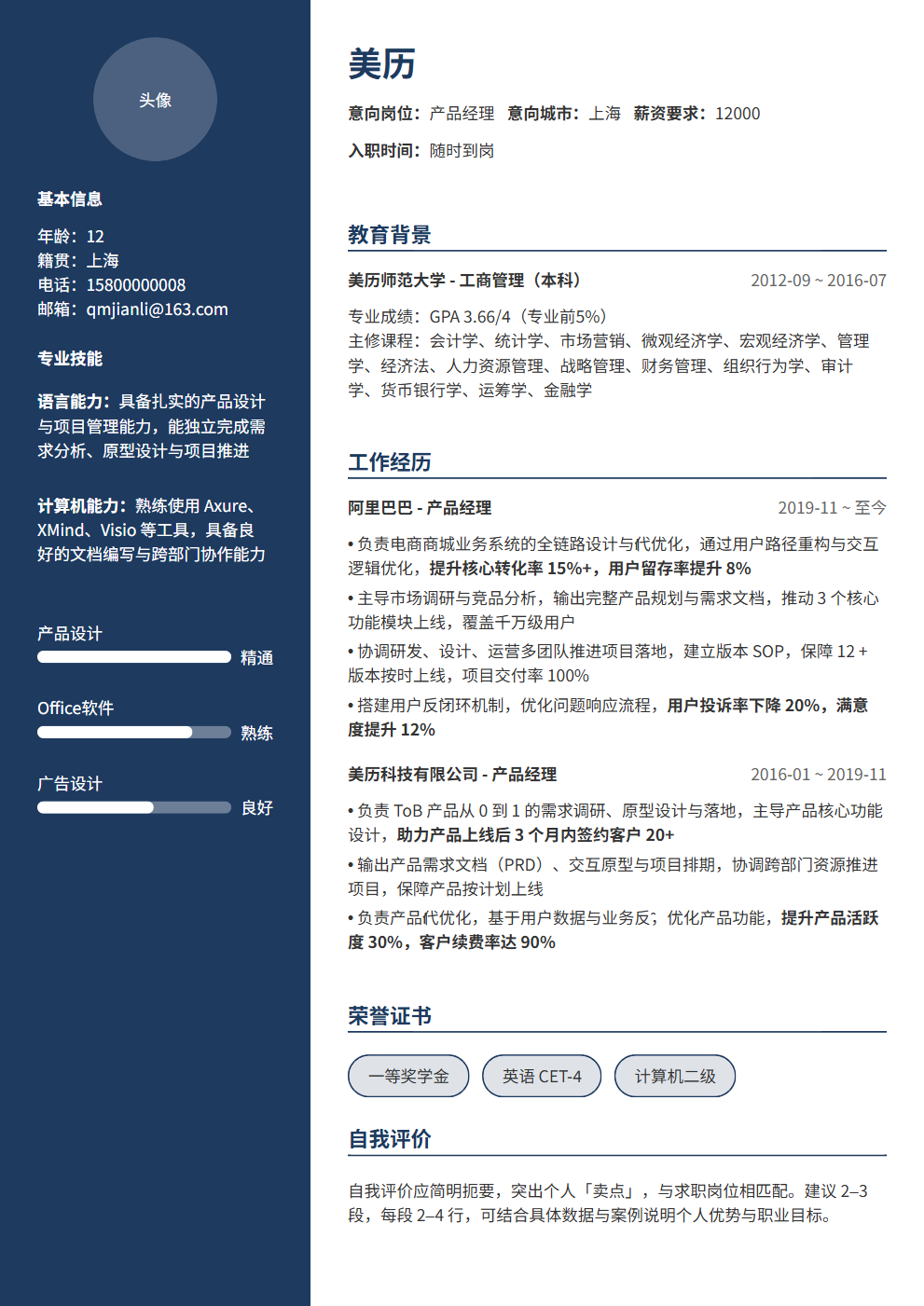
If you're thinking about finding a job with better work-life balance, the first step is optimizing your resume. Use BeautyResume to organize your core experiences and achievements, making every line say "I deliver efficiently — I don't need overtime to prove my worth." A great resume opens doors to great opportunities, and great opportunities keep you away from pointless overtime. Start optimizing your resume now and give yourself a better choice.