Stress Interviews: How to Stay Calm and Confident When the Interviewer Pressures You on Purpose
The interviewer deliberately challenges you, dismisses you, and fires rapid follow-up questions — it's not personal, it's a stress interview. A detailed guide to 3 stress interview formats and 4 response strategies to help you perform well under pressure.
Halfway through the interview, the interviewer suddenly says: "That answer was mediocre — not convincing at all." Your heart drops, you start getting nervous, your voice shakes, and your subsequent answers become increasingly disorganized. Or the interviewer fires three follow-up questions in a row, each trickier than the last, and you feel like you're being interrogated. Or they throw an extreme scenario at you: "What would you do if your entire proposal was rejected?" Your mind goes blank. Don't panic — this isn't the interviewer targeting you personally. It's a stress interview. Stress interviews deliberately create high-pressure situations to test your ability to react, control your emotions, and think logically under pressure. Many major companies and core roles use this method to screen candidates. Today, let's break down the 3 formats of stress interviews, 4 response strategies, and 3 reactions you absolutely must avoid, so you can perform well even under pressure.
The 3 Formats of Stress Interviews — Each "Challenge" Has Its Own Pattern
A stress interview isn't about the interviewer having a bad day — it's a purposeful assessment technique. Interviewers apply pressure to see how you react to stress, conflict, and rejection in real workplace situations. There are 3 main formats of stress interviews, each with different "challenge" methods and different focus areas.
- Format 1: Rapid follow-up questions — The interviewer follows up on every answer with "Why?" "How specifically?" "What if X happens?" — one question after another without giving you time to breathe. For example, you say "I improved efficiency by optimizing processes," and the interviewer immediately fires back: "What process did you optimize? Which specific steps did you change? What was the efficiency before? After? How did you handle resistance?" The focus of rapid follow-ups: Can you maintain logical clarity under pressure? Do you change your answers or contradict yourself when pressed? Can you make reasonable judgments with incomplete information?
- Format 2: Direct dismissal and questioning — The interviewer directly dismisses your answer or questions your competence. For example: "This proposal is completely unfeasible," "I don't hear any standout points in what you're saying," "Do you really think you're suited for this role?" The focus of dismissal: Do you lose emotional control when dismissed? Can you stand your ground and support your viewpoint with facts when questioned? Can you quickly adjust your thinking and propose a better solution after being challenged?
- Format 3: Extreme scenario pressure — The interviewer presents an extreme or dilemma scenario to see how you handle it. For example: "If your direct supervisor asked you to do something against regulations, how would you handle it?" "If you discovered a critical bug the day before launch, what would you decide?" "If a client changes requirements at the last minute, but your team has already been working overtime for a month, how do you coordinate?" The focus of scenario pressure: Can you make reasonable judgments and decisions under high pressure? Can you weigh pros and cons in dilemma situations? Can you maintain professional integrity in extreme circumstances?
Recognizing the format of a stress interview is the first step in responding to it. When you realize the interviewer is "applying pressure" rather than "targeting you," your mindset shifts completely — you'll treat the stress interview as a test rather than an attack, and respond more calmly.
Strategy 1: Stay Calm — Don't Enter Defense Mode
The most fundamental thing a stress interview assesses is your emotional control. The interviewer dismisses you, questions you, and presses you — all to see if you can hold steady. If you get flustered the moment you're challenged, or panic when pressed, the interviewer will conclude that you'll also crumble under pressure in real work situations. Staying calm is the top priority for handling stress interviews.
- Physical calmness: When the interviewer dismisses you, your first reaction might be a racing heart, shallow breathing, and sweaty palms. At this moment, take 3 deep breaths — inhale for 4 seconds, hold for 2 seconds, exhale for 6 seconds. Deep breathing activates the parasympathetic nervous system, lowering your heart rate and blood pressure, shifting you from "fight or flight" mode back to "rational thinking" mode
- Verbal calmness: Don't rush to refute or defend yourself. When the interviewer says "This proposal is unfeasible," your first reaction might be "How is it unfeasible?!" — but don't say that out loud. Pause for 1-2 seconds first (this pause won't be perceived as slow thinking — it'll be seen as careful consideration), then respond in a calm tone
- Mental calmness: Tell yourself "This is a stress interview, not a personal attack." The interviewer is dismissing your proposal, your answer — not you as a person. Treat "dismissal" and "questioning" as part of the interview process, not as a negation of your abilities. This cognitive shift is crucial — it moves you from a "being attacked" mindset to a "being assessed" mindset
- What not to do: Don't ask the interviewer "What do you think is wrong with it?" (this comes across as challenging their authority), don't say "I think my answer is fine" (this shows you can't accept feedback), don't stay silent for more than 10 seconds (this suggests poor stress tolerance). The right approach: first acknowledge that the interviewer's concern has merit, then supplement your supporting evidence or adjust your proposal
Remember, the interviewer isn't picking on you — they're seeing whether you can stay professional under pressure. Your performance under pressure reveals more about your true capabilities than your performance in your comfort zone. So treat the stress interview as an opportunity to showcase your emotional management skills, not as a confrontation.
Strategy 2: Respond to Challenges with Data and Facts
When the interviewer questions you, the most effective response isn't "I think I'm right" — it's supporting your viewpoint with specific data and facts. Data and facts are the most persuasive evidence — they don't rely on subjective judgment and can't be easily dismissed.
- Use data to respond to "Your proposal is unfeasible": When the interviewer says "This proposal is unfeasible," don't say "I think it's feasible" — that's not convincing. Instead, say: "Based on my previous project experience, a similar proposal implemented in a comparable context increased conversion rates by 25% and reduced costs by 15%. Of course, every situation is different, and I can adjust based on specific circumstances." When you speak with data, it's hard for the interviewer to dismiss your point outright
- Use facts to respond to "What are your standout points?": When the interviewer says "I don't hear any standout points," don't say "I'm really excellent" — that's empty talk. Instead, say: "The XX project I led built a complete user growth system from 0 to 1 in 3 months, growing monthly active users from 50,000 to 200,000 while reducing customer acquisition costs by 40%. The key innovation of this project was XX." With specific facts and results, your standout points emerge naturally
- Use examples to respond to "Do you really think you're suited for this role?": When the interviewer says "Do you really think you're suited for this role?" don't say "I think I'm very well-suited" — that's just self-assertion. Instead, say: "This role requires XX capability, and my experience with XX in my previous job directly speaks to this. For example, the XX project I was responsible for required achieving XX goals under XX conditions, and I accomplished XX results through XX methods — this aligns directly with the core requirements of this position." Use examples to build a logical connection between yourself and the role
- Notes on data-based responses: Data must be real and verifiable (don't fabricate data — the interviewer may probe for details), data must be directly relevant to the question (don't use irrelevant data to change the subject), and data needs comparison to be meaningful ("increased by 25%" is more persuasive than "reached XX")
The core logic of responding with data: transform a subjective debate into an objective discussion. When the interviewer challenges you, they're essentially asking "Can you prove that what you're saying is correct?" Proving it with data and facts is a hundred times more effective than refuting with emotions and attitudes.
Strategy 3: Acknowledge Weaknesses and Show Your Improvement Plan
When the interviewer questions a particular skill or experience and you genuinely have a gap, the best strategy isn't to stubbornly defend yourself — it's to honestly acknowledge it and demonstrate your improvement plan. The interviewer isn't looking for a perfect person; they're looking for someone who can face their shortcomings and continuously improve.
- Acknowledgment scripts: When the interviewer says "Your experience in this area seems insufficient," don't say "I think I have plenty of experience" — this only makes you look lacking in self-awareness. Instead, say: "It's true that my direct experience in this area is relatively limited, but I've been actively working to close that gap. For example, I recently completed XX course and participated in XX project, building a preliminary foundation in XX. I believe that on your company's platform, I can quickly grow to meet the role's requirements"
- How to present your improvement plan: Don't just say "I'll work hard to learn" — that's empty talk. State a specific plan: "I plan to focus on closing my knowledge gaps in XX during my first 3 months, specifically through XX methods. I'll also proactively seek guidance from experienced team members, with the goal of independently handling XX-type work within 6 months"
- Boundaries of acknowledgment: Acknowledge gaps that can be improved, like "insufficient experience" or "knowledge that needs development" — not things that are hard to change, like "personality flaws" or "value conflicts." For example, you can say "My experience in XX isn't deep enough yet," but don't say "I'm kind of lazy" or "I don't work well with others"
- The bonus effect of acknowledgment: Honestly acknowledging weaknesses actually earns bonus points — it demonstrates self-awareness, willingness to learn, and growth potential. Interviewers prefer someone who "knows their weaknesses and wants to improve" over someone who "thinks they can do everything." The former has room to grow; the latter often stagnates
Acknowledging weaknesses isn't showing weakness — it's a form of advanced confidence. Only someone who is truly confident dares to honestly admit their shortcomings in an interview. And presenting an improvement plan transforms "weaknesses" into "growth space," letting the interviewer see your potential and attitude.
Strategy 4: Turn Pressure into Motivation
The highest level of stress interview mastery isn't "withstanding pressure" — it's "leveraging pressure." When the interviewer applies pressure, you can turn it into an opportunity to demonstrate deeper capabilities — showing deeper thinking, more flexible adaptation, and firmer professional conviction under pressure.
- Turn follow-up questions into deep demonstrations: When the interviewer fires rapid follow-ups, treat them as an opportunity for deeper elaboration. For example, if they ask "What were the specific steps of your process optimization?", you can go from "what I did" to "why I did it that way" and "how I would optimize it if I could do it over." Follow-up questions give you the chance to show deeper levels of thinking, rather than staying at surface-level descriptions
- Turn dismissal into iteration: When the interviewer dismisses your proposal, iterate a better version on the spot. For example, if they say "Your proposal doesn't account for costs," you can respond: "You're right — I didn't fully factor in cost constraints. With that in mind, I would adjust the approach like this: XX." Iterating on the spot demonstrates your quick learning ability and flexible thinking — this is even more impressive than delivering a perfect proposal from the start
- Turn scenario pressure into value demonstration: When the interviewer presents a dilemma scenario, you can use your response to showcase your professional values and decision-making principles. For example, when asked "What would you do if your boss asked you to do something against regulations?", your answer not only shows your approach but also reveals your professional integrity and bottom-line thinking. This kind of value demonstration is hard to naturally present in a regular interview, but flows naturally in a stress interview
- The mindset foundation for transforming pressure: The prerequisite for turning pressure into motivation is that you don't treat the interviewer's pressure as an attack, but as "a more challenging opportunity to showcase yourself." Once this mindset shift happens, you'll actually perform better in stress interviews than in regular ones — because pressure brings out your best state
The interviewer applying pressure is essentially giving you an "extra credit" opportunity — if you perform well on the extra credit, your score will be higher than in a regular interview. So don't fear stress interviews — embrace them. A stress interview is your best chance to stand out.
3 Reactions You Absolutely Must Avoid
In stress interviews, certain reactions, once they appear, essentially guarantee interview failure. These 3 reactions are the "death lines" of stress interviews — absolutely do not cross them.
- Reaction 1 to avoid: Losing emotional control — After the interviewer dismisses you, you visibly display anger, grievance, frustration, or other negative emotions. For example, rolling your eyes, sighing, your tone becoming aggressive, or even directly saying "What do you mean by that?" Losing emotional control is the most fatal reaction in a stress interview — it directly proves your insufficient stress tolerance. The interviewer will think: if you can't control your emotions in an interview, what will you do when facing customer complaints, boss criticism, or colleague conflicts at work?
- Reaction 2 to avoid: Repeatedly changing your answers — After the interviewer questions you, you immediately backtrack: "Actually, what I meant was..." "No, no, my point is..." Repeatedly changing your answers shows that you lack confidence in your own responses or that you're trying to please the interviewer. The interviewer will conclude that you lack independent thinking and are easily swayed by others. The right approach: stick to your core viewpoint, but adjust your supporting evidence and details. The core position stays the same; the expression can be refined
- Reaction 3 to avoid: Attacking the interviewer — After being pressured, you turn around and question the interviewer's professionalism or the interview method itself. For example: "Do you think these questions are meaningful?" "Is this how your company interviews?" Attacking the interviewer is the most unforgivable reaction in a stress interview — it not only shows poor stress tolerance but also reveals poor professional conduct. No matter how much pressure the interviewer applies, you must maintain respect and professionalism
These 3 reactions are "death lines" because they expose not capability issues, but attitude and character issues. Insufficient capabilities can be developed; attitude and character problems are much harder to change. What stress interviews are truly designed to filter out are the people who reveal attitude and character problems under pressure.
Conclusion: A Stress Interview Isn't an Attack — It's Extra Credit
The 3 formats of stress interviews — rapid follow-up questions, direct dismissal and questioning, and extreme scenario pressure — all aim to test your performance under high pressure. The 4 response strategies: stay calm and don't enter defense mode (deep breathing, pausing to think, cognitive reframing), respond to challenges with data and facts (turning subjective debates into objective discussions), acknowledge weaknesses and show improvement plans (turning shortcomings into growth space), and turn pressure into motivation (using pressure as an opportunity for deeper demonstration). The 3 reactions to absolutely avoid: losing emotional control, repeatedly changing your answers, and attacking the interviewer. Remember, a stress interview isn't the interviewer targeting you — it's giving you an opportunity to showcase your stress tolerance. Someone who can stay calm under pressure, speak with facts, acknowledge weaknesses while showing improvement, and turn pressure into motivation — that's the person the interviewer truly wants.
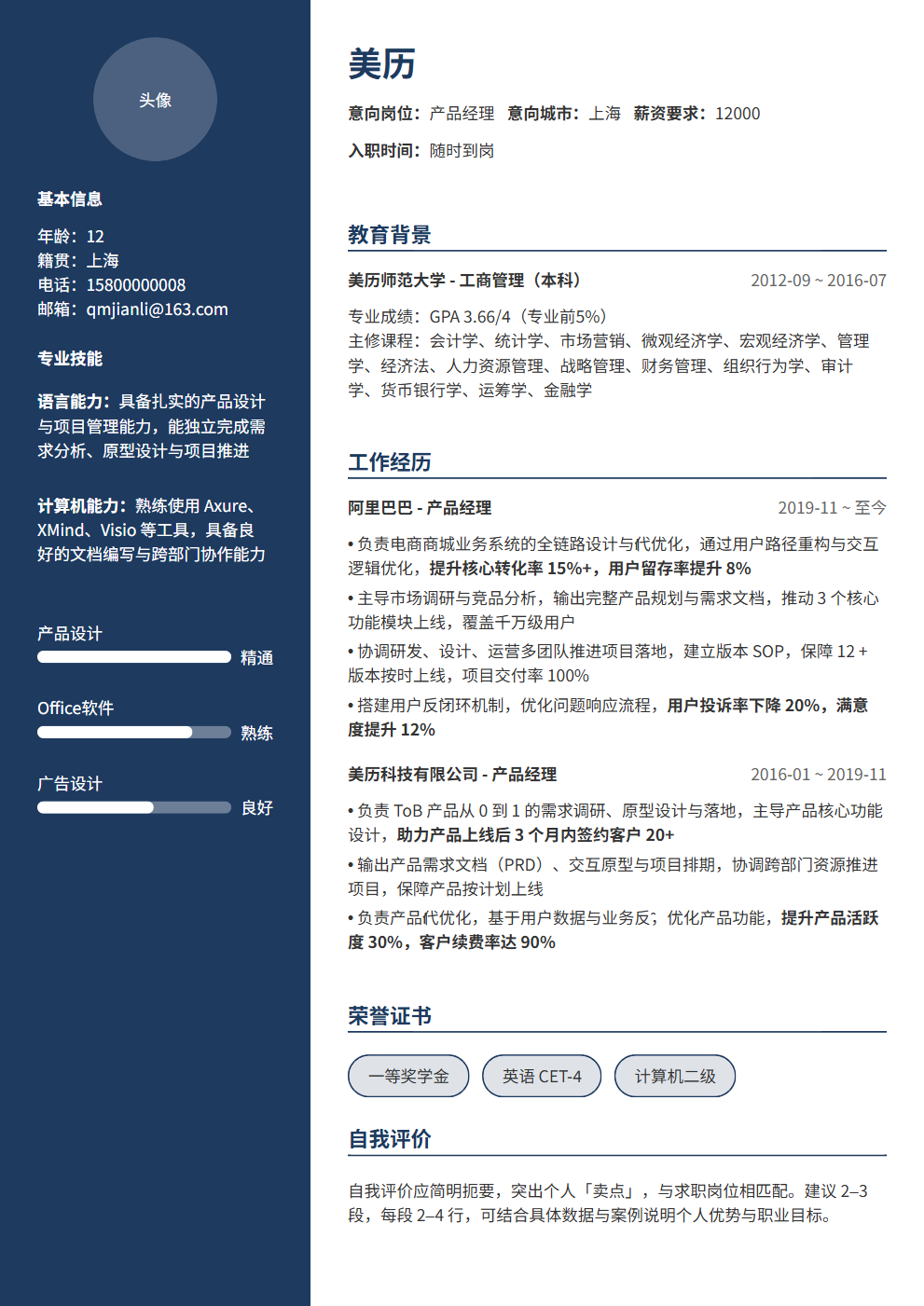
The first step to staying calm and confident in interviews is having a professional resume that gives you solid ground to stand on. Use BeautyResume's resume editor to clearly present your capabilities and achievements, building the interviewer's trust before they even meet you — with that kind of confidence, you can handle any stress interview with composure.