Spring Recruitment Guide for Fresh Grads: How to Land a Satisfying Offer in 3 Months After Missing Fall Recruitment
Missed fall recruitment? Don't panic — spring recruitment still offers plenty of opportunities. A 3-month comeback roadmap: January for resume building and application blitz, February for interview prep and mock training, March for offer evaluation and contract decisions. Week-by-week action items from resume optimization to interview readiness.
Missed Fall Recruitment — Is Spring Recruitment Still Worth It?
Fall recruitment is over. Your classmates are posting their offer letters while you have nothing to show — that anxiety is real, and everyone who's been through spring recruitment understands it. But here's the truth: spring recruitment offers far more positions than you think. Companies that didn't fill their quotas in the fall release remaining headcount, and some employers deliberately reserve spots for the spring cycle. The key question is: can you execute efficiently over the next three months and hit every milestone on time? This guide is your spring recruitment action manual.
Month 1 (January): Resume Sprint + Application Blitz
January is the golden preparation window. Most companies open spring positions after the Lunar New Year, so your job right now is to stockpile ammunition first.
- Week 1: Audit all your experiences and rewrite your resume using the STAR method. Stop writing "responsible for X" — change it to "led X project, achieving 20% user growth in 3 weeks." Numbers are the most persuasive language on a resume.
- Week 2: Tailor different resume versions for 3-5 target roles. Sending one generic resume to every position is a fatal mistake. HR scans for keyword matches, and you need those keywords visible in the top third of your resume.
- Week 3: Mass apply + leverage referrals simultaneously. Spring recruitment info is scattered — beyond mainstream job platforms, check company career pages, university job boards, and alumni networks. Referral resumes have a 3-5x higher pass rate than cold applications, so don't be shy about asking.
- Week 4: Fill gaps and apply to newly released positions. Many companies add spring headcount at the end of January. Check job listings daily.
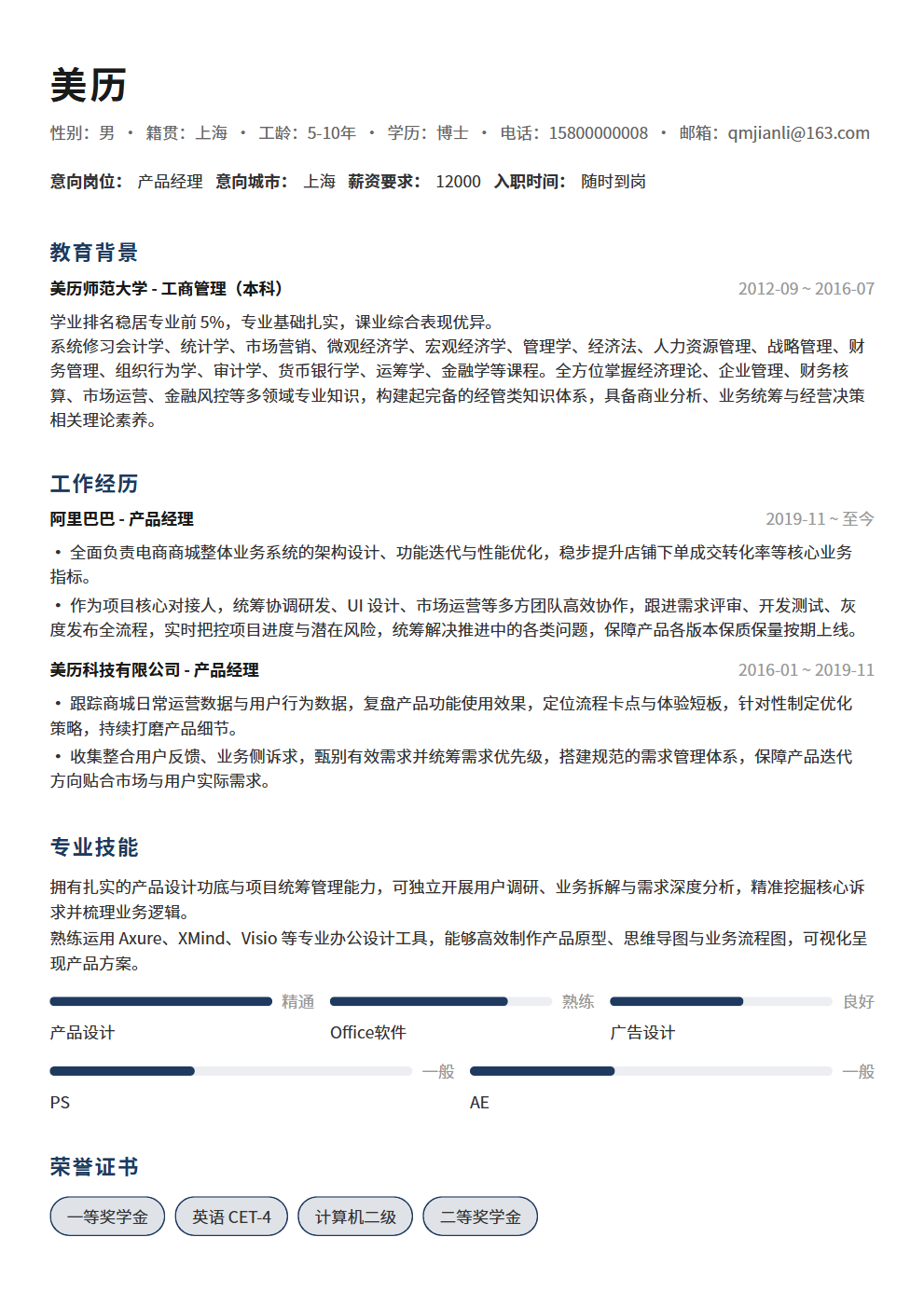
Your resume is the first gate of spring recruitment. A well-structured, focused resume can double your pass rate. If you're unsure whether your resume meets the bar, use BeautyResume's smart templates to quickly build a professional layout — saving formatting time so you can focus on content.
Month 2 (February): Interview Intensive + Mock Training
February is peak interview season. Candidates who missed fall recruitment often stumble at the interview stage. Interviewing isn't talent — it's technique. Practice enough, and you'll pass.
- Self-introduction: Prepare both a 1-minute and 3-minute version, highlighting three elements: who you are, what you've done, and why you fit this role. Don't memorize a script — practice until it flows naturally.
- Behavioral interviews: Prepare 8-10 stories using the STAR framework, covering leadership, stress management, teamwork, and innovation. Keep each story under 2 minutes.
- Technical interviews: For tech roles, balance coding practice with deep project dives. Solve 100+ LeetCode medium problems and be ready to explain design decisions, alternatives, and optimization strategies for your projects.
- Mock interviews: Practice with peers or mentors, record yourself, and review. If no one's available, practice in front of a mirror. Focus on catching filler words, logical jumps, and nervous habits.
Interviewers will probe your resume repeatedly. Make sure you can expand on every bullet point for 3 minutes. Don't include experiences you can't defend, and every line you write must withstand follow-up questions.
Month 3 (March): Offer Evaluation + Contract Decisions
March is the closing phase of spring recruitment. The biggest mistake after receiving an offer is settling too quickly. The cost of choosing the wrong offer far exceeds waiting two more weeks.
- Compensation comparison: Don't just look at monthly salary — calculate total compensation (base + performance bonus + year-end bonus + equity + allowances). The same monthly salary with a 2-month difference in year-end bonus means tens of thousands in annual gap.
- Growth potential: Your first job's most important factor is what you'll learn, not the starting salary. Ask about mentorship programs, core vs. peripheral teams, and the 1-3 year promotion path.
- Company stability: Some spring positions come from business expansion, others from employee turnover. During interviews, subtly learn about team attrition rates and business direction — don't jump into a sinking ship.
- Contract timing: Breaking a tripartite agreement has costs. Don't sign a safety offer out of anxiety. If you're waiting for a preferred company's result, politely ask the HR for an extension — most companies allow 1-2 weeks of buffer.
Where Are the Hidden Opportunities in Spring Recruitment?
Many students only watch for big-company spring announcements, but spring recruitment opportunities go far beyond that:
- Positions opened by fall offer reneges: Every year, some candidates sign and then back out. Companies fill these spots in spring but rarely advertise them widely — you need to proactively contact HR.
- New business line hiring: When companies launch new initiatives, they often skip the fall cycle and post positions directly in spring. These roles have less competition and more growth potential.
- Intern-to-full-time conversion: If you interned during fall recruitment, pushing for a return offer in spring is the most reliable path. Express your interest to your manager early — it's far easier than starting the interview process from scratch.
- Government and state-owned enterprise spring recruitment: These organizations have many spring openings with standardized processes, ideal for candidates seeking stability. Check local human resources bureau websites and university career center notices.
Mindset Management: Don't Let Anxiety Sabotage Your Spring Recruitment
The biggest enemy in spring recruitment isn't competition — it's anxiety. Anxiety makes you apply indiscriminately, freeze in interviews, and settle for bad offers. Every step becomes a mistake.
- Set a "good enough" target: It's not about only going for big tech — it's about knowing your floor (salary, city, industry) and choosing the best option above it.
- Control information intake: Stop reading posts about "everyone having 3 offers." Focus on what you've applied to and what you still need to prepare. Action is the best antidote to anxiety.
- Allow yourself rest: Spring recruitment is a marathon, not a sprint. Give yourself half a day off each week — you'll return more productive.
- Find an accountability partner: Going solo makes it easy to slack off. With a partner pushing each other, your application volume and practice sessions will double.
5 Resume Mistakes That Kill Your Spring Recruitment Chances
Time is tight in spring recruitment, and many students rush to apply before polishing their resumes — then wonder why they hear nothing back. Avoid these 5 traps:
- Resume exceeds 2 pages: One page is enough for fresh grads, 1.5 pages maximum. HR spends an average of 6 seconds per resume — a wall of text means they read nothing.
- No quantified results: Everything is "participated in" or "responsible for" with zero numbers. Change to "optimized processes saving 30% time" or "independently developed 3 modules" — the impact is immediate.
- Messy formatting: Inconsistent fonts, misaligned elements, uneven spacing. Visual first impressions determine whether HR bothers to read your content.
- Sending the same resume everywhere: One resume for 10 different roles with zero keyword alignment. Prepare at least 2-3 versions by role type.
- Missing critical info: Wrong contact details, missing graduation date, unclear target position — these basic errors happen every single year.
Spring Recruitment Timeline Cheat Sheet
Save this checklist and review your progress every week:
- Jan Weeks 1-2: Finalize resume, start applying, activate referral network
- Jan Weeks 3-4: Mass apply, monitor new postings, prepare for written tests
- Feb Weeks 1-2: Peak interview period, at least 1 mock interview per day
- Feb Weeks 3-4: Review interview performance, strengthen weak areas
- Mar Weeks 1-2: Offers arrive, compare compensation and growth potential
- Mar Weeks 3-4: Make decisions, sign tripartite agreements
Final Thoughts: Spring Recruitment Isn't a Backup — It's a Different Track
Many people treat spring recruitment as "leftovers" from fall — that mindset alone puts you behind the starting line. Spring recruitment has unique advantages: more targeted positions, faster processes, and fewer competitors (many dropped out after fall offers). Your job isn't to "settle" — it's to prove through 3 months of focused action that you deserve a great offer. Start with your resume and nail every step. BeautyResume helps you perfect your resume so you stand out in spring recruitment. Go get it — results will show in 3 months!