Side Hustle Guide for Full-Time Workers: 5 Directions That Won't Hurt Your Day Job and Pitfalls to Avoid
Want a side hustle but worried about your day job? 5 side income directions suitable for full-time workers, from skill monetization to content creation, plus an employment contract pitfall checklist for worry-free second income.
1. The Side Hustle Dilemma: Wanting to but Afraid to Start
More and more full-time workers want side hustles, but face two core concerns:
- Fear of hurting the day job: Divided attention, time conflicts, boss finding out
- Fear of legal issues: Does the employment contract prohibit side work? How to navigate non-compete agreements?
First, address the legal question: carefully read your employment contract, focusing on 3 clauses — moonlighting prohibition, non-compete restrictions, and intellectual property ownership. If the contract explicitly prohibits side work, either negotiate with your company or choose a side hustle that doesn't compete with your employer's business.
2. Five Side Hustle Directions for Full-Time Workers
Direction 1: Skill Consulting/Training
Monetize the professional skills you've built in your day job. Designers take freelance projects, developers accept contract work, HR professionals offer resume optimization consulting, finance experts do tax planning — earn money using skills you already have, no need to start from scratch.
Recommended platforms: Upwork, Fiverr, Clarity.fm, LinkedIn ProFinder. Income reference: entry-level consulting $30-80/hour, senior experts $150-500/hour. The key is to accumulate reviews and case studies on the platform first, then gradually raise your rates as your reputation grows.
Note: Don't compete with your company's clients.
Direction 2: Content Creation
Choose a platform where you can consistently produce content — blogs, social media, video platforms. The key to content creation is niche focus + consistent output. Don't write about everything — focus on one area to build influence.
Monetization timelines vary by platform: Instagram and TikTok creators can land brand deals at 5,000+ followers, earning $100-500 per post; Medium's Partner Program pays based on read time, with top writers earning $1,000-5,000/month; YouTube requires 1,000 subscribers and 4,000 watch hours for monetization, but ad revenue can reach $3-10 per 1,000 views. Start with one platform, establish steady income, then consider cross-platform distribution.
Direction 3: Online Courses/Knowledge Products
If you have deep expertise in a field, record online courses. Platform options include major MOOCs and course marketplaces. Record once, earn continuously.
Income reference: domestic platforms price courses at $20-100, with monthly sales of 50-500 copies; Udemy global pricing ranges from $9.99 to $199.99, and quality courses can generate thousands of dollars monthly. Start with a free mini-course to test demand before investing in a full production.
Direction 4: E-commerce/Store Operations
Second-hand marketplaces, online stores, cross-border e-commerce — low barriers but require consistent time investment. Best for those with product sources or e-commerce knowledge.
Beginners should start with dropshipping on eBay or Amazon, with near-zero upfront costs and monthly income of $200-1,500. With more experience, try Shopify or Amazon FBA, where monthly profits can reach $2,000-8,000. The key is data-driven product selection — never stock inventory based on gut feeling alone.
Direction 5: Investment and Finance
Index fund investing, convertible bonds, REITs — make money with money without occupying work time. But avoid high-risk investments — the purpose of a side hustle is to increase income, not anxiety.
Conservative strategy: S&P 500 index fund DCA yields approximately 8-12% annualized returns; REITs offer 4-8% dividend yields. Start with $1,000-5,000 in capital. Never use leverage or chase hot tips — steady compounding beats speculative swings every time.
3. Three Time Management Principles for Side Hustles
- Time isolation: Strictly limit side hustle work to after-hours and weekends — never handle side business during work time
- Energy management: Spend no more than 2 hours daily on side hustles, ensuring day job energy takes priority
- Clear priorities: Your day job is always #1. If side hustle and day job conflict, choose the day job without hesitation
4. Five Side Hustle Pitfalls to Avoid
- Don't use company resources for side work: Company computers, networks, and clients are all red lines
- Don't expose your side hustle on social media: Colleagues and bosses might see it — low profile is the first principle
- Don't choose side hustles requiring large upfront investment: Franchises, inventory, paid courses — these "opportunities" might be scams
- Don't let side work hurt day job performance: Declining day job performance makes it all not worthwhile
- Don't ignore tax obligations: Side income must be reported — compliance ensures sustainability
5. The Relationship Between Side Hustles and Your Resume
Side hustle experience can be a resume bonus, but pay attention to presentation:
- If the side hustle relates to your target role, include it as "project experience"
- If it demonstrates entrepreneurial spirit and self-drive, mention it in your summary
- Don't reveal conflicts between side hustle and day job — present it as "independent projects"
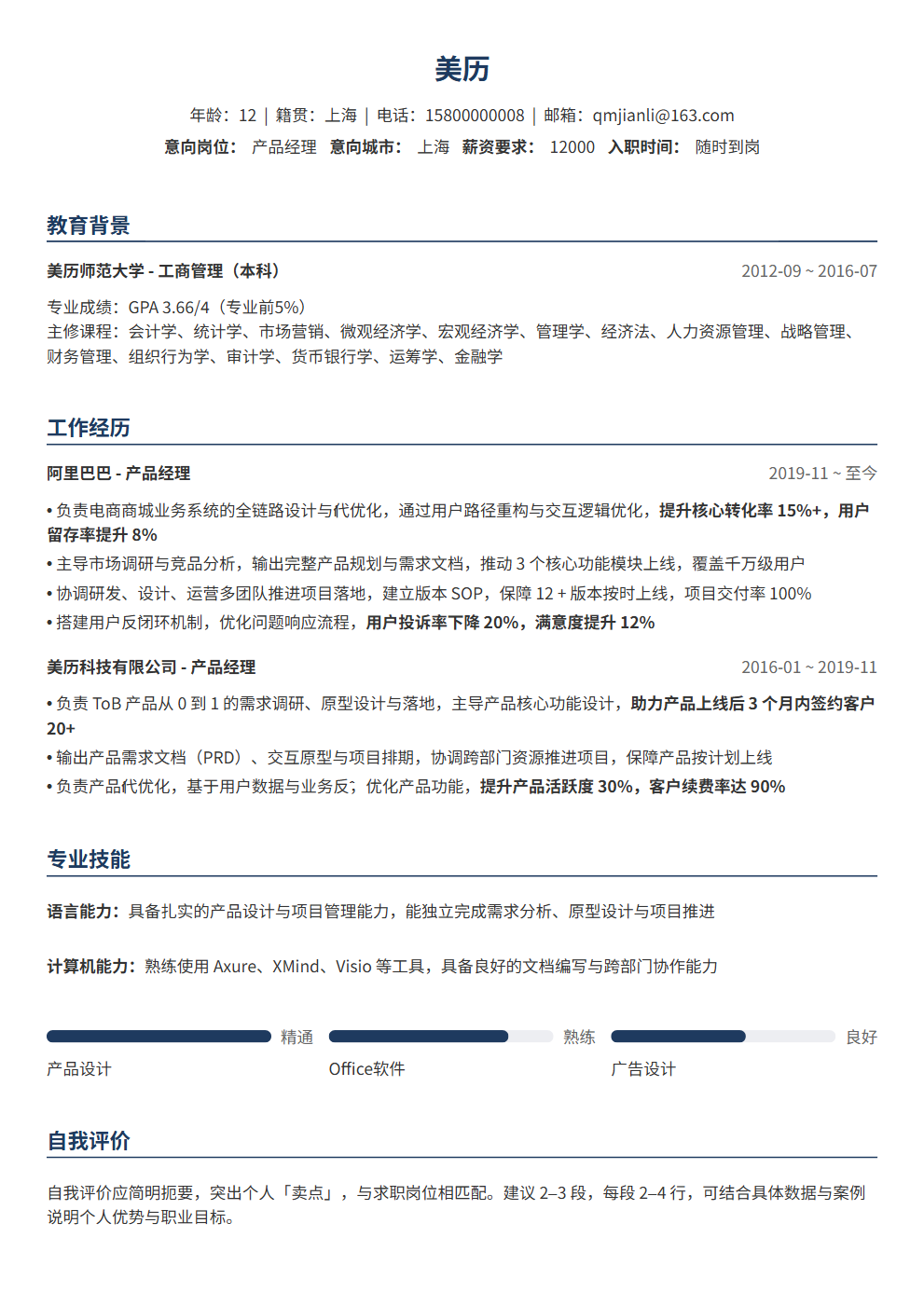
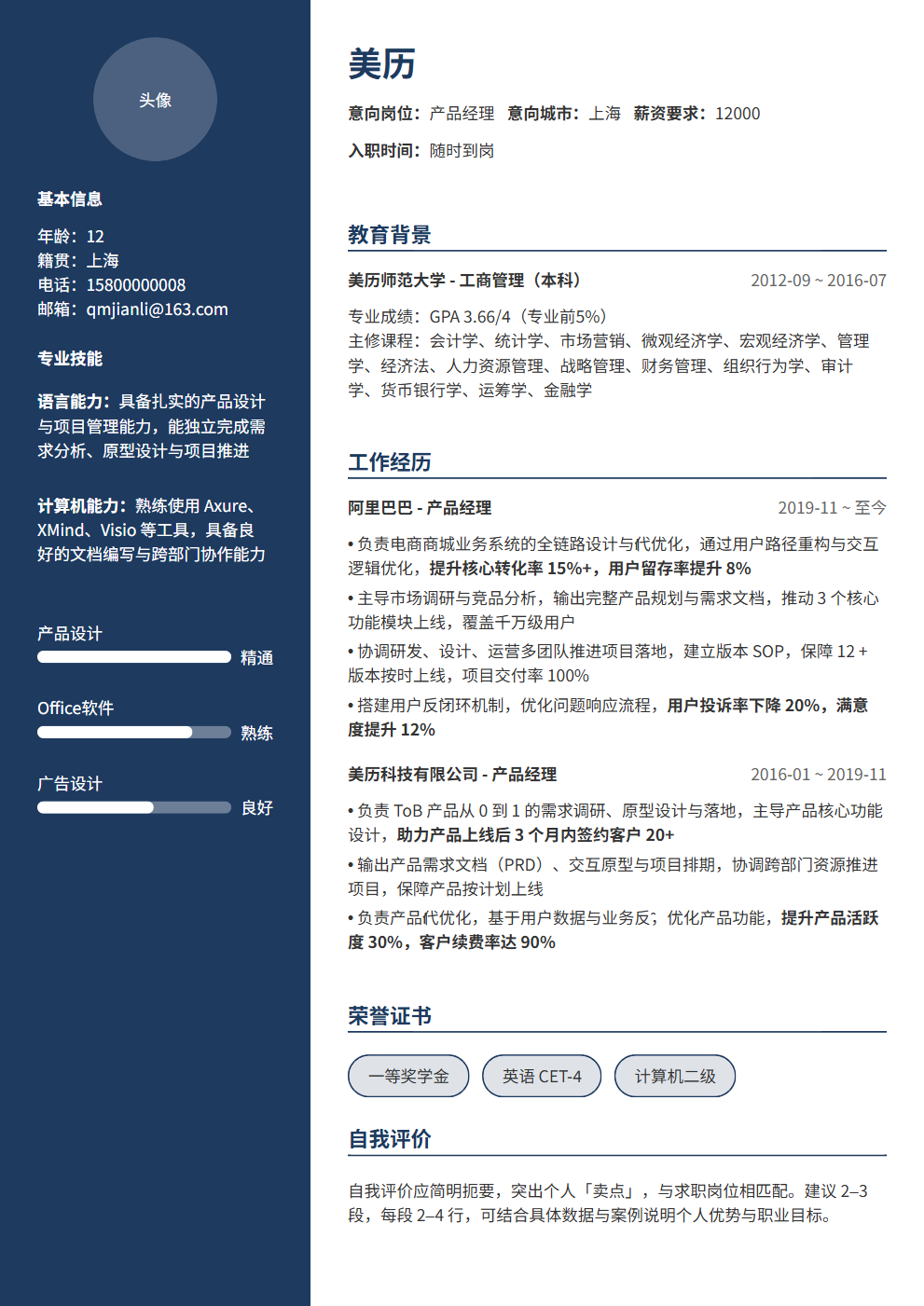
A strong resume can transform side hustle experience into proof of "multi-threading capability" and "self-drive."
6. From 0 to 1: Launching Your Side Hustle
Many people get stuck between "what to do" and "how to start." These four steps will help you break through:
1. Validate Your Idea Before Investing
Don't rush to buy equipment, register a company, or build a website. Validate demand with the simplest method first: want to freelance as a designer? Post 3 portfolio pieces on social media and see if anyone asks for pricing; want to create knowledge products? Write 5 free articles and gauge readership and feedback. The core validation metric is whether anyone is willing to pay for your output — not whether you think it's good.
2. Start Small and Test Quickly
Set a 2-week test cycle and run a complete loop at minimum cost. For example: select a product → list it → make 1 sale; write an article → publish → gain 10 followers; record a lesson → upload → sell 1 copy. The significance of your first sale far exceeds the revenue — it proves your direction works.
3. Build Your First 10 Customers/Readers
Your first 10 customers or loyal readers are the most precious. They not only validate your business model but also provide genuine feedback and word-of-mouth promotion. Proactively serve these 10 people well, ask them for reviews and referrals — this is the most effective growth strategy during the cold-start phase.
4. Scale What Works
Once you find a working path, concentrate 80% of your energy on the validated direction. Don't launch 5 initiatives simultaneously — one proven model beats ten ideas. Scaling methods include: raising your prices, expanding traffic sources, building standardized delivery processes, and recruiting partners to share the execution load.
7. The Synergy Between Side Hustles and Day Jobs
The ideal side hustle doesn't exist in isolation from your day job — it creates a positive feedback loop. Smart professionals make their side hustle and day job reinforce each other:
Side Hustle Skills Feed Back Into Your Day Job
People who do content creation significantly improve their writing and information synthesis skills, which directly help with reports, proposals, and cross-departmental communication at work. Consultants who encounter diverse industry cases develop broader perspectives and bring more creative solutions back to their day job. A side hustle is the best on-the-job training — and someone's paying you to learn.
Leveraging Day Job Resources (Legally) for Your Side Hustle
Emphasis on "legally." You can leverage the industry knowledge, professional networks, and tool expertise you've built at work, but never use company client data, trade secrets, or office equipment. Example: you learned data analysis at work, then use your own computer after hours to provide data consulting for small businesses — that's fully compliant. Your skills are yours; client data and proprietary information belong to the company — hold that line.
Building a Personal Brand That Benefits Both
When you consistently produce professional content in a specific niche, your personal brand simultaneously elevates your value in both your day job and side hustle. Internally, you'll be recognized as a domain expert with more promotion opportunities; externally, your consulting rates and course sales will rise accordingly. The key is choosing a vertical direction that benefits both your day job and side hustle from the start, avoiding the trap of two completely unrelated directions that scatter your energy.
Summary
Core principles for full-time workers doing side hustles: legal compliance, no impact on day job, choose skill-monetization directions. Among the 5 directions, skill consulting and content creation are the best starting points — low barriers, flexible timing, no conflict with day jobs. Maintain time isolation, energy management, and clear priorities so your side hustle becomes a second growth curve rather than a double-edged sword.
The key to going from 0 to 1: validate before investing, start small and test quickly, serve your first 10 customers well, and scale what works. The smarter approach is creating synergy between your side hustle and day job — side hustle skills improve your work performance, day job experience legally supports your side business, and your personal brand benefits both.
Finally, don't forget to add side hustle achievements to your resume. Whether as independent project experience, quantified results, or proof of self-drive in your professional summary, they make your resume stand out. An optimized resume shows interviewers that you don't just complete your job duties — you actively expand your capabilities beyond them. That's the rarest quality in today's job market. Use the right resume tools to turn your side hustle experience into your core competitive advantage.