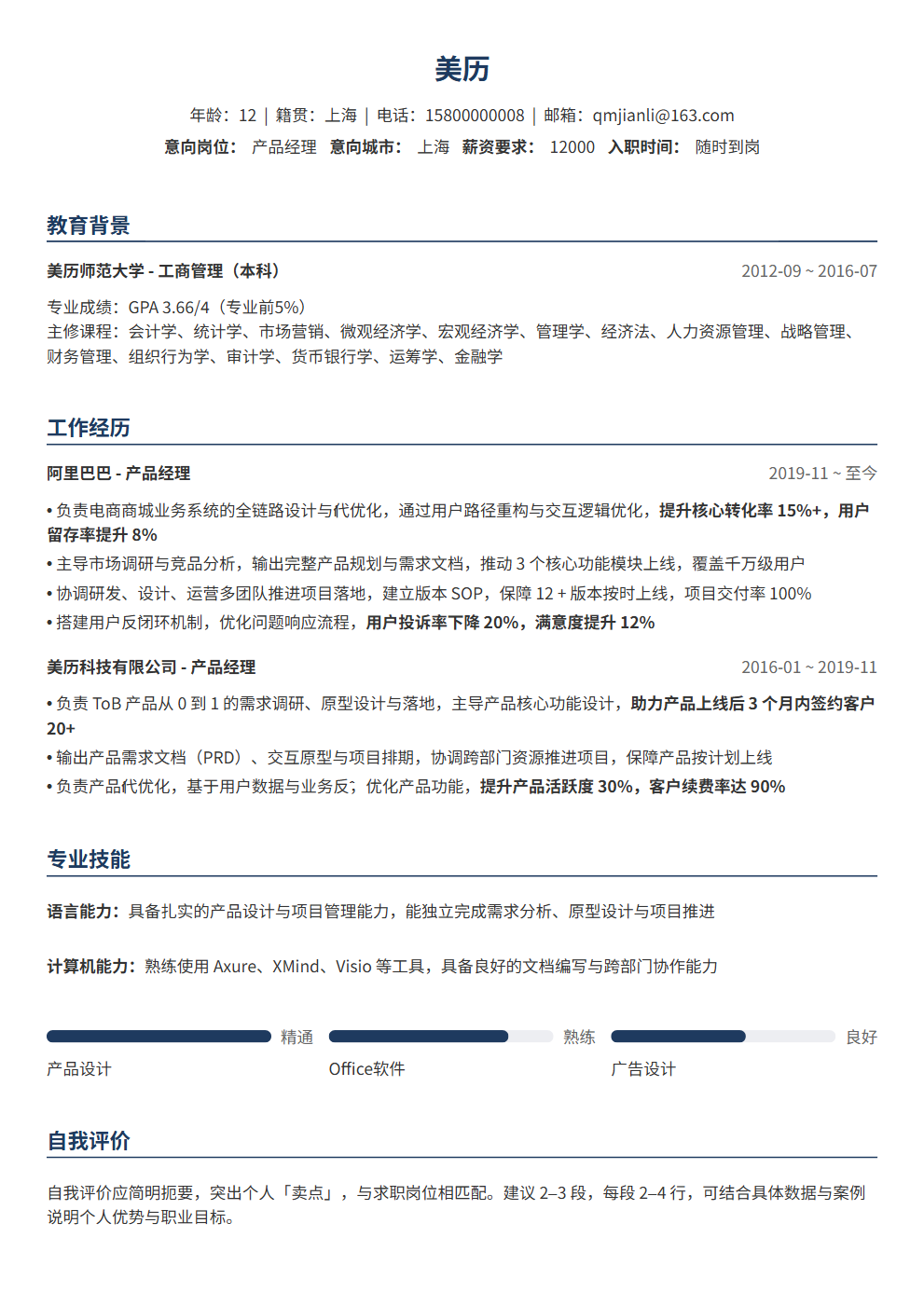
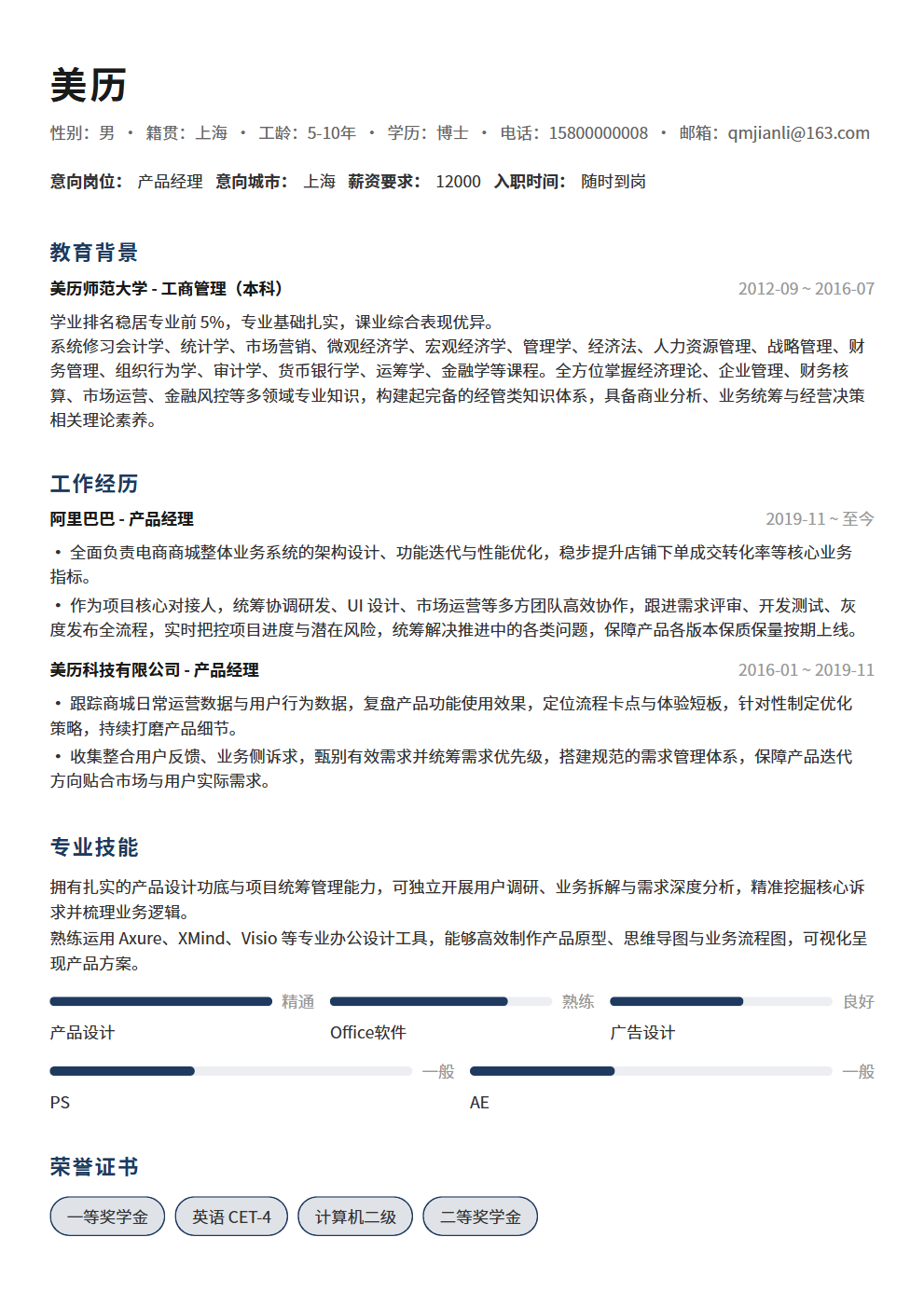
Should You Put a Photo on Your Resume? A Complete Guide to Resume Photo Rules by Industry and Position
Should you include a photo on your resume? Rules vary by industry and position — finance, consulting, and front-desk roles require one, while tech, R&D, and remote positions don't. 5 standards for resume photos and 3 types of photos you should never use, helping you make the right choice.
You open a resume template, see the "photo" field, and your hand hovers over the keyboard — to include or not to include? You're worried about recruiters judging by appearance if you include one, but also worried your resume looks incomplete without one. You search online and find conflicting advice — some say "must include," others say "never include," and still others say "it depends" — which is basically saying nothing. Actually, whether to include a resume photo isn't a simple "yes" or "no" — it depends on "the industry, the position, and the region." Different industries have different unwritten rules, different positions have different expectations. Understand these rules, and you'll never be confused again.
3 Industries Where You Must Include a Photo
In some industries, not including a photo on your resume is almost "career suicide" — not because of how you look, but because it's industry convention. Without a photo, recruiters will think you "don't understand the rules" or "have something to hide," and screen you out immediately.
- Finance industry: Banks, securities, funds, insurance and other financial institutions almost require resume photos. The reason is simple — the finance industry places extreme importance on professional image; client trust is a core asset. A candidate who won't even include a resume photo makes recruiters worry about whether you'll also be "unkempt" when meeting clients. Especially for client-facing roles like relationship managers and financial advisors, photos are practically mandatory
- Consulting industry: Management consulting, strategy consulting, HR consulting — including a photo on your resume is industry convention. Consulting serves corporate executives, and a consultant's appearance and demeanor are part of their professionalism. MBB (McKinsey, BCG, Bain) resume templates all have photo spaces — that's not a coincidence
- Front-desk service positions: Hotel reception, flight attendants, luxury retail, real estate sales and other positions requiring face-to-face customer service must include photos. The nature of these roles means appearance is part of professional capability — not requiring you to be beautiful, but requiring you to look professional, neat, and approachable
The common thread across these 3 industries: your image is part of the job itself. Including a photo isn't "judging by appearance" — it's demonstrating you possess the professional image this industry requires. Not including a photo makes recruiters think you "don't meet industry requirements."
3 Industries Where You Don't Need a Photo
In some industries, including a photo might actually have negative effects — not because you don't look good, but because the industry culture doesn't value appearance, and including a photo seems "unprofessional" or "out of place."
- Technology/R&D positions: Programmers, algorithm engineers, data scientists, backend developers and other pure tech positions don't need resume photos. Tech positions evaluate coding ability and technical results — photos have zero correlation with your programming skills. Silicon Valley tech companies (Google, Meta, Apple, etc.) even explicitly state not to include photos on resumes — to avoid legal risks of appearance discrimination
- Remote positions: Remote work, freelancing, outsourcing and other positions that don't require on-site presence don't need resume photos. Your interactions with colleagues and clients are all online — image isn't part of the work. Including a photo makes you seem "still stuck in traditional thinking"
- Creative/design positions (some): UI designers, illustrators, motion designers — your portfolio is your "photo." Recruiters look at your design work, not your face. But if you're applying for a creative director role that requires client interaction, a photo might help showcase your professional image
The common thread across these 3 industries: your work results have nothing to do with your appearance. Not including a photo isn't because you "don't look good" — it's because there's no causal relationship between your photo and your professional ability. In these industries, not including a photo is the norm; including one might make recruiters think you're "not focused enough on professionalism."
5 Standards for Resume Photos
If you decide to include a photo (or your industry requires one), photo quality becomes very important. An unprofessional photo is worse than no photo at all — it doesn't add points but seriously deducts them. Here are 5 standards your resume photo must meet.
- Standard 1: Professionalism. The photo should convey "this is a professional," not "this is an ordinary person." Formal or business casual attire, natural and confident expression — no goofing around, no excessive smiling, no blank expression. Imagine how you look when meeting clients — that's what the photo should present
- Standard 2: Clarity. Photo resolution at least 300dpi, not blurry when printed. Selfies, video screenshots, over-beautified photos are all unacceptable. The safest approach is to get a professional headshot at a photography studio — spending 100-200 yuan for a photo you can use for years
- Standard 3: Formal or business casual attire. Men in suits or dress shirts, women in blazers or professional attire. No T-shirts, no tank tops, no sportswear. Necklines shouldn't be too low; clothing colors should be dark or neutral. A resume photo isn't a fashion shoot — it's a professional image presentation
- Standard 4: Light background. White or light gray background is safest, close to resume paper color, looking clean and professional. No dark backgrounds, no gradient backgrounds, no scenic backgrounds, no blurred backgrounds. The background's role is to complement you, not steal your spotlight
- Standard 5: Recent photo. The photo should be taken within the last 6 months, with minimal difference from your current appearance. If your resume photo is from 3 years ago and you look noticeably different at the interview, recruiters may feel "deceived" — this disconnect directly affects interview impressions. Updating your resume photo every 6 months is the ideal frequency
The 5 standards summarized: make recruiters think "this is a professional" when they see the photo, not "this person doesn't seem to care about their image." The photo is the only element in your resume that lets recruiters "see you" — use it well, don't waste it.
3 Types of Photos You Should Absolutely Never Use
Some photos on resumes have the effect of "self-destruction." Here are 3 types of photos that, no matter how good-looking you think you are in them, you should absolutely never include.
- Type 1: Casual/travel/party photos. Taken at the beach, in restaurants, or cropped from group photos — these photos convey "I'm not professional enough to even bother taking a formal photo." Recruiters' first reaction to casual photos isn't "this person looks nice" but "this person doesn't take job searching seriously"
- Type 2: Over-beautified photos. Skin smoothed until features are blurry, face slimmed until the chin could poke someone, filters applied until skin looks white — these photos convey "I'm not confident and need beauty filters to compensate." Even worse, when recruiters discover a big gap between you and your photo at the interview, it creates a negative impression of "dishonesty"
- Type 3: Over-retouched/artistic/glamour photos. Retouched until you don't look like yourself, exaggerated posing poses, heavy makeup in evening gowns — these photos convey "I can't distinguish between professional and social occasions." A resume photo isn't a beauty pageant — you don't need to show your most beautiful side; you need to show your most professional side
The common problem with all 3 types of photos you should never use: they shift the recruiter's attention from "your professional ability" to "your photo" — and in a negative way. The purpose of a resume photo is to "make recruiters think you're professional," not to "make recruiters think you're pretty" or "make recruiters think you're unreliable."
Gray Area: How to Choose When It's Optional?
Beyond the "must include" and "don't need to include" industries, some are in the gray area — including or not are both fine, with no hard rules. How to decide in this situation?
- Internet operations/marketing/branding: Optional. If you have a polished appearance, a photo might add points; if unsure, not including won't lose points. Recommendation: If applying for roles with significant external communication (like brand PR, marketing events), a professional photo might help demonstrate your image management capability
- HR/admin/legal: Recommended to include. These roles require extensive interpersonal communication, and professional image is part of work capability. A professional photo can convey "I understand professional image management"
- Education/training: Recommended to include. Teachers and trainers face students and trainees; approachability and professionalism both matter. A smiling professional photo can add points
- Manufacturing/engineering/logistics: Not needed. These industries value professional skills and project experience more; photos are irrelevant to job capability
- General judgment standard: If your role requires frequent face-to-face communication (with clients, partners, the public), include a photo; if your role is primarily internal (with computers, data, code), no photo needed
The logic for gray area choices: when uncertain, ask yourself one question — "Does my photo relate to my job capability?" If yes (need to demonstrate professional image), include it; if no (pure technical or back-office role), don't include it. Simple and direct.
Conclusion: The Resume Photo Question Isn't "Whether to Include" but "How to Include"
Should you include a photo on your resume? The answer depends on your industry and position — finance, consulting, and front-desk service roles must include one; technology, R&D, and remote positions don't need one; gray areas depend on whether the role requires face-to-face communication. If you decide to include a photo, make sure it meets 5 standards: professional, clear, formal attire, light background, and recently taken. Absolutely never use casual photos, beauty-filtered photos, or artistic photos. The essence of a resume photo is showcasing professional image — it conveys not "what I look like" but "I am a professional." Understand the industry rules, choose the right photo, and your resume won't be mistakenly rejected due to photo issues.
Want your resume photo and content to both be professionally on point? Use BeautyResume resume editor, with built-in smart photo placement layout, automatically adapting resume templates for different industries — finance style, tech style, creative style at the click of a button, with photo position, size, and proportions all optimized, making your resume impeccable from image to content.