Should You Include a Photo on Your Resume? A Complete Guide to Resume Photo Rules by Industry and Role
Whether to include a photo on your resume has always been debated, but the answer isn't a simple yes or no — it depends on industry, role, and region. This guide breaks down photo rules by industry: finance/consulting requires one, tech/internet is optional, creative fields treat it as a plus, and multinational companies say skip it. Includes photo selection standards and common mistakes to avoid.
Introduction: A Resume Photo Isn't Trivial — the Wrong One Is Worse Than None
Should you include a photo on your resume? This question haunts countless job seekers. Some think a photo looks professional; others believe it's safer to skip it. The truth: the answer depends on your industry, role, and region. The right photo adds points; the wrong one gets you eliminated. This guide breaks down resume photo rules industry by industry so you can make the right call.
1. Finance & Consulting: A Photo Is Mandatory
If you're applying to banks, securities firms, funds, or consulting companies, your resume must include a photo. The reasons are straightforward:
- Finance values professional image — a photo is the first signal of professionalism
- Many financial institutions' online application systems require photo uploads
- Interviewers reference photos during screening; no photo may signal "not taking this seriously"
Finance has the strictest photo requirements: formal attire, dark background, composed expression, forehead and ears visible. Any attempt at "personalization" will be judged as unprofessional.
2. Tech & Internet: Optional, But Don't Make Mistakes If You Include One
Tech and internet companies have the most relaxed attitude toward resume photos — including one or not is fine, but if you do, don't mess it up.
- Technical roles (development, testing, DevOps): Photos barely affect screening results; skipping is fine
- Product roles: A clean, polished photo can help, but not including one won't hurt
- Operations/marketing roles: Photos have some reference value; including one is recommended
If you include a photo for tech, avoid heavily retouched images or casual selfies. A clean, natural, approachable professional headshot is all you need.
3. Creative & Design: A Photo Is a Plus — But It Should Showcase Your Aesthetic
Ad agencies, design studios, media companies — a photo isn't just a plus, it's a window into your aesthetic sensibility.
- In creative fields, your resume is part of your portfolio; your photo style reflects your taste level
- You can be more creative than in traditional industries, but don't go overboard — it should feel intentional
- Black-and-white or artistic-style photos are acceptable in creative fields and might even help
Key principle: Your photo style should align with your portfolio's tone. If you're applying for a minimalist design role, keep the photo clean and simple; if it's a trendy brand direction, more personality is fine.
4. Multinational & Western Companies: Do Not Include a Photo
This is the clearest rule: when applying to Western multinationals, do not include a photo. The reasons are legal and cultural:
- Western countries have strict anti-discrimination laws; resume photos can create liability around appearance, age, or race bias
- ATS (Applicant Tracking Systems) at multinationals may automatically filter out resumes with photos
- Western HR considers photos irrelevant to job capability; including one may seem unprofessional
Note: Japanese and Korean companies are exceptions — resumes for these typically require photos. So when applying to Japanese firms, a photo is mandatory.
5. Government & State-Owned Enterprises: A Photo Is Standard
Civil service, public institutions, SOEs — a photo is standard on these resumes, and application forms often have a designated "photo area."
- Must use an ID-style photo with red or blue background, per the recruitment notice
- Formal attire required: suit and tie for men, business formal for women
- No lifestyle or artistic photos — these will be flagged as non-compliant
The keyword for government/SOE photos is "compliant" — not attractive, not creative, just following the rules. Prepare according to the announcement and don't improvise.
6. Resume Photo Standards: 5 Must-Follow Rules
Regardless of industry, if you decide to include a photo, these 5 standards must be met:
- Clarity: At least 300dpi resolution — a blurry photo is worse than no photo at all
- Attire: Formal or business casual — no T-shirts, tank tops, or activewear
- Expression: A natural smile, not stiff or exaggerated — approachable but composed
- Background: Solid color (white, gray, or blue) — no clutter or scenery
- Size: Standard ID photo dimensions — don't let it take up a quarter of the page
7. Five Common Resume Photo Mistakes
These are the most frequent photo errors job seekers make — each one can get your resume eliminated on the spot:
- Over-filtered selfies: Looking nothing like yourself in person raises honesty concerns at interview
- Lifestyle/travel photos: Beach, café, tourist spots — these don't belong on a resume
- Outdated photos: Using a 3-year-old photo where you look completely different also hurts credibility
- Distorted proportions: Stretched, poorly cropped, or misaligned photos look unprofessional
- Wrong placement: Centering the photo or making it too large — it shouldn't dominate the page
Summary: The Core Principle Is "Match"
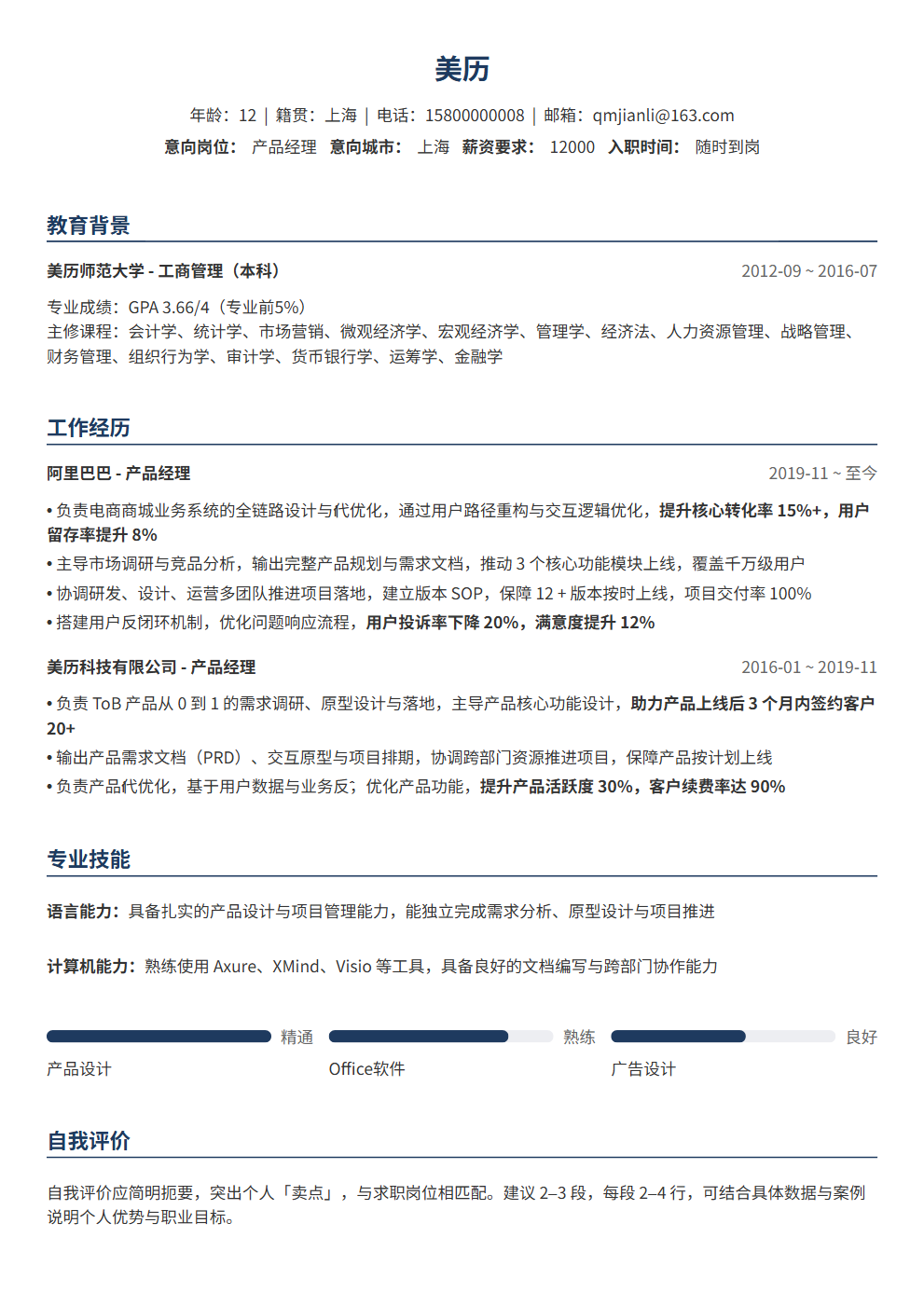
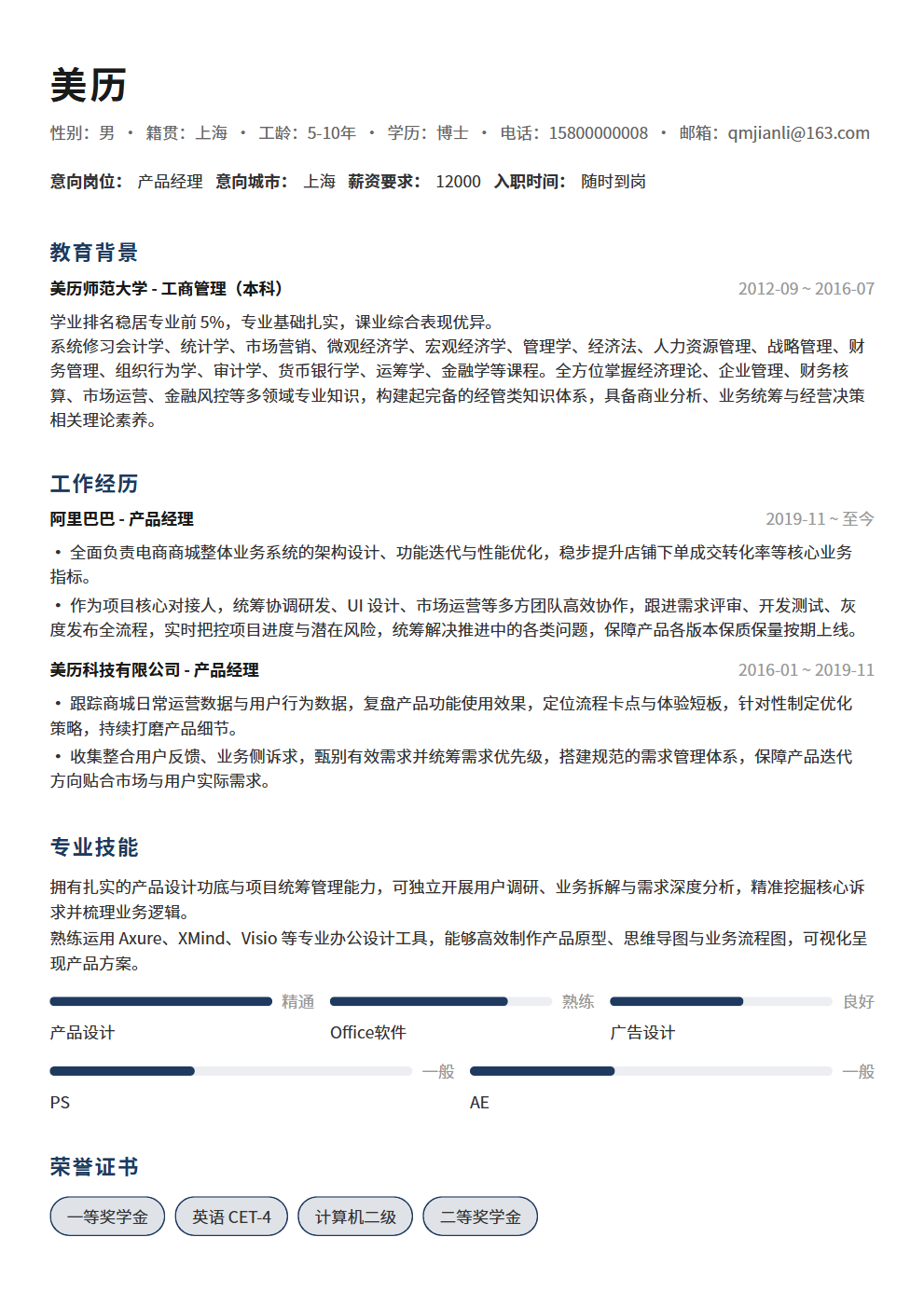
Whether to include a resume photo comes down to matching industry norms and role requirements. Finance requires one; multinationals say skip it; tech is flexible but avoid mistakes; creative fields welcome personality; government demands strict compliance. Remember, a resume photo's purpose is to convey professionalism, not showcase looks. Choose the right photo, place it correctly, and your resume earns goodwill from the first glance. And the overall presentation matters just as much — with BeautyResume's professional templates, layout, photo placement, and proportions are already optimized, so your resume wins on visuals before anything else.