Sent Hundreds of Resumes with No Response? It's Not You — You Hit These Hidden Barriers
Sent hundreds of resumes with no response and started doubting yourself? Don't worry — often it's not that you're not good enough, but that you've hit hidden barriers: age discrimination, degree filtering, positions already filled internally, ATS system filtering, and more. This article reveals the 5 most common hidden barriers and teaches you how to break through each one.
Have you ever been stuck in this job search dilemma: you carefully prepared your resume, sent out hundreds of copies, and got nothing but silence — not even a single interview invitation? You start doubting yourself: Am I not skilled enough? Is my degree insufficient? Is the market really that bad? Don't be so quick to blame yourself. If you've sent hundreds of resumes with no response, chances are it's not about your abilities — it's about the hidden barriers you didn't even know existed. These barriers won't appear in any job posting, but they're very real obstacles between you and interview opportunities. Today, we'll break down these 5 hidden barriers one by one and show you exactly how to overcome them.
Hidden Barrier 1: ATS Filtering — Your Resume May Never Have Been Seen by a Human
You might not realize this, but 80% of resumes submitted are never seen by a real person. Most mid-to-large companies now use ATS (Applicant Tracking System) to screen resumes. HR sets keywords and criteria in the backend, and the ATS automatically filters out resumes that don't match. Only those that pass the filter ever reach a human recruiter. This means — if your resume doesn't contain the keywords from the job description, or if your formatting is too complex for the ATS to parse correctly, you're eliminated in the very first round, and HR never even knows you exist.
- The reason: 80% of resumes are automatically filtered by ATS. The ATS doesn't "read" your resume — it "scans" for keywords. If your resume lacks the core skill keywords from the job description, or uses complex formatting that ATS can't recognize (like tables, text boxes, or text embedded in images), the system will simply mark you as unqualified
- Solution 1: Optimize keywords. Carefully read the job description and extract core skill keywords, then make sure your resume includes them. For example, if the job requires "proficiency in Python data analysis," your resume should explicitly include "Python" and "data analysis" — not just "skilled in programming for data processing"
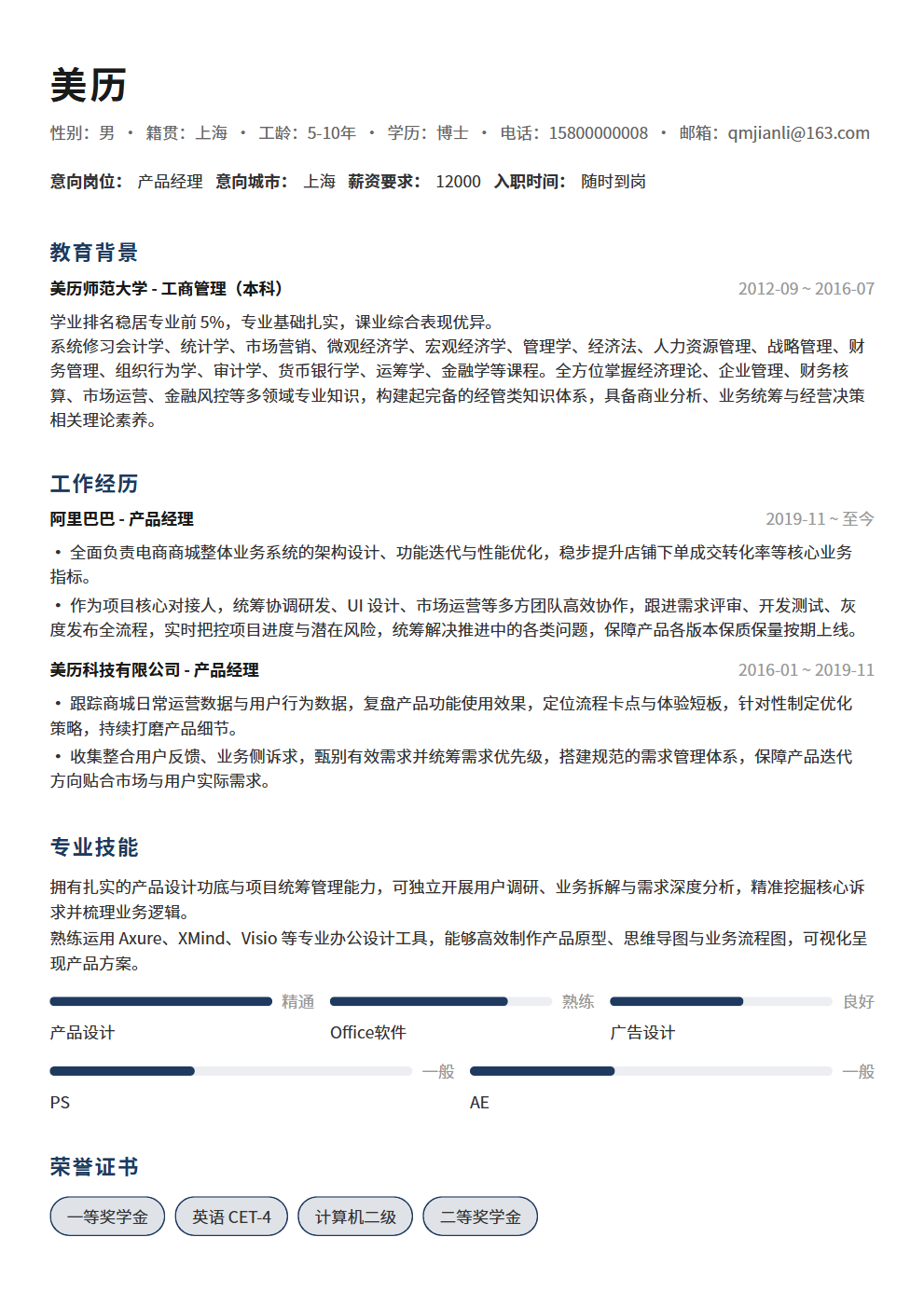
- Solution 2: Use ATS-friendly formatting. Stick to clean, simple resume formats. Avoid tables, text boxes, images, headers/footers, and other elements that ATS struggles to parse. Use standard section headings (like "Work Experience," "Education") and present information in plain text rather than images
- Solution 3: Complete your information. Ensure your resume includes all the fields that ATS commonly scans: name, contact information, work experience (company name, title, dates), education (school, major, degree, dates), and skills list. Missing any key field could cause the system to flag your resume as incomplete and filter it out
ATS filtering is the biggest hidden barrier because it's the kind of rejection you don't even know about. You think HR saw your resume and decided you weren't a fit — in reality, HR never saw it at all. Solving the ATS problem is the first and most important step in improving your resume submission strategy.
Hidden Barrier 2: Pre-Filled Positions — Many Job Postings Are Just Formalities
The job postings you see aren't always actually hiring. Many companies post job listings simply because their policies require "open recruitment," even though they've already decided on a candidate internally — it could be an employee transferring from another department, someone recommended by a leader, or an intern being converted to full-time. Your application is just going through the motions. Data shows that 30%-40% of positions already have a pre-selected candidate when the job is posted, and the open recruitment is merely a formality.
- The reason: 30%-40% of positions already have a pre-selected candidate. The hiring process for these roles looks perfectly legitimate — posting a JD, collecting resumes, conducting interviews — but the outcome was decided from the start. You submit your resume, prepare carefully for the interview, and eventually receive a "regret to inform you" response, thinking you performed poorly, when the result was predetermined
- Solution 1: Prioritize employee referrals. Referrals are the most effective way to bypass "formality" positions. Through internal employee recommendations, your resume can reach the hiring department directly, bypassing the HR screening system. Even if a position has a pre-selected candidate, referred resumes are more likely to be taken seriously
- Solution 2: Focus on newly posted positions. The more recently a position was posted, the less likely it has a pre-selected candidate. Prioritize applying to positions posted within the past week — these are more likely to be genuinely hiring. Set up job alerts on recruitment platforms to get notified about new postings immediately
- Solution 3: Avoid positions that have been listed for a long time. If a position has been open for over a month, either the requirements are extremely high and they haven't found anyone, or they already have a pre-selected candidate but the process isn't complete yet. Either way, the return on investment for applying is low
Pre-filled positions are an objective reality you can't change, but you can adjust your application strategy to avoid them — prioritize referrals, target new postings, and skip stale listings. Put your limited energy into positions where you actually have a chance.
Hidden Barrier 3: Hidden Education/Age Screening — HR Backend Filters You Never See
Many companies have education and age filters set up in their HR backend. Resumes that don't meet these criteria are automatically blocked, and recruiters never see them. These screening criteria won't appear in job postings (because they involve discrimination concerns), but they absolutely exist. For example, some companies only review resumes from top-tier universities, and some set age limits of 35 — if your resume doesn't meet these hidden criteria, no amount of applications will help.
- The reason: Many companies set education thresholds (like only reviewing resumes from top universities) or age limits in their HR backend. These are unwritten rules — the job posting says "Bachelor's degree or above," but the backend filter is set to "top-tier universities only"; the posting doesn't mention age requirements, but resumes from candidates over 35 are filtered out. You don't know these criteria exist, so you keep applying and never get a response
- Solution 1: Highlight project achievements and capabilities in your resume. If your education isn't the target, let your results speak. Place project achievements, data metrics, and proof of capability in the most prominent positions on your resume, so that HR is impressed by your abilities before they even notice your education. For example, "Led XX project, saving the company 3 million in costs" is far more impactful than "XX University, Bachelor's"
- Solution 2: Target companies without education thresholds. Not all companies filter by education — many startups, foreign companies, and tech companies value capability over credentials. Adjust your application direction and focus your energy on companies more likely to give you a chance
- Solution 3: Use referrals to bypass system screening. Referred resumes can often bypass the HR backend's automatic filtering and go directly to the hiring manager. Hiring managers are more focused on whether your skills match the role, not whether your degree meets a threshold
Hidden education and age screening is the most frustrating barrier — it's unfair, but it exists. Rather than complaining about the unfairness, use strategy to bypass it: let your achievements speak, find the right targets, and leverage referral channels. Your capabilities shouldn't be defined by a filter setting.
Hidden Barrier 4: Bad Timing — HR Has Peak Hours for Reviewing Resumes
You might think it doesn't matter when you submit your resume — HR will see it eventually. But the reality is: HR has clear peak and off-peak hours for reviewing resumes. If you submit at the wrong time, your resume can get buried under a flood of new applications, and HR may never see it. Timing might seem like a minor detail, but it directly affects the probability of your resume being seen.
- The reason: Tuesday through Thursday mornings are peak times for HR to review resumes; weekend submissions tend to get buried. HR's work rhythm goes like this: Monday is for handling leftover tasks from last week, Tuesday through Thursday is for processing resumes and scheduling interviews, and Friday is for wrapping up before the weekend. If you submit on Friday evening or over the weekend, your resume gets pushed down by the flood of new applications arriving Monday morning, significantly reducing the chance it'll be seen
- Solution 1: Submit during optimal times. Tuesday through Thursday, 9:00-11:00 AM, is the golden window for submitting resumes — HR has just finished routine tasks and is starting to review applications, so your resume appears near the top of the list and has the highest chance of being seen
- Solution 2: Apply within 24 hours of a job posting. For newly posted positions, HR's attention is most focused, and the number of resumes received is still low, so your resume has the highest chance of being carefully reviewed. After 24 hours, the volume of applications surges, and HR starts screening quickly, reducing the chance your resume gets a thorough look
Submission timing is a simple but often overlooked technique. Adjusting when you submit doesn't cost anything extra — it just requires a little planning. Schedule your resume submissions for weekday mornings and focus on newly posted positions, and you can significantly increase the probability of your resume being seen.
Hidden Barrier 5: Low Resume-Job Match — Mass Applying = Low Match = Low Response
The most common job search mistake is "mass applying" — using the same resume for every position, thinking that more applications means more opportunities. But the reality is: mass applying = low match = low response. HR spends an average of only 6-10 seconds on each resume. If your resume doesn't demonstrate a strong match with the position within those 6 seconds, it gets skipped. One targeted resume sent to 10 positions beats one generic resume sent to 100.
- The reason: Using one resume for all positions naturally results in low match rates. Every position has different requirements, different emphases, and different keywords. If you use the same resume to apply for product manager, project manager, and operations manager roles, each hiring manager sees a resume that's "not quite a match" — because your resume hasn't been optimized for any specific role
- Solution 1: Tailor your resume for each application. Adjust your resume's emphasis based on the job description: put the most relevant work experience first, reorder your skill keywords, and modify your self-summary wording. Tailoring doesn't mean rewriting your entire resume — it takes just 10-15 minutes per application, but the difference in results is enormous
- Solution 2: Only apply to positions where you match 70% or more of the requirements. Don't apply to every "close enough" posting — first assess how well your experience and skills match the job requirements. For positions where your match rate is below 70%, even if you apply, you'll most likely get no response. Better to spend that time optimizing your resume for higher-match positions
Mass applying is the root cause of the most common job search dilemma — you think you're expanding your opportunities, but you're actually wasting your energy. Targeted applications are the answer: tailor your resume for each position, only apply to high-match roles, and prioritize quality over quantity. 10 targeted applications will far outperform 100 mass-submitted ones.
Priority Order for Overcoming the 5 Hidden Barriers
You can't solve all 5 hidden barriers at once — you need to prioritize. Tackle the highest-impact ones first, then optimize the rest. Here's the priority order:
- Priority 1: ATS filtering + resume-job match — These are the two most fundamental issues. If your resume can't pass the ATS and has a low match rate with the position, all other optimizations are pointless. First ensure your resume can be correctly identified by the system, then make sure your resume content closely matches the job requirements
- Priority 2: Application strategy (timing + channels) — Once your resume quality is solid, optimize your submission timing and channels. Submit during peak hours, prioritize referrals, and focus on newly posted positions. These techniques can significantly increase the probability of your resume being seen
- Priority 3: Hidden education/age screening — This is the hardest barrier to change but also one of the most impactful. Short-term strategies include using referrals to bypass filters and letting your achievements speak; long-term strategies involve building your core competitiveness so that your capabilities become a more convincing credential than your degree
- Priority 4: Pre-filled positions — This is an objective factor you can't control, and you can only mitigate it through application strategy. Don't fixate on a single position — targeted applications beat mass submissions. Focus your energy on positions where you genuinely have a chance
Remember: solve ATS and match rate first (these are within your control), then optimize your application strategy (these are adjustable), and finally navigate education/age screening and pre-filled positions (these are barriers to bypass). Spend your energy on things you can change, rather than dwelling on things you can't.
Conclusion: It's Not You — It's Your Approach
Sending hundreds of resumes with no response doesn't mean you're not capable — it means you've hit hidden barriers you didn't know about. ATS filtering means your resume was never seen, pre-filled positions made you a placeholder, education and age screening blocked you in the backend, bad timing buried your application, and mass applying resulted in match rates too low to generate responses. Each of these 5 hidden barriers could be the reason your resume disappears into the void. But here's the good news — every single barrier has a solution. Optimizing ATS keywords and formatting, using referral channels, submitting during peak hours, and tailoring your resume for each application — these methods don't require talent, just awareness and action. The way out of your job search struggle isn't sending more resumes — it's sending smarter ones.
Want to make sure your resume passes the ATS filter? Use BeautyResume — ATS-friendly formats, one-click keyword optimization, and professional templates that catch HR's eye. Make every application count, not disappear.