Salary Negotiation in Practice: How to Negotiate 20% More After Receiving an Offer
Got the offer and you're done? Wrong! The golden window for salary negotiation is after the offer. Master 3-round negotiation strategies and 5 scripts to leave no regrets on salary.
1. Why Is the Post-Offer Period the Golden Window for Negotiation?
Many people think salary is set during the interview, but the real negotiation happens after you receive the offer. The reason is simple: during interviews, the company is still evaluating you — you have no leverage. After receiving the offer, the company has decided they want you — now you have real bargaining power.
Data shows that over 80% of offers have negotiation room, but fewer than 30% of candidates negotiate. Not negotiating means voluntarily giving up.
2. Three Pre-Negotiation Preparations
Preparation 1: Determine Your Target Salary Range
Don't give just one number — prepare a range: floor - expected - ideal. The floor is the minimum you'll accept, expected is reasonable, and ideal is what you'll push for. Start negotiations from the ideal number.
Preparation 2: Gather Market Data
Use job sites, recruiters, and peers to understand the salary range for your target role. Data-backed negotiation is 100x more powerful than "I feel I should earn more."
Preparation 3: Compile Your Value List
List the specific value you bring to the company: unique skills, project experience, industry resources. This is your negotiation ammunition.
3. Three-Round Negotiation Strategy
Round 1: Express Gratitude + State Expectations
Open naturally — acknowledge the offer first, then transition to compensation. Full script example:
"Thank you very much for this offer — I'm genuinely excited about the team's direction and the business outlook. Regarding compensation, based on my 5 years of deep experience in X, and my track record of improving X metric by 30% in my previous role, my expected salary is Y."
Note: Don't apologize, don't hesitate — use a factual, confident tone. If HR asks "What's the basis for this number?", be ready to cite market data and your past achievements.
Round 2: Respond to Their Counter-Offer
If their counter is below your expectation, don't reject outright. Use the "understand + alternative" approach:
"I appreciate the company's budget considerations and your sincerity. The gap between us is about X. I'd like to explore — if base salary can't be adjusted to X right now, could we compensate in other areas? For example, increasing the year-end bonus from 2 months to 3, adding a signing bonus, or providing 5 additional vacation days?"
If HR says "I need to check with leadership," that's a positive signal. Respond: "Of course, take your time. If there's room for adjustment, I can confirm my acceptance promptly."
If salary is stuck, negotiate the total package — base salary, year-end bonus, equity, signing bonus, training budget, remote work days, and more.
Round 3: Final Confirmation
When they present their final offer:
"Thank you for your consideration. I'd like a day to think about it and give you my final response tomorrow."
Don't decide on the spot; give yourself time to think clearly. During that day, carefully calculate the total package value and compare it against your floor. If the final offer is below your floor, decline politely. If it's close to your expectation, accept — but confirm all details are reflected in the written offer.
4. Five Key Scripts
- "Based on my research, the market range for this role is X-Y" — Speak with market data
- "My experience in X can directly bring Y value to the team" — Emphasize your unique contribution
- "I have another offer at X salary" — Use when you have a competing offer, but never fabricate one
- "If salary is constrained, could we adjust the year-end bonus / equity / training budget?" — Negotiate total package
- "I'm very interested in this role and hope we can find a solution that works for both sides" — Express sincerity
5. Three Salary Negotiation Taboos
- Don't show your cards first: When HR asks "What's your expected salary?" counter with "What's the salary range for this position?"
- Don't use personal difficulties as reasons: "I have a big mortgage" isn't a reason for higher pay — "My capabilities are worth this price" is
- Don't threaten: "Give me this number or I won't join" — this breaks the relationship immediately
6. Psychological Tactics in Salary Negotiation
The Anchoring Effect
In negotiations, whoever names a number first sets the anchor. If you start with a higher number, all subsequent discussion revolves around it. That's why you begin with your "ideal" rather than your "floor." If your floor is 25K, expected 28K, and ideal 32K, open at 32K — the final number will likely land around 28K.
The Power of Silence
When HR gives a number below your expectation, don't rush to respond. Pause for 3 to 5 seconds and let them feel your hesitation. Many recruiters will voluntarily add: "Of course, there may be some flexibility." Silence isn't awkward — it's a pressure tool.
Handling HR Pressure Tactics
Common pressure lines include: "This already exceeds our budget," "Other candidates accepted this number," or "This is our final offer." Stay calm and respond with facts: "I understand budget constraints, but based on market data and my experience, X is a reasonable range. Can we look at other components of the total package?"
Maintain Confidence Throughout
Your tone, pace, and word choice all send signals. Hesitation suggests uncertainty; firmness suggests you're worth it. Maintain a balanced, confident posture throughout — you're not begging; you're having an equal business conversation.
7. Salary Negotiation in Special Situations
Negotiating When Changing Careers
Career changes mean less direct experience in the new field, but that doesn't mean you should accept a lowball offer. The strategy is to emphasize transferable skills: project management, cross-functional collaboration, data analysis. Script: "While I'm new to this industry, my project management experience in X is directly applicable — that cross-industry perspective is my unique advantage."
Negotiating After a Career Gap
A gap doesn't mean you should undervalue yourself. Focus on what you did during the gap: learned new skills, completed personal projects, conducted industry research. Script: "During this period, I systematically learned X skill and completed Y project, which gives me stronger execution capability in this new role."
Negotiating for a Lower-Level Position
If the target role is below your previous level, don't voluntarily lower your salary expectations. Let the company set the range, then evaluate based on total package. If base salary is indeed lower than expected, focus on signing bonus, fast-track promotion paths, and performance bonuses.
Trading Equity and Benefits for Base Salary
At startups or pre-IPO companies, equity may be more valuable than base salary. During negotiation, understand vesting conditions, cliff periods, and the company's valuation logic. For benefits, remote work, flexible hours, and learning stipends are all negotiable. The true value of a total package requires item-by-item calculation.
Summary
The core of salary negotiation: the post-offer period is the real negotiation window — use market data + personal value as ammunition, advance through 3 rounds of strategy, and negotiate total package, not just salary. 80% of offers have room for negotiation — not negotiating means giving up. Psychological tactics like anchoring and strategic silence help you take control, and in special situations, leverage transferable skills and total package strategy.
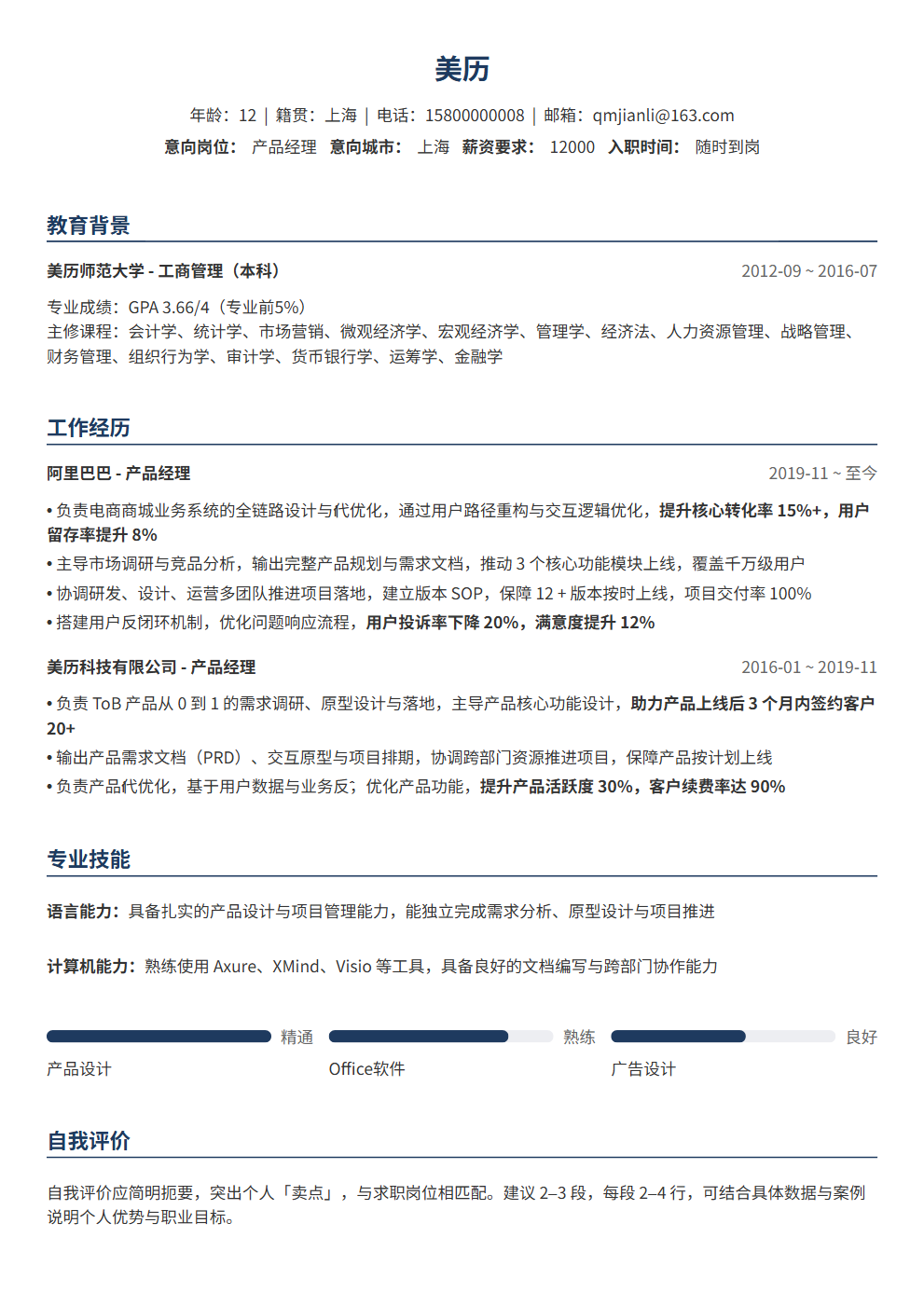
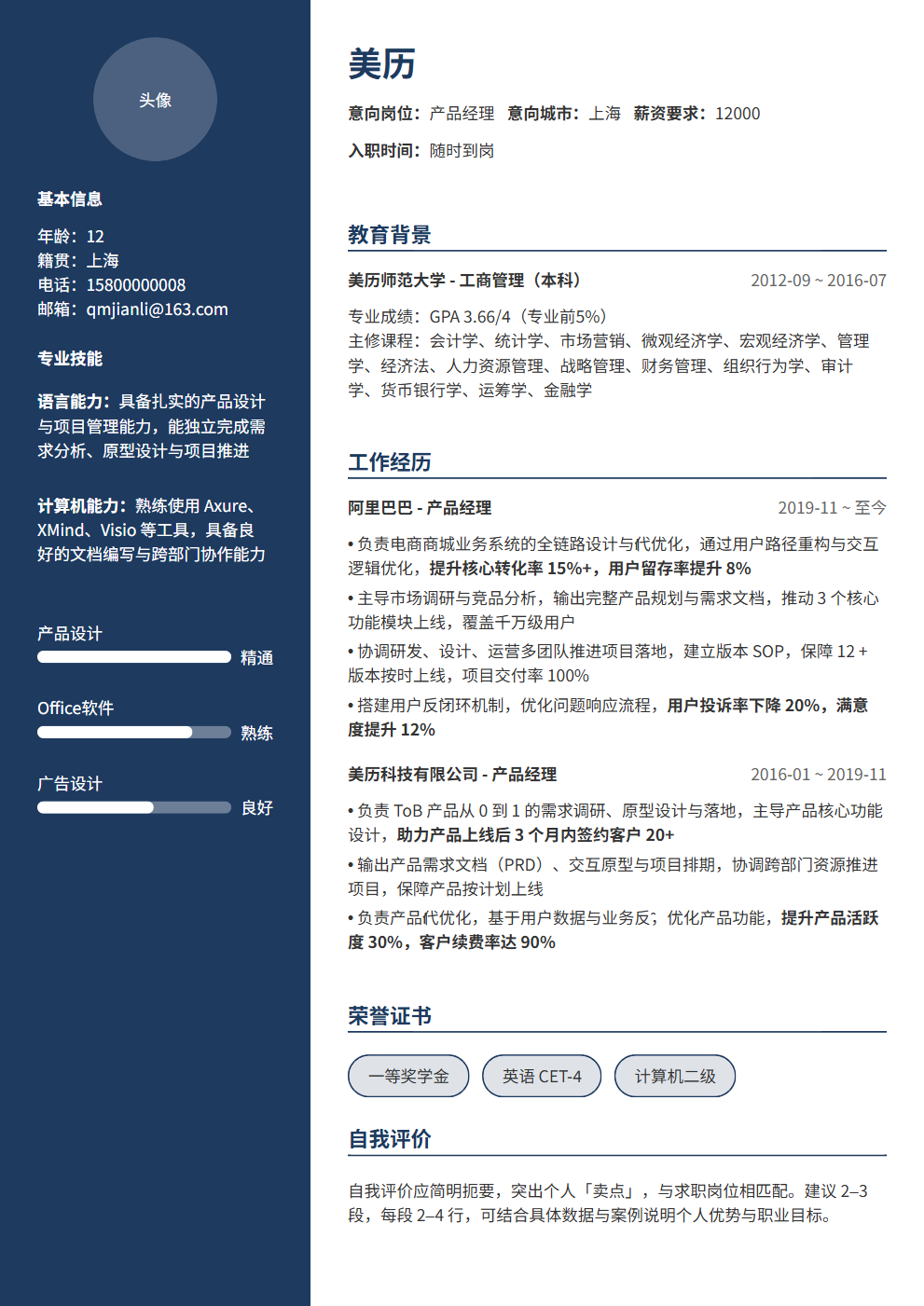
And the starting point for all of this is a resume that fully showcases your value. Every quantified achievement and precisely described experience on your resume becomes your strongest evidence at the negotiation table. Write a strong resume, and you'll have chips to negotiate with. Use a professional resume to open the door to a high-salary offer, then use negotiation skills to turn that offer into a result you're satisfied with.