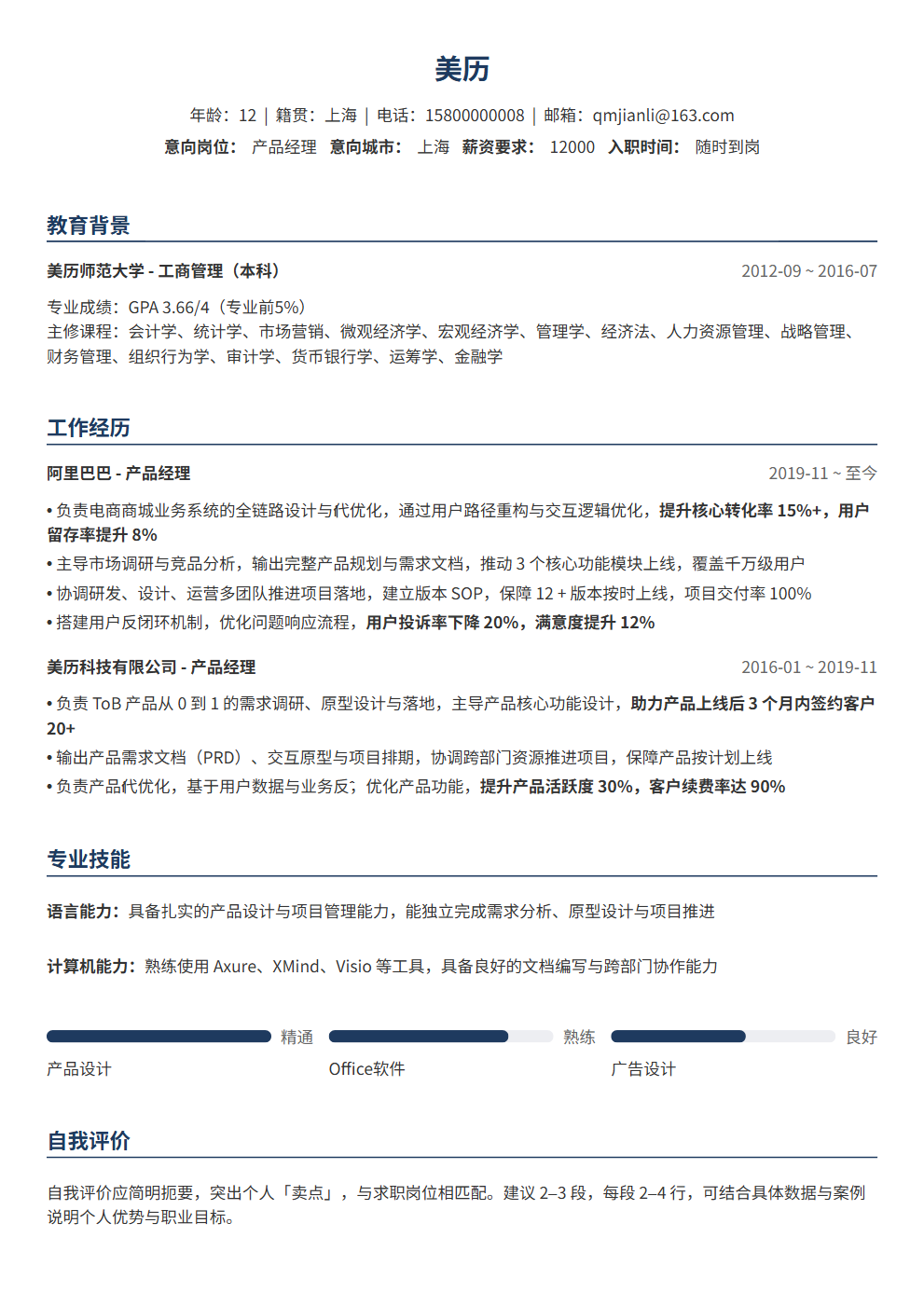
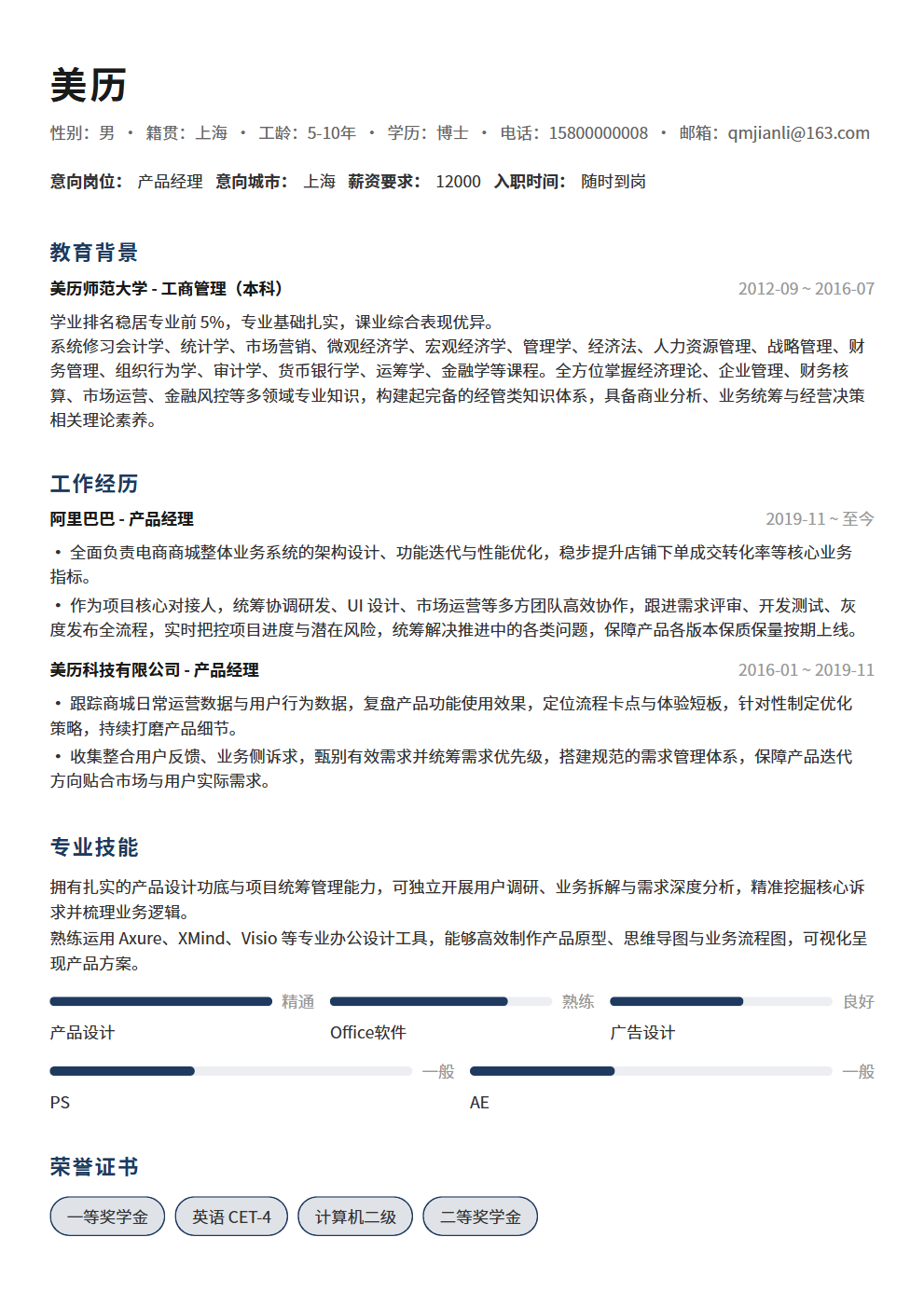
Resume Power Verbs Fifty High Impact Verbs to Replace Weak Expressions Like Responsible and Participated
Open your resume and count how many times words like "responsible for," "participated in," "assisted with," and "cooperated on" appear.
Is Your Resume Full of "Responsible For" and "Participated In"?
Open your resume and count how many times words like "responsible for," "participated in," "assisted with," and "cooperated on" appear. If it's more than 3, your resume is telling your story in the weakest possible way. HR doesn't read resumes to see what you were "responsible for" — they want to see what you accomplished. "Responsible for" is a job description; "drove," "built," and "optimized" are achievement statements. Verbs are the engine of your resume — weak verbs make it read like a job posting, while strong verbs make it read like a success story. This article provides 50 high-impact verbs, categorized by scenario, that will immediately upgrade your resume's impact.
Why Verbs Determine Your Resume's Fighting Power
Verbs are the first word in each resume bullet point, and they're also the first thing HR scans. The problem with weak verbs is that they cast you as a passive executor — "responsible for" implies you were assigned tasks, "participated in" implies you weren't the lead, and "assisted with" implies you were a supporting player. Strong verbs, on the other hand, position you as an active driver — "spearheaded" shows you took charge, "built" shows you created from scratch, and "optimized" shows you identified and solved problems. The same experience, with a different verb, projects an entirely different presence. The first step in resume optimization isn't changing your content — it's upgrading your verbs.
50 High-Impact Verbs by Category
These 50 verbs are organized across 7 scenarios. Swap them in to replace weak expressions on your resume:
- Leadership: Spearhead, champion, orchestrate, drive, launch. Use when: you were the project lead or core driver. Replace "responsible for XX project" → "spearheaded XX project," "championed XX initiative," "orchestrated XX workflow."
- Creation: Build, design, develop, establish, architect. Use when: you created a system, process, team, or product from scratch. Replace "responsible for building XX system" → "built XX system," "designed XX architecture," "architected XX framework."
- Optimization: Optimize, restructure, streamline, upgrade, iterate. Use when: you improved an existing process, system, or solution. Replace "participated in optimizing XX process" → "optimized XX process," "restructured XX module," "streamlined XX workflow."
- Growth: Boost, grow, expand, extend, breakthrough. Use when: you delivered quantifiable growth. Replace "responsible for improving XX metric" → "boosted XX metric by 30%," "grew XX revenue by 2M," "achieved breakthrough in XX bottleneck."
- Analysis: Analyze, diagnose, evaluate, research, uncover. Use when: you solved problems or identified opportunities through analysis. Replace "participated in XX data analysis" → "analyzed XX data to inform strategy," "diagnosed root cause of XX issue," "uncovered XX market trend."
- Collaboration: Coordinate, integrate, align, mobilize, facilitate. Use when: you drove cross-team or cross-department collaboration. Replace "assisted with cross-department communication" → "coordinated resources across 3 departments," "integrated upstream and downstream processes," "facilitated XX partnership launch."
- Problem-Solving: Overcome, resolve, troubleshoot, fix, navigate. Use when: you solved a difficult problem or crisis. Replace "responsible for solving XX issue" → "overcame XX technical challenge," "resolved XX client crisis," "navigated XX unexpected risk."
Verb Swap in Action: 5 Before/After Comparisons
See 5 real swap examples and feel the power of verb upgrades:
- Before: "Responsible for company website redesign project" → After: "Spearheaded company website redesign, improving page load speed by 40%"
- Before: "Participated in user growth strategy development" → After: "Drove user growth strategy execution, adding 150K new registrations in 3 months"
- Before: "Assisted in optimizing customer service response process" → After: "Streamlined customer service workflow, cutting average response time from 48 hours to 4 hours"
- Before: "Cooperated with marketing on competitive analysis" → After: "Uncovered competitive strategy gaps, delivering 3 analysis reports that informed product decisions"
- Before: "Responsible for resolving production system outages" → After: "Overcame 3 P0-level production incidents, establishing incident response SOP that reduced recurrence by 80%"
Verb + Data = The Ultimate Combination
Strong verbs give your resume power, but adding data gives it credibility. The formula: strong verb + specific action + quantified result. For example: "Optimized recommendation algorithm, boosting click-through rate by 25%," "Built data platform, tripling data processing efficiency," "Expanded South China market, growing quarterly revenue by 1.8M." A verb without data is self-congratulation; data without a verb is a laundry list. Together, they're the killer combo. Every bullet point should have at least one quantified metric, and your 3–5 core experiences should each feature the complete verb + data expression.
Change a Verb, Transform Your Resume's Presence
Upgrading verbs is the highest-ROI optimization you can make — no need to change your experience or invent content. Just swap expressions and your resume instantly levels up. Replace "responsible for" with "spearheaded," swap "participated in" for "drove," change "assisted with" to "coordinated" — your resume goes from a job description to an achievement list. If you want every verb on your resume to be precise and powerful, try BeautyResume's resume editor with built-in smart word optimization suggestions that automatically identify weak expressions and recommend high-impact verbs, making your resume grab HR's attention from the very first line.