Quit Naked or Job-Hunt While Employed? 4 Dimensions to Help You Make the Right Decision
Quit naked or job-hunt while employed? 4 dimensions — financial reserves, industry conditions, mental state, and opportunity windows — help you decide which suits you better, with precautions for both approaches.
You want to quit but fear not finding a new job; job-hunting while employed leaves no energy for interviews — should you quit naked or job-hunt while employed? There's no standard answer, but there is one that fits you. 4 dimensions (financial reserves, industry conditions, mental state, and opportunity windows) help you determine which approach suits you better, so you can stop agonizing.
Quitting Naked vs. Job-Hunting While Employed: Neither Is Absolutely Better
First, a fact many people won't admit: neither quitting naked nor job-hunting while employed is absolutely better. Each approach suits certain people and doesn't suit others. The key isn't "which method is better" but "which method better fits your current situation."
Core differences between the two approaches:
- Quitting naked: Time freedom, full interview energy, can start at a new company quickly; but high financial pressure, risk of social insurance gaps, resume blank periods, and intensified anxiety. Suitable for those with ample financial reserves, good industry conditions, and strong psychological resilience
- Job-hunting while employed: Financial security, continuous social insurance, calm mindset, no resume gaps; but difficult to coordinate interview times, divided energy, might miss urgent hiring opportunities, and the longer you stay the harder it is to make the leap. Suitable for those with significant financial pressure, uncertain industry conditions, and a need for stable transition
Most people's problem: they only look at what others chose, without analyzing their own actual situation. The following 4 dimensions will help you make your own judgment.
Dimension 1: Financial Reserves — How Much "Freedom Not to Work" Do You Have?
Financial reserves are the hardest criterion for deciding between quitting naked and job-hunting while employed. Quitting naked without sufficient financial reserves isn't brave — it's reckless.
Judgment criteria:
- 6+ months of living expenses: You can quit naked. 6 months is the safety line — most people find new work within 3-6 months, and 6 months of reserves lets you avoid lowering your standards due to financial pressure during your job search
- 3-6 months of living expenses: Quit naked with caution. This range means "barely enough" — if you're confident in your market competitiveness and industry conditions are good, you can try; but if you haven't found work after 3 months, anxiety will spike dramatically
- Less than 3 months of living expenses: Don't quit naked. Financial pressure will seriously affect your job search judgment — you'll accept unsuitable offers out of anxiety, ending up worse than before
When calculating living expenses, don't just count "minimum survival costs" (rent + food). Calculate "real living costs" — including mortgage/car payments, insurance, social activities, and unexpected expenses. Many people only calculate minimum costs when quitting naked, then can't sustain themselves after 2 months.
An additional reminder: social insurance gaps after quitting naked can affect household registration and home-buying eligibility in tier-1 cities. If you're in a tier-1 city and accumulating registration years, the hidden costs of quitting naked are much larger than you think.
Dimension 2: Industry Conditions — Is It Easy to Find Work in Your Industry?
Industry conditions determine how quickly and easily you'll find new work after quitting naked. With the same financial reserves, quitting naked in a strong industry carries low risk; in a weak industry, the risk is high.
How to judge industry conditions:
- Look at hiring demand: Search for your target role on job platforms and check the number of postings from the past month. If there are many positions with frequent updates, conditions are good; if positions are few and many JDs have been up for months, conditions are poor
- Look at salary trends: Compare salary ranges for the same role from six months ago. If salaries are rising, supply is short and conditions are good; if salaries are falling or flat, supply exceeds demand and conditions are poor
- Look at peers' job search cycles: Ask 3-5 people in your industry how long their most recent job change took. An average cycle of 1-2 months means good conditions; 3+ months means poor conditions
- Look at industry news: Is the industry laying people off? Are leading companies reducing hiring? Are many new companies entering? Industry news provides the most直观 signals of conditions
Conclusions from condition assessment:
- Good conditions (strong hiring demand, rising salaries, short job search cycles): Low risk for quitting naked — you can boldly quit
- Average conditions (steady hiring demand, flat salaries, 2-3 month job search cycles): Quit naked with caution; job-hunting while employed is safer
- Poor conditions (shrinking hiring demand, falling salaries, 3+ month job search cycles): Don't quit naked — job-hunting while employed is the only option
An important reminder: industry conditions are dynamic. What you see today might change in 3 months. If you decide to quit naked, make your condition assessment before quitting — not after, when you no longer have a way back.
Dimension 3: Mental State — Can You Handle the Anxiety of "No Income"?
Financial reserves are objective conditions; mental state is subjective. Some people have 6 months of reserves but can't sleep from anxiety after 2 months; others have only 3 months of reserves but remain rock-solid — psychological resilience varies by person, and you must be honest with yourself.
Assessing your psychological resilience:
- Have you experienced "no income" before? If you've never gone through a period without income, the anxiety of quitting naked may exceed your expectations. People who've experienced unemployment typically have stronger psychological resilience
- Will anxiety affect your judgment? Starting in the second month after quitting, will you lower your job search standards due to anxiety? Will you accept clearly unsuitable offers because it's been "too long without work"? If your anxiety will seriously affect your judgment, job-hunting while employed suits you better
- Is your family supportive? If you have a family, quitting naked isn't just your decision. Family understanding and support can significantly reduce your psychological pressure; conversely, family opposition and complaints will compound your anxiety
- Can you maintain a regular routine? The biggest fear after quitting naked isn't lack of money — it's the collapse of your life rhythm: sleeping late, scrolling through your phone all day, increasingly reluctant to go out. If you have poor self-discipline, quitting naked might trap you in a vicious cycle
A psychological test: imagine you've quit naked 2 months ago, your savings are decreasing, and you've interviewed at several places without success — what's your mental state right now? If you think "it's fine, I'll just keep looking," your psychological resilience is sufficient for quitting naked; if you think "I can't do this, I need to find any job quickly," job-hunting while employed is more suitable.
Dimension 4: Opportunity Windows — Are There Opportunities You Can't Catch Without Quitting Naked?
Some opportunities have time windows — if you don't grab them immediately, they're gone. In these cases, quitting naked might be a reasonable choice. But you need to distinguish between real opportunity windows and ones you only think are real.
What real opportunity windows look like:
- Urgent hiring roles: Some positions need someone to start within 1-2 weeks due to project urgency — people job-hunting while employed simply can't make it. If you've confirmed this is a good opportunity (good company, good role, good salary), quitting naked to seize it is reasonable
- Industry inflection point: When an industry suddenly explodes (for example, after a policy announcement), early entrants enjoy the greatest dividends. If you judge the industry is at an inflection point, quitting naked to enter quickly might be more valuable than waiting while employed
- Entrepreneurship/freelance opportunities: If you plan to start a business or go freelance, job-hunting while employed is pointless — you need to fully commit to the new venture, not juggle it with a day job
What's NOT a real opportunity window:
- Just "feeling like your current job is too annoying and wanting to leave ASAP" — this is emotion-driven, not opportunity-driven
- Just "seeing a good position but not sure if you want it" — uncertain opportunities aren't worth quitting naked for
- Just "a friend says their company is hiring" — verbal tips aren't opportunities; only formal offers count
A judgment principle: quitting naked is only reasonable when "not quitting naked means definitely missing a confirmed good opportunity." Quitting naked in any other circumstance is impulsive.
Precautions for Quitting Naked
If you've decided to quit naked after evaluating the 4 dimensions, these precautions will help you reduce risk:
- Update your resume before quitting: Don't wait until after quitting to start writing your resume. Have it updated before you resign so you can start applying immediately
- Do a round of interviews before quitting: Apply to a few target companies and interview before resigning to gauge your market competitiveness. If interview feedback is good, you'll have more confidence quitting naked; if feedback is poor, reconsider whether to quit
- Enter job search mode in your first week after quitting: Don't give yourself the excuse of "resting for a week first." Rest becomes habit, and habit becomes procrastination. Start sending resumes and scheduling interviews in your first week
- Set a job search rhythm: Send 5-10 resumes daily and schedule at least 2-3 interviews per week. Maintain momentum and avoid falling into the passive state of "waiting for responses"
- Handle social insurance continuity: After quitting, promptly pay social insurance as a flexible worker to avoid gaps that could affect household registration and home-buying eligibility
- Set a stop-loss deadline: Give yourself a "must find work by X date" stop-loss line. If you pass it, lower your standards and get employed first, then choose again later
Precautions for Job-Hunting While Employed
If you decide to job-hunt while employed, these precautions will help you be more efficient:
- Interview time management: Prioritize online and phone interviews to reduce time off. Schedule in-person interviews for mornings when possible — taking half a day off is easier than a full day
- Don't reveal your job-hopping intentions at your current company: Don't use company computers to send resumes, don't take interview calls at the office, and don't share your job-hopping plans with colleagues. Once your manager knows, your position becomes very passive
- Don't lower your "horse-finding" standards just because you're "riding a donkey": The biggest risk of job-hunting while employed is thinking "I still have a job, so there's no rush," resulting in staying put for six months. Set a clear job search timeline — for example, you must get a satisfactory offer within 3 months
- Resign only after receiving an offer: This is an iron rule. Don't quit because "the interview felt great" — only a written offer provides real security. Verbal offers don't count
- Pay attention to non-compete agreements: If you've signed a non-compete, jumping to a competitor could carry legal risks. Read your employment contract and non-compete clauses carefully before job-hunting
- Prepare for handover: Once you have an offer, prepare for work handover in advance. Don't leave a mess when you leave — the professional world is small, and your reputation matters
A Comprehensive Decision Framework Across 4 Dimensions
After evaluating each of the 4 dimensions, how do you make a comprehensive decision? A simple framework:
- All 4 dimensions support quitting naked (sufficient finances + good conditions + strong mentality + opportunity window): Quit naked decisively, without hesitation
- 3 dimensions support quitting naked: You can quit naked, but prepare a risk contingency plan
- 2 dimensions support quitting naked: Job-hunting while employed is safer, unless there's a very certain opportunity window
- 1 or 0 dimensions support quitting naked: Firmly job-hunt while employed — the risks of quitting naked far outweigh the benefits
A key principle: when you're hesitating about whether to quit naked, the answer is usually "don't." Hesitation itself shows your confidence isn't sufficient — people who are truly suited for quitting naked make the decision decisively.
Conclusion: Quitting Naked or Job-Hunting While Employed Depends on Your "Safety Margin"
Should you quit naked or job-hunt while employed? The core logic of the 4 dimensions: this isn't a question of "which is better" but of "is your safety margin sufficient?" Financial reserves are your financial safety margin. Industry conditions are your market safety margin. Mental state is your psychological safety margin. Opportunity windows are your opportunity safety margin. The more ample your safety margins, the lower the risk of quitting naked; the more insufficient your safety margins, the more prudent job-hunting while employed becomes. Don't be influenced by others' choices — their financial reserves, industry conditions, mental state, and opportunity windows are completely different from yours. Use the 4 dimensions to give yourself an honest assessment, then make your own decision. Remember: the best choice isn't "quitting naked" or "job-hunting while employed" — it's "making a decision you won't regret after thorough assessment."
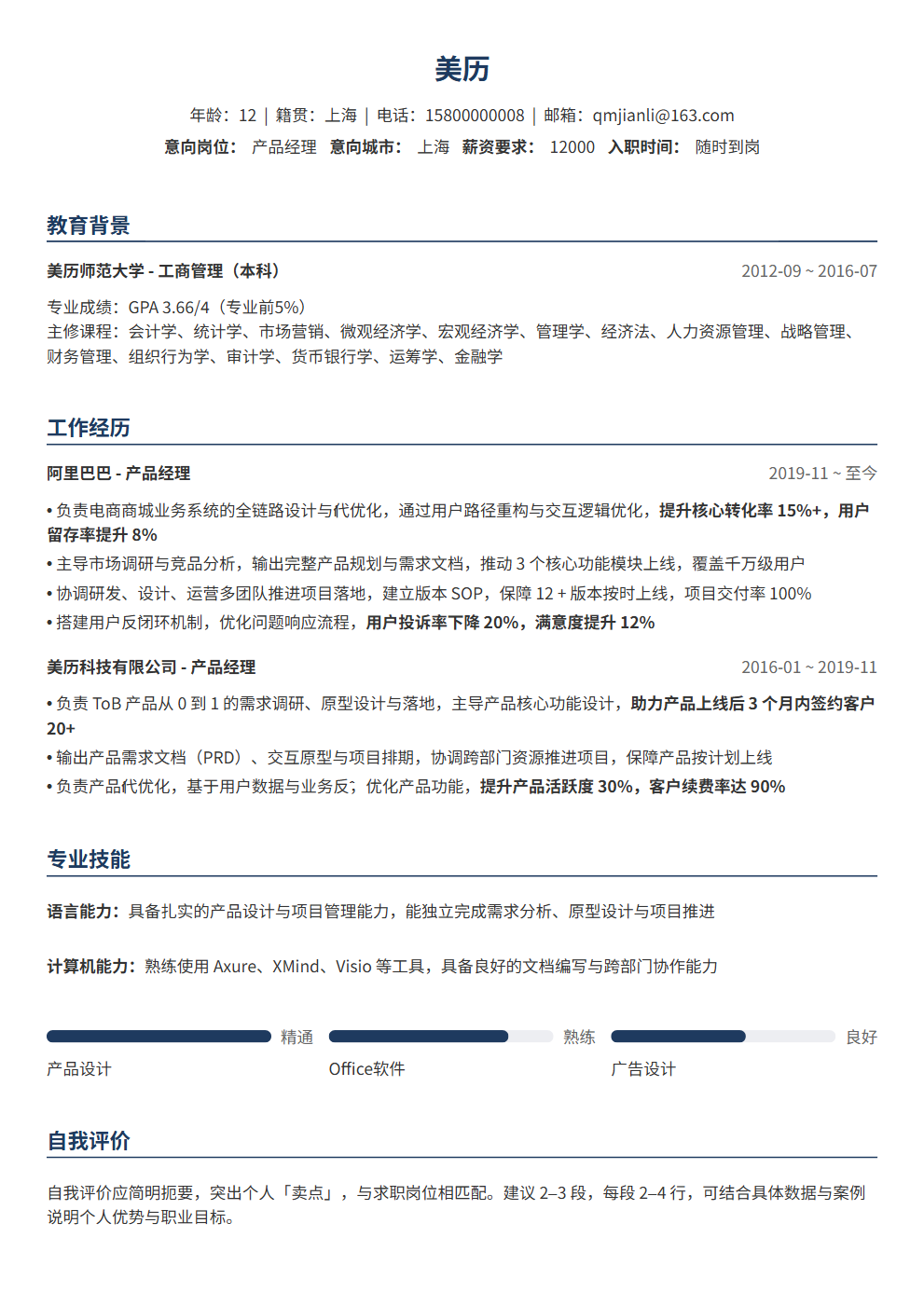
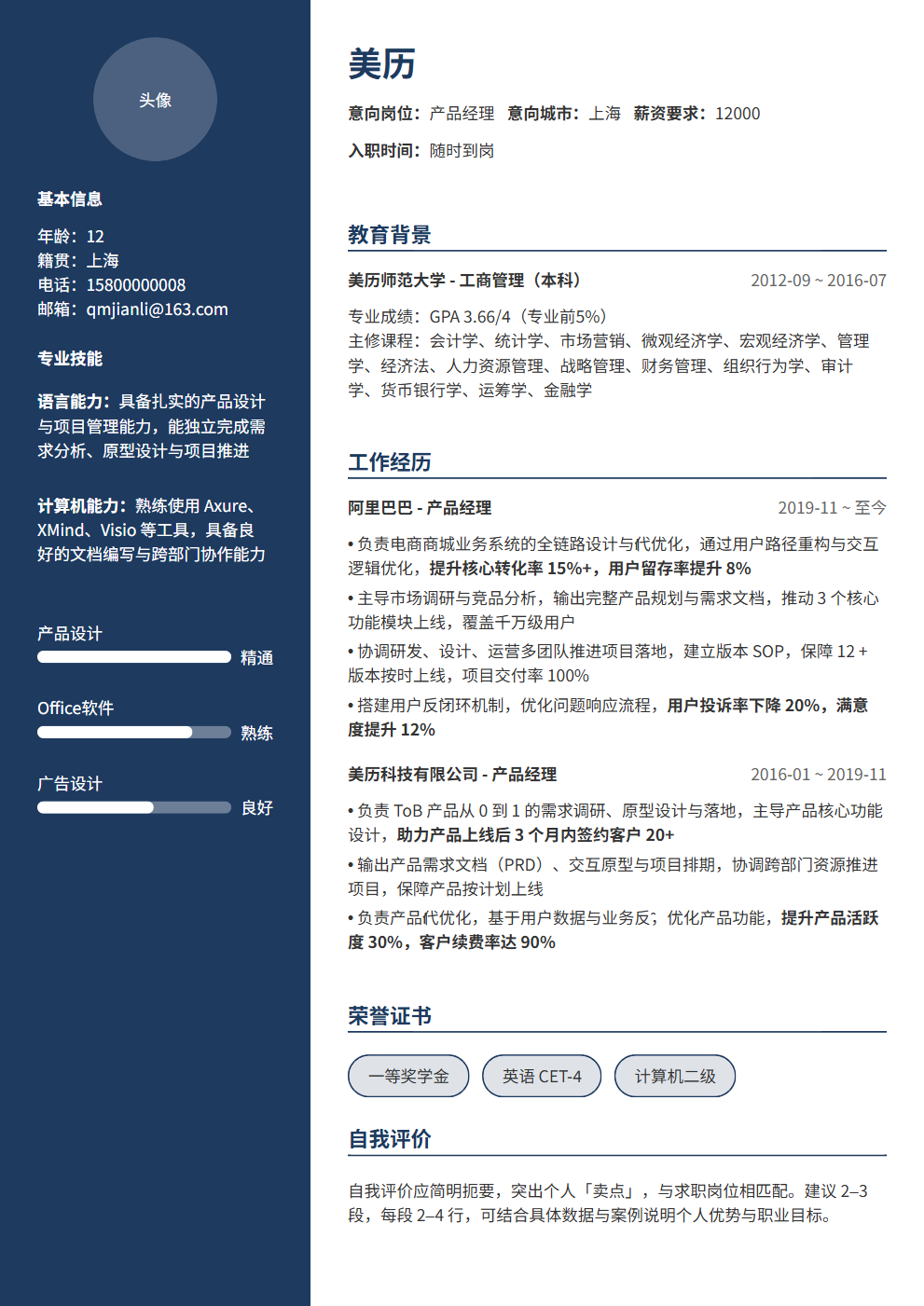
Whether you choose to quit naked or job-hunt while employed, the first step in your job search is preparing a professional, persuasive resume. BeautyResume offers smart formatting and one-click optimization to help you create a high-quality resume in the shortest time. Whether you feel the urgency of quitting naked or the composure of job-hunting while employed — prepare your resume with BeautyResume first, and your job search will be focused and effective!