Must-Read Before Signing the Tripartite Agreement: 6 Clauses That Could Cost You Dearly
Before signing the tripartite agreement, 6 clauses must be carefully reviewed — penalty fees, service period, salary terms, position terms, work location, and supplementary agreements, with notes and proper cancellation procedures for each.
The moment you receive an offer, you probably feel like you've finally made it. But don't rush to sign the tripartite agreement. The tripartite agreement isn't just a simple confirmation letter — it's a legally binding document. Once signed, it establishes a formal commitment between you and the employer. Many fresh graduates, unaware of the agreement's clauses, discover after signing that the penalty fee is exorbitant, the position is completely different from expectations, or the work location can be arbitrarily changed. These pitfalls can be avoided if you read carefully before signing. Here are 6 clauses that could cost you dearly if you don't examine them.
Clause #1: Penalty Fee — Changing Your Mind Could Cost More Than You Think
The penalty fee is one of the most critical clauses in the tripartite agreement, and also the most easily overlooked by fresh graduates. Many people think the penalty fee is just "paying some money," but how much exactly, under what circumstances you need to pay, and whether the agreement is automatically terminated after payment — if you don't confirm these details, you might face the awkward situation of "paying the fee but still being bound by the agreement."
- Common penalty fee amounts: Fresh graduate tripartite agreement penalty fees typically range from 1 to 3 months' salary, but some companies set fixed penalties of 5,000 to 20,000 yuan. A few companies even set penalties above 50,000 yuan, which is legally controversial
- Legal boundaries of penalty fees: Under the Labor Contract Law, employers cannot stipulate penalty fees for employees except in two cases — violation of service period agreements and violation of non-compete agreements. However, the tripartite agreement is a "preliminary contract" not fully governed by the Labor Contract Law, so penalty fee clauses are valid within tripartite agreements
- Key confirmation points: What is the exact penalty fee amount? Is it a fixed amount or calculated as a multiple of monthly salary? Under what circumstances must the penalty be paid (is it for unilateral breach by either party)? Does the agreement automatically terminate after paying the penalty?
- Negotiation room: Penalty fees are not non-negotiable. If you feel the fee is too high, try negotiating with HR to lower it. Many companies have flexibility on penalty fees, especially for candidates they value
- Real case: Xiao Liu signed the tripartite agreement and then received a better offer. When she wanted to back out, she discovered the penalty fee was 30,000 yuan. Her monthly salary was only 8,000 — the penalty equaled nearly 4 months' salary. She had no choice but to go to the original company, missing the better opportunity
The penalty fee isn't something to "deal with later" — it's the cost of changing your mind. Before signing, make sure you see the exact amount and assess whether you can afford it. If the penalty is too high, either negotiate it down or think carefully before signing.
Clause #2: Service Period — You Might Be "Tied Down" Longer Than Expected
The service period clause specifies the minimum duration you must work for the employer. Many fresh graduates think "signing the tripartite agreement equals signing the labor contract," but the service period in the tripartite agreement may differ from that in the labor contract. Some companies specify a 3-5 year service period in the tripartite agreement, and if you leave early, you must pay a penalty fee.
- Common service period terms: 1, 2, 3, or 5 years. The most common is 3 years. The service period starts from the date of employment, not from the date of signing the tripartite agreement
- Relationship between service period and penalty fee: The service period and penalty fee are typically linked — if you leave during the service period, you must pay a penalty. However, the penalty cannot exceed the training costs provided by the employer and must decrease proportionally based on the unfulfilled portion of the service period
- Key confirmation points: What is the exact duration of the service period? When does it start? How is the penalty calculated for leaving during the service period? What is the relationship between the service period and the labor contract term?
- Connection between service period and training: If the company specifies a service period, it's usually because they provided specialized training. If the company hasn't provided any training but still specifies a service period and penalty fee, this may not be legally supported
- Real case: Xiao Zhao signed a 5-year service period in the tripartite agreement. After joining, he found the work completely different from expectations and wanted to leave, but was asked to pay a 40,000 yuan penalty. The company's so-called "training" was just a 3-day corporate culture orientation — not specialized training at all
The service period clause isn't just a "formality" — it directly limits your career freedom for years to come. Confirm the duration and penalty calculation before signing. If it seems unreasonable, negotiate or walk away early.
Clause #3: Salary Terms — Verbal Promises Don't Count, Only Written Terms Matter
Salary is the issue fresh graduates care about most, but salary terms in tripartite agreements are often the vaguest. Many agreements only state "according to company compensation policy" or "salary negotiable" without specifying exact amounts. This means your salary is entirely at the company's discretion with no written guarantee.
- Common problems with salary terms: The agreement only states "according to company compensation policy" without specific amounts; only monthly salary is listed without annual salary structure; only base salary is mentioned without performance pay and allowances; verbal promises differ from written terms
- Key confirmation points: Is the specific monthly/annual salary amount written into the agreement? Is the salary structure (base salary, performance pay, allowances) clearly defined? What percentage of the regular salary is the probation salary? How long is the probation period?
- Risks of verbal promises: During the interview, HR says "monthly salary of 12K," but the agreement states "according to company compensation policy." After joining, you discover the base salary is only 8K, with 4K as performance pay (not guaranteed in full). Verbal promises have no legal effect
- Negotiation tips: Request that specific salary amounts and structure be written into the tripartite agreement. If HR says "company policy doesn't allow writing specific numbers," ask for clarification in a supplementary agreement or offer email, and keep written records
- Real case: Xiao Chen was told during the interview that the monthly salary was 10K, but the agreement only stated "according to company compensation policy." After joining, the base salary was 6K, 3K was performance pay (quarterly evaluation), and 1K was meal allowance (receipt required). Actual take-home was only about 7K
Salary terms aren't "close enough" — they directly determine your income level after joining. All salary-related promises must be in black and white in the tripartite agreement or supplementary documents. Verbal "approximately how much" doesn't count.
Clause #4: Position Terms — You Might Be "Reassigned" to a Completely Different Role
You interviewed for product manager but might be assigned to operations after joining. You applied for R&D but might be placed in testing. If position terms are unclear in the tripartite agreement, the company can adjust your position based on "business needs," and you have no basis to object.
- Common problems with position terms: The agreement only lists broad categories like "technical position" or "management position" without specifying the exact role; it states "arranged according to company needs," which is essentially no agreement at all; position names are vague — "product operations" could mean product manager or operations specialist
- Key confirmation points: Is the specific position name written into the agreement? Are the responsibilities clearly defined? Is there a clause stating "the company may adjust the position based on business needs"? If so, what are the scope and conditions for adjustment?
- Legal boundaries of position adjustment: Positions specified in labor contracts cannot be arbitrarily changed by the company. However, the tripartite agreement is not a labor contract, so position adjustment constraints are weaker. Therefore, you must specify the exact position when signing
- Negotiation tips: Request that the specific position name and scope of responsibilities be written into the agreement. If the company insists on "arranged according to company needs," ask to add a clause stating "position adjustments require mutual agreement"
- Real case: Xiao Wang interviewed for a front-end development position, but the agreement stated "technical position." After joining, he was assigned to back-end development because "front-end is fully staffed." He wanted to refuse, but the agreement didn't specify the exact position, so he had to accept
Position terms aren't something to "figure out after joining" — they directly determine your work content and career development direction. Specifying the exact position when signing is infinitely better than discovering a mismatch after joining.
Clause #5: Work Location — You Might Be Sent Somewhere Unexpected
You think signing with a Beijing company means working in Beijing? Not necessarily. If the work location is unclear in the tripartite agreement, the company can assign you to other cities based on "business needs." This might mean dealing with housing, living costs, and personal relationships in an unfamiliar place.
- Common problems with work location: The agreement only states "company location" without specifying the city; it states "arranged according to business needs," which means no agreement; it lists multiple cities like "Beijing/Shanghai/Shenzhen," allowing the company to choose freely
- Key confirmation points: Is the specific work city written into the agreement? Is there a clause about "the company may adjust work location based on business needs"? If so, what are the conditions and compensation for adjustments?
- Practical impact of relocation: If you signed with a Shanghai company and are sent to a tier-3 city, your salary might stay the same while living costs decrease (seemingly good), but career opportunities, social circles, and family relationships are all affected. If sent to a tier-1 city, living costs might increase significantly
- Negotiation tips: Request that the specific work city be written into the agreement. If the company has multiple offices, ask for "priority placement in XX city." If the company insists on "arranged according to business needs," request a clause stating "work location adjustments require mutual agreement"
- Real case: Xiao Li signed with a Shanghai company, but the agreement stated "East China region." After joining, she was sent to the Hefei branch because "Shanghai has no headcount." Her Shanghai apartment lease was wasted, and the Hefei salary was lower
Work location isn't "whatever the company arranges" — it directly determines your living costs, social circle, and career development space. Specifying the exact city when signing is much better than being "exiled to the frontier" after joining.
Clause #6: Supplementary Agreement — The Most Easily Overlooked "Hidden Clauses"
Many tripartite agreements come with a supplementary agreement that may contain clauses about non-compete restrictions, confidentiality obligations, training costs, household registration (hukou) transfers, and more. These supplementary agreements have the same legal effect as the tripartite agreement itself, but many fresh graduates sign without reading them. Supplementary agreements are the most easily overlooked "hidden clauses" and the most likely to cause problems.
- Common contents of supplementary agreements: Non-compete clauses (cannot work for competitors after leaving), confidentiality obligations (cannot disclose company information), training cost clauses (who bears the cost of company-provided training), hukou transfer clauses (conditions and penalty for company-assisted household registration), dormitory/housing clauses (conditions and requirements for company-provided housing)
- Key confirmation points: What are the specific contents of the supplementary agreement? Are the rights and obligations of each clause balanced? Are there unreasonable restrictive clauses? Are penalty liabilities clearly defined?
- Special attention to non-compete: Fresh graduates should be especially cautious about signing non-compete clauses — you may not have accumulated enough industry resources yet, but your future career choices are already restricted. Confirm the scope, duration, and compensation standards of the non-compete
- Special attention to hukou transfer: If you're signing the agreement primarily for household registration, confirm the specific timeline and penalty conditions for hukou transfer. Some companies promise to assist with registration but delay or fail to deliver in practice
- Real case: Xiao Zhou didn't read the supplementary agreement when signing. After joining, she discovered a 2-year non-compete clause that prevented her from working for any company in the same industry after leaving, with only 2,000 yuan per month in non-compete compensation. Her career freedom was restricted for 2 years right after graduation
Supplementary agreements aren't "add-ons" — they have the same legal effect as the tripartite agreement. Reading every clause before signing is far better than discovering "hidden clauses" afterward.
3 Confirmations Before Signing
Before signing the tripartite agreement, in addition to reviewing the 6 clauses, there are 3 things you must confirm. These confirmations aren't about "nitpicking" — they're about protecting your rights.
- Confirm the employer's entity information: Is the employer named in the tripartite agreement the same company you interviewed with? Some companies use "XX Human Resources Company" as the signatory, meaning your labor contract is with the HR company — this is labor dispatch, not regular employment. The gap in benefits between dispatched workers and regular employees can be significant
- Confirm the agreement's effective conditions: The tripartite agreement requires signatures and seals from the school, employer, and student to take effect. Confirm whether the school has stamped it? Whether the employer has stamped it? If only you have signed, the agreement hasn't taken effect yet, and you have the right to change your mind
- Confirm the signing timeline and process: Tripartite agreements typically have a validity period. Failing to report by the agreed date may constitute a breach. Confirm the reporting date, onboarding process, and required documents to avoid breaching the agreement due to procedural issues
The Right Way to Cancel the Agreement
If you've signed the tripartite agreement and want to back out, don't panic, and don't just "disappear." There's a proper way to cancel that minimizes your losses.
- Cancellation process: Step 1, notify the employer in writing of your intention to cancel; Step 2, negotiate with the employer to terminate the agreement; Step 3, pay the penalty fee (if specified in the agreement); Step 4, request the employer to issue a termination letter; Step 5, use the termination letter to apply for a new tripartite agreement from your school
- Cancellation notes: Don't notify verbally — always do it in writing (email or courier) and keep evidence. Don't just "disappear" — this affects your personal credit and school reputation. Penalty fees can often be negotiated down, especially if you have reasonable grounds for cancellation
- Cancellation timing: The earlier you cancel, the lower the penalty might be. Some companies have reduction policies for early cancellations. If you cancel before graduation, the school may still have time to help you reassign
Conclusion: The Tripartite Agreement Isn't Just a Formality — Every Clause Affects Your Vital Interests
Signing the tripartite agreement as a fresh graduate isn't "just going through the motions" — penalty fees, service periods, salary terms, position terms, work location, and supplementary agreements — each of the 6 clauses affects your vital interests. Penalty fees could cost you months of salary, service periods could restrict your career freedom for years, vague salary terms could significantly reduce your income, unclear positions and work locations could result in a "bait and switch," and supplementary agreements might hide pitfalls you can't see. Reviewing each clause before signing is far wiser than regretting it afterward. Remember: once you sign the tripartite agreement, it has legal effect. Before signing, make sure you've read every clause.
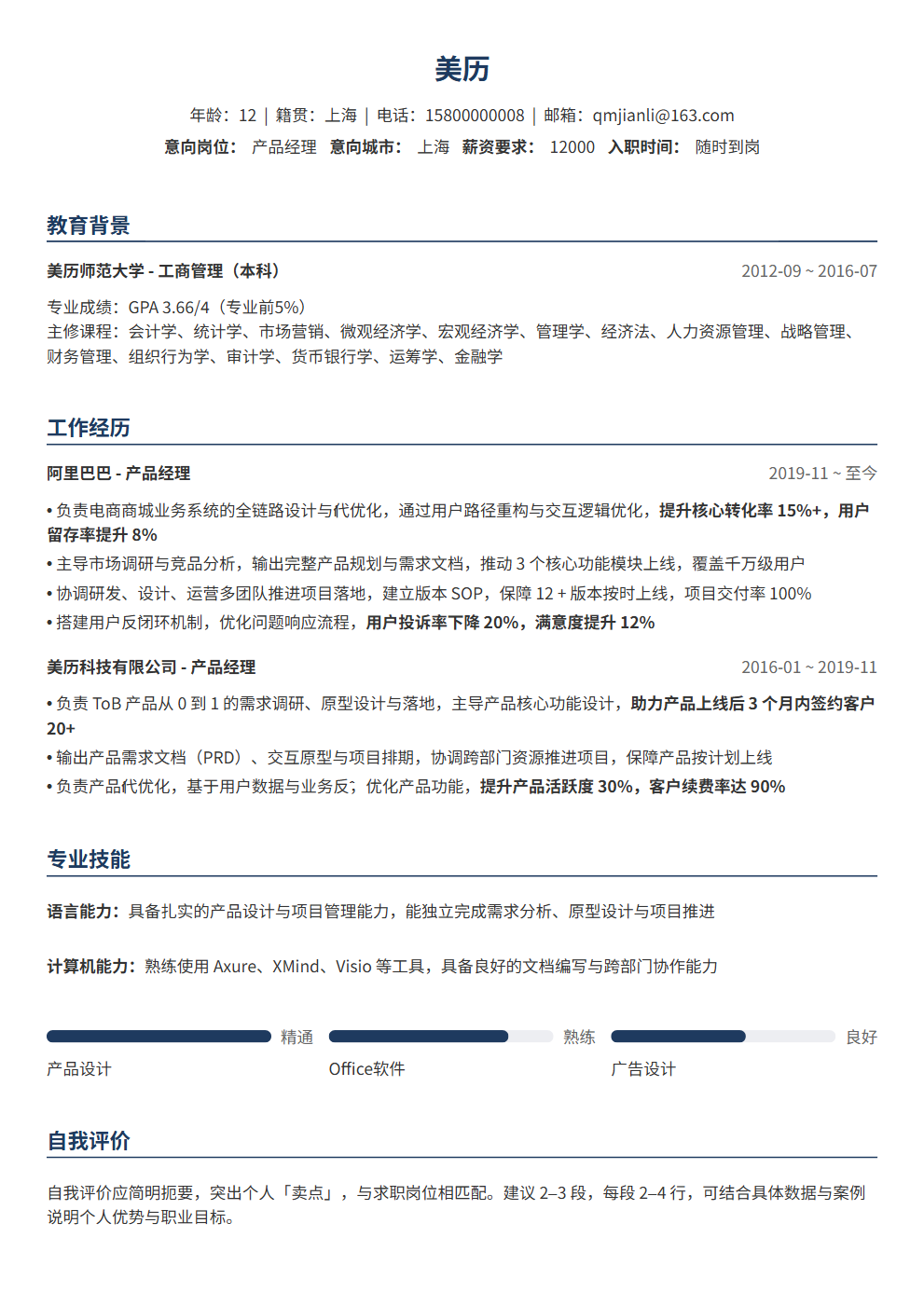
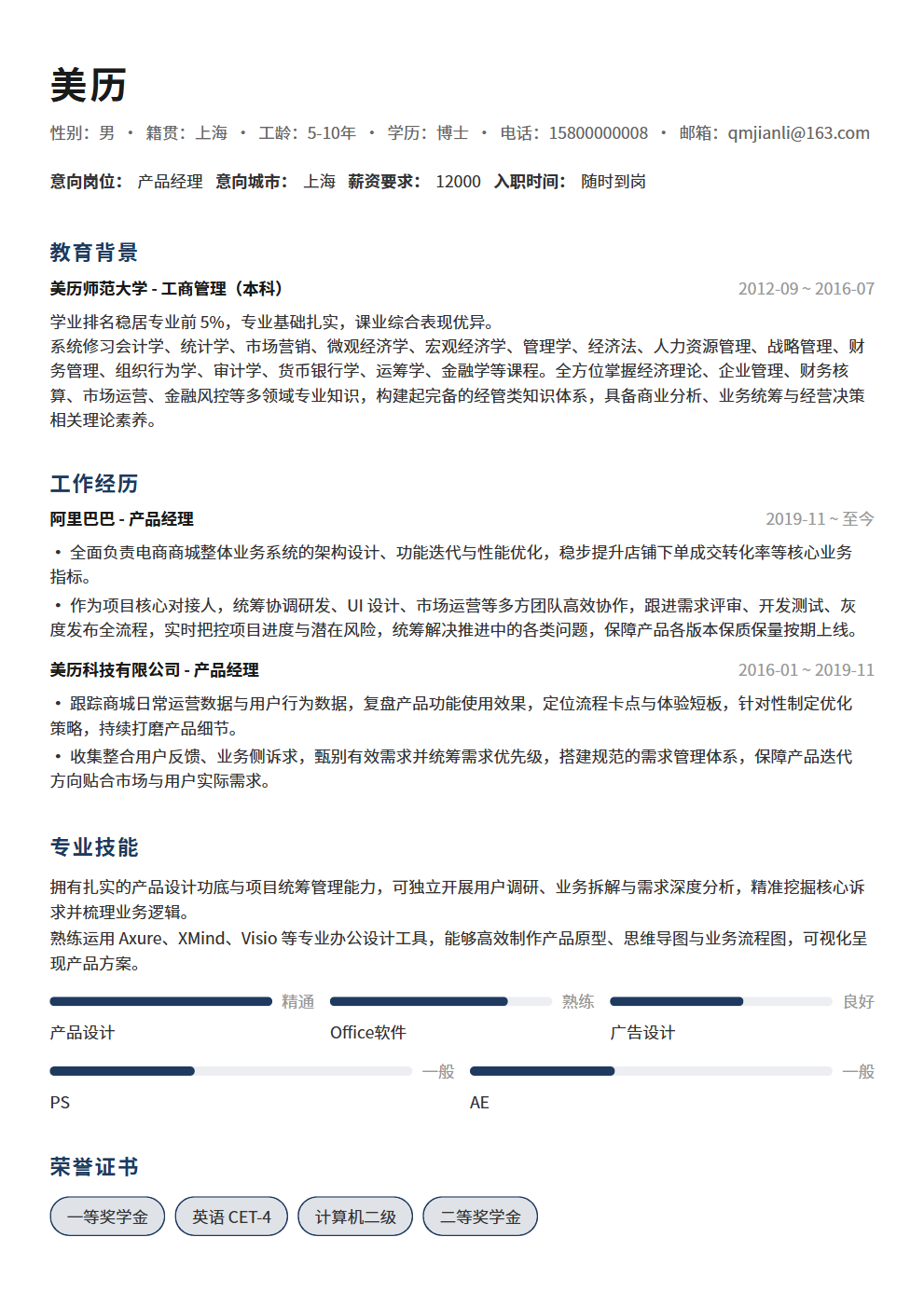
The first step before signing is polishing your resume. Use BeautyResume to create a professional resume that gives you more confidence in your job search — read the clauses carefully, prepare a great resume, and sign with peace of mind.