Multi-Round Interview Guide: Preparation Focus and Common Questions from First to Final Round
Passed the first round but failed the second? Each of the 3 interview rounds has different focus areas — first round checks basic fit, second round tests depth, final round assesses culture fit and motivation. Full breakdown of prep checklists, common questions, and 3 key tips between rounds.
You passed the first round smoothly but somehow failed the second. The third round felt great, but then... nothing. Have you ever been confused — you prepared seriously for every round, so why still couldn't pass? The problem might be that you don't understand each round's "examination focus" well enough. Multi-round interviews aren't simply "repeated interviews" — each round has different assessment priorities, interviewer roles, and evaluation criteria. Using the same preparation for all rounds is like using the same key for different locks — success is purely luck. Today I'll break down the preparation focus and common questions for each round from first to final, so you can perform precisely in every round.
First Round: Checking Basic Fit — Can You Do This Job?
The first round is usually an HR interview or initial business interview. The core assessment is "basic fit" — whether your experience, skills, and background match the job requirements. The first round won't ask deeply technical questions but will comprehensively scan your basics to filter out clearly mismatched candidates.
- First round interviewers: Usually HR (at large companies) or your direct supervisor (at smaller companies). HR interviews focus on communication skills, stability, and salary expectations; business interviews focus on basic professional competency and project experience
- First round evaluation criteria: Does your experience match the job description? Is your communication clear? Are your motivations reasonable? Are your salary expectations within budget? Can you start when needed? The first round is about "filtering out" rather than "selecting" — as long as you don't make obvious mistakes, the pass rate is typically 50%-70%
- First round preparation checklist: Thoroughly read the job description and prepare evidence for each requirement; prepare a 1-2 minute self-introduction highlighting relevant experience; prepare your "why our company" answer (showing you've done your research); understand the company's basic business and industry position; prepare answers for salary expectations and availability
- First round common questions: "Please introduce yourself briefly," "Why do you want to join our company?", "Why did you leave your last job?", "What's your career plan?", "What's your salary expectation?", "When can you start?" These seem simple, but many people stumble because they're underprepared
- First round key strategy: Keep answers concise, highlight key points, and strongly connect to the role. First rounds are usually only 30-45 minutes — you don't have time to elaborate on every experience, so keep each answer to 1-2 minutes and emphasize the most role-relevant information
The first round is your "admission ticket" — passing means you've entered the candidate pool, but that's far from enough. The key is "don't make mistakes" rather than "be outstanding."
Second Round: Testing Depth of Ability — How Well Can You Do This Job?
The second round is usually a deep business interview or cross-functional interview. The core assessment is "depth of ability" — not just whether you can do the job, but how well you can do it. The second round digs deep into your project experience, professional skills, and problem-solving methods — this is where you truly "show your stuff."
- Second round interviewers: Usually business leaders, technical leads, or cross-department heads. They have higher professional standards, will probe for details, challenge your viewpoints, and assess your depth of thinking
- Second round evaluation criteria: Is your professional capability deep enough? Is your methodology for solving complex problems mature? Were you an executor or decision-maker in projects? Is your approach to challenges effective? The second round is about "selecting" — choosing the most capable person from first-round passers, with a typical pass rate of 30%-50%
- Second round preparation checklist: Deeply prepare details for 2-3 core projects (background, challenges, your role, specific actions, results, retrospective); prepare for in-depth questions in your professional domain (industry trends, technology choices, business logic); prepare answers for "what's the biggest challenge you've faced" and "what's the most valuable project you've done"; research the interviewer's background if you know who they are
- Second round common questions: "Tell me about your most challenging project," "If you could redo this project, how would you improve it?", "What was the biggest difficulty you faced in a project and how did you solve it?", "What do you think about XX technology/method?", "If I gave you a XX task, how would you plan it?", "How do you handle disagreements with your team?" These require specific case studies — you can't just give empty answers
- Second round key strategy: Use case studies, show your thinking process, demonstrate depth. The second round isn't testing whether you "know" something — it's testing how "deeply" you understand it. When answering, don't just say "what" — also explain "why" and "how." Don't just say "I used XX method" — explain "why I chose this method over alternatives, and what its advantages and limitations are"
The second round is the "watershed" — passing means you've entered the finals. The key is "having depth" — not being comprehensive about everything, but having deep understanding and practice in key areas.
Final Round: Assessing Culture Fit and Motivation — Are You the "Right Person"?
The final round is usually with senior executives or partners. The core assessment is "culture fit and motivation" — whether your values align with the company and whether you genuinely want to join. The final round rarely asks professional questions — it's more about getting to know the "person."
- Final round interviewers: Usually department VPs, company executives, or founders. They care about "whether this person fits our team" and "whether this person really wants to join us" — not "whether this person's skills are sufficient" (that's already been verified in previous rounds)
- Final round evaluation criteria: Do your values match the company culture? Does your communication style fit the team? Is your motivation strong? Is your long-term development aligned with the company's direction? Does your vision match the position level? The final round is about "finalizing" — selecting the most suitable person among equally capable candidates, with a typical pass rate of 50%-70%
- Final round preparation checklist: Deeply understand the company's culture, values, and recent developments; prepare a thoughtful answer for "what else would you like to know" (showing depth of thought and motivation); prepare your "why us over other companies" answer; think about your 3-5 year career plan and ensure it aligns with the company's direction; research the final-round interviewer's background and focus areas
- Final round common questions: "Why did you choose our company?", "What's your long-term career plan?", "What can you bring to the team?", "Do you have any questions for me?", "If you joined us, how would you plan your first 90 days?", "Are you considering other opportunities? How do you rank them?" These seem casual, but each is assessing your motivation and fit
- Final round key strategy: Be authentic, express motivation, show vision. The final round isn't a "performance" — it's a "conversation." Interviewers want to see a real person, not a perfect answering machine. Express genuine interest in the company and role (not generic "I really like your company" but specific "I noticed your recent expansion in XX direction, which aligns perfectly with my expertise"). Also show your vision — not just what you can gain, but what you can contribute
The final round is the "last hurdle" — passing means you're about to receive an offer. The key is "sincerity," not "perfection." A genuine, highly motivated candidate is more likely to pass the final round than someone who's "flawless" but lacks enthusiasm.
3 Key Tips Between Interview Rounds
Multi-round interviews aren't 3 independent interviews — they're a continuous evaluation process. How you connect and adjust between rounds often determines whether you make it to the end.
- Tip 1: Review immediately after each round. Within 30 minutes after the interview, while your memory is fresh, write down: What questions did the interviewer ask? Which answers were good? Which weren't? What topics was the interviewer particularly interested in? Did you say anything wrong? This review information is invaluable preparation material for the next round — if you answered a question poorly in the second round, it might come up again in the final round, so prepare a better answer in advance
- Tip 2: Don't reuse the same answers in subsequent rounds. If you used the STAR framework to tell a project story in the first round, don't tell the same project in the second round (unless the interviewer brings it up). Prepare different cases and stories for each round to showcase different capabilities. If you only have 1-2 projects to discuss, tell them from different angles — first round about project outcomes, second round about challenges and decision-making, final round about growth and reflections
- Tip 3: Maintain information consistency. The information you share across rounds must be consistent — years of experience, project timelines, reasons for leaving, salary expectations. If you say "5 years of experience" in the first round but "4 and a half years" in the second, the interviewer will question your integrity. I recommend writing down key information before the interview and quickly reviewing it before each round to ensure consistency
Common Questions Summary by Round
Finally, here's a summary of common questions for each round for easy reference when preparing.
- First round common questions: Self-introduction, reason for leaving, why our company, career plan, salary expectations, availability, strengths and weaknesses, teamwork experience, ability to handle pressure. First round questions are "broad" — wide coverage but shallow depth
- Second round common questions: Most challenging project, key decisions in projects, technical/professional depth questions, problem-solving methodology, cross-departmental collaboration cases, data-driven decision cases, innovation cases, failure analysis. Second round questions are "deep" — narrow coverage but requiring depth
- Final round common questions: Why us (deep motivation), long-term career plan, what you can bring to the team, first 90 days plan, views on industry trends, culture fit questions, reverse Q&A. Final round questions are "personal" — focusing on your values, motivation, and vision
Conclusion: Each Interview Round Is a Different Exam — Use Different Strategies
The key to passing multi-round interviews: understand each round's assessment focus and use different strategies. First round checks basic fit — keep answers concise, highlight key points, strongly connect to the role. Second round tests depth of ability — use case studies, show thinking process, demonstrate professional depth. Final round assesses culture fit and motivation — be authentic, express motivation, show vision. Add 3 tips between rounds — review after each round, don't reuse answers, maintain information consistency — and you can perform precisely in every round to ultimately land your dream offer. Remember, multi-round interviews aren't 3 independent exams — they're a relay race where every leg must be run well to cross the finish line.
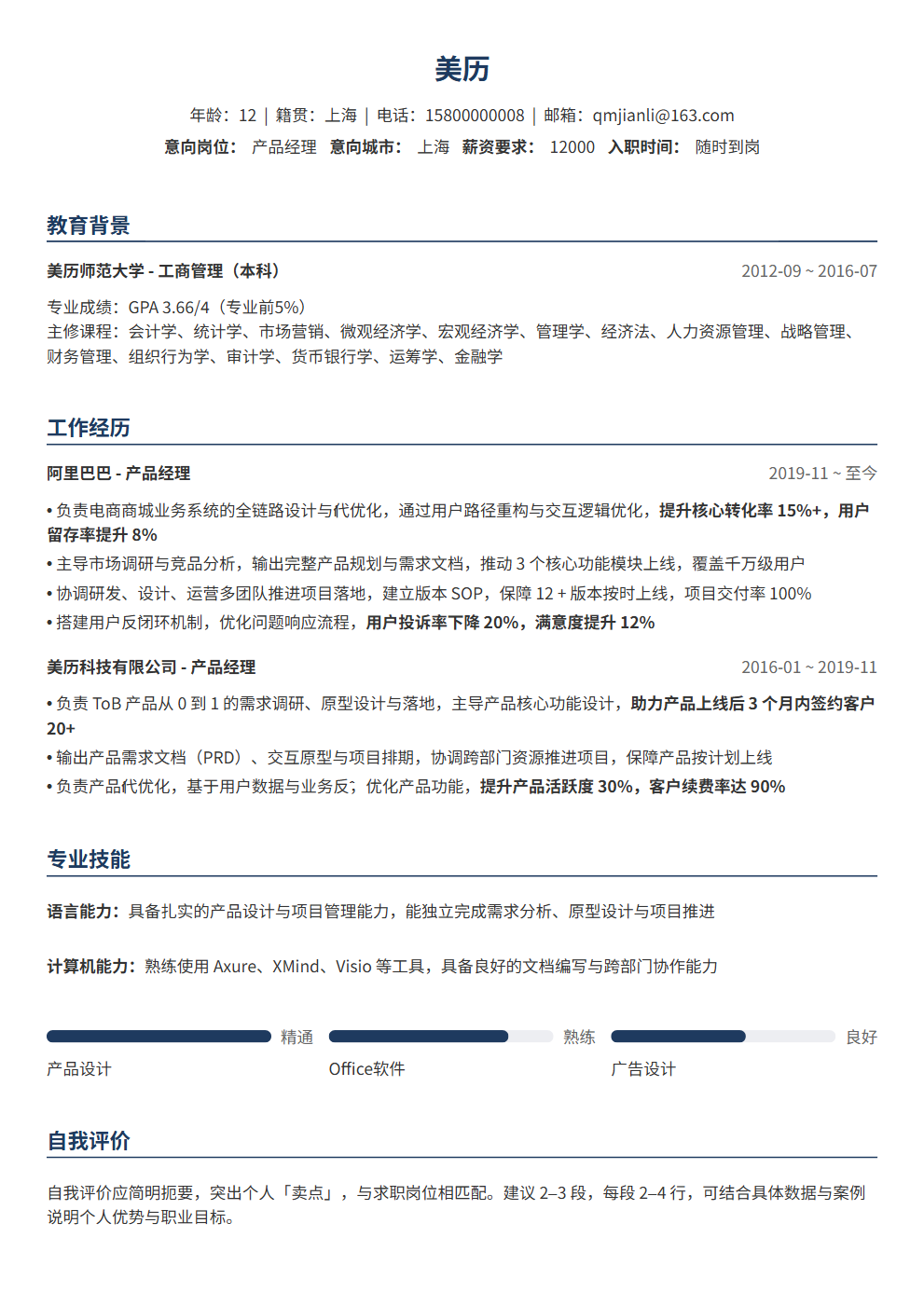
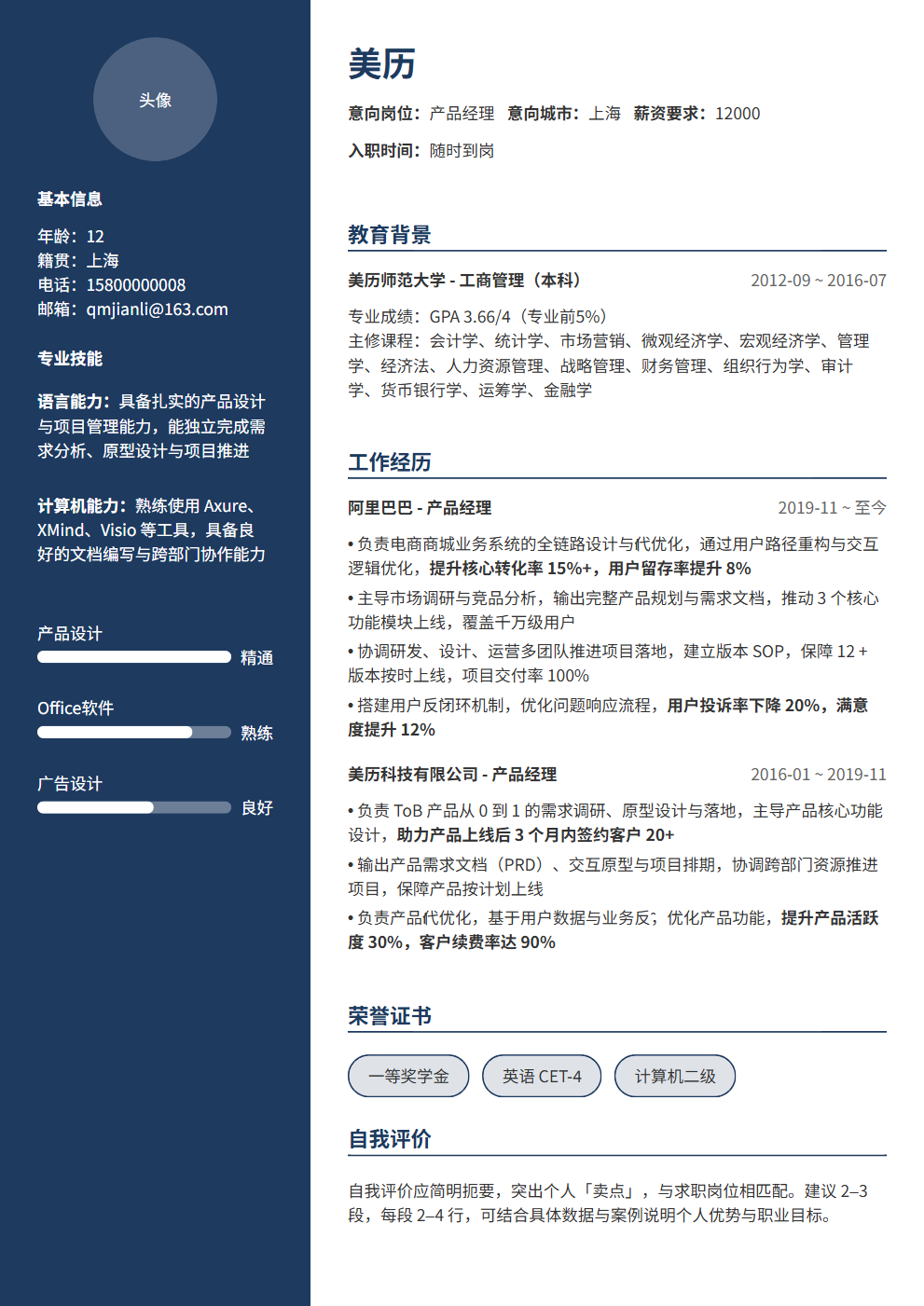
Multi-round interviews start with a professional resume — it's your "admission ticket" to the interview. Use BeautyResume resume editor to create a resume that makes interviewers take notice, helping you pass resume screening and start your interview journey on the right foot.