Managing Up: How to Get Your Boss to Proactively Promote and Raise Your Salary
Promotions and raises aren't waited for — they're cultivated. Master 4 key actions of managing up so your boss sees your value and proactively fights for your opportunities.
1. Why Doesn't "Heads-Down Hard Work" Lead to Promotions?
Many professionals have a misconception: if I work hard and put in overtime, my boss will naturally see my effort and promote me. Reality: your boss has no obligation to proactively discover your value. They handle too many things daily — if you don't actively showcase your results, your efforts may never be seen.
The core of managing up isn't flattery — it's making your boss's work easier while making your value more visible. There's an honest truth in the workplace: your work output sets your floor, but your visibility sets your ceiling.
2. Four Key Actions for Managing Up
Action 1: Report Regularly — Give Your Boss a Sense of Control
What bosses fear most isn't subordinates making mistakes — it's information black holes — not knowing what you're doing or how things are progressing. Build a regular reporting mechanism:
- Send a brief weekly update: completed this week + plans for next + support needed
- Set key milestones for important projects and proactively report at each one
- When encountering problems, prepare solutions before reporting — don't just throw problems
Action 2: Understand Your Boss's Core Goals — Align Your Work
Your boss cares about their KPIs, not yours. If your work doesn't align with their core goals, no amount of effort will earn recognition:
- Figure out your boss's top 3 goals for the year
- Connect your work results to their goals
- Describe your achievements using their language and priorities
Action 3: Proactively Take On What Your Boss Doesn't Want to Do but Must
Every boss has tasks they'd rather avoid but can't delegate away: cross-department coordination, upward reporting, difficult communications. If you proactively handle these well, your standing with your boss will rise quickly.
Action 4: Raise Your Aspirations at the Right Time
Promotions and raises aren't sudden year-end requests — they're long-term cultivation + timely proposals:
- Make your results visible regularly (through reports and key projects)
- Make your request after completing a major project — the best timing
- Use "I'd like to take on more responsibility" instead of "I want a raise" — the former shows ambition, the latter feels entitled
3. Three Managing Up Misconceptions
- Misconception 1: Managing up equals kissing up — Managing up is professional collaboration; kissing up is personal dependency. The difference: are you creating real value?
- Misconception 2: Only do what the boss assigns — Assigned tasks are the "passing line"; exceeding expectations is the "excellence line"
- Misconception 3: Being afraid to communicate with your boss — The more you avoid your boss, the less they understand you, and the fewer opportunities you get
4. Strategies for Different Boss Types
Results-Oriented Boss
This type of boss only cares about final output, not how many hours you worked. When communicating with them, speak with data and outcomes — less process, more results. Use a "conclusion first" approach: state the result, then add key context. Don't say "I had five meetings this week to coordinate resources." Say "Resources are secured; the project launches next week."
Detail-Controlling Boss
This boss wants to know everything — not because they don't trust you, but because they need a sense of security. The best strategy is to proactively increase your reporting frequency so they feel everything is under control. With each report, include your judgment and recommendations to gradually demonstrate your decision-making ability and earn more autonomy. Never fight back or hide information — that only makes them micromanage more.
Hands-Off Boss
This boss gives you plenty of freedom, but that doesn't mean they don't care about progress. If you go silent for too long, they may assume you've lost control. The best approach is to proactively establish a reporting rhythm: a brief weekly progress sync, and proactively seek direction on key decisions. Make them feel "hands-off but reassured."
Emotional Boss
This boss's mood swings significantly — the same request might get very different responses depending on their emotional state. The key is choosing the right timing: raise important requests or new proposals when they're in a good mood, and avoid adding extra burden when they're stressed. Also, learn to distinguish between "emotional reactions" and "genuine feedback" — don't get swept up in the emotion.
5. Put Managing Up Skills on Your Resume
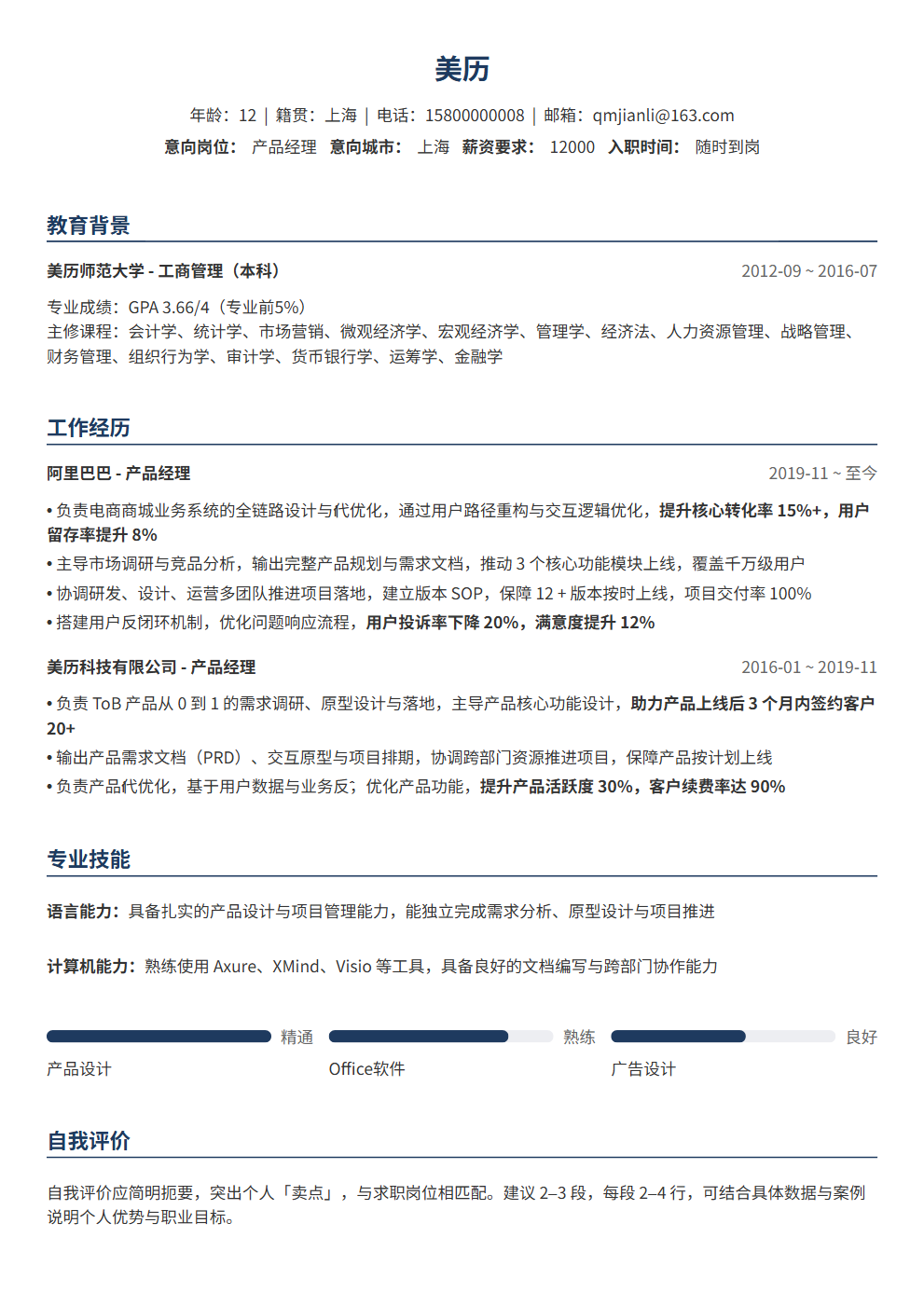
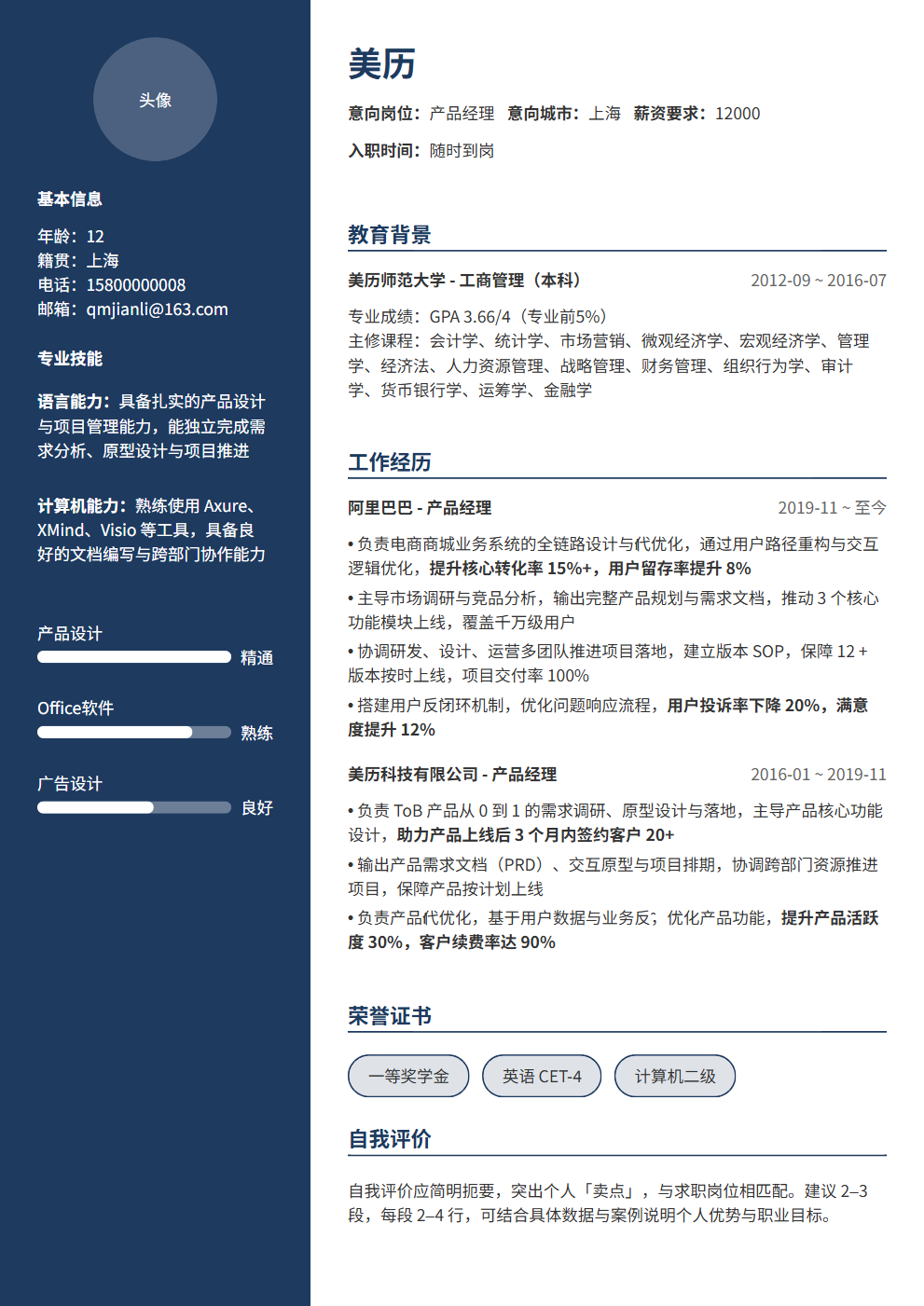
Managing up ability is a hidden resume bonus. In your work experience, you can demonstrate it like this:
- "Led cross-department collaboration project, driving consensus across 3 departments" — shows coordination ability
- "Presented quarterly business updates to CEO, securing X resource support" — shows upward communication skills
- "Proactively took on X responsibilities, helping the team achieve annual targets" — shows initiative
6. Upward Communication and Reporting Techniques
How to Write Effective Weekly Reports
A weekly report is not a log of activities — it's a window to showcase your value. A good report follows the "Results + Plans + Needs" three-part structure: what you accomplished this week (quantified with data), what you plan to do next week (with priorities marked), and what support you need from your boss (be specific). Keep it under 300 words — your boss doesn't have time for long reads.
How to Present Bad News
The principles for delivering bad news are timely, solution-ready, and impact-controlled. Don't wait until the problem escalates — the earlier you report, the more room there is to fix it. Use a "Problem + Cause + Solution + Prevention" structure so your boss sees you solving the problem, not creating panic. For example: "The project is delayed by 2 days due to a vendor delivery issue. I've arranged a backup plan and expect to catch up by Friday. Going forward, I'll build in buffer time."
How to Propose New Ideas
What bosses dread isn't new ideas — it's half-baked suggestions with no execution plan. When proposing something new, prepare a one-pager: what's the problem, what's your solution, what resources are needed, what's the expected return, and what are the risks with mitigation strategies. Use a minimum viable validation approach to lower your boss's decision cost.
How to Ask for Resources
When requesting resources, frame your ask in the language of return on investment: what you need, what it's for, what results it will produce, and when the payoff will be visible. The logic for approving resources isn't "you need it" — it's "it's worth investing in."
7. Setting Boundaries in Managing Up
When to Push Back Respectfully
Managing up doesn't mean saying yes to everything. When a request is clearly unreasonable, beyond your capacity, or conflicts with higher-priority work, you need to learn the art of strategic refusal. Use facts and priorities: "I currently have projects A and B in progress. If I take on C, A's delivery will be delayed by a week. How would you like me to prioritize?" Return the decision to your boss.
Maintaining Professional Boundaries
Having a good relationship with your boss doesn't mean becoming friends. Professional boundaries include: not questioning your boss's decisions in public, not skipping levels to report unless necessary, and not bringing personal emotions into work communication. Be respectful without being subservient, approachable without overstepping.
Avoiding Over-Dependence on Boss Approval
If you need your boss's nod before moving forward on everything, you've become over-dependent. Healthy managing up means aligned on direction, autonomous in execution. Make decisions on small things and report afterward; align on direction for big things before executing. As you gradually build trust, your boss will naturally give you more space.
Balancing Autonomy with Alignment
Autonomy and alignment aren't contradictory. The best approach: fully align on goals and boundaries at project kickoff, maintain autonomous decision-making during execution, and proactively sync at key milestones. This ensures the right direction without constant check-ins that slow everything down.
Summary
The essence of managing up: make your boss's work easier, make your value more visible. Regular reporting gives a sense of control, goal alignment gives a sense of value, proactive responsibility gives trust, and timely requests give direction. Meanwhile, mastering reporting techniques makes your communication more effective, and maintaining boundaries keeps the relationship healthy. Promotions and raises aren't waited for — they're cultivated through continuous value creation and effective communication.
Once you've truly mastered managing up, don't forget to reflect it in your resume. Phrases like "led cross-department collaboration," "presented to senior leadership and secured resource support," and "proactively took on key responsibilities" don't just showcase your skills — they prove your professional maturity. A great resume is itself an extension of managing up: using the language your audience (the interviewer) cares about, demonstrating the value you can create.