6 Major Probation Period Traps: From Salary Cuts to Disguised Dismissal, Everything You Need to Know
Probation periods are full of traps — 6 common pitfalls (overlong probation, salary below 80%, no social insurance, arbitrary extension, arbitrary dismissal, withholding documents), with legal basis and countermeasures for each, helping you protect your rights.
The moment you receive an offer, you might feel like you've finally made it. But don't celebrate too soon — the probation period is the real trial by fire. Many companies treat probation as a source of cheap labor, finding creative ways to exploit new hires. Salary cuts, no social insurance, arbitrary dismissal... these practices you might think are "normal" are actually illegal in many cases. Today, we'll expose the 6 most common probation traps so you never get taken advantage of again.
Trap 1: Overlong Probation — 6 Months for a 3-Year Contract? Illegal!
Some companies love stretching probation periods as long as possible. They'll set a 6-month probation for a 3-year contract, or even a 6-month probation for a 1-year contract. They're banking on your ignorance of the law — every extra day of exploitation counts.
- Legal provision: Article 19 of the Labor Contract Law clearly sets probation limits — contracts of 3 months to 1 year: probation no more than 1 month; contracts of 1 to 3 years: probation no more than 2 months; contracts of 3+ years or open-ended: probation no more than 6 months. Anything exceeding these standards is illegal
- Common trick: Sign a short-term contract with a long probation, then renew near the end. For example, a 1-year contract with 6-month probation, then a 2-year renewal. This "contract splitting" is also illegal — the same employer can only set one probation period with the same employee
- How to respond: Before joining, carefully verify the contract duration and probation length. If it exceeds the limit, raise an objection immediately. If you've already signed, request the company to shorten the probation per law and pay the salary difference for the excess period. If refused, keep evidence and file a complaint with labor inspection authorities
- Real case: Xiao Wang signed a 1-year contract with a 3-month probation. After checking the law (1-month maximum), he negotiated with HR. The company agreed to shorten probation to 1 month and paid 2 months of salary difference. The law is your backbone
Remember, probation isn't whatever length the company wants. The law has clear limits — exceeding them is illegal. Don't accept it silently just because "everyone does it this way" — "everyone does it" doesn't make it legal.
Trap 2: Probation Salary Below 80% — Excessive Discounts Are Illegal
"Probation salary is 80% of regular pay" — you've probably heard this countless times. But did you know this "80%" is a legal minimum? Some companies pay only 50-70% during probation, claiming "it'll increase after you pass probation." In reality, some companies find excuses to delay or reduce post-probation salary too.
- Legal provision: Article 20 of the Labor Contract Law clearly states: probation salary shall not be lower than 80% of the lowest wage for the same position or the contracted salary, and shall not be lower than the local minimum wage. All three conditions must be met simultaneously
- Common trick: Set a high post-probation salary but only pay 50-60% during probation, making you think "it'll be fine after probation." But some companies find reasons to delay or reduce salary after probation — you may never see that "high salary"
- Calculation: If the contracted post-probation salary is 10,000 yuan, the minimum probation salary is 8,000 yuan. If the company pays 6,000 yuan, that's illegal. You can demand the difference and may also claim economic compensation
- How to respond: Clarify probation salary before joining. If it's below 80%, refuse or negotiate. If you discover the violation after joining, first negotiate for back pay; if that fails, file for labor arbitration. Salary difference disputes have a 1-year statute of limitations from the date of termination
- Special reminder: Some companies play the "base salary + performance" game — setting a low base (just meeting 80%) but not paying or discounting performance during probation. If your actual income falls well below 80% of the post-probation salary, you can still fight for your rights
Probation salary can be discounted, but not below 80%. This isn't a "favor" from the company — it's your legal right. Don't be fooled by "that's how probation works everywhere."
Trap 3: No Social Insurance During Probation — "We'll Pay After You Pass" Is Completely Illegal
"No social insurance during probation, we'll start paying after you pass" — you've probably heard this more than once. Some companies even make you sign a "voluntary social insurance waiver." It sounds like they're doing you a favor (more take-home pay), but this is one of the most typical illegal practices.
- Legal provision: Article 58 of the Social Insurance Law clearly states: employers must apply for social insurance registration for employees within 30 days of employment. Note: "from the date of employment," not "from the date of passing probation." Probation is part of the labor contract period — not paying social insurance during probation is illegal
- "Voluntary waiver" is invalid: Even if you sign a written agreement to waive social insurance, it's legally invalid. Paying social insurance is a statutory obligation that cannot be waived by agreement. Signed or not, the company must still pay
- Common trick: Have you sign a waiver, then give you the insurance amount as a "subsidy." It looks like more take-home pay, but you lose medical, pension, and work injury coverage. If you get sick or injured during probation, you get zero reimbursement
- How to respond: If the company hasn't paid social insurance within 30 days, first communicate and request back payment. If refused, file a complaint with social insurance audit authorities. You can also terminate the contract for "failure to pay social insurance as required by law" and claim economic compensation
- Real case: Xiao Li's company said no social insurance for 3 months' probation. He endured it silently. In month 2, he had an emergency appendectomy costing over 20,000 yuan — all out of pocket with no insurance. After discharge, he filed a complaint, and the company was required to pay back insurance and partially compensate medical costs
Social insurance isn't a "benefit" — it's a legally mandated safeguard. Not paying it during probation saves the company a few hundred yuan but could cost you tens of thousands in risk. The math doesn't work in your favor.
Trap 4: Arbitrarily Extending Probation — "Your Performance Needs Improvement, Let's Extend 2 More Months"? No Way!
Probation is almost over, and HR suddenly calls you in: "Your recent performance hasn't been outstanding enough. Let's extend probation by 2 months." Sounds reasonable — poor performance means longer probation, right? The law says: absolutely not!
- Legal provision: Article 19 of the Labor Contract Law clearly states: the same employer and the same employee can only agree on one probation period. Once probation is set, it cannot be extended. Regardless of what the company thinks about your performance, they cannot unilaterally extend probation
- Common tricks: Extending probation for "failing assessment"; re-setting probation for "position adjustment"; verbally promising "definite conversion after extension" while continuing to exploit. All of these are illegal
- Legal consequences: Unilateral probation extension is an illegal probation agreement. Under Article 83, the labor administrative department will order correction; if the illegal probation period has already been served, the employer must pay compensation based on the full post-probation monthly salary for the period exceeding the legal limit
- How to respond: Firmly reject any probation extension request and inform them it's illegal. If the company forces the extension, preserve all written evidence (emails, chat records, recordings) and file for labor arbitration to confirm probation is complete, demand salary difference, and claim compensation
- Special reminder: Some companies ask you to sign a "probation extension agreement" before the original probation expires. If you sign it, subsequent legal action becomes more complicated. Never sign such an agreement
Probation can only be set once — that's the iron rule. The company wants to extend? The law says no. Don't be intimidated by "poor performance" rhetoric — your rights don't disappear because of "poor performance."
Trap 5: Arbitrary Dismissal During Probation — "You're Not a Good Fit" Isn't a Magic Phrase
Many workers believe companies can fire anyone at any time during probation without reason. This is wrong. Probation dismissal has legal boundaries — "you're not a good fit" isn't a magic phrase that works every time.
- Legal provision: Article 21 of the Labor Contract Law states: during probation, employers cannot terminate the contract except under Articles 39 and 40(1)(2). Employers must explain the reason for termination during probation. Simply put: probation dismissal must have legal grounds — it can't be arbitrary
- Legal dismissal reasons: Proven failure to meet hiring criteria (note: "proven," not "the company thinks so"); serious violation of company rules; serious dereliction of duty causing significant loss; establishing labor relationships with other employers that seriously affect work completion; being held criminally liable
- Common illegal dismissal tricks: Not setting clear hiring criteria at onboarding, then saying "you don't meet requirements" near the end of probation; setting unreasonable assessment standards designed to make you fail; dismissing probation employees for "business adjustment" when it's actually disguised layoffs
- How to respond: Request clear hiring criteria and assessment standards at onboarding — preferably in writing. If dismissed during probation, demand a written reason. If the reason is unfounded or there's no evidence you "don't meet criteria," file for labor arbitration to demand reinstatement or compensation for illegal termination
- Real case: Xiao Zhang was dismissed in his 5th probation month for "not meeting position requirements." But the company had never informed him of specific hiring criteria or assessment standards, and couldn't provide evidence. He filed for arbitration and received 2 months' salary as compensation
Probation isn't the company's "free firing period." Dismissal must have reasons, evidence, and procedures. If you're arbitrarily dismissed, don't just accept it — the law has your back.
Trap 6: Withholding Documents — Hand Over Your ID and Diploma? Absolutely Not!
On your first day, HR asks you to hand over your ID card, diploma, and degree certificate for "centralized safekeeping." Sounds normal — many companies do this. But did you know this is explicitly illegal?
- Legal provision: Article 9 of the Labor Contract Law clearly states: when hiring workers, employers must not withhold their ID cards or other documents, must not require workers to provide guarantees, and must not collect property under any other name. Withholding documents? Illegal. Collecting deposits? Illegal. Requiring guarantors? Illegal
- Common tricks: Withholding ID "for onboarding procedures" (never returning it); withholding diplomas "to prevent job-hopping"; collecting "training deposits" or "uniform deposits"; requiring guarantors or security deposits. All of these are illegal
- Legal consequences: Under Article 84, employers who illegally withhold workers' ID cards or other documents will be ordered by labor administrative departments to return them within a time limit and penalized per relevant laws. Employers who collect property as guarantees will be ordered to return it and fined 500-2,000 yuan per person
- How to respond: If the company asks to withhold documents, firmly refuse and inform them it's illegal. You can provide copies, but originals must stay with you. If the company forcibly withholds them, immediately file a complaint with labor inspection authorities. Never think "it's fine to hand them over temporarily" — once documents are withheld, you lose leverage
- Special reminder: Some companies threaten "no documents, no onboarding." Such companies aren't worth joining. A company that doesn't even follow the law — do you think it'll treat employees well?
Your documents belong to you — no one can withhold them. This isn't something "company policy" can override; it's a legal baseline. Don't hand over your ID and diplomas for a job opportunity — you could lose far more than a few documents.
3 Steps for Probation Rights Protection: Evidence, Negotiation, Arbitration
Now that you know the 6 traps, the next question is how to protect yourself. Defending your rights isn't making trouble — it's legally protecting your legitimate interests. Here are 3 steps from discovering violations to successful resolution.
- Step 1: Collect evidence. The foundation of rights protection is evidence. Keep your labor contract, pay stubs, attendance records, social insurance payment records, company policies, offer letters, and all written documents. Try to use written communication (email, WeChat) with HR or managers; record verbal conversations when possible. More evidence means easier rights protection
- Step 2: Negotiate. After discovering rights violations, first negotiate with the company. Use the law as your basis, communicate rationally, and clearly state your demands (back pay, social insurance payment, shortened probation, etc.). Many companies will compromise when an employee cites legal provisions — the cost of non-compliance is higher than paying what they owe
- Step 3: Labor arbitration. If negotiation fails, file for arbitration at the local labor arbitration committee. Arbitration is free and the process isn't complicated — submit your application and evidence, wait for the hearing, and await the ruling. Most labor disputes are resolved at the arbitration stage. If you disagree with the result, you can file a lawsuit in court
- Statute of limitations: The limitation period for labor dispute arbitration is 1 year from when you knew or should have known your rights were violated. Act early — don't delay
- Free legal aid: If you're financially constrained, you can apply for free legal aid. Most areas have legal aid centers where eligible workers can receive free attorney services
Defending your rights isn't shameful — it's your legal entitlement. Don't give up because it's inconvenient. What you're giving up isn't just one instance of rights protection — it's the dignity of your entire career.
Conclusion: Probation Is Not a "Lawless Zone" for Companies
The 6 major probation traps — overlong probation, salary below 80%, no social insurance, arbitrary extension, arbitrary dismissal, and withholding documents — each one is explicitly prohibited by law, and each one has countermeasures. Probation isn't a "lawless zone" for companies; your rights are legally protected. The key is: understand the law before joining, preserve evidence during employment, and dare to defend your rights when violated. Don't let ignorance be the reason for exploitation, and don't let silence be the excuse for being bullied. Remember, the law is your strongest backbone.
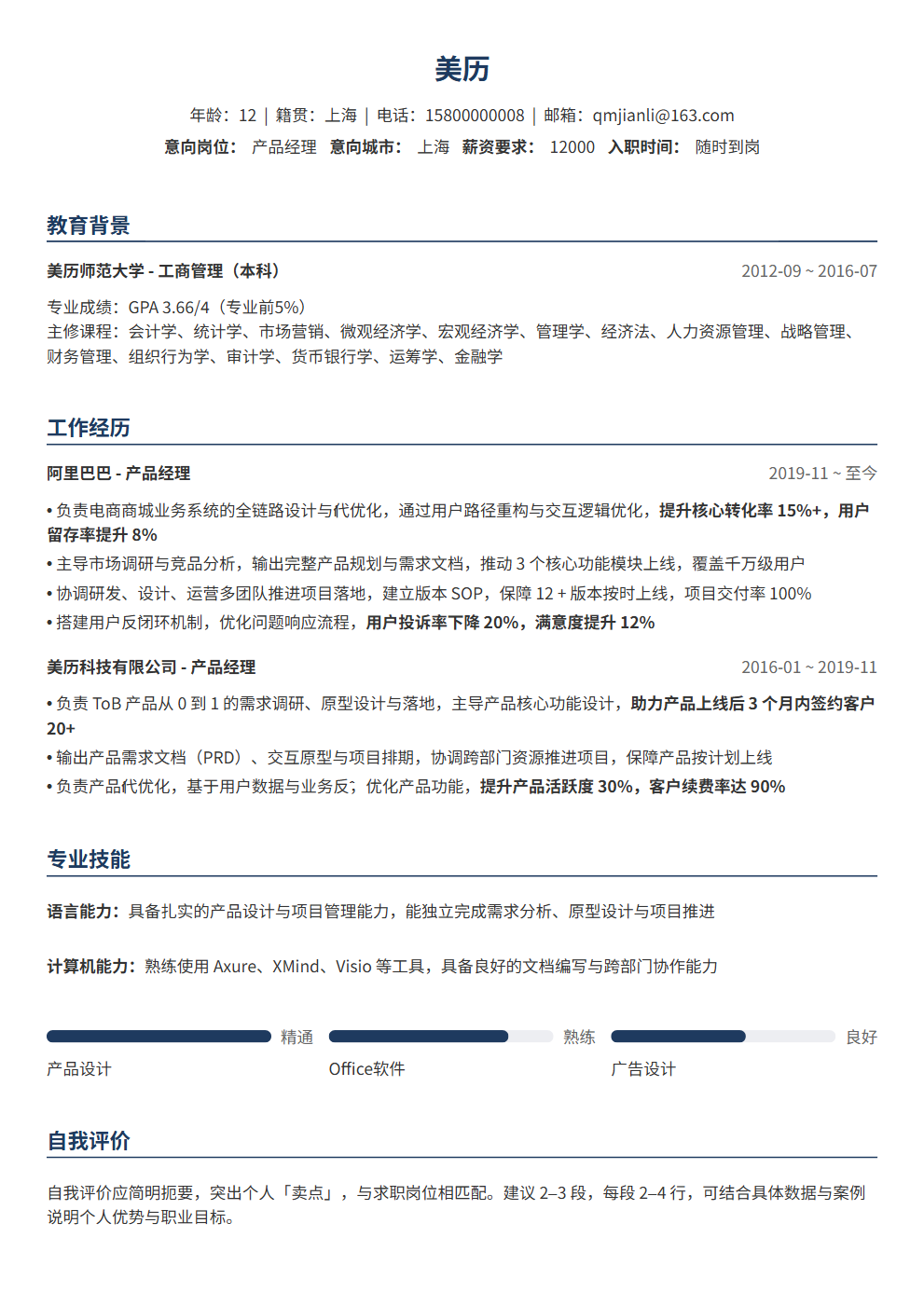
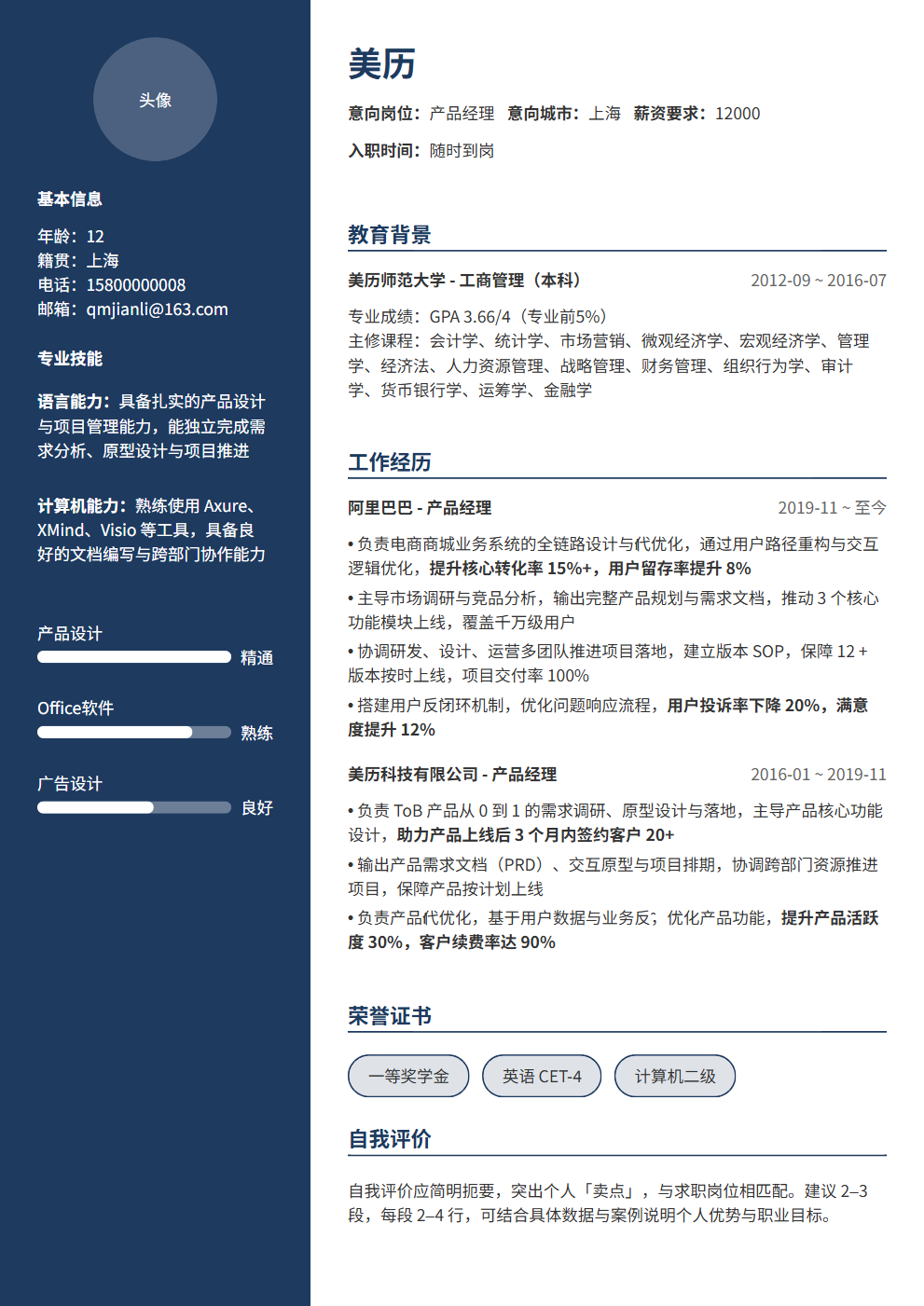
Job hunting? Know your rights first. Use BeautyResume to create a professional resume and land better offers — avoiding unreliable companies from the start is a hundred times better than fighting for your rights after the fact.