Job Market Trends for H2 2026: 5 Industries with Large Talent Gaps and Rising Salaries
Which industries are worth targeting in H2 2026? This article analyzes 5 industries with large talent gaps and rising salaries — AI and Large Model Applications, New Energy and Energy Storage, Silver Economy, Cross-border E-commerce, and Smart Manufacturing, with job demand, salary levels, and entry advice for each.
We're halfway through 2026, and the job market is undergoing a quiet structural transformation. Traditional tech giants are downsizing, real estate remains sluggish, and the education sector hasn't fully recovered—many people feel that "finding a job is harder than ever." But if you look closely at the data, a different picture emerges: AI application talent is in desperate shortage, new energy companies are fiercely competing for hires, and silver economy job growth exceeds 30%... Opportunities haven't disappeared—they've relocated. The key question is: do you know where the opportunities are? This article breaks down the 5 most promising job market trends for H2 2026, analyzing each industry from four dimensions: current landscape, hot positions, salary levels, and entry advice—so you can take action immediately after reading.
Trend 1: AI & Large Model Applications—From "Hype" to "Urgent Implementation," Massive Talent Shortage
If 2024-2025 was AI's "concept popularization period," then 2026 is AI's "implementation explosion period." Companies are no longer satisfied with AI promises in pitch decks—they're investing real money into deploying large model applications. From intelligent customer service to AI office assistants, from code generation to marketing copy, large models are penetrating every business function. But here's the problem: there simply aren't enough people who understand AI. Industry reports estimate that the AI application talent gap exceeds 500,000 in 2026, and this number is still growing.
- Industry landscape: Large model implementation is exploding, and companies urgently need AI application talent. They don't need you to train large models from scratch—they need you to integrate large model capabilities into business scenarios, optimize usage outcomes, and solve real problems. This type of "AI + business" hybrid talent is the most scarce resource right now
- Hot positions: AI Product Manager (defining AI product requirements and use cases), Prompt Engineer (optimizing large model output quality and efficiency), AI Application Developer (integrating large model APIs into products), Large Model Operations Engineer (ensuring stable large model service delivery). AI Product Manager and Prompt Engineer are the fastest-growing new positions in 2026
- Salary levels: Junior 15-25K/month, Mid-level 25-50K/month, Senior 50K+/month. Prompt Engineers as an emerging role generally command higher starting salaries than equivalent positions because supply is so limited
- Entry advice: Learn Prompt Engineering—the lowest-barrier skill for entering AI applications; understand mainstream large models (GPT, Claude, Tongyi Qianwen, Wenxin Yiyan, etc.) and their capability boundaries and usage methods; build AI application projects—even a simple AI chatbot or AI writing tool is a hundred times more convincing than writing "familiar with AI" on your resume
The biggest advantage of the AI & large model application track: it doesn't require a deep algorithm background—it values your understanding of business and your ability to leverage large model capabilities. An AI product manager who understands business is more sought after than an algorithm engineer who only knows how to tune parameters. This trend will last at least 3-5 more years—now is the perfect time to enter.
Trend 2: New Energy & Energy Storage—Driven by Dual Carbon Goals, Industry Expansion Is Unstoppable
China has set targets for peak carbon by 2030 and carbon neutrality by 2060—this isn't just a slogan, it's an ongoing industrial revolution. Solar, wind, energy storage, hydrogen—the new energy supply chain is expanding at an unprecedented pace. In 2026, the energy storage sector deserves special attention: as solar and wind power installations continue to grow, the demand for energy storage as a "regulator" is exploding. Numerous energy storage projects are being launched, directly driving a surge in talent demand.
- Industry landscape: Driven by dual carbon goals, the new energy industry continues to expand. In 2026, domestic energy storage additions are expected to exceed 80GWh, a year-over-year increase of over 60%. Solar, wind, and energy storage are advancing together, and companies across the entire supply chain are ramping up hiring
- Hot positions: Energy Storage System Engineer (designing and managing energy storage system solutions), New Energy Project Operations (managing daily operations of solar/wind/storage projects), Carbon Management Specialist (helping companies with carbon accounting and carbon asset management). Energy Storage System Engineer is currently the most in-demand position—many companies offer salaries 30-50% higher than the traditional power industry
- Salary levels: Junior 12-20K/month, Mid-level 20-35K/month, Senior 35K+/month. New energy salaries are rapidly catching up with the tech industry, and some core technical positions have already surpassed it
- Entry advice: Understand energy storage technology basics (lithium batteries, flow batteries, compressed air storage, and other technology pathways); obtain relevant certifications (Registered Electrical Engineer, Energy Storage System Designer certifications carry significant weight); follow policy developments (the new energy industry is heavily policy-driven—staying aligned with policy directions is key to seizing opportunities)
The unique advantage of the new energy & energy storage track: it's a national strategic industry with strong policy support, abundant funding, and high development certainty. Unlike some trends that come and go quickly, new energy is a genuine long-term track. Moreover, new energy jobs are more geographically distributed than tech jobs—opportunities exist not just in tier-1 cities but also in tier-2 and tier-3 cities where solar bases and energy storage projects are located.
Trend 3: Silver Economy—Accelerating Aging, Elderly Care Demand Is Skyrocketing
China is rapidly entering an aging society. In 2026, the population aged 60 and above is expected to exceed 320 million, accounting for over 22% of the total population. This isn't a distant future—it's happening right now. The living needs, health needs, entertainment needs, and social needs of 320 million elderly people—behind each need lies an enormous market. The silver economy is no longer a "niche track"—it's becoming a trillion-yuan "big business."
- Industry landscape: Accelerating aging is driving explosive demand in the elderly care industry. From nursing homes to home-based care, from senior health to senior entertainment, from age-friendly renovation to senior finance—the silver economy supply chain is rapidly maturing. The elderly care industry is projected to exceed 12 trillion yuan in 2026
- Hot positions: Senior Care Product Manager (designing products and services for the elderly), Health Management Specialist (providing health management and chronic disease management services for seniors), Age-Friendly Designer (renovating buildings, products, and digital interfaces for accessibility). These three are "young" positions—new to the industry, with few practitioners and high demand
- Salary levels: Junior 10-18K/month, Mid-level 18-30K/month, Senior 30K+/month. While absolute salaries may not match AI and new energy, the silver economy has one of the fastest salary growth rates across all industries, with year-over-year increases exceeding 15% in 2026
- Entry advice: Understand elderly care policies (national and local elderly care support policies are the bellwether for industry development); learn age-friendly design (WCAG accessibility standards, elderly user interaction design principles, etc.); focus on elderly user needs (talk to seniors frequently, understand their real pain points rather than designing for them based on assumptions)
The biggest opportunity in the silver economy track: it's a "blue ocean market." Current industry practitioners are predominantly over 40, with a severe shortage of young talent—yet many silver economy products specifically need young people's perspectives and innovative capabilities. If you're willing to invest time in understanding elderly users, you can find a differentiated competitive advantage in this track. Plus, the silver economy is "counter-cyclical"—whether the economy is good or bad, people keep aging, and demand keeps growing.
Trend 4: Cross-Border E-Commerce—Overseas Expansion Continues, Scale Growth Creates Numerous Positions
The domestic market is fiercely competitive, and more companies and individuals are looking overseas. In 2026, cross-border e-commerce continues its rapid growth, with SHEIN, Temu, and TikTok Shop expanding globally, and numerous Chinese brands reaching international markets through cross-border e-commerce. It's no longer just a business for "small sellers"—it's becoming a complete supply chain. From product selection, operations, and marketing to logistics, payments, and compliance, every link requires specialized talent.
- Industry landscape: The overseas expansion boom continues, and cross-border e-commerce scale keeps growing. In 2026, China's cross-border e-commerce transaction volume is expected to exceed 18 trillion yuan, a year-over-year increase of over 20%. Temu's global expansion, TikTok Shop's social commerce model, and SHEIN's fast-fashion supply chain—the three major platforms are driving prosperity across the entire industry chain
- Hot positions: Cross-Border E-Commerce Operations (managing store operations, product selection, and pricing strategies), Overseas Social Media Marketing (brand marketing on Instagram, TikTok, YouTube, etc.), Cross-Border Supply Chain Management (managing the logistics chain from domestic factories to overseas warehouses). Cross-border e-commerce operations has the highest demand, but operations talent that truly understands overseas markets is extremely scarce
- Salary levels: Junior 10-18K/month, Mid-level 18-30K/month, Senior 30K+/month. High-performing operations staff also earn substantial commissions, making actual income potentially far above base salary
- Entry advice: Learn overseas platform rules (Amazon, Temu, TikTok Shop each have different operating rules and algorithm logic that need to be studied separately); improve foreign language skills (English is foundational; knowing additional languages like Spanish or Arabic gives you a competitive edge); understand cross-border logistics (the pros, cons, and applicable scenarios of FBA, overseas warehouses, direct mail, and other models)
The opportunity in the cross-border e-commerce track: it's a "results-driven" industry—academic credentials aren't the most important factor; ability and outcomes are. An operations specialist with a vocational diploma who creates a hit product is worth more than a top-university graduate who only writes proposals. If you're willing to start from the ground up, don't mind hard work, and are good at learning, cross-border e-commerce is an industry where you can quickly accumulate experience and wealth.
Trend 5: Smart Manufacturing—Manufacturing Digital Transformation, Smart Factory Construction Accelerates
China is a manufacturing powerhouse, but not yet a manufacturing leader—this is widely acknowledged. In 2026, manufacturing digital transformation is shifting from an "optional question" to a "mandatory question." Rising labor costs, disappearing demographic dividends, and intensifying international competition—under this triple pressure, smart manufacturing is no longer "nice to have" but "survival-critical." Numerous traditional factories are upgrading to smart factories, and industrial internet platforms, MES systems, and digital twin technologies are accelerating deployment.
- Industry landscape: Manufacturing digital transformation is accelerating, and smart factory construction is speeding up. In 2026, China's industrial internet core industry scale is expected to exceed 1.5 trillion yuan, with smart factory penetration rates continuing to rise. From automotive manufacturing to 3C electronics, from food processing to textile and apparel—every industry is advancing smart manufacturing
- Hot positions: Industrial Internet Engineer (building and maintaining industrial internet platforms), Smart Manufacturing Project Manager (coordinating smart factory construction projects), Digital Twin Engineer (creating digital mirrors of physical factories for simulation and optimization). Industrial Internet Engineer is currently the most in-demand position—many companies report they "can't find people"
- Salary levels: Junior 12-22K/month, Mid-level 22-40K/month, Senior 40K+/month. Smart manufacturing salaries are rising rapidly, especially in industrial internet and digital twin directions
- Entry advice: Understand industrial internet platforms (the technical architecture and application scenarios of mainstream platforms like Rootcloud, COSMOPlat, and Foxconn Industrial Internet); learn MES/ERP systems (these are the "operating systems" of smart manufacturing—people who understand MES/ERP will never struggle to find jobs in any manufacturing company); follow smart manufacturing case studies (Tesla Gigafactory, Midea Lighthouse Factory, and other benchmark cases to understand the practical implementation path of smart manufacturing)
The biggest advantage of the smart manufacturing track: it's a "high-certainty" track. China's manufacturing transformation and upgrading is a national strategy, not a short-term trend. Moreover, smart manufacturing talent demand is "pyramid-shaped"—it doesn't just need top-tier algorithm experts, but even more so, it needs a large number of application-oriented talent who understand industrial scenarios and can implement solutions. If you have a manufacturing background and supplement it with digital skills, you become the "hybrid talent" that companies compete for.
3 Universal Tips for Entering a New Industry
After reviewing the 5 major trends, you might be tempted. But between "temptation" and "action" lies the question of "how to enter." The following 3 universal tips apply to any new industry you want to break into.
- Learn before you switch—don't quit your job to enter a new industry blindly. New industries may look glamorous, but every industry has barriers and pitfalls. Use your spare time to learn relevant knowledge, follow industry developments, and build your network. Only consider switching when you have enough confidence and capability. The risk of quitting without preparation is too high—financial pressure will lead you to make irrational decisions, like accepting an unsuitable job out of desperation
- Prove your ability with projects—don't rely solely on your resume. Hiring managers in new industries are most concerned about whether you can actually do the work. The best way to prove you can isn't self-evaluation on a resume, but actual project results. Want to be an AI product manager? Build an AI application demo first. Want to do cross-border e-commerce operations? Open a small store and run through the process first. Want to be an age-friendly designer? Create an age-friendly renovation plan first. Project experience is more persuasive than any certificate
- Find the right entry point—don't start from the hardest place. Every industry has positions that are "low barrier but high value"—these are your entry points. The entry point for AI is prompt engineer; for new energy, it's project operations; for the silver economy, it's health management specialist; for cross-border e-commerce, it's basic operations; for smart manufacturing, it's MES system implementation. Enter through the entry point, then gradually develop toward more core positions
Career switching isn't something that happens overnight, but it's also not an unreachable dream. The key is strategic action—learn first to build a foundation, prove ability with projects, and steadily enter through the right entry point. Many people fail at career switching not because they lack ability, but because they lack the right approach.
Summary: The Trends Are Here—Action Is What Matters
The job market trends for H2 2026 are crystal clear: AI & large model applications, new energy & energy storage, silver economy, cross-border e-commerce, and smart manufacturing—5 industries, each with massive talent gaps and continuously rising salaries. The trends have arrived, but they won't wait for you. AI application talent gap of 500,000, new energy projects everywhere, a trillion-yuan silver economy waiting to be explored—opportunities are right there. The question is whether you're ready. Don't wait until the trends have passed to regret "I should have entered that industry back then." Start learning, start building projects, start taking action now. Job market trends are never something you wait for—they're something you chase.
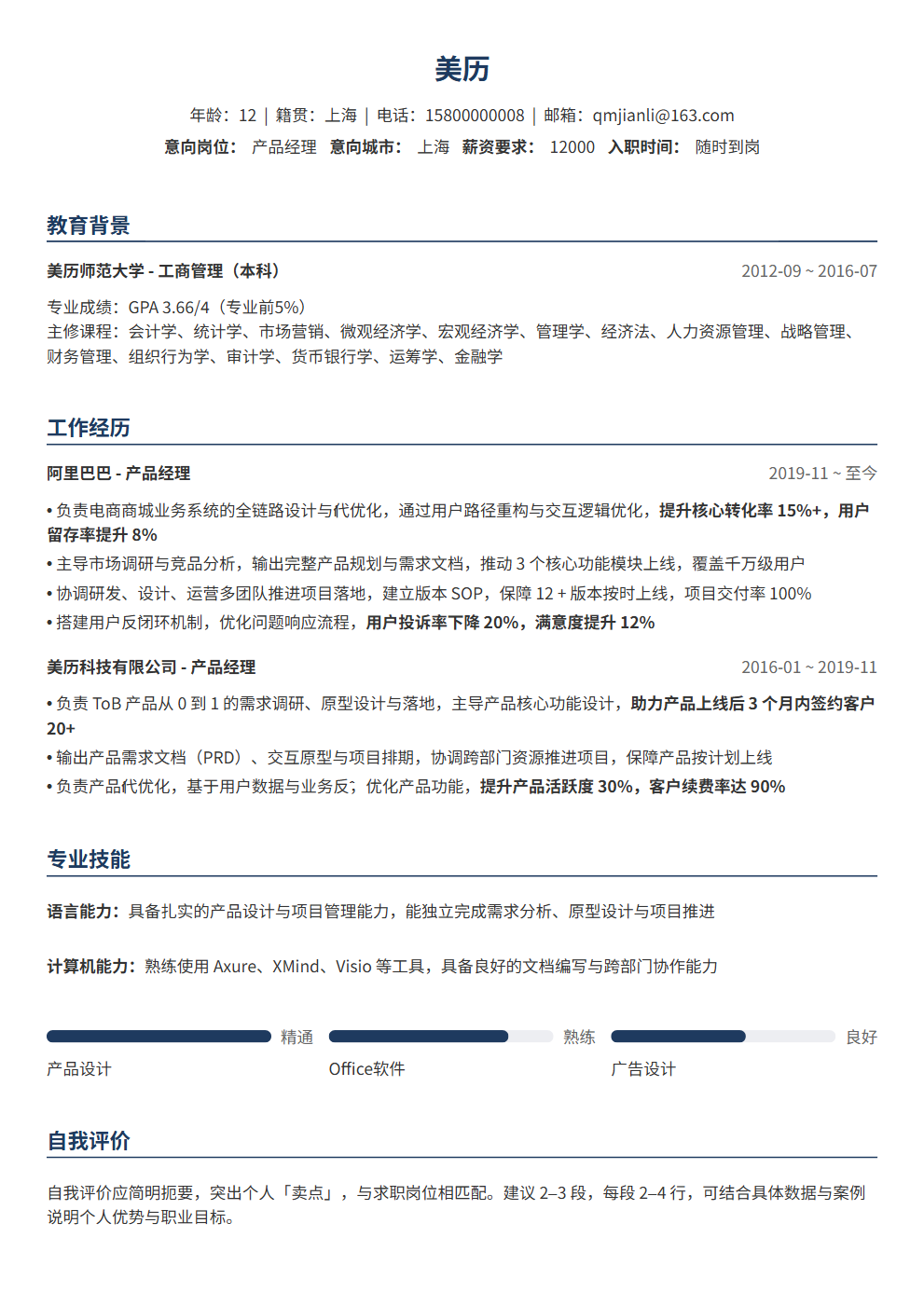
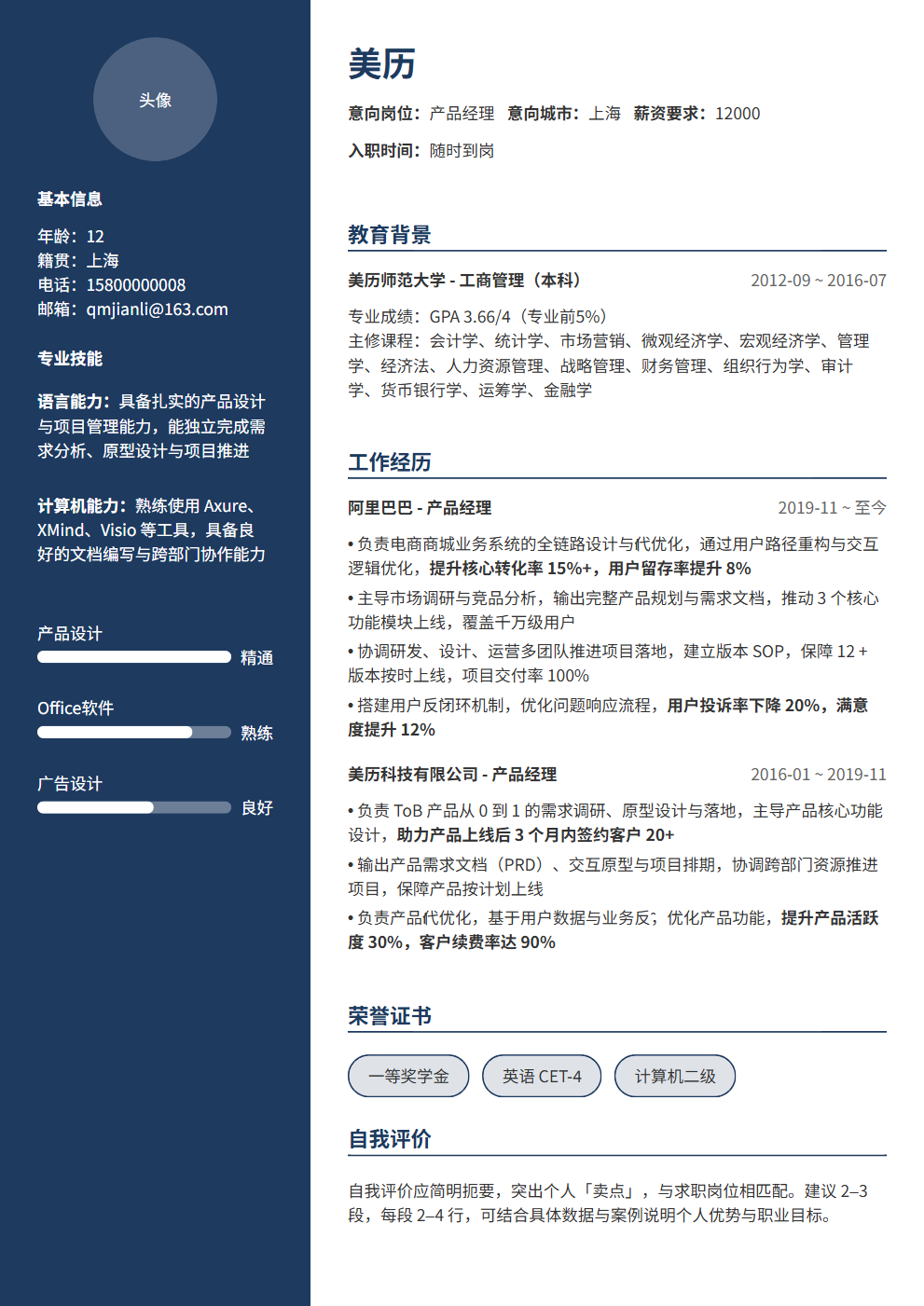
Want to seize job market opportunities? The first step is making recruiters see your value. Use BeautyResume resume editor to craft a professional resume that precisely showcases your skills and project achievements—whether you're a fresh graduate job hunting or an experienced professional switching careers, a great resume is your first stepping stone into a new track.