Is It Too Late to Change Careers at 30? 4 Truths and 3 Paths for Late-Career Switchers
4 truths about career change at 30 (age isn't the biggest barrier, experience transfers, salary cuts are normal, networks matter more than skills), 3 paths (internal transfer, skill stacking, dimensional downgrade), plus resume tips for late-career switchers.
Want to change careers at 30 but worry you're too old, the cost is too high, and starting over is too hard? Almost every late-career switcher has been through this dilemma. But the truth is: changing careers at 30 isn't as hard as you think, nor as simple as you hope. 4 truths help you break through cognitive biases, and 3 paths help you find the transition route that fits you.
Truth 1: Age Isn't the Biggest Barrier — Your Fixed Mindset Is
When people mention career change at 30, the first reaction is often "I'm too old." But if you ask people who successfully changed careers, almost none of them list age as the main obstacle. Why? Because age itself isn't the problem — the fixed mindset that comes with age is.
- "I'm already 30, it's too late": This is the most typical fixed mindset. At 30, you're still 30 years from retirement — your career isn't even halfway over. If you don't change now, at 40 you'll say "I'm already 40, it's even more too late" — age anxiety doesn't disappear because you don't change; it intensifies because you don't
- "I can't compete with younger people": You don't need to compete with 25-year-olds for the same position. The advantage of changing careers at 30 is precisely that you have work experience, industry knowledge, and professional relationships — things 25-year-olds don't have. What you need to do is find the intersection of "experience + new skills," not compete with younger people on who learns faster
- "Changing careers means starting from zero": This is the biggest misconception. A career change isn't "resetting to zero" — it's "transferring." The communication skills, project management abilities, industry understanding, and customer thinking you've accumulated are all valuable in a new industry. You're just changing the application scenario, not starting from a blank slate
A data point: according to LinkedIn's career report, professionals experience an average of 5-7 career transitions in their lifetime. Changing careers at 30 isn't unusual — it's the norm. What truly holds you back isn't age, but the thought "I'm too old."
Truth 2: Experience Can Transfer — But Not All Experience Is Valuable
The core logic of career change is "experience transfer" — migrating experience from your old industry to a new one. But here's the key: not all experience can transfer. You need to identify which experience is "transferable" and which is "industry-bound."
- Transferable experience: Project management, team collaboration, client communication, data analysis, problem-solving, logical thinking, presentation skills. These capabilities are valuable in any industry and form the core assets of a career change
- Industry-bound experience: Industry-specific regulations, jargon, specialized tool operations, specific client resources. This experience loses value in another industry — be mentally prepared for "partial reset" when changing careers
- How to determine if experience is transferable: Ask yourself one question — "If I switch industries now, can this skill still be used?" If yes, it's transferable; if no, it's industry-bound. When changing careers, emphasize transferable experience and de-emphasize industry-bound experience
A practical tip: list the 10 most important skills from your past work, marking which are transferable and which are industry-bound. You'll find that transferable skills are more numerous than you think. These are your foundation for career change.
Truth 3: Salary Cuts Are Normal — Not a Failure
This is a truth many people don't want to face but must: changing careers at 30 will likely mean a salary cut. The reason is simple — you're a novice in the new industry, and the new industry has no reason to pay you veteran wages. A salary cut isn't failure — it's the cost of transition.
- Salary cut range: Depending on the industry and role, initial salary cuts for career changers typically range from 10%-30%. Cross-industry + cross-role changes may see larger cuts; internal industry transfers see smaller ones
- Salary cut duration: A salary cut isn't permanent. Most career changers recover to pre-change salary levels within 1-2 years and exceed them within 3-5 years. The key is whether your new industry has growth potential — if the new industry's salary ceiling is higher, the short-term cut is a long-term investment
- How to handle a salary cut: Prepare financially before changing careers (at least 6 months of living expenses in reserve), control spending after the change, keep learning, and accelerate growth. Treat the salary cut period as "paid learning" — the experience you accumulate in the new industry will pay off in the future
A mindset shift: don't view a salary cut as a "loss" — view it as an "investment." You're trading short-term salary for long-term development space. If your new industry's ceiling is higher than your old one, then 2-3 years of reduced salary in exchange for 5-10 years of accelerated growth is a worthwhile trade.
Truth 4: Networks Matter More Than Skills
Many people pour all their energy into "learning new skills" when changing careers, overlooking a more important factor — networks. When it comes to career change, networks matter far more than skills. The reason is simple: skills can be learned, but opportunities need to be given by people.
- 80% of first career-change opportunities come from networks: Statistics show that over 80% of cross-industry career changers get their first opportunity in the new industry through personal referrals, former colleague introductions, or people met at industry events. The success rate of changing careers purely through resume submissions is extremely low — because your resume lacks experience in the new industry, HR won't even give you an interview
- Networks aren't "how many people you know" but "how many people are willing to help you": The networks that truly matter during a career change aren't hundreds of silent contacts in your phone — they're the people willing to refer you internally, connect you with projects, and share industry information. This kind of network requires long-term cultivation; you can't build it at the last minute
- How to build career-change networks: Attend offline events in the new industry, join industry communities, publish content on industry platforms, and proactively reach out to practitioners in the new industry for advice. Don't start by "asking for job referrals" — first build relationships, provide value, then seek help
A practical tip: start cultivating networks in the new industry 3-6 months before your career change. Attend at least 1 industry event or online exchange per week, and have in-depth conversations with at least 2-3 practitioners in the new industry per month. Networks are the shortest path to career change.
Path 1: Internal Industry Transfer — The Lowest-Risk Transition Route
If you don't want to bear the high risk of cross-industry career change, an internal industry transfer is the safest choice. You switch roles within the same industry, leveraging your existing industry knowledge and networks to reduce transition costs.
- What is an internal industry transfer: Moving from Role A to Role B within the same industry. For example, from sales to marketing, from development to product, from operations to strategy. Your industry experience is fully preserved — you only need to learn the new role's skills
- Why internal industry transfer has the lowest risk: You don't need to rebuild industry knowledge, start networking from scratch, or explain "why you're changing industries." During interviews, you can say "I've worked in this industry for X years and now want to move from Role A to Role B because I'm more interested in Role B's XXX" — this logic is very smooth
- How to achieve an internal industry transfer: First, proactively engage with the target role's work content in your current position to accumulate relevant experience; build relationships with colleagues in the target role to understand the real situation; look for internal transfer opportunities, or job-hop to another company in the same industry for the target role
- Limitations of internal industry transfer: The scope of change is limited, salary changes are modest, and the industry ceiling remains unchanged. If you're not optimistic about your current industry itself, an internal transfer is just "changing your posture in the same hole"
Internal industry transfer suits: people who still have confidence in their current industry but are dissatisfied with their current role. It's a "micro-transition," not a "major transition."
Path 2: Skill Stacking Transition — Creating New Value with "Old Skills + New Skills"
The core logic of skill stacking transition: you don't need to completely abandon old skills. Instead, you stack new skills on top of old ones to create a "1+1>2" new positioning.
- What is skill stacking transition: Retaining your core existing skills while learning a new skill, forming a composite capability of "old skills + new skills." For example, "finance + data analysis," "design + AI tools," "education + live streaming operations," "law + compliance tech"
- Why skill stacking transition works: People with only new skills lack industry experience; people with only old skills lack new skills — but someone with "old skills + new skills" has both industry depth and the scarcity of new skills, making them highly sought after in the market
- How to choose which new skill to stack: Choose a new skill that has synergistic effects with your existing skills. The criterion is "1+1>2" — the combination of new and old skills should produce greater value than either skill used alone. For example, "HR + AI" has more synergy than "HR + cooking"
- Practical steps for skill stacking transition: First identify your core transferable skills, then find a new skill that can create synergy with them, spend 3-6 months learning the new skill, then position yourself as a "composite talent" in your job search
Skill stacking transition suits: people with professional accumulation who don't want to start from zero. It's a "semi-transition" that preserves past accumulation while opening new space.
Path 3: Dimensional Downgrade — Using High-Dimensional Experience in Low-Dimensional Markets
The core logic of dimensional downgrade: the experience and capabilities you've accumulated in highly competitive industries are "dimensional downgrade" level advantages in less competitive industries. Just as tier-1 city professional experience is overwhelming in tier-3 cities, and big tech experience is a dimensional downgrade at startups.
- What is dimensional downgrade: Moving from a high-competition, high-standard environment to a low-competition, low-standard one, leveraging the experience, methodologies, and perspectives you've accumulated in the high-dimensional environment to create competitive advantages in the low-dimensional one. For example, going from big tech to traditional industries for digital transformation, from tier-1 cities to tier-2/3 cities for industry upgrades, from multinationals to local companies for management improvement
- Why dimensional downgrade works: The project management methods, data analysis capabilities, user thinking, and efficiency tools you learned in high-dimensional environments are scarce in low-dimensional ones. People in low-dimensional environments aren't less smart — they just haven't been exposed to these methodologies. What you bring is "advanced productivity"
- Risks of dimensional downgrade: Low-dimensional environments may offer lower salaries, more limited development space, and your high-dimensional experience may not "fit." Dimensional downgrade isn't foolproof — if the low-dimensional environment doesn't even value basic professionalism, your high-dimensional experience may become a reason for "not fitting in"
- How to choose your downgrade direction: Choose industries or regions that are "upgrading but haven't finished upgrading" — these places have upgrade demand but lack upgrade talent. Your high-dimensional experience can fill exactly that gap
Dimensional downgrade suits: people with solid accumulation in highly competitive environments who are willing to trade "environmental downgrade" for "relative advantage." It's "changing tracks," not "downgrading."
How to Write a Resume for Late-Career Switchers
For late-career job seekers, the resume is the first checkpoint. Your resume is full of old-industry experience, and HR takes one look and thinks "not a match." How do you write it so HR is willing to give you an interview?
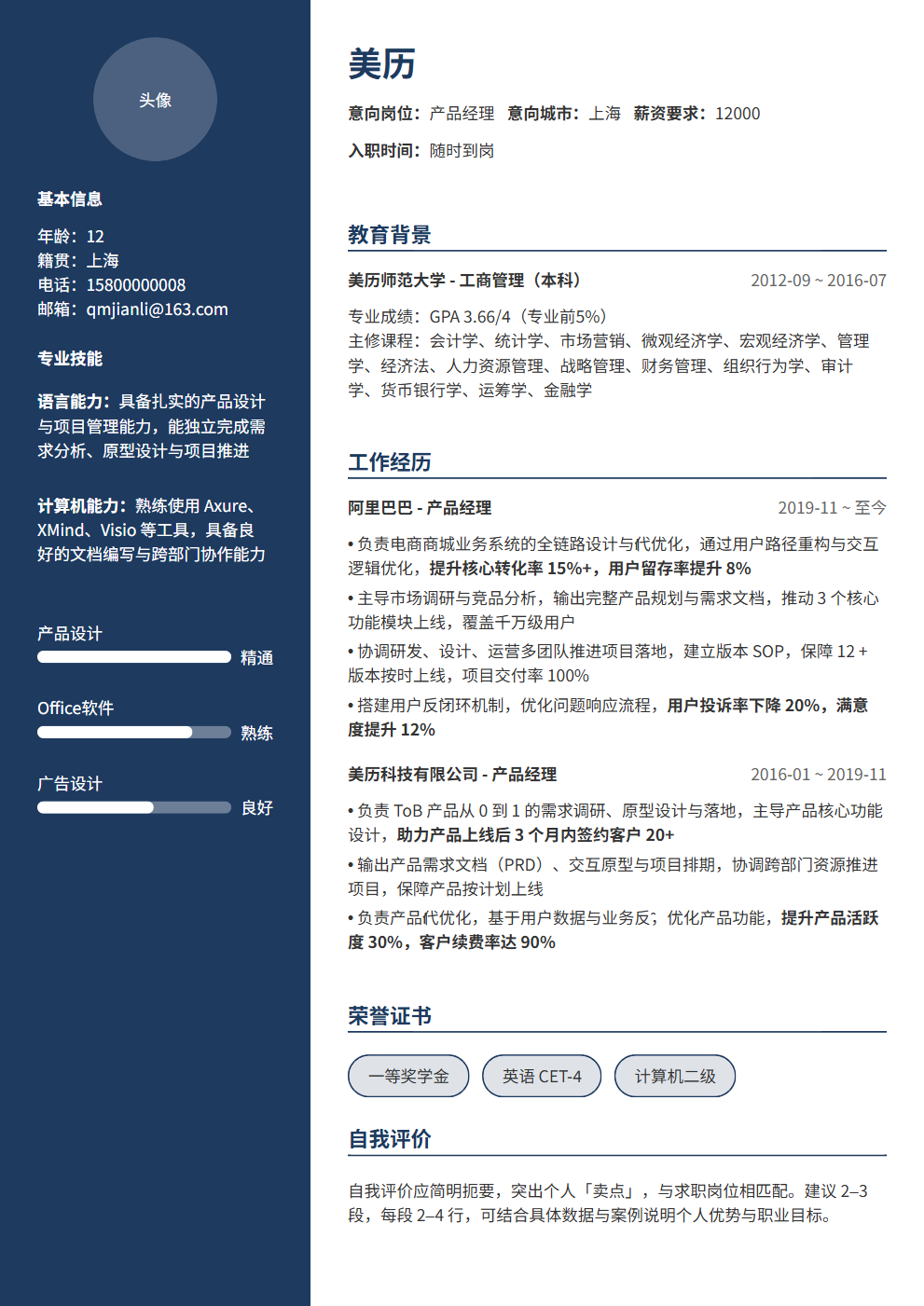
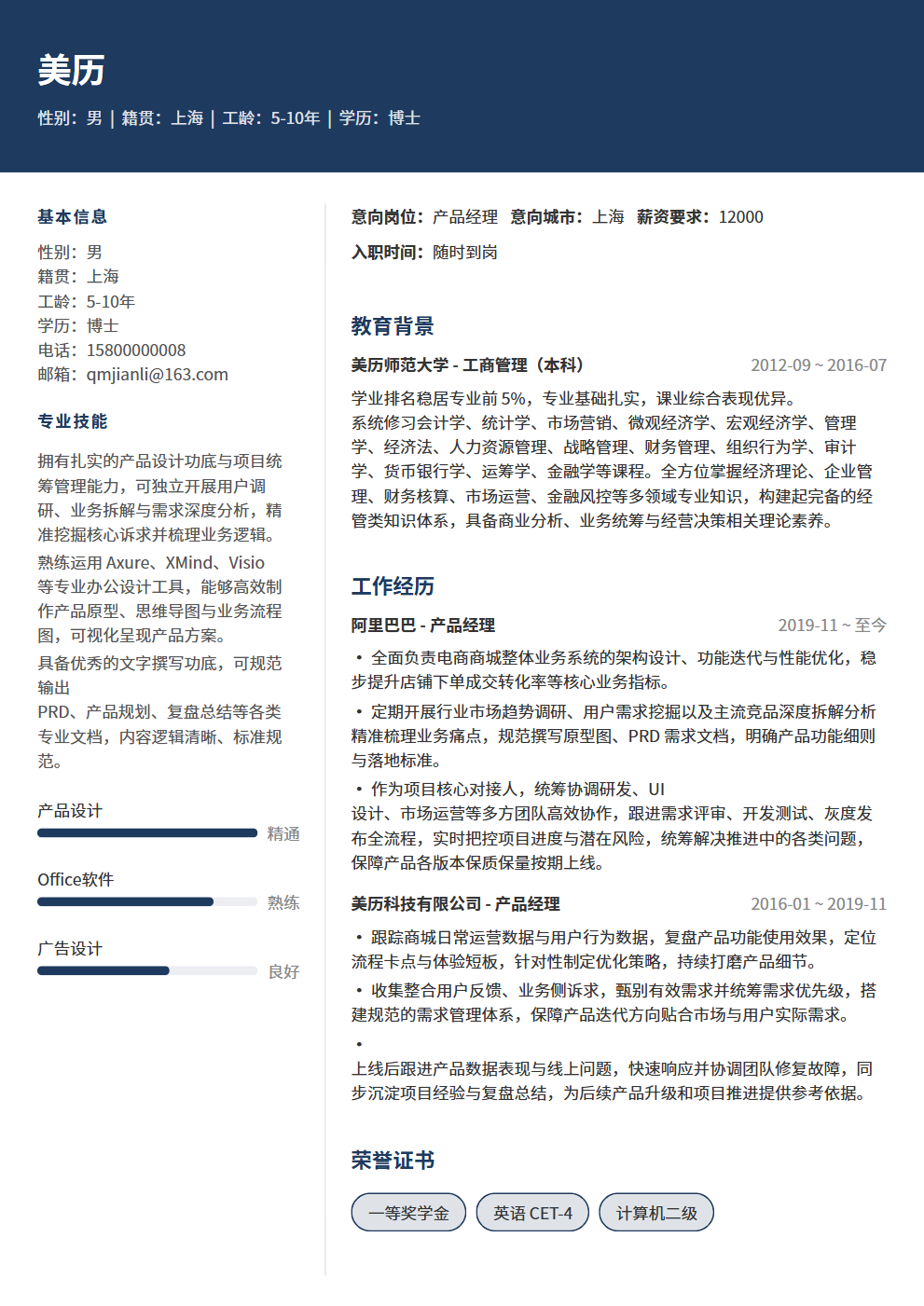
- Emphasize transferable skills, de-emphasize industry labels: In your work descriptions, don't write "did XX in XX industry" — write "managed XX type of projects, solved XX type of problems, achieved XX type of results." Let HR see your capabilities, not your industry
- Clearly state your career change motivation: In your resume's self-summary or job objective, use 2-3 sentences to explain why you're changing careers, what preparation you've done for the new industry, and what unique value you bring. Don't make HR guess why you applied for this role
- Showcase new skill learning outcomes: If you've already learned skills for the new industry, include the learning outcomes in your resume — certificates, projects, and portfolios all count. This proves you're not "just thinking about it" but already taking action
- Adjust your resume's narrative logic: Traditional resumes are written chronologically, but late-career switchers can write by "skill dimension" — list the skills and experience most relevant to your target role first, then other experience. Let HR see "fit" at first glance
A key principle: a late-career change resume isn't about "what you did in the past" but "what your past experience can bring to the new role." Every line of work description should answer this question.
Conclusion: It's Not Too Late to Change Careers at 30 — If You Use the Right Approach
Is it too late to change careers at 30? The answer: it's not too late, provided you use the right approach. 4 truths (age isn't the biggest barrier, experience transfers, salary cuts are normal, networks matter more than skills) help you break through cognitive biases and stop being held hostage by "30 is too late" anxiety. 3 paths (internal industry transfer, skill stacking transition, dimensional downgrade) help you find the transition route that fits you — risk ranges from low to high, and returns from modest to significant. Which path you choose depends on your risk tolerance and determination to transition. Remember: changing careers isn't "starting from zero" — it's "continuing in a different direction." None of your past steps were wasted.
For late-career job seekers, the resume is the first threshold and the most important door-opener. BeautyResume offers smart formatting and one-click optimization, specially suited for career changers to restructure their professional narrative — highlighting transferable skills, de-emphasizing industry labels, and showcasing transition preparation. Changing careers at 30 isn't scary — what's scary is using an old resume to tell an old story. Rebuild your professional narrative with BeautyResume, and let HR see your transition value!