Is It Too Late to Change Careers at 30? 5 High-Fit Directions and Resume Rewriting Strategies
Worried it's too late to switch careers at 30? This article analyzes 5 career-change-friendly directions for the 30+ crowd (Product Manager, Data Analyst, Project Manager, Content Operations, Consulting), paired with resume rewriting strategies that translate your past experience into language the new role understands — so HR sees your cross-industry value, not your age.
1. Changing Careers at 30 Isn't Starting Over — It's Translating
The most feared phrase when considering a career change at 30: "Aren't you worried it's too late?" But here's the truth: switching careers at 30 isn't starting from zero — it's translating skills you already have into a language your new industry understands. The communication skills, project management experience, and industry insights you've built over 5-8 years aren't worthless — they're undervalued assets. The real question isn't "is it too late?" but "how do you make HR see your cross-industry value?"
2. Direction #1: Product Manager — The Most Cross-Industry-Friendly Role
Product management might be the most welcoming role for career changers. Why? Because great products require understanding users, and people from different industries bring unique perspectives on user needs.
- Why it fits: Core PM skills — requirement analysis, prioritization, cross-functional coordination — can be developed in any role
- Switching barrier: Medium. You'll need to learn product thinking and prototyping tools (Axure/Figma), but no hardcore technical background required
- Salary expectation: Junior PM 15K-25K; after 3 years, 25K-40K
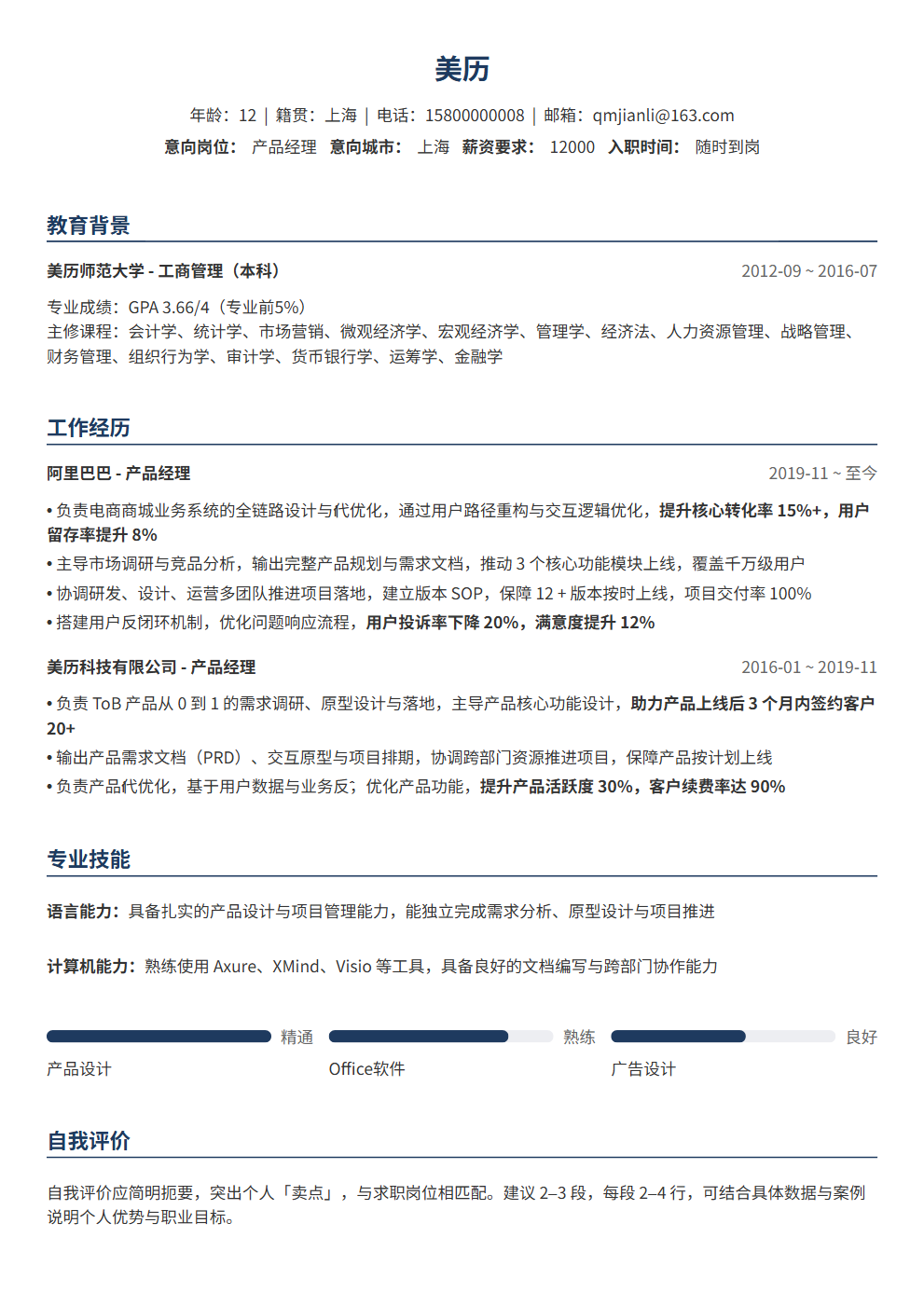
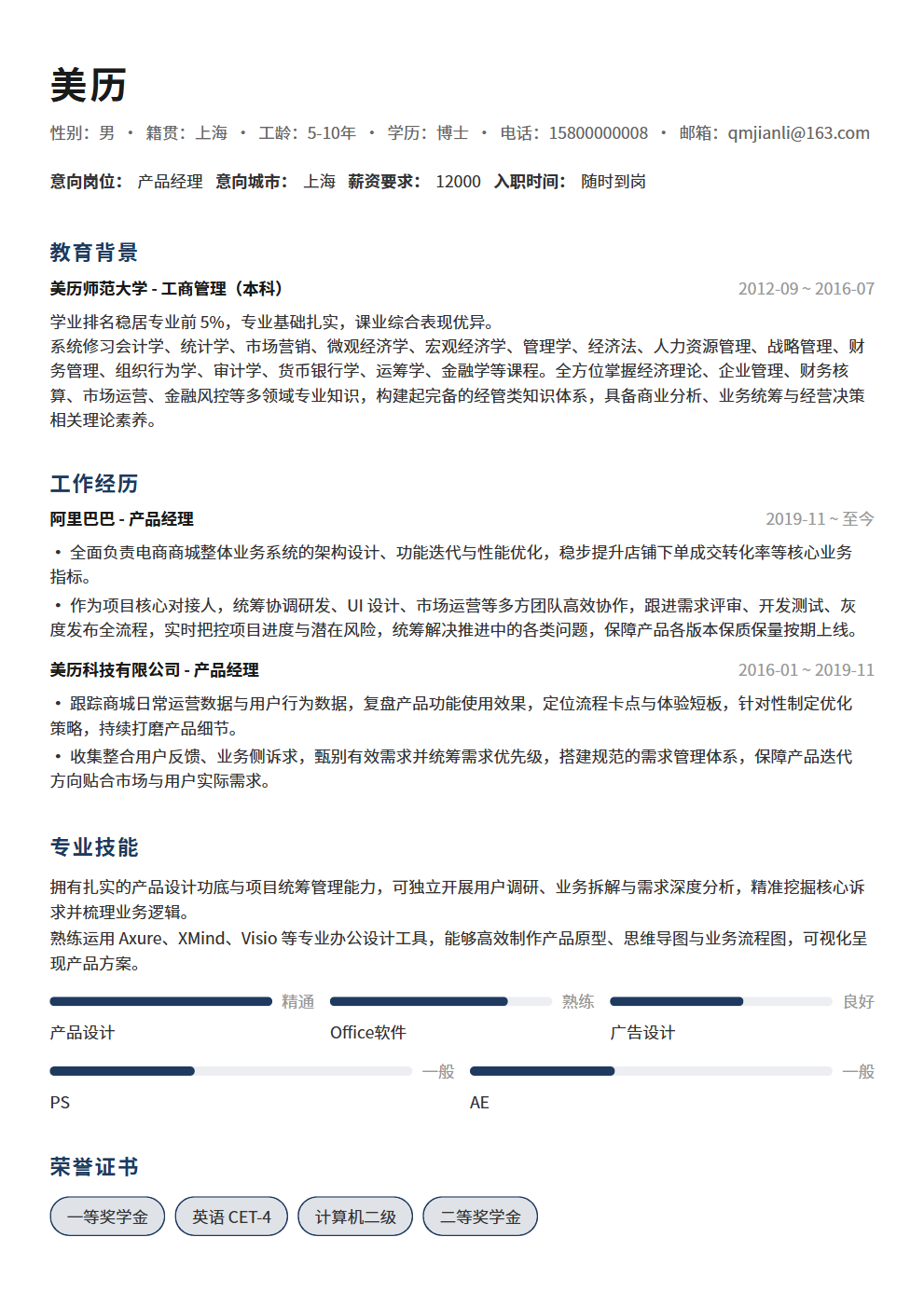
Resume rewriting strategy: Change "responsible for XX project" to "identified XX user pain points, designed XX solution, drove cross-department collaboration to deliver." PM resume keywords are "user, requirements, solution, delivery" — reframe your experience around these four words.
3. Direction #2: Data Analyst — If You Can Think Logically, You Can Enter
Data analysis doesn't require you to be a math genius. It demands logical thinking and business understanding — exactly where 30+ professionals excel.
- Why it fits: After 5+ years in an industry, your understanding of business logic runs far deeper than any fresh graduate's — that's the scarcest skill in data analysis
- Switching barrier: Medium-low. SQL + Excel + basic Python gets you in the door; learning cycle is 3-6 months
- Salary expectation: Junior data analyst 12K-20K; after 2 years, 20K-35K
Resume rewriting strategy: Change "completed XX sales targets" to "analyzed XX regional sales data, identified XX trends, proposed XX optimization recommendations, drove performance improvement of XX%." Data analysis resume keywords are "data, analysis, insight, optimization" — let the numbers speak and translate business experience into analytical capability.
4. Direction #3: Project Management — A Natural Fit for Experienced Managers
If you've already held management positions or frequently coordinated cross-department projects in your current industry, switching to project management is virtually barrier-free.
- Why it fits: The core of project management — schedule control, risk anticipation, resource coordination — is exactly what experienced professionals do best
- Switching barrier: Low. Get a PMP certification, pair it with your management experience, and you're essentially ready
- Salary expectation: Junior project manager 15K-25K; after 3 years, 25K-45K
Resume rewriting strategy: Change "managed a team of XX" to "orchestrated XX-person cross-department project, established XX milestone plans, identified XX risks and developed mitigation strategies, on-time delivery rate of XX%." PM resume keywords are "orchestrate, plan, risk, delivery" — highlight your management methodology, not just the scale.
5. Direction #4: Content Operations — If You Can Write and Communicate, You Can Do It
Content operations has low industry experience requirements but demands high content sensitivity and user insight — where 30+ professionals with life experience actually have an edge.
- Why it fits: Content ops requires understanding user psychology and producing resonant content — your career experience and life wisdom are the best material library
- Switching barrier: Low. If you can write copy, understand basic data analysis, and know mainstream content platforms, you can get started
- Salary expectation: Junior content operations 10K-18K; after 2 years, 18K-30K
Resume rewriting strategy: Change "responsible for XX marketing campaign" to "conceptualized XX-themed content, reached XX million users, engagement rate of XX%, follower growth of XX%." Content ops resume keywords are "concept, reach, engagement, growth" — translate your marketing experience into content operations language.
6. Direction #5: Consulting — Your Industry Experience Is Your Moat
Consulting might offer the highest salary ceiling for 30+ career changers. Why? Because what consulting firms lack most isn't methodology — it's industry depth.
- Why it fits: With 5+ years deep-diving into an industry, your understanding of pain points, competitive landscapes, and development trends is something fresh graduates and young consultants simply can't match
- Switching barrier: Medium-high. You'll need to systematically learn consulting methodologies and business analysis frameworks, plus tackle case interviews
- Salary expectation: Junior consultant 20K-35K; after 3 years, 35K-60K
Resume rewriting strategy: Change "worked in XX industry for X years" to "deeply engaged in XX industry for X years, served XX clients/projects, identified XX industry trends, provided decision-making basis for XX." Consulting resume keywords are "insight, strategy, solution, impact" — package your industry experience as professional output from a consulting perspective.
7. Three Universal Rules for Resume Rewriting
Regardless of which direction you're switching to, follow these three rules:
- Rule #1: Cut the jargon from your old industry: Specialized terms from your previous field mean nothing to HR in your new field. Redescribe your work in universal language
- Rule #2: Rebuild your experience using the new role's keywords: Study JDs for your target role, extract high-frequency keywords, and redescribe your experience using those terms
- Rule #3: Highlight transferable skills over industry experience: Communication, coordination, analysis, execution — these transferable skills are your core competitive advantage; industry experience is just a bonus
Remember: the core mission of a career-change resume isn't proving how great you were in your old industry — it's proving your skills are equally applicable in the new one.
8. Three Psychological Preparations for Career Changing at 30
Changing careers isn't just switching jobs — it's a mindset shift:
- Accept short-term salary fluctuations: Initial post-switch salary may be lower than your previous role, but typically catches up or surpasses within 1-2 years
- Prepare to be the "new kid" again: You might be the oldest newcomer on the team, but your experience is your foundation
- Give yourself 6 months to adapt: Discomfort in the first 6 months of a new industry is completely normal — don't rush to second-guess your decision
The biggest enemy of career change at 30 isn't age — it's fear of the unknown. When you turn fear into action, changing careers becomes just a matter of time.
Summary
It's absolutely not too late to change careers at 30 — the key is choosing the right direction and rewriting your resume well. Product Manager, Data Analyst, Project Manager, Content Operations, and Consulting — five directions friendly to the 30+ crowd with manageable switching barriers and solid salary ceilings. The core of resume rewriting is translating past experience into language the new role understands: cut old-industry jargon, rebuild with new-role keywords, and highlight transferable skills. And a professional career-change resume is your first step toward landing that switch interview — use BeautyResume's optimization tools to precisely match your target role's keywords, transform cross-industry experience into professional language HR can understand, and make your career change more than just talk.