Is It Too Late to Change Careers at 30? 3 Golden Paths for Zero-Experience Career Transitions
Want to change careers at 30 but worried it's too late, afraid of salary cuts, or daunted by starting from scratch? This article provides 3 golden paths for zero-experience career transitions — skill-transfer transitions, dimension-reduction transitions, and side-hustle-to-career transitions, each with specific steps, real cases, and risk assessments to help you find the best approach.
You're 30. A few years into your career, you realize this path isn't working anymore—your industry is shrinking, positions are being cut, salaries are stagnating, or you simply can't see yourself doing this for another 30 years. You want to change careers, but then the doubts flood in: "Is 30 too late?" "How can I compete with younger candidates with zero experience?" "What if the transition fails?" So you stay put. Here's the truth: changing careers at 30 is absolutely doable. You're not starting from zero—you're just changing direction. But a successful transition requires strategy, not impulse. This article provides 3 proven golden paths for zero-experience career transitions, each with specific action steps, real-world cases, and risk assessments to help you find the approach that fits you best.
3 Truths About Changing Careers at 30
Before diving into the specific paths, let's dismantle some common misconceptions about career transitions at 30. These three truths might completely change how you think about switching careers.
- Truth 1: It's not too late at 30. You're still over 30 years away from retirement—your career has only covered about a third of its total span. Many people successfully transition at 35, 40, or even 45. At 30, you're actually in the golden window—you have enough professional experience to be valuable, but you're not so far along that the cost of change is unbearable. What's truly "late" isn't your age—it's your endless hesitation
- Truth 2: You have unique advantages at 30. With 3-5 years (or more) of work experience, you understand office dynamics, project management, professional communication, and execution—these soft skills are things fresh graduates simply don't have. Many emerging industries don't lack technical talent; they lack people who can get things done. That's your edge
- Truth 3: Strategy is non-negotiable at 30. In your 20s, you could afford to quit and "figure it out." At 30, you likely have a mortgage, family obligations, and living costs that demand stability. Career transitions at 30 can't rely on luck—they require strategy: choosing the right path, managing risk, and executing methodically. The 3 paths below are strategies designed specifically for your situation
Once you internalize these truths, you can set aside the anxiety and approach your career transition with clarity and rationality. Thirty isn't the end—it's a new beginning. The key is choosing the right path.
Path 1: Skill-Transfer Transition—Migrate Your Existing Skills to a New Industry
This is the most recommended path for 30-year-old career changers because its core logic is simple: don't abandon what you've built—find a new direction where your skills are transferable. You're not starting from scratch; you're relocating your skill set to a new industry. Think of it like driving: if you move from New York to Austin, you don't need to relearn how to drive—you just need to learn the local roads. That's exactly how skill-transfer transitions work.
- Core Logic: Don't discard your accumulated expertise—find a new direction where your skills are applicable. The professional skills, industry knowledge, and work methods you've built in your current field still hold value in a new industry—only the application context changes
- Best For: Professionals with 3-5 years of experience who don't want to start from scratch. You've built something in your field and don't want to tear it all down, but you want to move to an industry with better prospects
- Action Steps: Step 1—Inventory your transferable skills. List every skill you use at work and categorize them as either universally applicable (project management, data analysis, copywriting, client communication) or industry-specific. Step 2—Identify industries where your transferable skills are in demand. For example, "data analysis" can transfer to e-commerce, fintech, or edtech. Step 3—Learn industry-specific knowledge. Once you've identified your target industry, focus on learning its professional terminology and rules—you don't need to start from zero, just fill in the gaps. Step 4—Prove your capability with projects. Complete 1-2 real projects in the new industry to demonstrate that your skills transfer effectively. Want to do digital marketing? Create a marketing plan for a friend's business first
- Real Cases: Traditional marketing → Digital marketing—the underlying logic of marketing hasn't changed (user insights, creative expression, performance tracking); only the channels and tools have evolved. Traditional finance → Fintech—financial analysis skills are universal; fintech needs people who understand both finance and digital transformation. Traditional education → Online education—instructional design capability is the core; online education just changes the delivery method
The biggest advantage of skill-transfer transitions is the "leapfrog effect"—you might be average in your current industry, but the same skills in a newer, less mature industry could make you a top performer. Emerging industries often have a lower overall talent level, so your experience becomes a scarce resource.
Path 2: Dimension-Reduction Transition—Move from High-Competition to Low-Competition Industries
If you've worked at a major tech company or well-known corporation, you possess an often-overlooked "invisible asset"—your big-company experience. At a tech giant, you might be just another P6/P7 among millions of employees. But to traditional enterprises, SMEs, and companies in Tier-2 cities, your background is a gold-standard credential. The core logic of dimension-reduction transitions: big-company experience is a competitive weapon in smaller ponds.
- Core Logic: Big-company experience gives you an outsized advantage in less competitive environments. The systematic thinking, standardized processes, and data-driven decision-making you developed in high-pressure environments are "next-level" capabilities in lower-competition settings
- Best For: People who've worked at major companies or well-known brands. You don't need to have been a top performer—just 2-3 years at a big company gives you the capital for this type of transition
- Action Steps: Step 1—Identify target industries with leading companies undergoing digital transformation but with relatively lower talent density, such as traditional manufacturing, retail, or finance. Step 2—Leverage your big-company experience as a differentiator. In interviews and on your resume, highlight the methodologies and results from your high-competition environment: "Led a user growth initiative at [Big Tech], increasing DAU by 50% in 3 months." Step 3—Accept a potential salary adjustment in exchange for growth potential. Dimension-reduction transitions may require accepting a 10%-30% salary reduction initially, but you gain more room for advancement, higher-level positions, and faster promotion tracks
- Real Cases: Big tech → Traditional enterprise digitalization—product thinking and agile methodologies from tech companies are rare and valuable in traditional IT departments. Tier-1 city → Tier-2 city—industry experience and work pace from top-tier cities are clear competitive advantages in Tier-2 markets, plus lower living costs and less pressure
The key to dimension-reduction transitions is mindset—you can't walk into a new environment with big-company arrogance. Instead, bring big-company methodologies and use them to create real value. If you can check your ego, adapt to the new culture, and apply your frameworks to solve actual problems, you'll establish yourself quickly.
Path 3: Side-Hustle-to-Career Transition—Validate with a Side Hustle Before Going Full-Time
If you're unhappy with your current job but can't afford to quit, the side-hustle-to-career path is the safest approach. Its core logic: test the waters with a side hustle, validate viability, then transition full-time. This way, you avoid the financial risk of quitting without a safety net, and you don't have to make a major decision based on assumptions alone. It's the "iterate fast, fail small" approach to career transitions.
- Core Logic: Use a side hustle to test and validate before committing full-time. A side hustle is your transition's "litmus test"—if it doesn't gain traction, the direction might not be right for you, and you still have your day job. If it takes off, you have the confidence and data to justify going all-in
- Best For: People who are dissatisfied with their current work but can't risk quitting outright. You have a stable income, don't want to gamble on a blind leap, but want to explore new career directions
- Action Steps: Step 1—Choose a side hustle aligned with your target career. If you want to do content creation, start a blog or channel. If you want to be a designer, start taking freelance design gigs. Step 2—Work on your side hustle during evenings and weekends. Don't let it affect your day job. The first 3 months are for learning and experimentation. Step 3—Aim for side hustle income exceeding 50% of your main income. This is the "safety threshold" for full-time transition. When your side hustle consistently generates over half your salary, you have market validation. Step 4—Make the full-time switch. Once side hustle income is stable, clients are consistent, and your business model is proven, resign and commit fully
- Real Cases: Day job + content creation → Full-time creator—write articles or shoot videos after work; once followers and income are stable, go full-time. Day job + freelance design → Full-time designer—work in marketing or operations by day, take design commissions by night; once the client base and income are stable, transition to full-time design
The biggest advantage of the side-hustle path is risk control—you always have your day job as a fallback, so a failed transition won't put you in financial crisis. But the downside is equally clear: your time and energy will be severely divided. Juggling a full-time job and a side hustle is exhausting. This path demands exceptional self-discipline and time management.
Risk Assessment for All 3 Paths
Every career transition path carries risk. The key isn't to avoid risk—it's to identify risks early and prepare mitigation strategies. Here's a risk assessment for each path to help you make a more informed choice.
- Skill-Transfer Transition Risks: The biggest risk is "transfer failure"—you assume your skills are transferable, but the new industry may not value them. Mitigation: Before committing, validate your skill transferability through side projects or freelance work. If validation fails, pivot early—don't force it. Another risk is "salary compression"—your starting salary in the new industry may be lower than your current one. Mitigation: Adjust your salary expectations to "get in first, then grow." Accept a modest reduction for the first 1-2 years, then leverage your experience to accelerate earnings growth
- Dimension-Reduction Transition Risks: The biggest risk is "culture clash"—big-company methodologies may not work in traditional organizations where culture, decision-making processes, and resources are fundamentally different. Mitigation: Spend the first 3 months observing and understanding the new environment's rules before gradually introducing your frameworks. Don't walk in and start "revolutionizing" everything on day one. Another risk is "low ceiling"—traditional companies may have lower salary ceilings than tech. Mitigation: Treat the transition as a "stepping stone"—build 2-3 years of industry experience, then leverage it to move to a better platform
- Side-Hustle-to-Career Transition Risks: The biggest risk is "the side hustle never takes off"—many people give up after 3 months with zero income. Mitigation: Give yourself at least a 6-month validation window. The first 3 months are for learning; the next 3 are for validation. If income is still zero after 6 months, honestly assess whether it's a direction problem or an execution problem. Another risk is "the side hustle hurts your day job"—divided attention leads to declining performance and potential termination. Mitigation: Strictly separate day-job and side-hustle time. Never work on your side hustle during office hours
Risk assessment isn't meant to scare you away from transitioning—it's meant to help you transition with preparation. When you know where the risks are, you can plan ahead and minimize them.
How to Write a Career Transition Resume: 3 Key Techniques
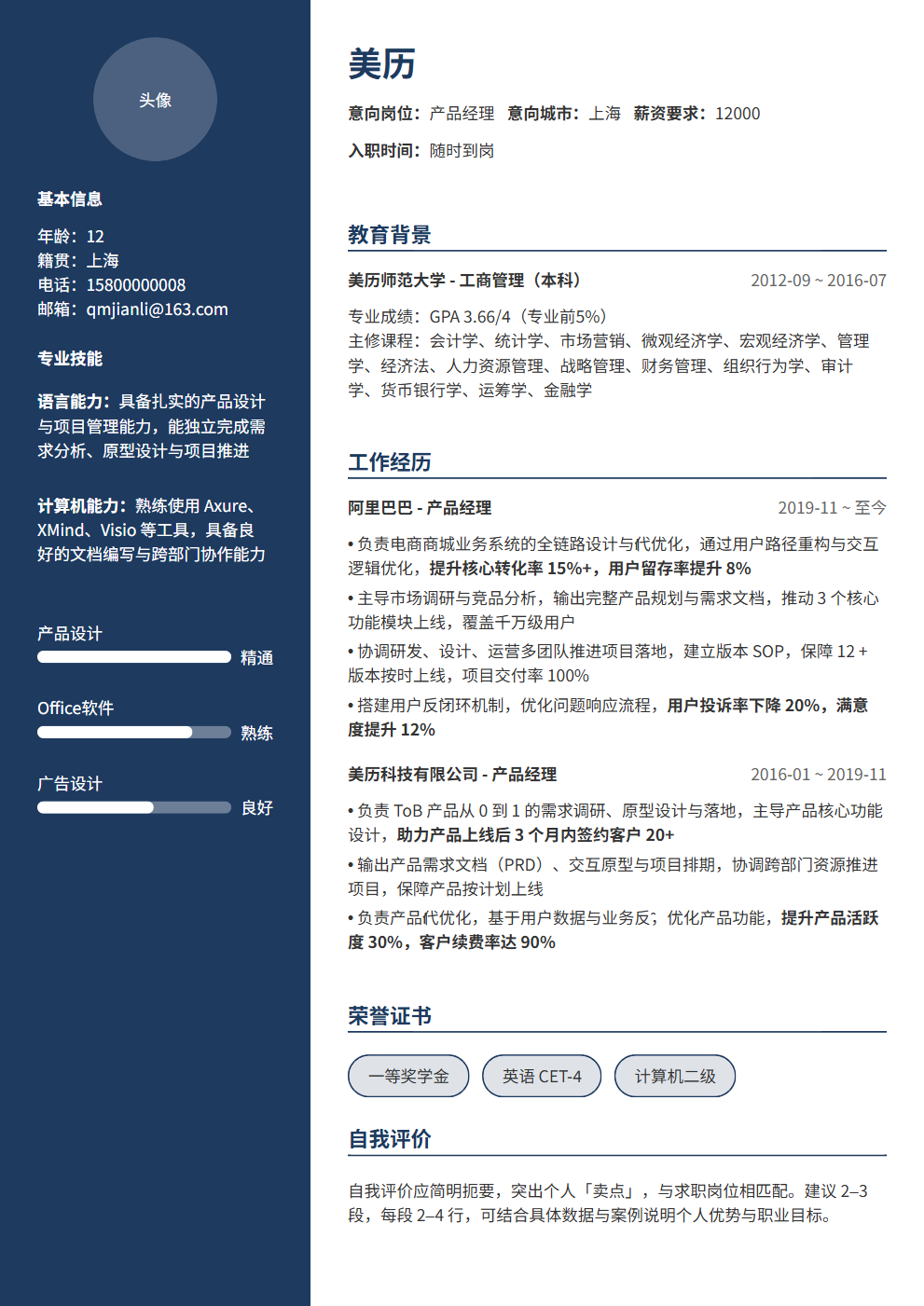
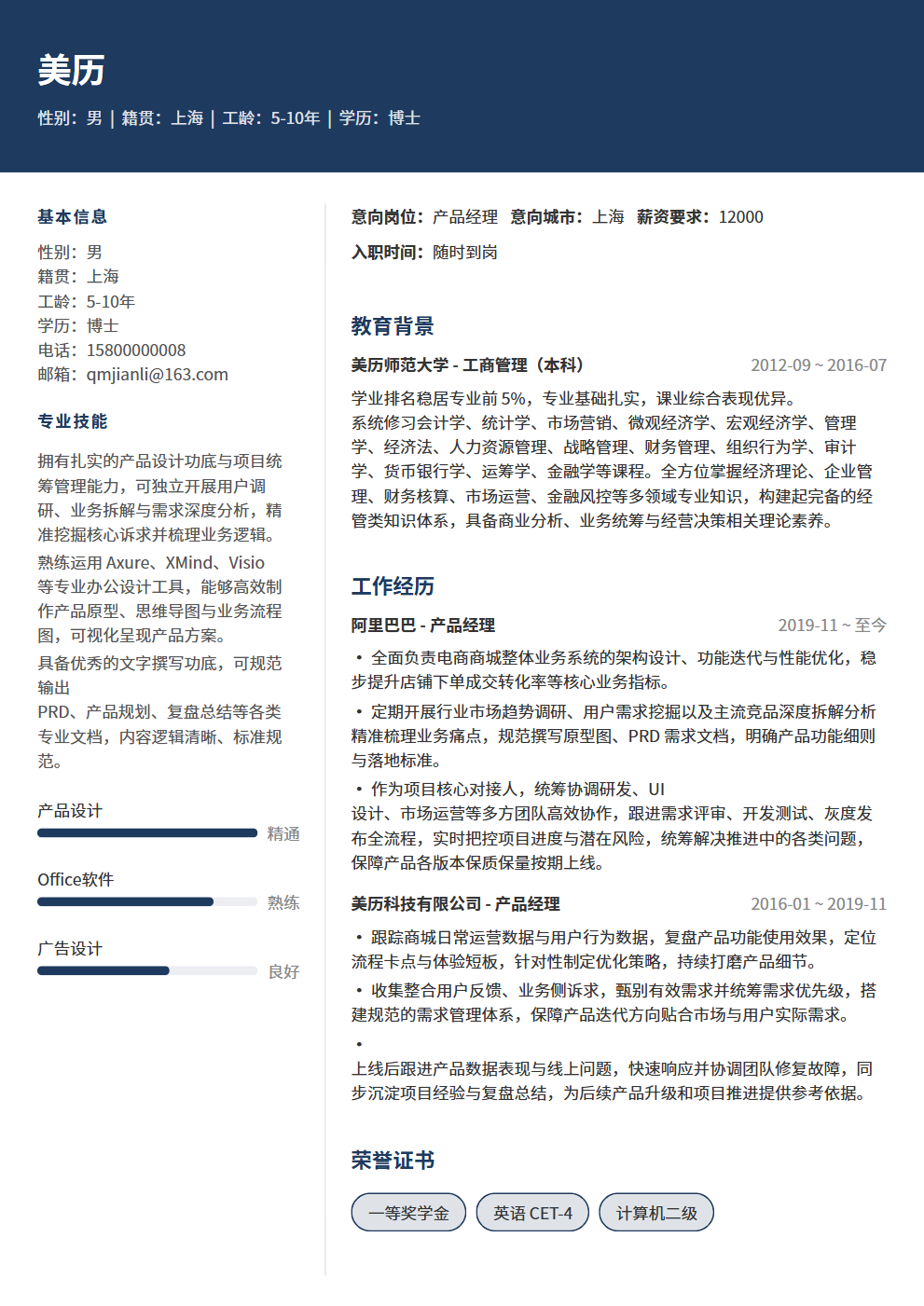
One of the hardest parts of changing careers is the resume—every line is about your old industry, and hiring managers in the new field see it and think: "No relevant experience." How do you make your resume competitive when you lack direct experience? These 3 key techniques will help you craft a compelling career transition resume.
- Technique 1: Lead with transferable skills instead of industry experience. Don't organize your resume chronologically by job title—organize it by skill set. If you're moving from traditional marketing to digital marketing, your resume shouldn't emphasize "3 years of traditional marketing at Company X." Instead, highlight "User Insight Skills: Conducted deep user needs analysis through Project X, delivering Y outcome; Creative Planning Skills: Led marketing campaign X, achieving Y result." Strip away the industry-specific "packaging" and reveal the transferable "core"
- Technique 2: Prove capability with project outcomes. The worst career transition resumes have descriptions without results. Instead of "Responsible for X," write "Achieved Y result through Z method." Hiring managers don't care which industry you worked in—they care whether you can deliver results. If you have project experience related to the new industry (even from side hustles or self-directed learning), feature it prominently
- Technique 3: Use a cover letter to explain your transition motivation. Your resume showcases hard skills; your cover letter conveys soft skills. In your cover letter, concisely and powerfully explain why you're transitioning, what preparation you've done, and what unique value you bring to the new company. A strong cover letter can eliminate hiring managers' concerns about career changers and show them your commitment and readiness
The core principle of a career transition resume: don't let hiring managers think you "don't know anything"—make them see that you're bringing valuable skills in a new direction. Transferable skills are your weapons, project outcomes are your evidence, and your cover letter is your story. Combine all three, and you have a persuasive career transition resume.
Conclusion: Strategy Matters More Than Courage at 30
Is it too late to change careers at 30? No. But "not too late" only holds true if you act strategically—not if you quit on impulse. The skill-transfer path lets you carry your experience into a new direction, the dimension-reduction path leverages your big-company background for differentiation, and the side-hustle path lets you validate a new direction with controlled risk. Among these 3 paths, one will fit your situation. A career transition isn't a gamble—it's a calculated adventure. Assess your skills, choose your path, manage your risks, and take your first step. Thirty isn't the end—it's the starting point for choosing your direction anew.
The first step in any career transition is showing hiring managers your transferable value. Use BeautyResume's resume editor to craft a professional career transition resume that precisely showcases your transferable skills and project outcomes—no matter which transition path you choose, a great resume is the first key to opening doors in a new industry.