Is a Side Hustle Worth It for Full-Time Workers? 4 Criteria and 3 Pitfalls to Avoid
Before starting a side hustle, consider 4 criteria (time and energy, skill monetization, legal compliance, no impact on main job) and 3 pitfalls to avoid (don't pay to learn, don't go all in, don't hurt your main career). Plus 5 side hustle ideas suitable for full-time workers to help you decide rationally.
Everyone on your feed seems to have a side hustle — some are making extra thousands, others wasted money on courses and hurt their day job performance. A side hustle isn't a must-have, and it's definitely not a magic cure. Whether to start one and how to do it requires rational judgment. 4 criteria help you decide whether to start, 3 pitfalls to avoid keep you from falling into traps, and 5 side hustle directions help you find the right path.
1. Criterion One: Do You Have Enough Time and Energy?
The biggest cost of a side hustle isn't money — it's time and energy. Someone already working 60-hour weeks starting a side hustle isn't being a "slash careerist" — they're trading health for money. Before starting, honestly assess your time and energy.
- Time assessment: How much free time do you actually have after work? Not "theoretically" but "realistically" — after commuting, chores, socializing, and rest, how many hours can you dedicate to a side hustle daily? If it's under 2 hours, your output will be very limited. How do you allocate weekends? If every weekend goes to the side hustle, what about rest and social life? Long-term neglect of rest and socializing will take a toll on your body and mindset
- Energy assessment: Time and energy aren't the same thing. You might have 3 free hours, but if you're exhausted after work, those hours are nearly worthless in quality. Energy is a finite resource — more for the side hustle means less for your main job. If your main job still requires significant learning and growth, diverting energy to a side hustle may cost more than you gain
- Sustainability assessment: A side hustle isn't a sprint — it's a marathon. Lasting 3 months means nothing; lasting a year is the real test. Can your body handle 2-3 extra hours of work daily? Can your family accept you "working overtime" on weekends? Will your main job suffer from divided attention? If any answer is "no," reconsider
A key principle: The prerequisite for a side hustle is a stable main job. If your main job is still in a growth phase requiring heavy investment, focus on that first. Your main job is the foundation; the side hustle is the bonus — don't put the cart before the horse.
2. Criterion Two: Do You Have Monetizable Skills?
The essence of a side hustle is "skill monetization" — using your existing skills to earn extra income. If you don't have monetizable skills, your "side hustle" is likely just "paying to gain experience."
- What are monetizable skills: Hard skills — programming, design, writing, translation, video editing, data analysis, bookkeeping, legal consulting — these have clear market demand and pricing standards. Soft skills — project management, training, consulting — higher barriers to monetization but also higher rates. Resource-based — unique supply chain resources, client networks, or industry information asymmetry can also be monetized
- How to judge if your skills can be monetized: Is there market demand — are people paying for this type of skill? Check freelance platforms (Fiverr, Upwork) for pricing and demand volume. Are you competitive — does your skill level meet the paying standard? Not "I know a little" but "someone would pay for this." Is the monetization path clear — do you know how to find clients, how to price, how to deliver? If you can't answer these three questions, your skills aren't at the monetizable stage yet
- What if you don't have monetizable skills: Spend 3-6 months learning one — writing, design, programming, video editing. Pick one you're interested in that has market demand and learn it systematically. Don't spread yourself thin — one skill you can monetize beats three half-baked ones. Don't focus on making money during the learning phase — do a few projects for free first, build a portfolio and reputation, then start charging
A practical tip: List all your current skills, then search freelance platforms for the market price and demand for each one. If a skill's market rate is below your hourly wage at your main job, its monetization value is low. If a skill has very little market demand, the monetization path is narrow. Choose skills with reasonable pricing and strong demand as your side hustle direction.
3. Criterion Three: Are You Clear on Legal and Compliance Risks?
The most overlooked issue with side hustles is legal and compliance risk. Many workers start side hustles without thinking, only to get fired when discovered, or even face legal disputes.
- Employment contract restrictions: Read your employment contract carefully — many companies include "no moonlighting" or "no competing business activities" clauses. Violating these gives the company grounds to terminate without severance. Even without explicit prohibitions, if your side hustle competes with your employer, they can still hold you liable
- Non-compete agreements: If you signed a non-compete, you can't engage in competing activities for a specified period after leaving. Non-competes apply during employment too — you can't use your company's trade secrets, client relationships, or technical information for your side hustle
- Intellectual property issues: If you use company equipment, software, or materials for your side hustle, or work on it during company time, the resulting IP may belong to your employer. Worse, if you leak trade secrets to side hustle clients, you could face legal action for trade secret misappropriation
- Tax issues: Side hustle income is taxable. If you work through platforms, they may withhold taxes; if you deal directly with clients, you must self-report. Failing to report side income is tax evasion — if caught, you'll owe back taxes plus penalties
A key principle: Before starting a side hustle, read your employment contract cover to cover. If there's a "no moonlighting" clause, either don't start or negotiate with your company. Don't gamble on "they won't find out" — that's the most dangerous assumption.
4. Criterion Four: Will the Side Hustle Affect Your Main Job?
A side hustle can affect your main job in three ways: time impact, energy impact, and conflicts of interest. Any one of these can make the side hustle not worth it.
- Time impact: Working on your side hustle during company hours — this is the worst approach. It violates your employment contract and degrades your main job performance. Even if you're "sneaky," colleagues and managers aren't blind — declining work quality, constantly checking your phone, and lack of focus will be noticed
- Energy impact: Even if you only work on your side hustle after hours, the energy drain is inevitable. Dozing off during the day, zoning out in meetings, declining work quality — these are all signals that your energy is being siphoned by the side hustle. If your main job starts suffering, pause the side hustle immediately
- Conflicts of interest: If your side hustle clients are your employer's clients or potential clients, if your side hustle business overlaps with your employer's business, or if you use company resources for your side hustle — these all constitute conflicts of interest. Conflicts of interest aren't just ethical issues — they're legal ones
A practical tip: Set a "red line" for yourself — if your main job performance drops for two consecutive months, pause the side hustle immediately. If your manager or colleagues start questioning your work ethic, pause immediately. If side hustle income stays below 10% of your main salary for 3 consecutive months, reassess whether it's worth continuing.
5. Pitfall One: Don't Pay to Learn — Truly Profitable Side Hustles Don't Require Upfront Tuition
The biggest trap in side hustles is "paying money to learn how to make money." "Side hustle bootcamps," "money-making courses," and "zero experience to $5K/month" ads are everywhere — remember this iron rule: truly profitable side hustles don't require you to pay thousands in tuition first.
- Common "pay to learn" scams: Course scams — "Learn X from zero, earn $5K/month in 3 months," tuition $500-$2,000. After completing it, you find the content is available free online, and the "1-on-1 coaching" is just a TA posting a few messages in a group chat. Reseller scams — "Join our team, drop-ship your way to $5K/month," but you need to pay an upfront fee or buy inventory. The "drop-shipping" is just getting you to sell to friends on social media — tiny margins that damage relationships. Franchise scams — "Join our brand with full headquarters support," franchise fees from $5K to $50K+. The "full support" turns out to be a set of marketing materials, and you're on your own after that
- How to spot side hustle scams: Requires large upfront payments — 99% are traps. Promises "easy money" or "$5K/month" — making money is never easy. Won't tell you specifically what you'll do, just "follow along" — likely MLM or a variant. Asks you to recruit others — 100% MLM. Emphasizes "limited opportunity" or "few spots left" — that's manufactured urgency, not a real opportunity
- The right way to learn: Free resources — YouTube has tons of free skill tutorials that are just as good as paid courses. Books — a $30 classic textbook is more systematic than a $500 "bootcamp." Practice — the best learning is doing. Do a few free projects for friends, build experience and a portfolio — that's 100x more effective than watching lectures
A key principle: A side hustle is about "making money," not "spending money." If a side hustle requires significant upfront financial investment, it's probably not a side hustle — it's someone else's business model for making money off you.
6. Pitfall Two: Don't Go All In — A Side Hustle Is a Test, Not a Gamble
Some people quit their jobs to go full-time on a side hustle from day one — that's the most dangerous approach. Side hustles have high uncertainty: unstable clients, fluctuating income, and fast-changing markets. Going all in without a stable income source is extremely risky.
- Why you shouldn't go all in: Unstable income — side hustle revenue might be $3K one month and $500 the next. Without stable cash flow, your mental state will crumble. Fast-changing markets — what's profitable today may not be tomorrow. Platform rule changes, increased competition, and declining demand can all cause income to plummet. High cost of failure — going full-time on a side hustle means giving up your main job's stable income and benefits. If it fails, finding a new job could take months
- The right pace: Start part-time — keep your main job and test the side hustle in your spare time. Stick with it for at least 6 months to see if income is stable and the market has staying power. Consider scaling up when side income reaches 50% of your main salary — stable side income at half your main pay signals potential. Consider going full-time only when side income consistently exceeds your main salary for 6 months with a stable trend
- The right way to go all in: If you do decide to go full-time, make at least 3 preparations — 6+ months of living expenses saved, stable client sources (at least 3 long-term clients), and a clear exit plan (if you're not profitable in 3 months, go back to a regular job). Remember: going all in without preparation isn't courage — prepared all-in is
A key principle: A side hustle is "addition," not "replacement." Let the side hustle supplement your main job first; only consider replacing it when the side hustle is mature enough. Don't abandon your main job for an immature side hustle — that's gambling, not entrepreneurship.
7. Pitfall Three: Don't Hurt Your Main Job — It's Your Foundation
This advice may seem to overlap with Criterion Four, but it goes deeper — it's not just about "can you do it" but "is it worth doing." Many side hustles appear to make money, but because they hinder main job growth, they're actually losses in the long run.
- Opportunity cost during your main job's growth phase: Ages 25-35 are the golden years for career growth — every unit of investment in your main job during this period can yield exponential returns (promotions, raises, networks, perspective). If you divert energy that should go toward main job growth into a side hustle, you might make a few extra thousand short-term but lose tens of thousands long-term. Simple math: main salary going from $5K to $10K/month means $60K more per year; side hustle at $1K/month means $12K per year. Which is worth more?
- Synergy between main job and side hustle: The best side hustles have synergy with your main job — your main job experience empowers the side hustle, and side hustle accumulation feeds back into your main job. For example: developers running tech blogs, designers taking freelance projects, HR professionals doing career coaching. These side hustles don't hurt your main job — they actually enhance your expertise and influence in your field
- When a side hustle is worth doing: Your main job has plateaued with no major growth opportunities in the near term; the side hustle has synergy with your main job, not completely disconnected; side hustle income is stable and growing, not "one-off gigs"; you have enough time and energy to handle both without either suffering
A key principle: When evaluating whether a side hustle is worth it, don't just look at how much the side hustle makes — look at whether "main job + side hustle" total returns are higher than "main job only." If the side hustle makes $1K but you lose $2K in main job income (because divided attention cost you a promotion), the side hustle is a net loss.
8. Five Side Hustle Directions Suitable for Full-Time Workers
If you've passed the 4 criteria and avoided the 3 pitfalls, here are 5 side hustle directions suitable for full-time workers — they all share flexible hours, skill monetization, and no impact on your main job.
- Direction 1: Content creation: Writing blogs, running social media accounts, making short videos, hosting podcasts — create content using your professional expertise, build an audience, then monetize through ads, paid content, or affiliate marketing. Pros: flexible timing, you can batch-create and schedule content; synergistic with your main job since content creation demonstrates professional expertise. Note: content creation requires long-term persistence — the first 3-6 months may generate no income
- Direction 2: Freelance skills: Design, programming, translation, writing, video editing — take projects on freelance platforms and charge per project. Pros: clear monetization path, relatively stable income; you can control workload — take fewer projects when busy, more when free. Note: you need to build a portfolio and reputation first; newbies may need 1-2 months to get started
- Direction 3: Knowledge products: Online courses, 1-on-1 consulting, paid communities — package your professional knowledge and experience into products for sale. Pros: create once, sell multiple times with low marginal cost; highly synergistic with your main job since knowledge products prove your expertise. Note: requires some audience base and professional influence; cold starts are difficult
- Direction 4: E-commerce: Second-hand sales, online stores, cross-border e-commerce — leverage information asymmetry or supply chain advantages. Pros: relatively low barrier to entry, can start small. Note: requires some capital investment (inventory, promotion), and inventory management and after-sales are major hassles. Avoid models requiring large inventory holdings
- Direction 5: Investing: Index fund DCA, bonds, REITs — use spare cash to invest and let money make money. Pros: no extra time needed (beyond research), passive income. Note: investing carries risk — never borrow to invest, never invest living expenses, and don't chase high returns — 8-12% annualized is already a great return
A key principle: When choosing a side hustle direction, prioritize ones with synergy with your main job. This way, the side hustle not only makes money but also enhances your professional capabilities — main job and side hustle empower each other, creating a positive feedback loop.
9. Conclusion: A Side Hustle Is Icing on the Cake, Not a Lifeline
The 4 criteria for full-time workers considering a side hustle — do you have enough time and energy (if not, don't force it), do you have monetizable skills (if not, learn first), are you clear on legal and compliance risks (if not, don't take the risk), will it affect your main job (if yes, it's not worth it) — help you rationally judge whether a side hustle suits you. The 3 pitfalls to avoid — don't pay to learn (truly profitable side hustles don't require upfront tuition), don't go all in (a side hustle is a test, not a gamble), don't hurt your main job (it's your foundation) — help you avoid the most common side hustle traps. The 5 side hustle directions suitable for full-time workers — content creation, freelance skills, knowledge products, e-commerce, and investing — help you find the right path. Remember: a side hustle is icing on the cake, not a lifeline. If your main job isn't solid yet, focus on that first — your main job is the foundation, and the side hustle is the bonus. Don't put the cart before the horse.
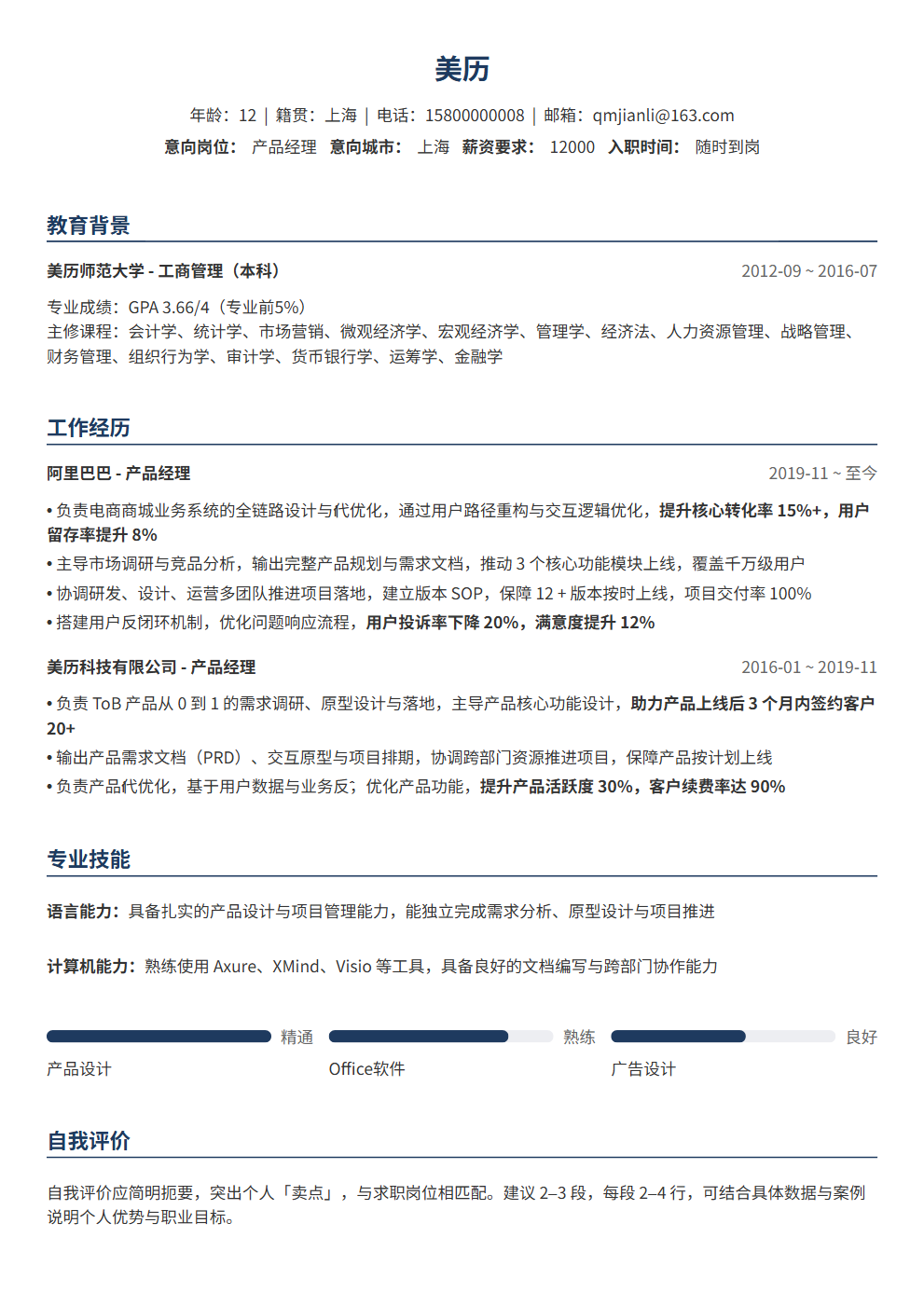
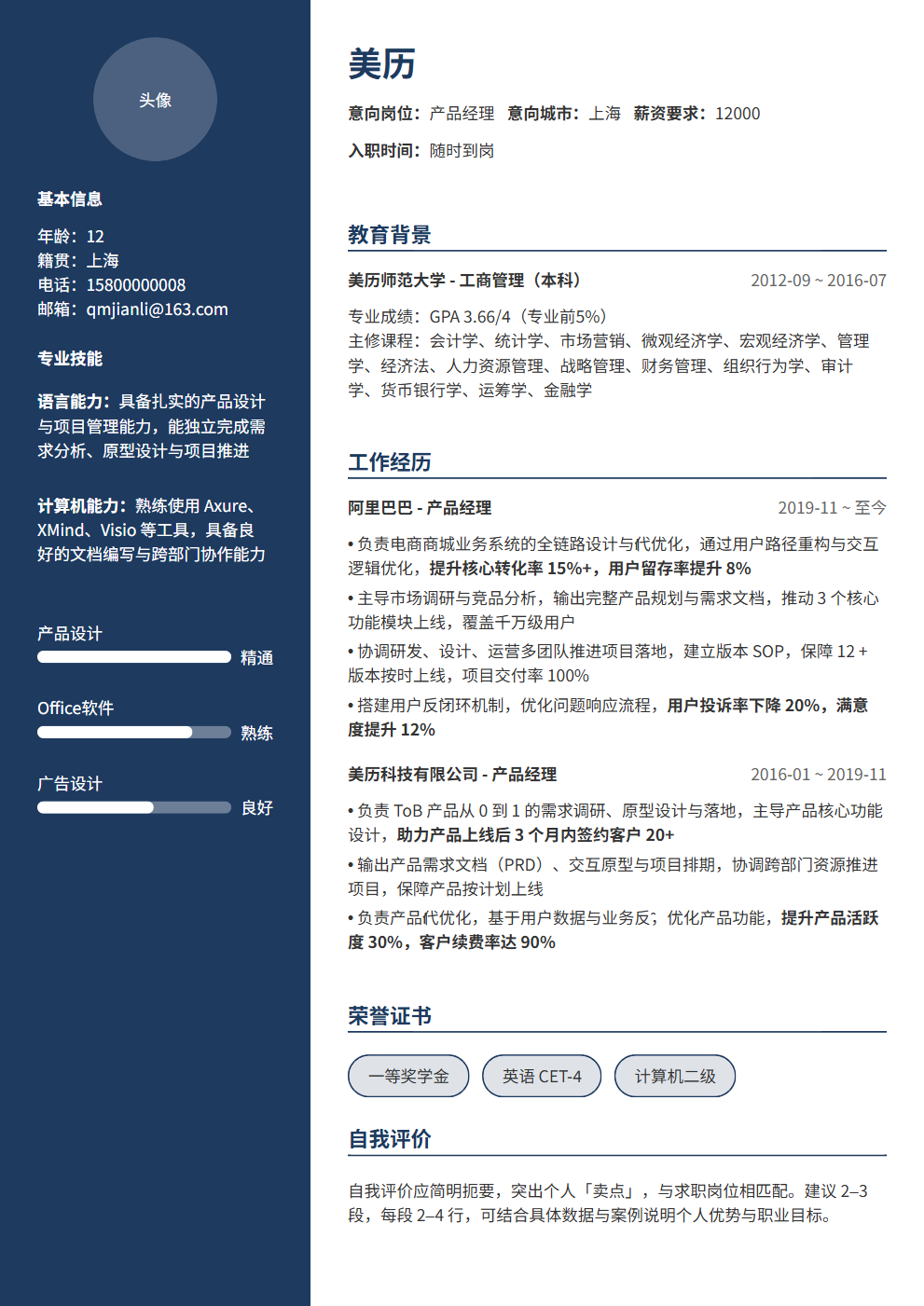
Whether you want to boost income through a side hustle or negotiate better pay in your main job, a strong resume is your core competitive advantage. BeautyResume Editor provides professional templates and smart optimization to help you precisely showcase your skills and achievements. Whether you're job hunting for your main career or pitching for side hustle clients, a standout resume opens doors. Side hustle or main job — competence is the real currency. Use BeautyResume to write out your strengths!