Introvert's Workplace Survival Guide: 4 Ways to Turn Introversion Into Your Career Advantage
Think the workplace belongs to extroverts? 4 methods (written communication over verbal, deep thinking over broad networking, 1-on-1 over group socializing, expertise over charisma) + 3 introvert advantages + 3 unsuitable roles to turn introversion into your competitive edge.
Afraid to speak up in meetings, dodging team-building events, stuttering during boss reports—if you have these symptoms, congratulations, you're a workplace introvert. In a work culture where "the squeaky wheel gets the grease," introverts often feel shortchanged: doing plenty but going unnoticed because you can't "show off," having ideas but getting ignored because you won't speak up. But is introversion really just a disadvantage? Of course not. Introverts have unique strengths—deep thinking, strong focus, good listening, attention to detail. The key is leveraging these strengths to turn introversion into your competitive edge. Here are 4 methods.
Method 1: Use Written Communication to Compensate for Verbal Expression — Let Your Words Speak for You
What's the introvert's biggest struggle? Verbal expression. Nervous about speaking in meetings, stumbling during in-person reports, awkward during small talk—these scenarios make introverts squirm. But verbal expression is just one form of communication, not the only one. Written communication is the introvert's "home court"—you have time to think, organize your language, and revise, ultimately producing content far superior to impromptu speech.
- Prepare written materials before meetings: Write your ideas as documents or emails before the meeting and send them to attendees in advance. Even if you don't speak up during the meeting, your views have been communicated. Plus, written materials are more organized and persuasive than verbal remarks—because they're thought through, not improvised
- Use email and messaging instead of face-to-face: Not everything needs to be said in person. If it can be explained via email, don't make a special trip; if it can be resolved via messaging, don't call. This isn't avoidance—it's choosing the most effective communication method. For you, written communication is far more efficient than verbal
- Write weekly and monthly work reports: Introverts often "do but don't tell," leaving leaders unaware of what you've accomplished. Regularly write work reports presenting your achievements, project progress, and thoughtful suggestions in writing. This is more effective than scrambling to speak in meetings—because your report is systematic and complete, not fragmented
- Build a personal knowledge base: Document your professional knowledge and experience in a team-shared space. When colleagues need help, your documents become your best "voice"—available 24/7, helping others without you having to speak. Many tech experts are introverts whose influence comes not from talking but from documentation and code
- Write in-depth analysis reports: Introverts excel at deep thinking, so write out your insights. One high-quality analysis report has more impact than ten meeting speeches. Leaders value not who speaks most, but who speaks most sensibly
Written communication isn't the introvert's "fallback"—it's the introvert's "weapon." In an age of information overload, people who can write clear, logical, and deep content are scarcer than smooth talkers. Present your thinking in writing, and your influence won't fall short of any extrovert's.
Method 2: Use Deep Thinking Instead of Broad Networking — Quality Over Quantity
Networking culture makes many introverts anxious—others attend industry events daily, join countless group chats, and can chat with anyone, while you just want to do your work in peace. But does networking really require "casting a wide net"? The introvert's networking strategy should be "digging deep wells"—rather than knowing 100 nodding acquaintances, build 10 deep relationships.
- Be selective about social events: Not all networking events are worth attending. Industry summits, professional forums, small-scale seminars—these events with clear themes and opportunities for deep exchange suit introverts better than large cocktail parties and team dinners. Before attending, clarify "what I want to get from this event"—attend with purpose, not just to "fit in"
- Build "key connections" not "broad connections": You don't need to know everyone—just the key people. Who are the key people? Your direct supervisor, critical cross-department contacts, industry mentors you admire, people who can open doors for you. Focus your energy on maintaining these 5-10 key relationships rather than adding 100 WeChat contacts
- Build social connections through professional value: Introverts aren't good at "schmoozing," but they're good at "providing value." When you can help others professionally, connections form naturally. Helping a colleague solve a technical problem, sharing a valuable industry report, offering a key suggestion on a project—these "value outputs" build deeper relationships than any social technique
- Replace group socializing with 1-on-1 deep conversations: Introverts often "disappear" in groups but shine in 1-on-1 conversations. Invite key people for coffee or lunch—1-on-1 deep conversation is 10 times more effective than group chatting. Introverts aren't bad at socializing; they need the "right social format"
The core of deep networking is "value exchange"—not how many people you know, but how many people recognize your value. Introverts don't need to become social butterflies; they just need key people to see their professional capabilities. Five deep relationships beat 100 "like" friendships.
Method 3: Replace Group Socializing with 1-on-1 — Find Your Social Rhythm
Introverts typically perform better in 1-on-1 settings than in groups. Group socializing has too many uncontrollable factors—you need to compete for speaking time, navigate multiple people, and maintain focus in noisy environments—all weaknesses for introverts. But 1-on-1 socializing is completely different: you only face one person, have ample time to think and respond, and can deeply explore a topic. 1-on-1 is the introvert's "comfort zone socializing."
- Proactively initiate 1-on-1s: Don't wait for others to invite you. Take the initiative to invite people you want to build relationships with for coffee or lunch—"Hey, I have a technical question I'd love your input on—would you have time to chat?" This proactive invitation shows your intellectual curiosity while creating 1-on-1 deep conversation opportunities
- Prepare conversation topics: The worst thing in 1-on-1 conversations is awkward silence. Prepare 2-3 topics in advance—a professional question, an industry trend, a project idea. A prepared introvert often outperforms an extrovert in 1-on-1 conversations—because your questions are deeper and your thinking more logical
- Listening matters more than speaking: In 1-on-1 conversations, listening is far more valuable than talking. Introverts are naturally good listeners—you genuinely hear what the other person says, think about their needs, and give targeted responses. This "deep listening" ability is hard for extroverts—they often rush to express themselves while ignoring the other person
- Follow up and continue: After a 1-on-1 conversation, send a brief thank-you message—"Today's chat was really insightful. I'll think more about the XX issue and share my thoughts when I have conclusions." This follow-up deepens the relationship rather than letting it end after one conversation. The introvert's advantage is depth, and depth requires time to build
1-on-1 socializing is the introvert's "secret weapon"—it avoids all the pain points of group socializing while leveraging the introvert's strength in deep conversation. Don't force yourself into group activities you dislike; focus your energy on 1-on-1 deep conversations for much better results.
Method 4: Build Influence Through Professional Capability — Let Your Competence Speak
Workplace influence comes from two sources: "relational influence" built through networking and socializing, and "professional influence" built through capability and results. Extroverts excel at the former; introverts should focus on the latter. When your professional capability is strong enough, you don't need to actively network—people will come to you.
- Become an expert in a specific domain: Choose a field you're skilled in and interested in, and go deep. When you become "the person who knows the most about XX" on your team, your influence builds naturally—colleagues come to you with questions, and leaders seek your input on decisions. Professional capability is the hardest "social currency"
- Let results speak, not your mouth: Introverts aren't good at "self-promotion," so let results speak for you. Complete a high-quality project, solve a problem no one else could, deliver beyond expectations—these are more persuasive than any self-promotion. Leaders value results, not how much you talk
- Build reusable methodologies: Summarize your professional experience into methodologies—reusable processes, templates, frameworks. When your methodology gets adopted by the team, your influence extends beyond "personal capability" to "organizational capability." Many introverted tech experts have influence far exceeding smooth talkers—because their methodologies shaped the entire team's way of working
- Speak up at critical moments: Introverts don't need to speak constantly, but they must speak at critical moments. What are critical moments? When project direction needs a decision, when the team faces a tough problem, when your area of expertise is being discussed. Being quiet normally but razor-sharp at key moments—this "few but precise" speaking style has more impact than "frequent but shallow" contributions
The advantage of professional influence is "durability"—relational influence fades as networks shift, but professional influence only grows stronger with accumulated capability. Five years from now, people won't remember who was most social—they'll remember who was most competent.
3 Workplace Advantages of Introverts
- Deep thinking ability: Introverts habitually think before acting, giving them greater insight into complex problems. While extroverts scramble to speak in meetings, introverts are thinking silently—they may have already identified angles and solutions others missed. Deep thinking is the introvert's most undervalued advantage
- High concentration: Introverts can maintain focus without external stimulation, making them excel at tasks requiring extended deep work. Programming, writing, data analysis, research—these "immersive" roles are where introverts often outperform extroverts
- Good listening skills: Introverts prefer listening to speaking. This listening ability is crucial in client communication, team collaboration, and requirements analysis—you truly understand the other party's needs and pain points rather than rushing to express your own views. Many excellent consultants and advisors are introverts
3 Roles Not Suited for Introverts
- Sales roles (especially B2C sales): Sales requires extensive cold calling, phone communication, and client entertainment—all weaknesses for introverts. It's not impossible, but it requires expending enormous energy "performing" as an extrovert, leading to burnout over time. If you're an introvert who must do sales, consider B2B enterprise sales—more focused on professional capability and deep relationships than broad networking
- PR/Event planning roles: PR and event planning require frequent socializing, media communication, and on-site coordination—high social density work. Introverts struggle to leverage their strengths in these roles and instead become exhausted from sustained social drain
- Business development (BD) roles: BD's core is "casting a wide net"—meeting lots of people, negotiating partnerships, building relationship networks. This broad networking model contradicts the introvert's "deep networking" strategy. Introverts are better suited for "deep maintenance" than "broad expansion"
Conclusion: Introversion Isn't a Flaw—It's a Different Kind of Competitive Edge
The workplace isn't an extroverts-only stage—introverts have their own survival strategies and competitive advantages. 4 methods—use written communication to compensate for verbal expression, letting your words speak; use deep thinking instead of broad networking, quality over quantity; replace group socializing with 1-on-1, finding your social rhythm; build influence through professional capability, letting competence speak for you. Combined with 3 natural introvert strengths—deep thinking, high concentration, good listening—you can absolutely turn introversion into a workplace competitive advantage. Don't force yourself to become an extrovert—find workplace strategies that suit introverts. The world needs smooth talkers and deep thinkers alike. And you are the latter.
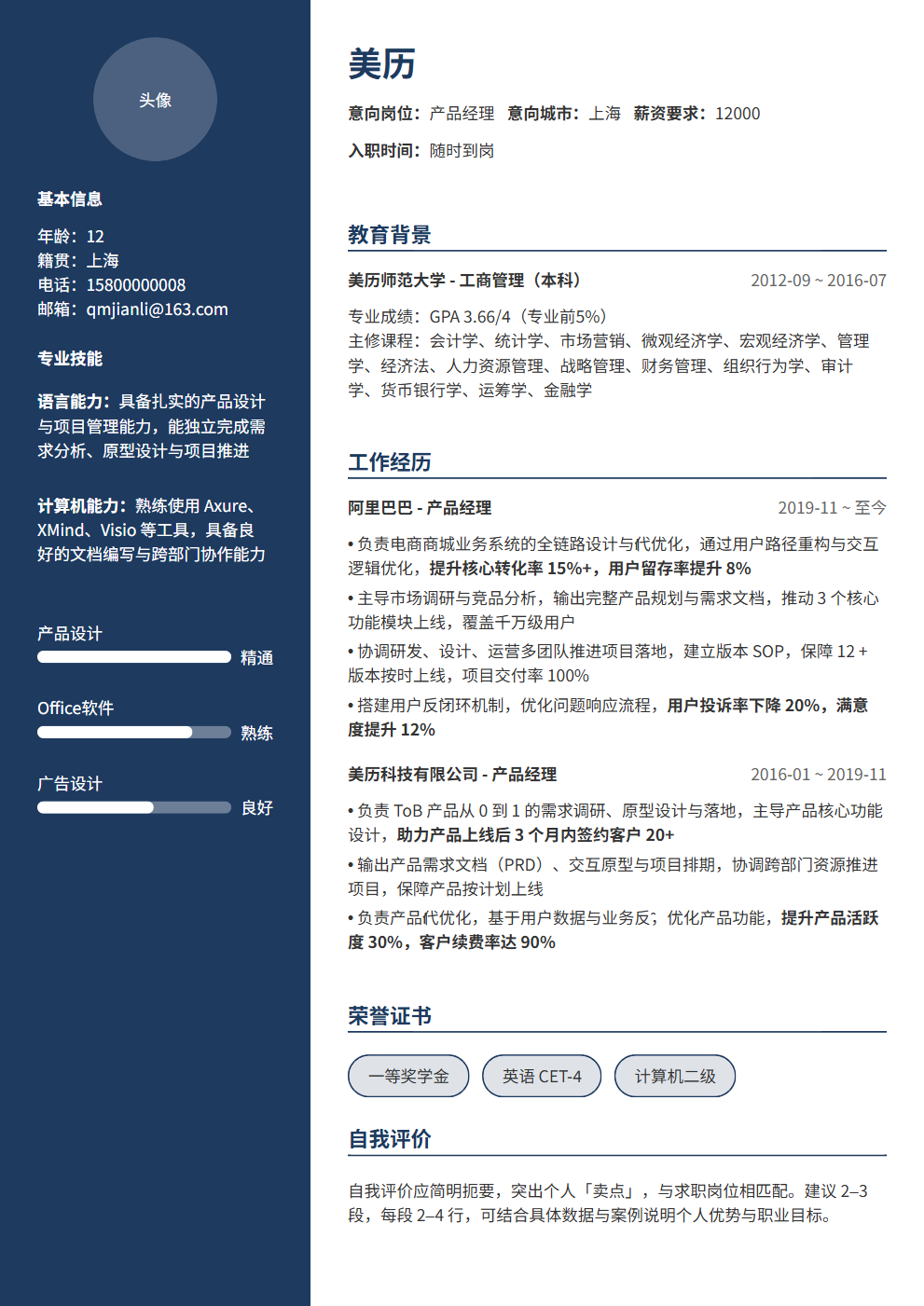
The introvert's greatest advantage is depth and expertise. Use BeautyResume to clearly showcase your professional capabilities and in-depth achievements—let your competence speak for you, let your expertise be your voice.