2026 Interview Trends: How to Prepare for AI Interviews, Recorded Video Interviews, and Gamified Assessments
You spent three days preparing interview talking points, practicing your self-introduction over and over — then on interview day, the person sitting across from you…
You spent three days preparing interview talking points, practicing your self-introduction over and over — then on interview day, the person sitting across from you isn't a person at all. It's an AI. You speak to a screen with no real-time feedback, no way to know if you're doing well, and no clue what the AI is actually "looking at." Even more bizarre: some companies ask you to record a video and submit it, never meeting an interviewer at all. Others have you play games, then announce "assessment complete." Why are interviews getting so fancy? Don't panic. These new formats seem intimidating, but once you understand what they're assessing, they're actually easier to prepare for than traditional interviews. Today, let's break down the 3 hottest new interview formats so you won't be eliminated just because you "don't know how to use the tools."
Format 1: AI Video Interviews — How to Talk to a Machine Without Feeling Awkward
AI video interviews are the most mainstream new interview format in 2026. Here's how they work: you open an interview platform (like HireVue, Moka, or Beisen), the system displays questions one by one, you answer into the camera, and the system automatically records and analyzes your responses. There's no live interviewer — just you and the screen. The AI scores you across multiple dimensions: language content, speech pace and tone, facial expressions, keyword matching, and more, then generates a report for HR.
- What AI interviews assess: Logical and structured expression (AI analyzes whether your answers have structure and supporting arguments), keyword matching (whether your answers contain role-relevant professional terms and skill keywords), emotional stability (AI analyzes your micro-expressions and vocal changes to gauge nervousness or anxiety), communication confidence (whether you look at the camera, whether your body language is natural, whether your voice is clear and strong)
- Common AI interview scenarios: Campus recruitment screening (major companies' first round is almost entirely AI interviews), experienced hire screening (mid-to-large companies use AI to quickly filter large candidate pools), international roles (time zone differences make AI interviews more convenient), high-volume hiring (retail, customer service, sales and similar roles with scaled recruitment)
- Preparation method 1 — Build a response framework: AI interview questions are typically behavioral ("Describe a time you resolved a conflict") or situational ("How would you handle a customer complaint?"). Use the STAR method (Situation-Task-Action-Result) to structure each answer, keeping each response under 2 minutes. AI prefers structured answers because it needs to extract keywords and logical chains
- Preparation method 2 — Keyword embedding: Carefully read the job description and extract 5-8 core keywords. For example, a product manager role's keywords might include "requirement analysis," "user research," "data-driven," "PRD," "agile development." Naturally embed these keywords in your answers — AI's semantic analysis system will score you higher. But don't force them in unnaturally — AI can detect that too
- Preparation method 3 — Mock practice: Use your phone's front camera to record yourself answering questions. When reviewing, focus on three things: Are your eyes on the camera (not the screen)? Is your expression natural (not blank or over-smiling)? Is your voice clear (not too fast, not too quiet)? Do at least 5 mock sessions until talking to the camera feels as natural as talking to a real person
- Common pitfalls: Don't look down and read from notes (AI detects when your eyes aren't on the camera), don't pause for too long (silence over 5 seconds gets flagged as "slow response"), don't use overly casual language (AI scores formal expression higher), don't interview in a noisy environment (background noise reduces AI speech recognition accuracy)
The biggest advantage of AI interviews is fairness — every candidate faces the same questions, the same time limits, and the same evaluation criteria. There's no risk of a low score just because the interviewer is having a bad day. So instead of worrying about whether "AI will discriminate against me," focus on making your answers more structured, more logical, and more information-rich.
Format 2: Recorded Video Interviews — How to Keep the Energy Up When There's No One on the Other Side
Recorded video interviews are similar to AI video interviews but with one key difference: there's usually no real-time AI analysis. Instead, HR or interviewers watch your recorded video afterward. This means your "audience" is human, but your "performance" is pre-recorded — you can't adjust your pace based on the interviewer's reactions, nor can you compensate for weak answers through interaction. The core challenge of recorded interviews: how to maintain high-quality output without anyone giving you feedback.
- What recorded interviews assess: Fluency and completeness of expression (without an interviewer probing, can you fully address a topic on your own?), self-management ability (can you allocate time appropriately across questions within the given limit?), professional depth (without interaction, do your answers have enough substance and expertise?), presence and demeanor (do you appear professional, confident, and approachable on video?)
- Common recorded interview formats: One-way video interview (system displays questions, you record answers, 2-3 minutes per question), screen recording interview (you share your screen and narrate while demonstrating — common for technical roles), combined format (video + screen recording + document submission — multi-dimensional capability showcase)
- Preparation method 1 — Time management: Recorded interviews typically have strict time limits. For example, 5 questions, 2 minutes each, 10 minutes total. Plan your time allocation in advance: Question 1 (self-introduction) 1.5 minutes, Questions 2-4 (professional questions) 2 minutes each, Question 5 (closing/reflection) 1 minute. Practice with a timer until you can fully answer each question within the time limit
- Preparation method 2 — Content density: Without an interviewer to probe, each answer must be a self-contained, complete unit. Use a "conclusion-details-summary" structure: state your point first, then expand with 2-3 supporting arguments, then wrap up. Support each argument with specific data and examples — no empty claims. Instead of "I have strong communication skills," say "When coordinating cross-departmental projects, I established a weekly report mechanism and bi-weekly alignment meetings, reducing project delay rates from 30% to 5%"
- Preparation method 3 — Environment setup: Choose a quiet, well-lit space with a clean background. Use natural light or a ring light to ensure your face is clearly visible. The background should ideally be a solid-color wall or an organized bookshelf — no clutter or personal photos. Test your internet speed (upload speed at least 5Mbps) to ensure the video won't lag. Log into the interview platform 15 minutes early to test your camera and microphone
- Common pitfalls: Don't re-record excessively (most platforms limit re-takes, and pursuing perfection only increases anxiety), don't fill pauses with "uh" and "um" (these filler words are much more noticeable without interaction), don't end with "that's it" (it sounds dismissive — close with "That's my answer, thank you" instead)
A recorded interview is essentially a solo performance — no scene partner to react to, you have to carry the whole show yourself. This sounds hard, but it's actually easier to control than a live interview: you can prepare response frameworks for each question in advance, practice until they're second nature, then confidently "perform" them. Remember, a recorded interview isn't improvisation — it's a naturally delivered, meticulously prepared presentation.
Format 3: Gamified Assessments — Can Playing Games Count as an Interview? How to Score High
Gamified assessments have emerged in recent years as an interview format, becoming increasingly common in campus recruitment at major tech, finance, and consulting companies. The logic: by having you complete a series of game-like tasks (resource allocation, logical reasoning, situational decision-making), they evaluate your cognitive abilities, personality traits, decision-making style, and team collaboration tendencies. Gamified assessments aren't about how well you "play games" — they're about what your in-game behavior patterns reveal about your workplace traits.
- What gamified assessments evaluate: Cognitive abilities (logical reasoning, numerical sensitivity, spatial imagination — similar to aptitude tests but more disguised), personality traits (risk appetite, stress tolerance, collaboration tendency — judged through your in-game choices), decision-making style (analytical-rational vs. intuitive-action — judged through your decision pathways), time management (can you make optimal decisions within limited time?)
- Common gamified assessment types: Scenario simulation (simulate a business scenario where you make decisions, like "You're the CEO — how do you allocate a limited budget?"), cognitive testing (similar to IQ puzzles but packaged as games, like "Complete a puzzle/sorting/matching task within a time limit"), role-playing (simulate workplace situations where you choose your response, like "A colleague took credit for your work — what do you do?"), multi-player (multiple people online simultaneously, observing your role and collaboration style in a team)
- Preparation method 1 — Understand the assessment logic: Gamified assessments don't test whether you "know how to play" — they test "how you play." For example, in a resource allocation game, if you invest all resources in one project, the system judges you as having a "high risk appetite, lacking diversification awareness." If you allocate evenly, it judges you as "steady but potentially lacking decisiveness." Once you understand this logic, you know how to "play" — adjust your behavior patterns based on the role's characteristics. Investment banking roles can appropriately show risk-taking spirit; finance roles should demonstrate steadiness
- Preparation method 2 — Practice similar question types: While gamified assessment questions vary each time, the underlying logic is the same. You can practice with similar assessment tools in advance, such as SHL, Cut-e, or Beisen assessments. These tools have free trial versions that let you familiarize yourself with the interaction style and time pacing. Focus on practicing: quickly reading and understanding questions, making decisions under time pressure, and handling multiple tasks simultaneously
- Preparation method 3 — Be authentic but strategic: Gamified assessments have a hidden check — consistency. If you selected "I'm great at teamwork" earlier, but in the game you completely ignore teammates, the system flags your responses as inconsistent, lowering your credibility. The best strategy: be authentic, but on the foundation of authenticity, choose behaviors that better align with the role's requirements. For example, if you're naturally introverted, you can choose to "quietly support the team" rather than "act entirely independently"
- Common pitfalls: Don't overthink the "correct answer" (gamified assessments have no standard answers — the system looks for consistent behavior patterns), don't deliberately choose options that "look good" (the system has social desirability bias detection — excessive "good behavior" actually loses points), don't panic under time pressure (the time limits in gamified assessments are intentional — they're testing whether you can stay calm under pressure)
The biggest trap in gamified assessments is "overthinking" — many candidates spend excessive time guessing "what is this question trying to test me on?" instead of following the simplest strategy: be yourself, but be a "workplace version" of yourself. Gamified assessments aren't looking for "perfect people" — they're looking for "people who match the role."
3 Universal Preparation Tips for New Interview Formats
Whether it's an AI interview, recorded video interview, or gamified assessment, some preparation work is universal. Master these 3 things, and you'll be ready for any new format.
- Universal tip 1 — Test your tech setup in advance: No matter which new format, technical failures are the biggest killer. Test one day before: Is the camera working? Is the microphone clear? Is the internet stable? Can the interview platform open properly? Prepare backup plans: mobile hotspot (in case WiFi drops), spare earphones (in case yours die), paper notes (in case you need to write but your computer freezes). Getting eliminated due to technical issues is the most unfair way to fail
- Universal tip 2 — Prepare a "universal material library": No matter how the interview format changes, the core competencies being assessed don't — communication skills, problem-solving ability, teamwork, learning and growth. Prepare 5-8 of your own real experiences in advance, each capable of showcasing multiple abilities from different angles. For example, "I led a cross-departmental project" can answer questions about leadership, communication, project management, conflict resolution, and more. The richer your material library, the faster you can draw from it for any question
- Universal tip 3 — Adjust your mindset — treat new formats as an advantage: Many people fear new interview formats, thinking "talking to a machine is weird" or "how can playing games count as an interview?" But consider this: AI interviews won't give you a low score because the interviewer is having a bad day, recorded interviews won't be interrupted by interviewer bias, and gamified assessments won't prejudge you based on your educational background. New formats are actually fairer — they give everyone the same stage. The question is whether you can perform well on it
Interview formats are changing, but the essence of interviewing hasn't — companies want to find the person who best matches the role. Whether you're facing AI or a real person, recording a video or playing a game, showcasing your genuine professional abilities and workplace qualities is the fundamental way to get an offer. New formats aren't obstacles — they're new windows for showcasing yourself. Used well, they can help you stand out even more than traditional interviews.
Conclusion: New Interview Formats Aren't Scary — Not Preparing Is
AI video interviews, recorded video interviews, and gamified assessments — these 3 new interview formats have become mainstream in 2026, especially in campus recruitment and major tech company hiring. AI interviews assess your expression logic and keyword matching, recorded interviews assess your content density and time management, and gamified assessments evaluate your cognitive abilities and behavior patterns. Each format has corresponding preparation methods: for AI interviews, build frameworks, embed keywords, and practice camera presence; for recorded interviews, control time, increase density, and prepare your environment; for gamified assessments, understand the logic, practice question types, and maintain consistency. The 3 universal tips — test your tech, prepare a material library, and adjust your mindset — help you handle anything. Remember, no matter how formats change, the core competencies being assessed remain the same. Prepare your professional abilities and real experiences, and new interview formats are actually easier to score high on than traditional ones.
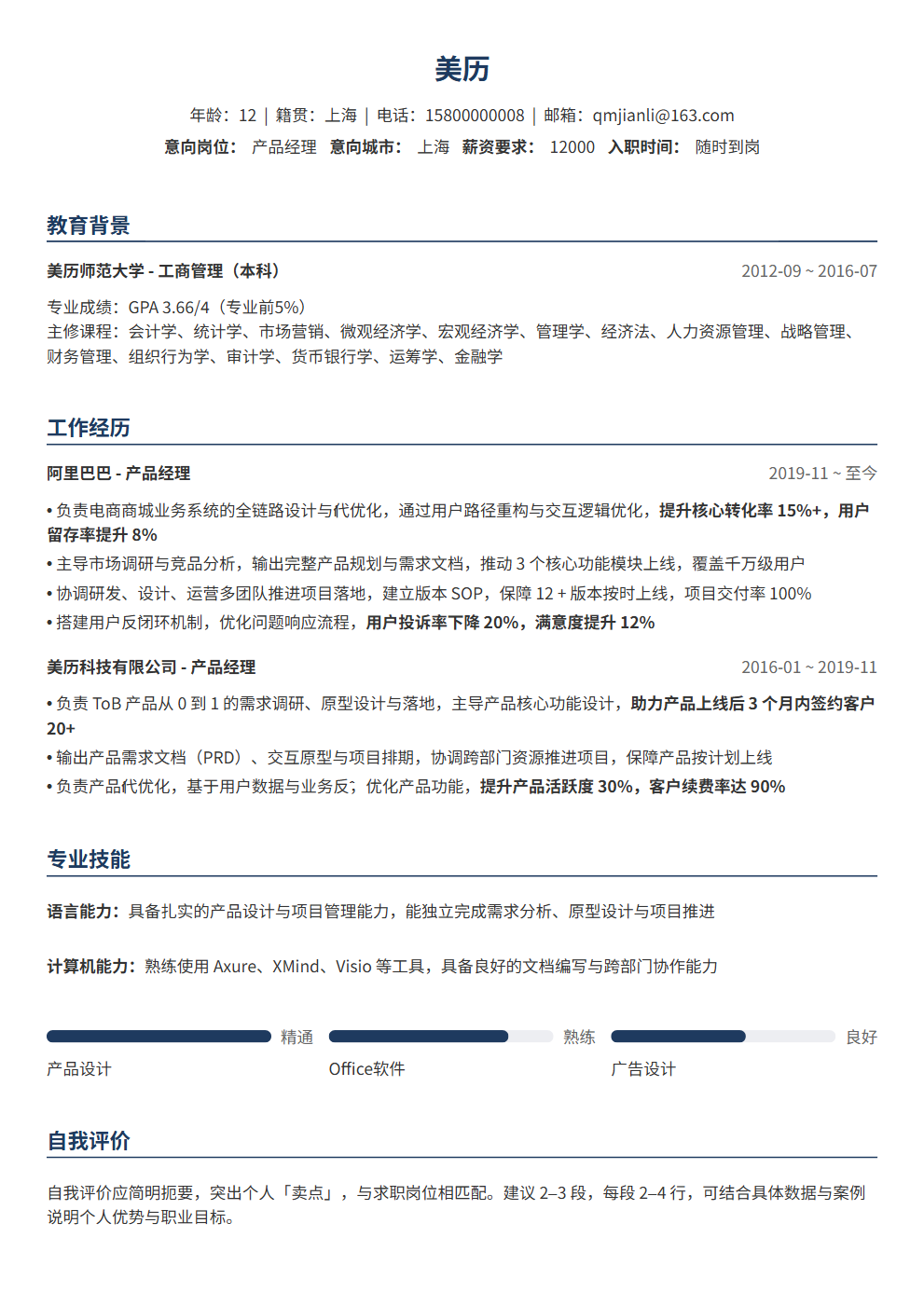
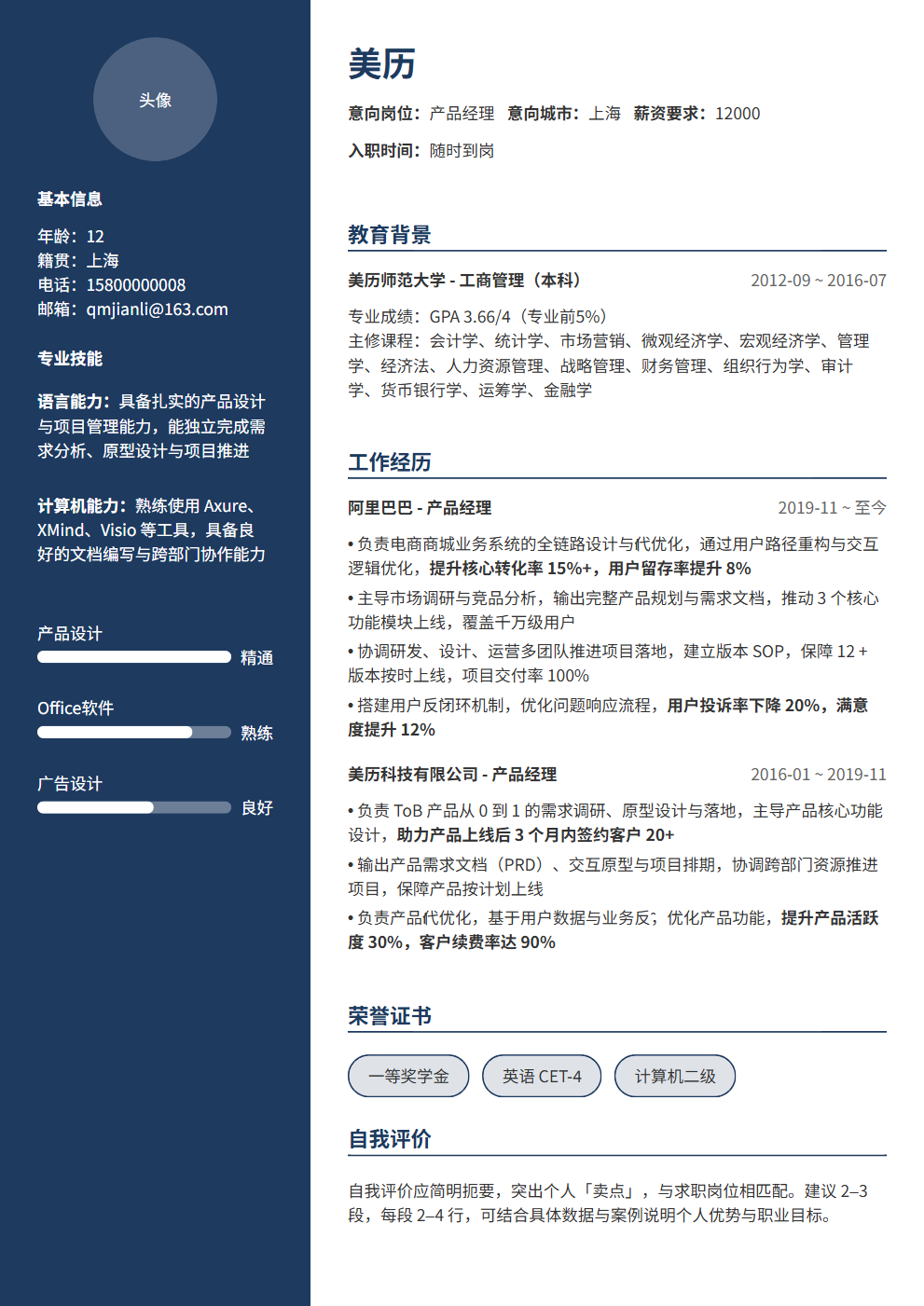
When facing new interview formats, the first step is making sure your professional image passes the test. Use BeautyResume's resume editor to craft a clearly structured, prominently featured resume that leaves a great impression on HR during the screening stage — because no matter how new the interview format, you still need to pass the resume screening first.