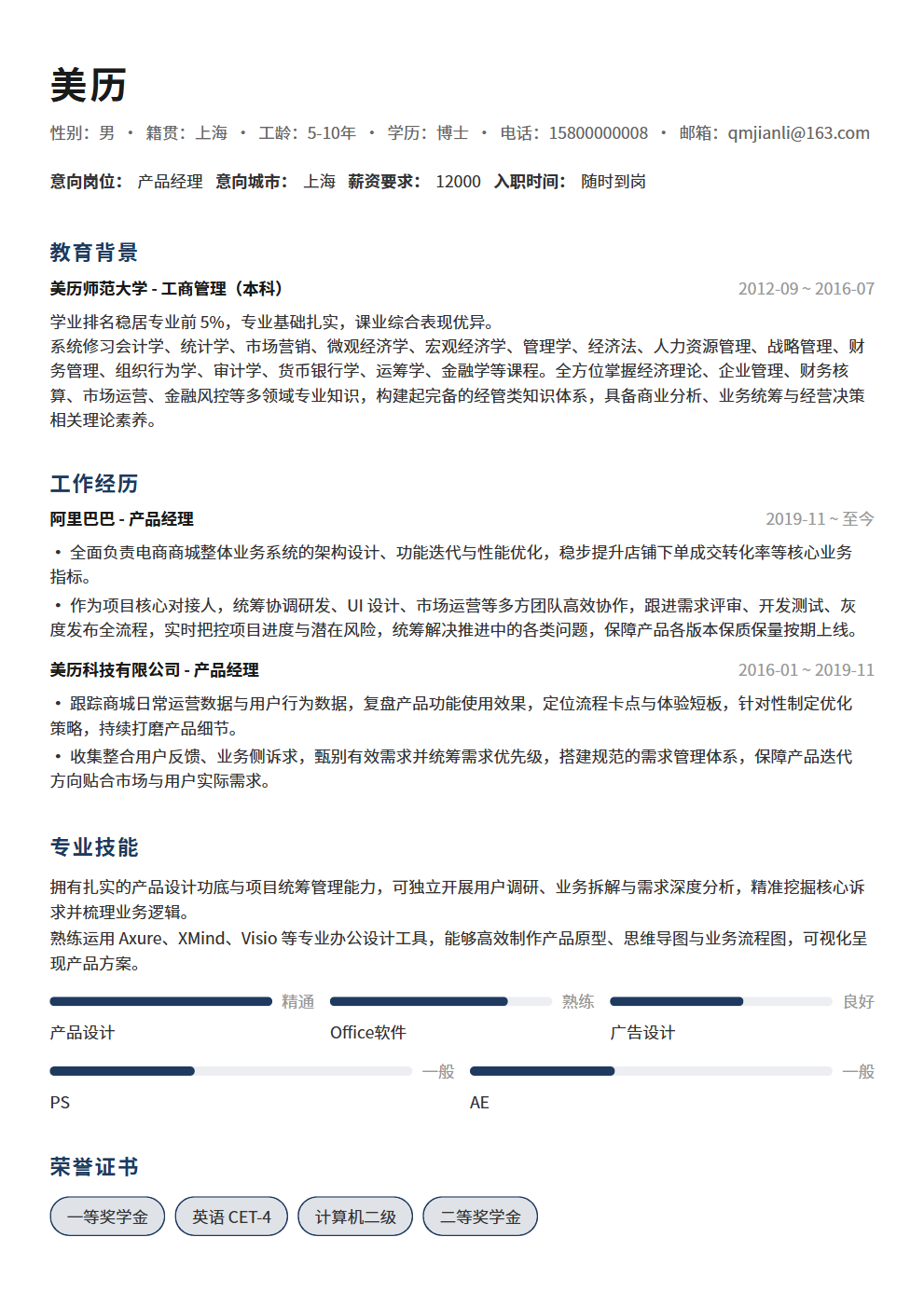
International Student's Guide to Job Hunting in China: How to Write a Resume That Impresses Domestic HR
3 challenges for returning students + 5 special resume points (degree certification, internship conversion, skill alignment, language advantage, cultural fit) + 3 common interview questions + job search timeline — your complete guide to job hunting in China.
After investing substantial time and money in studying abroad, many returning students discover that finding a job at home is not straightforward. Applications may go unanswered, interviewers may ask why they did not remain overseas, and an eventual offer may not match expectations for role or pay. What makes the transition difficult, and how should you prepare? This guide covers the full process, from localizing your resume to interviewing and planning your search timeline.
3 Challenges for Returning International Students
Difficulty finding work after returning is not necessarily a reflection of ability, nor can it be reduced to “returnee status.” Common causes include receiving recruitment information late, presenting experience in a way that does not match the role, and knowing too little about how the target team works.
- Challenge 1: Information gap. Recruitment calendars vary by company, role, and graduation cohort, while campus hiring, internship conversion, and experienced-hire roles use different eligibility rules. Preparing only from last year's advice or secondhand group messages can mean missing an application window or targeting roles for which you are not eligible
- Challenge 2: Experience that is hard to interpret quickly. A recruiter may not know your institution, curriculum, overseas employer, or team context. Instead of assuming the experience will be undervalued, provide accurate Chinese names, scope of responsibility, and verifiable outcomes so the recruiter can judge its relevance directly
- Challenge 3: A different communication context. After adapting to an overseas work culture, you may need to relearn local meeting rhythms, reporting conventions, and collaboration norms. Very direct answers can be misread as lacking tact, while overly reserved answers can sound uncertain; a resume crowded with personal details can also obscure your professional value. Research the target company’s culture and use specific collaboration examples to demonstrate adaptability instead of performing to stereotypes
The common response to these challenges is information alignment: verify the current rules for each target role, then express overseas experience as evidence that a recruiter can quickly check and map to the requirements. There is no need to perform to stereotypes about returnees or Chinese workplaces.
5 Special Resume Points for Returning Students
A Chinese resume should not be a word-for-word copy of an English one, but “repackaging” must not mean embellishment. Localize it by using the target role's terminology, adding necessary context, and preserving verifiable responsibilities, actions, and results.
- Point 1: Describe the degree and any credential verification accurately. Include the institution's official English and Chinese names, degree, subject, and dates. Whether an overseas academic credential evaluation is required depends on the employer and purpose, so check the latest CSCSE eligibility and process. If you are not yet eligible, state that you will apply after the degree is awarded if required; do not equate the evaluation with the degree itself. Rankings are optional. If one is relevant, give the ranking name, edition year, and a verifiable source rather than an unqualified “Top 10”
- Point 2: Make overseas internships easy to assess. Explain the employer or team's business, your responsibility, your actions, and the outcome; a forced “Chinese equivalent” is unnecessary. Include applicant numbers, acceptance rates, or client rankings only when you can verify them. Protect confidential information with approved public data, ranges, or ratios, and do not claim a solution applies directly to China without evidence
- Point 3: Use skills terminology searchable in the job description. Keep useful English terms alongside Chinese ones, such as “敏捷开发 (Agile/Scrum)” and “数据分析 (Data Analytics).” List only tools you have actually used and demonstrate proficiency through projects; awareness of a Chinese tool is not a substitute for hands-on experience
- Point 4: Evidence language ability. Include relevant test scores, CEFR level, and date where useful, or show real applications such as writing reports or facilitating a bilingual meeting. Business negotiation, professional translation, and simultaneous interpretation are different skills—claim them only if you have performed them and can explain the experience
- Point 5: Demonstrate cross-cultural collaboration. Use a specific example to show how you clarified differences, aligned goals, communicated risks, and delivered on time. Add domestic market research, internships, or projects when their outcomes relate directly to the target role. The goal is to show transferable collaboration skills, not to fit a stereotype of what a returnee should be
All five points follow the same standard: relevant, accurate, and verifiable. Show what you did, what happened, and why the resulting capability applies to this role.
3 Types of Interview Questions Returning Students May Encounter
Priorities differ across companies and interviewers, but the following three areas are useful to review. Do not memorize a standard script; keep the facts consistent and answer with examples relevant to the role.
- Question 1: “Why have you chosen to return?” Explain the real factors, such as the target industry, role opportunities, family circumstances, long-term living plans, or visa constraints, and connect them to the current application. You do not need to disguise an objective constraint as a perfect voluntary choice or disparage either market. Show that you have evaluated the decision and explain why you are prepared to commit to this role
- Question 2: “What can your overseas experience contribute to this role?” Avoid stopping at “international perspective” or “good English.” Choose a real project, explain the goal, your actions, the result, and a transferable capability, then map it to one requirement in the job description. Claim that a method is rare in China or ready to deploy only if research supports that conclusion
- Question 3: “Can you adapt to the local work pace and culture?” The interviewer is trying to understand your adaptability and expectations. Answer with evidence of how you entered a new environment, collaborated across cultures, managed time, and delivered results. You can also ask directly about the role’s working rhythm, collaboration model, and overtime expectations. For example: “I delivered a demanding project in a cross-cultural team by aligning goals early and communicating risks promptly. I’d also like to understand this team’s collaboration rhythm and success measures.” Commitment and reasonable boundaries are compatible; long hours are not proof of ability
Answer these questions honestly, specifically, and in relation to the role. Overseas experience is neither an automatic advantage nor an inherent burden; its value depends on the evidence of relevant skills and realistic expectations.
How to Plan a Returnee Job-Search Timeline
Recruitment timing changes by industry, employer, role type, and year, so there is no universal fall/spring calendar. Use the milestones below to work backward. Confirm opening dates, eligible graduation dates, and document requirements on each employer's official careers site or account.
- 9–12 months before expected graduation: Choose target locations, industries, and roles; build an employer list; check how each employer defines graduation dates and campus-hiring eligibility; prepare Chinese and English resumes and core project material
- 6–9 months before expected graduation: Monitor official role pages and apply when positions actually open. Begin mock interviews, record where applications stop or advance, and adjust the resume and target range using that evidence
- 3–6 months before expected graduation: Coordinate thesis, exams, and interviews, and prepare transcripts and proof of enrollment or expected graduation. Apply for CSCSE evaluation only after meeting its current eligibility rules; do not plan around a fixed “1–2 month” processing claim
- Around graduation and return: Update the final degree, location, and availability date. Continue tracking open campus roles, internship conversion, and experienced-hire positions. Verify organizers and listings before attending a recruitment event
- During intensive interviewing: Track the role, application date, interview stage, contact, and deadline. When comparing written offers, check responsibilities, compensation structure, probation, location, working-time expectations, and all written terms
- If no suitable result emerges in one phase: Review role fit, documents, and interview feedback; expand to adjacent roles or employers; and continue monitoring supplementary and rolling recruitment. Do not stop merely because a particular month has passed
The timeline is about early verification and continuous monitoring. Some employers recruit in batches, while other roles open throughout the year. “Fall always has more roles” and “spring is always more competitive” are not reliable universal rules. A deadline list maintained from official sources is more dependable.
Conclusion: Being a Returnee Isn't a Disadvantage — The Key Is How You "Translate" Your Experience
For a returning applicant, “translation” means organizing overseas experience into accurate, relevant, and verifiable evidence: check current recruitment rules, use terminology familiar to the employer, prepare truthful examples, and discuss working expectations candidly. Whether overseas experience becomes an advantage ultimately depends on its fit with the target role and the evidence you provide.
You can use BeautyResume to organize a Chinese resume, standardize dates, role names, and skills, and reorder sections for each application. Before submitting, verify every claim and remove sensitive personal data—such as identity-document numbers and a full home address—that is not required for the application.