Intern to Full-Time Guide: Do These 5 Things During Your Internship to Boost Conversion Rate by 80%
Interned but didn't get converted? Do these 5 things right (integrate quickly, take on core tasks, report results regularly, build relationships, understand conversion criteria), plus 3 common mistakes and 3 confirmations before your internship ends.
You interned for 3 months, eagerly awaiting a conversion notice, only to hear "Thank you for your contribution, but we don't have a full-time headcount this time" — this blow hurts more than a interview rejection. A rejection means you never had it; not converting means you had it and lost it. What stings more is when your fellow intern gets the conversion offer and you don't — you both did similar work, so why not you? The problem usually isn't that you didn't work hard enough, but that you worked hard on the wrong things. Intern-to-full-time conversion isn't "automatically convert after 3 months" — it's an "invisible evaluation" that starts from day one. Here are 5 key actions that can boost your conversion rate by 80%.
Action 1: Quickly Integrate with the Team — The First 2 Weeks Determine Your "First Impression"
The first 2 weeks of your internship are the critical period when the team forms their "first impression" of you. Once formed, first impressions are hard to change — if you leave an impression of being "proactive, reliable, and easy to communicate with" in the first 2 weeks, people will excuse minor mistakes as "they're new, understandable"; but if you leave an impression of being "passive, slow, and difficult to communicate with," even good work later will be seen as "probably a fluke."
- Quickly learn everyone's name and role: This isn't flattery — it's basic professional courtesy. If you don't even know your colleagues' names, how can you collaborate? Introduce yourself on day one, ask about everyone's name and responsibilities, and memorize all direct collaborators within 2 days
- Proactively understand the team's work rhythm and norms: Every team has its own work habits — when morning meetings are, what communication tools to use, how to submit code, how to write documentation. Don't wait for others to tell you — observe and ask proactively. Figure out the team's basic norms within 3 days, adapt to the work rhythm within 7 days
- Ask questions, but don't ask "Googleable" ones: Asking questions during your internship is good — it shows you're learning and thinking. But asking "How do I merge cells in Excel" — something you could find on Google in 5 seconds — only makes people think you lack initiative. The principle: search and think first, ask only when truly stuck, and explain what you've already tried when asking
- Actively participate in team activities: Lunch together, afternoon tea, team-building events — these seemingly non-work activities are actually the most important ways to integrate. In many conversion evaluations, "team integration" is an important scoring dimension
- Volunteer for "small tasks": Help a colleague pull data, organize a document, test a feature — these seemingly insignificant small tasks are your best entry point for integrating with the team. Through small tasks, you quickly learn the team's business and work style while building a "reliable" first impression
Example: Xiao Zhou introduced herself to every colleague on day one, learned their roles; figured out the team's communication tools and work rhythm by day two; proactively organized a project document in her first week and was praised for being "very detail-oriented." After 2 weeks, the team's evaluation was "quick to adapt, very proactive." Meanwhile, fellow intern Xiao Wu still didn't know the name of the colleague at the next desk after 2 weeks — the team's evaluation was "not really integrating." This gap started from day one.
Action 2: Proactively Take on Core Tasks — Don't Just Do "Grunt Work"
Many interns spend their time on grunt work — organizing documents, pulling data, making PPTs, running errands. Grunt work itself isn't the problem — the problem is if you spend all 3 months on it, what do you use to prove your ability during the conversion evaluation? You must proactively pursue core tasks — work directly related to the team's business that demonstrates your professional capability.
- How to identify core tasks: Core tasks are those where "if nobody does it, the project suffers" — not organizing meeting minutes, but writing project proposals; not pulling data, but analyzing data and drawing conclusions; not testing features, but optimizing feature design. Core tasks typically require professional ability and independent judgment
- How to pursue core tasks: First, do grunt work quickly and well to prove your execution capability — when leadership sees you're reliable even at grunt work, they'll naturally give you more important tasks; Second, express your interest — "I'm really interested in this project, could I participate?" "I have some ideas about this feature, could I try?" — if you don't express it, leadership will never know what you want; Third, start with small core tasks — don't ask to lead an entire project right away, start with a small module or feature, prove yourself, then pursue bigger tasks
- 3 principles for taking on core tasks: First, if you commit, you must deliver — don't overpromise to get the task; Second, seek help when stuck — don't struggle alone for 3 days with no progress, ask for help within 1 day; Third, deliver beyond expectations — if asked for a proposal, include competitive analysis and data support — that's "beyond expectations"
- What if leadership won't give you core tasks: First, self-reflect — are you still not doing grunt work well? Have you expressed your interest? If you've done all this and still get nothing, talk to your mentor or manager: "I'd like to take on more challenging work during my internship — what areas do you think I need to improve?" This conversation itself demonstrates initiative
Example: Xiao Chen spent her first 2 weeks on data organization grunt work, but she did it quickly and well, and proactively produced a data analysis report. When leadership saw the report, they gave her a data analysis project. She not only completed the analysis but proposed 3 business optimization suggestions, one of which was adopted and implemented. During the conversion evaluation, she had a core achievement of "independently managing a data analysis project that delivered business value" — far more competitive than an intern who spent 3 months on grunt work.
Action 3: Regularly Report Results — Let Leadership See Your Value
Many interns have a fatal misconception: work silently, thinking "if I do well, leadership will naturally notice." But reality is, leaders handle many things daily and can't constantly monitor what you're doing. If you don't proactively report, leadership may not know what you did this week or what results you achieved. Regular reporting isn't "claiming credit" — it's letting leadership understand your work progress and value, the most basic form of workplace communication.
- Reporting frequency: At least one written report (weekly report) per week, one verbal report (1-on-1 with mentor or manager) every two weeks. For critical milestones of important projects, report progress at any time
- Reporting content: Not a chronological list of "what I did this week," but focused on results — "This week I completed XX, achieved XX results, encountered XX problem, my solution was XX, next week I plan to XX." Results should be quantified; problems should come with solutions
- Reporting methods: Formal reports via email or documents, informal reports via instant messaging or face-to-face. Use formal reports for important results, informal for daily progress. Don't send long text for everything — call for urgent matters, meet in person for complex issues, message for simple ones
- 3 most common reporting mistakes: First, only reporting good news — not reporting problems until they escalate makes you seem unreliable; Second, raising problems without solutions — "This feature can't be done" is worse than "This feature has a technical challenge, I've researched two approaches, approach A has advantage XX, approach B has advantage XX, I recommend approach A, what do you think?"; Third, being too verbose — leaders don't have 30 minutes to listen; communicate key points in 3 minutes
- The highest level of reporting: Making leadership feel "so relieved to have you" — you not only complete tasks but anticipate risks, proactively solve problems, and deliver beyond expectations. Leadership doesn't need to chase you for updates; you proactively push information to them
Example: Xiao Lin sends her mentor a weekly report email every Friday afternoon, including: 3 tasks completed this week with results, 1 problem encountered with solution, 3 plans for next week. Her mentor's evaluation: "Very reliable, I don't need to chase her for updates." Meanwhile, fellow intern Xiao Zheng never proactively reported work in 3 months — her mentor's evaluation: "I don't know what she does every day." Who do you think is more likely to convert?
Action 4: Build Good Relationships — Conversion Isn't Just Up to the Boss
Many interns think conversion means "if the boss likes me, I'm in," but in reality, conversion evaluations are typically multi-dimensional and involve multiple people — your mentor, collaborating colleagues, HR, and even cross-department partners may all participate. If you only have a good relationship with the boss but average relationships with other colleagues, you might not get enough supporting votes during evaluation.
- Relationship with your mentor: Your mentor is the most important person during your internship — they not only guide your work but also have significant say in conversion evaluations. Keys to building a good relationship: respect their time (think before asking), follow their advice (don't let it go in one ear and out the other), proactively share progress (show you're acting on their suggestions)
- Relationship with collaborating colleagues: You interact with colleagues more than your boss daily. Keys: be reliable (deliver on promises), don't deflect (solve problems first, assign blame later), be helpful (help colleagues solve problems within your ability). A "good to work with" intern converts more easily than a "capable but difficult" one
- Relationship with HR: HR may not be directly involved in your daily work, but they drive the conversion process. Maintain good communication — submit internship reports on time, actively participate in company events, understand the conversion process and timeline. These seem small, but HR's impression of you affects how smoothly the conversion process goes
- Relationship with cross-department colleagues: If your work involves cross-department collaboration, make sure to leave a good impression — deliver on time, communicate clearly, be friendly. Cross-department feedback is sometimes included in conversion evaluations
- The bottom line for relationships: Don't form cliques, don't participate in office politics, don't badmouth colleagues. During your internship, your only goal is to make as many people as possible think you're reliable — simple, direct, effective
Action 5: Understand Conversion Criteria — How Can You Hit a Target You Can't See?
Many interns reach the end of their internship without knowing what the conversion criteria are — is it based on work results? Attendance? The boss's preference? Headcount? If you don't even know the criteria, how do you know which direction to push?
- Ask about conversion criteria in your first week: Don't wait until the internship is almost over. In your first week, confirm with your mentor or HR: What are the evaluation dimensions for conversion? What are the evaluation timelines? What standards must you meet? How many conversion spots are available this year? The earlier you know, the more targeted your efforts can be
- Conversion evaluations typically include these dimensions: Work results (what you achieved), professional ability (whether your skills meet full-time employee level), team integration (whether you collaborate smoothly), learning growth (whether you showed significant improvement), work attitude (whether you're proactive and responsible)
- Conversion criteria vary greatly across companies: Big companies typically have standardized evaluation processes where meeting the score threshold means conversion; smaller companies may be more flexible, with the boss's judgment carrying more weight; startups may not even have a formal conversion process, depending entirely on the founder's impression. Understanding your company's conversion mechanism helps you develop the right strategy
- The most critical question: Is there a conversion headcount? This is the most practical question — if the company has no full-time spots this year, you can't convert no matter how excellent you are. Confirm headcount status when you start, and if there's no headcount, make other plans early rather than spending 3 months on an internship with no conversion opportunity
- Regularly check conversion progress with your mentor: Don't wait until the last day to learn the result. Mid-internship (typically weeks 4-6), proactively chat with your mentor: "I'd like to understand my current conversion evaluation status — what am I doing well, and what needs improvement?" This conversation helps you adjust direction in time
3 Common Mistakes About Intern-to-Full-Time Conversion
These 3 mistakes have trapped countless interns — don't fall into them yourself.
- Mistake 1: Thinking "3 months automatically means conversion." No company automatically converts after X months — conversion is the result of evaluation, not time accumulation. 3 months of grunt work and 3 months of core achievements lead to completely different outcomes
- Mistake 2: Thinking "more overtime = more effort = conversion." Overtime doesn't equal effort, and effort doesn't equal conversion. Conversion evaluations look at results, not hours. Working until 10 PM every day with no output is worse in evaluations than leaving at 6 PM with outstanding results
- Mistake 3: Thinking "good relationship with the boss means conversion." Relationships are a bonus, not a deciding factor. If you have a good relationship with the boss but poor work results, the boss can't save you — conversion typically requires multi-party evaluation, not one person's decision
3 Confirmations Before Your Internship Ends
As your internship nears its end, make sure to confirm these 3 things — don't leave with regrets.
- Confirmation 1: Conversion result and timeline. Proactively check with your mentor or HR — when will conversion evaluation results come out? If you convert, when do you sign the formal contract? If you don't convert, what are the reasons? Don't passively wait — proactively follow up
- Confirmation 2: If you don't convert, can you get a recommendation letter or internal referral? Even without conversion this time, a good internship is still a resume highlight. Ask your mentor or manager for a recommendation letter or internal referral to other teams/companies — many interns who performed well but didn't convert landed better offers through their manager's referrals
- Confirmation 3: Is work handover complete? Whether you convert or not, complete your work handover before leaving — organize your documents, code, and data, write a handover document, and properly hand off to the person taking over. This is basic professional conduct and your last chance to leave a good impression on the team
Conclusion: Intern-to-Full-Time Conversion Is an Invisible Evaluation Starting from Day One
Intern-to-full-time conversion isn't "automatically convert after 3 months" — it's an invisible evaluation starting from your first day. Quickly integrate with the team and build a proactive, reliable first impression within 2 weeks; proactively take on core tasks and prove your professional ability with results; regularly report work to let leadership see your value and progress; build good relationships so as many people as possible think you're reliable; understand conversion criteria and work purposefully toward the goal. Each of the 5 actions isn't difficult, but each is important. Remember: conversion evaluations look at "what value you created for the team," not "how long you stayed." An intern who delivers core achievements in 3 months will always be more competitive than one who spent 3 months on grunt work.
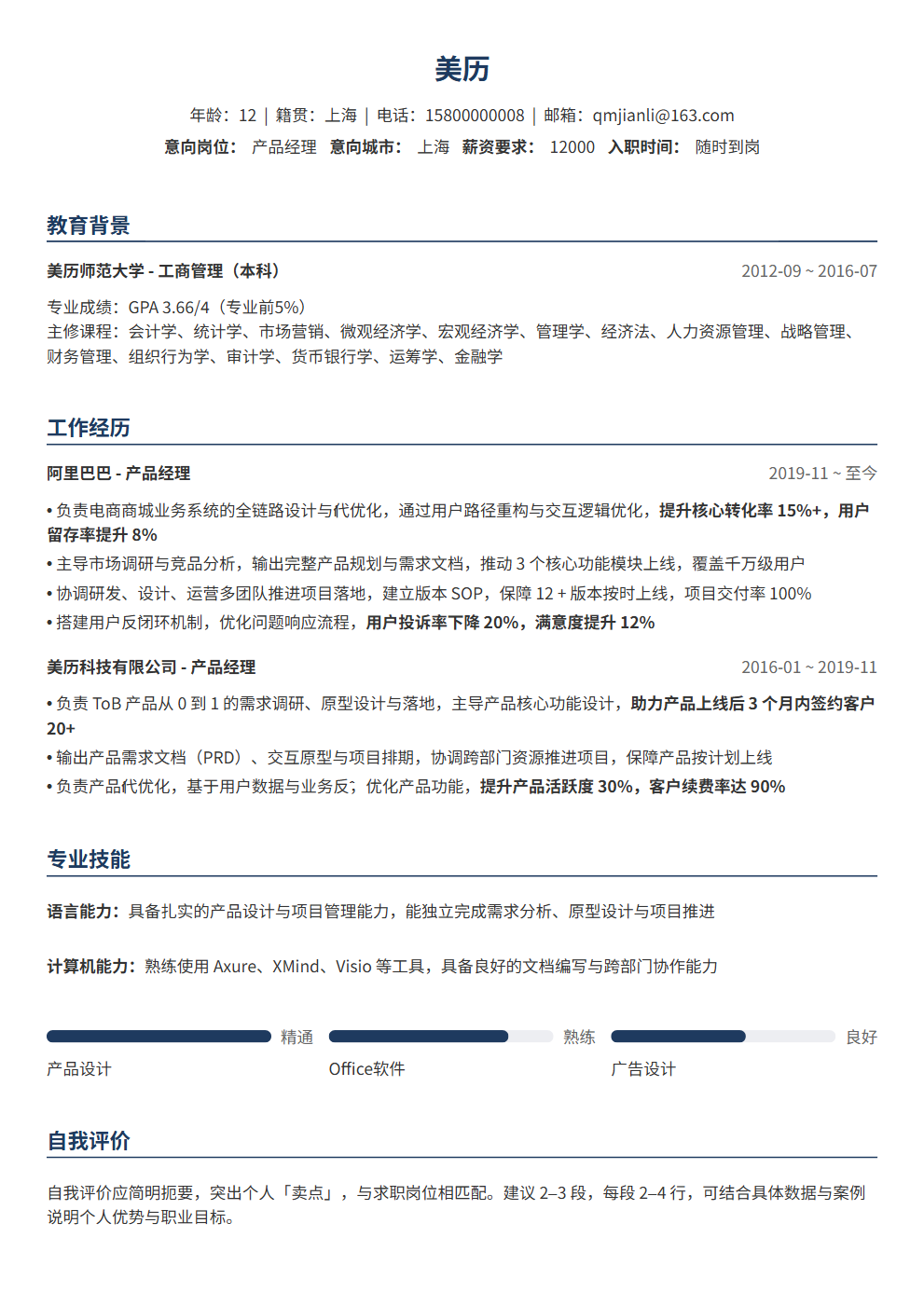
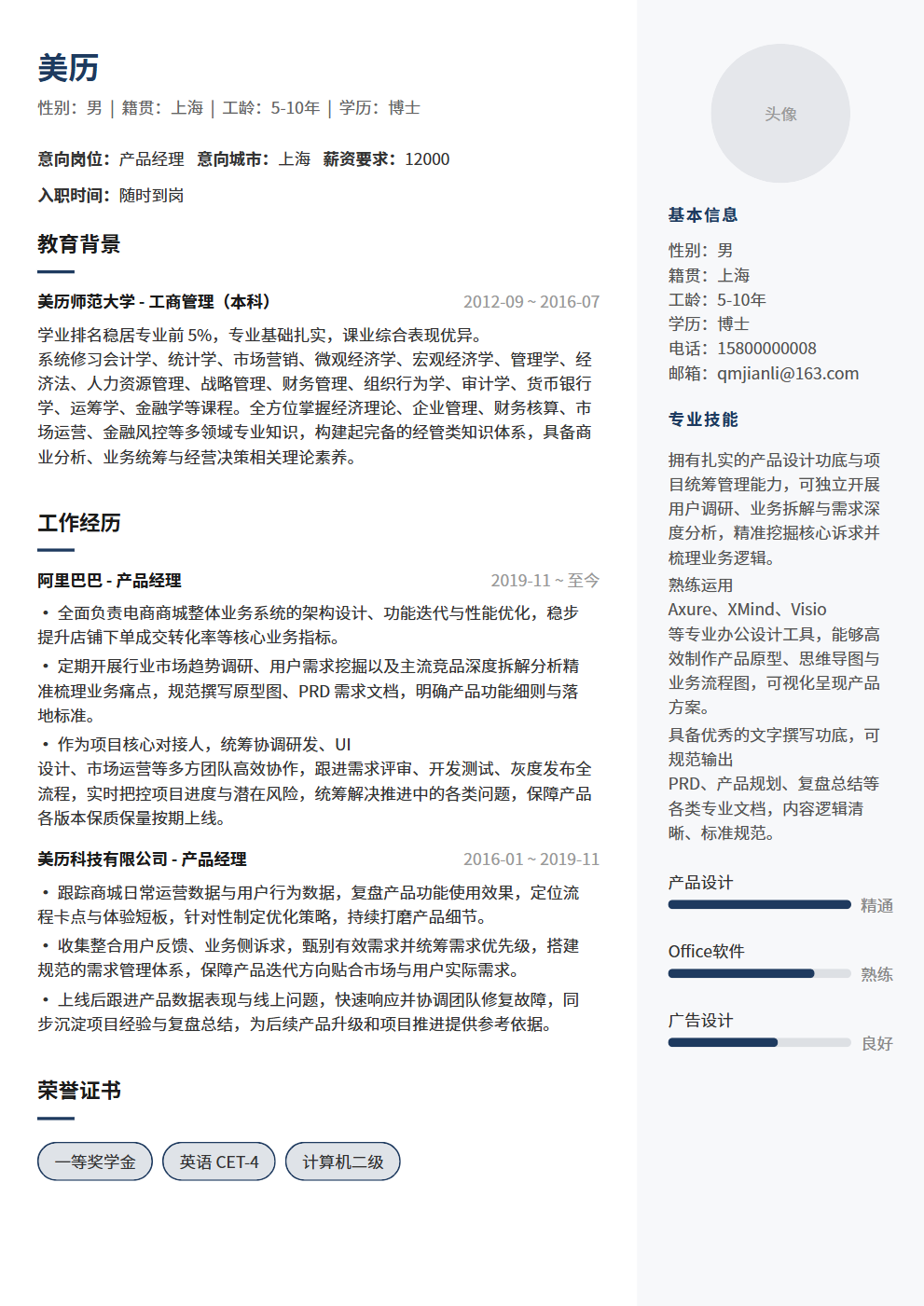
The first step in intern-to-full-time conversion is letting the team see your professional value. Use BeautyResume to clearly present your internship achievements and professional capabilities on your resume — whether pursuing internship opportunities or during conversion evaluations, a professional resume is your strongest proof.