If the Interviewer Says These 5 Things, Run — Don't Look Back
During interviews, every word from the interviewer deserves careful consideration.
During interviews, every word from the interviewer deserves careful consideration. Some phrases sound perfectly normal, even making you think "this company seems great," but if you listen carefully, you'll find hidden traps behind these words. Interviewers won't directly tell you "we have excessive overtime," "we can't retain employees," or "our pay is terrible" — they use positive, upbeat phrasing to package the truth. Today, we'll unpack the 5 most classic interview red flag phrases so you can identify toxic companies right at the interview table.
Red Flag #1: "We Need Someone Who Can Handle Pressure" — Translation: Excessive Overtime, No Overtime Pay
This phrase is practically No.1 on the interview red flag chart. When the interviewer says they need someone who can "handle pressure," it sounds like they're looking for someone with strong mental resilience. But 99% of the time, the real meaning is: the workload here is enormous, overtime is routine, and overtime pay? Doesn't exist.
- Deeper meaning: "Handling pressure" doesn't mean enduring normal work stress — it means tolerating unreasonable workloads, unreasonable deadlines, and unreasonable management. Companies that say they need "pressure-resistant" people typically have these characteristics: frequent late-night overtime, weekend work, one person doing three people's jobs, extremely unreasonable project timelines, and managers who lose their temper at any moment
- Why say "handle pressure" instead of "lots of overtime": Because "lots of overtime" is a negative description that would scare candidates away. "Handle pressure" sounds positive, like the company is seeking outstanding talent. This is classic language packaging — repackaging the company's flaws as requirements for candidates
- Follow-up method 1: "Can you describe the daily work rhythm for this role? For example, what time do people usually leave, and is weekend overtime required?" If the interviewer is vague or says "it depends on the project," you can basically confirm excessive overtime
- Follow-up method 2: "Did anyone on the team work more than 40 hours of overtime last month?" This question is specific enough that the interviewer can't be vague. If the answer is "yes, quite a few," then you know what "handle pressure" really means
- Follow-up method 3: "Does the company have an overtime policy? Like overtime pay or compensatory time off?" If the interviewer says "we focus more on results and don't encourage overtime" but also says they need someone who can "handle pressure," that's a classic contradiction
- Real case: Xiao Chen was asked "can you handle pressure?" during an interview and said yes. After joining, he found himself working until 10 PM every day, often on weekends too, with no overtime pay or compensatory time off. After leaving, he learned that this position had gone through 4 people in 6 months
Truly good companies don't need to emphasize "pressure resistance," because reasonable workloads and rhythms are themselves a form of respect for employees. A company that requires employees to "handle pressure" to survive has the problem — not the employees.
Red Flag #2: "Our Team Is All Young People" — Translation: High Turnover, Experienced Employees All Left
"Our team is all young people, the vibe is amazing!" — Sounds energetic, right? But think about it: why is the entire team young? Where did all the experienced employees go? The answer is simple: they can't retain people. A healthy team should have employees of different age groups. If it's all young people, it means the team is a "revolving door" — new people come in, get drained, and leave, then more new people are hired.
- Deeper meaning: An all-young team usually means: the company pays poorly, so experienced employees leave for better opportunities; the workload is heavy, so experienced employees can't sustain it; there's limited growth potential, so experienced employees don't see a future; there are management issues, so experienced employees can't tolerate it. Young people aren't bad, but an entirely young team definitely signals problems
- Why say "young team" instead of "can't retain people": Because "can't retain people" exposes a serious company problem, while "young team" sounds vibrant and energetic. Another classic case of packaging a flaw as a strength
- Follow-up method 1: "What percentage of the team has been here for more than 3 years?" This directly measures employee retention. If the percentage is very low, it means high turnover
- Follow-up method 2: "Why did the previous person in this role leave?" If the interviewer says "personal development reasons" or is evasive, it's likely a company problem. If they're honest about the reason, at least the company is relatively transparent
- Follow-up method 3: "Does the company have any long-service awards or similar incentives?" If the company doesn't even have employees with 3-5 years of tenure, naturally there won't be such incentives. The answer itself is a barometer of team stability
- Real case: Xiao Liu was told during the interview that "the team is all Gen Z and millennials, the vibe is amazing." After joining, she found that out of 20 people in the department, the longest-tenured had only been there 1.5 years. The department had an annual turnover rate exceeding 60% — new hires were just cannon fodder
Youth isn't the problem — an entirely young team is. A company that can't retain experienced employees probably won't retain you either. Don't be fooled by the "young and energetic" facade — see the team's true face.
Red Flag #3: "Salary Depends on Ability" — Translation: Pay Is Low, and We Decide How Much You Get
"Salary depends on ability — we won't shortchange strong performers" — Sounds fair, even making you think "as long as I'm capable, I'll earn well." But the reality is usually: no matter how capable you are, the pay won't be high, because the standard for "ability" is set by the company, and they hold all the interpretive power.
- Deeper meaning: "Salary depends on ability" really means: we don't want to give you a specific number, because once it's clear, you have a basis for negotiation. Vague salary standards let the company lowball offers and delay raises. "We won't shortchange strong performers" translates to "those deemed less capable (by us) shouldn't expect good pay"
- Why say "depends on ability" instead of a specific number: Because a specific number gives you a basis for comparison with other companies. "Depends on ability" strips you of bargaining power — you don't know what your "ability" is worth, so whatever the company says goes
- Follow-up method 1: "What's the salary range for this position? For example, the band for a P6 level." Ask the interviewer for a specific range, not vague "depends on ability." If they refuse to give a range, the pay is likely unimpressive
- Follow-up method 2: "What was the approximate salary level of the previous person in this role?" This helps you understand the real pay level. If the interviewer says "that's not convenient to share," then "depends on ability" is just an excuse for lowballing
- Follow-up method 3: "What's the company's raise mechanism? How often and by what approximate percentage?" If the raise mechanism is unclear or the cycle is very long, "depends on ability" is basically empty promises
- Real case: Xiao Zhao was told "salary depends on ability, no ceiling." After joining, he found his pay was 30% below industry average, raises required a full year, and the increase was only 3-5%. The so-called "no ceiling" was really "no floor" in disguise
Legitimate companies provide clear salary ranges during interviews. "Salary depends on ability" is fundamentally about information asymmetry — the company knows the pay level, you don't, and in this situation, you're always the weaker party. Asking for clear compensation is a basic job-seeking right.
Red Flag #4: "We're Very Flexible" — Translation: Chaotic Systems, Everything Is Up to the Boss
"Our company is very flexible, not as rigid as big corporations" — Sounds appealing, right? Who wouldn't want to work in a free, flexible environment? But the other name for "flexible" is "chaotic" — no clear systems, no defined processes, everything depends on the boss's word.
- Deeper meaning: "Flexible" usually means: no clear attendance policy (if the boss says work overtime, you work overtime); no clear promotion mechanism (promotions depend on the boss's mood); no clear performance evaluation standards (good or bad, the boss decides); no clear reimbursement process (whether expenses get reimbursed depends on the boss's signature); unclear job responsibilities (you do everything). The so-called "flexibility" means the company does whatever it wants, and you have no policies to fall back on
- Why say "flexible" instead of "chaotic systems": Because "chaotic systems" exposes management problems, while "flexible" sounds like flat management or startup culture. Another classic case of packaging a flaw as a strength
- Follow-up method 1: "What's the attendance policy? Flexible hours or fixed schedule?" If the interviewer says "it's flexible, depends on the department," there's likely no clear attendance policy, and overtime depends entirely on the boss
- Follow-up method 2: "How does performance evaluation work? How often, and what are the standards?" If the answer is vague or they say "we focus more on results," there are no clear evaluation standards — your performance depends entirely on the boss's subjective judgment
- Follow-up method 3: "What's the leave request process? How far in advance do you need to apply?" This simple question can reveal whether the company has proper systems. If the interviewer says "just tell the boss," there's no formal leave policy — your time off can be canceled at any moment
- Real case: Xiao Zhou was told "the company is very flexible, we don't do the big corporation thing." After joining, he found: no clear end time (nobody dares leave before the boss), no clear compensatory time system (overtime doesn't necessarily mean time off), no clear promotion path (3 years in the same position). The "flexibility" was all for the company, not for him
Systems aren't constraints — they're protections. Clear policies protect employees' rights — overtime means overtime pay, leave means actual time off, good performance means promotion. "Flexibility" without systems always ends up flexible for the company and rigid for you.
Red Flag #5: "Come Try It Out First" — Translation: Unstable Position, Everything Could Change
"We're still exploring this role — come try it out, let's grow together" — Sounds entrepreneurial and exciting, right? But "come try it out" means: the job responsibilities are unclear, you might end up doing everything; the position itself could be eliminated at any time; the company has no clear plan for this role, and you're just a test subject.
- Deeper meaning: "Come try it out" usually means: this is a newly created position, and the company doesn't even know what kind of person they need; job responsibilities are vague, and you might do completely different work from what was discussed in the interview; the position could be cut at any time because the company isn't sure it needs this role; your actual work content, reporting structure, and evaluation standards after joining may all differ from what was said in the interview
- Why say "try it out" instead of "unstable position": Because "unstable position" would scare candidates away, while "try it out" sounds like giving you an opportunity. In reality, all the risk of this "opportunity" falls on you — if the position is eliminated, you're unemployed; if the work changes, you wasted your time
- Follow-up method 1: "Can you describe the daily work content for this role in detail? For example, a typical week's schedule." If the interviewer's description is vague or they say "it depends," the responsibilities are unclear
- Follow-up method 2: "How long has this position existed? What happened to the previous person?" If the role is new or the previous person left quickly, the position itself has issues
- Follow-up method 3: "If the actual work differs from what's discussed in the interview, how is that handled?" This directly tests how well the company has planned the role. If the interviewer says "it won't differ" but can't describe specifics, they're brushing you off
- Real case: Xiao Wu interviewed for an operations role and was told "come try it out, we're still figuring it out." After joining, the "operations" role turned out to be sales + customer service + admin — one person doing three jobs. After 3 months, the company said the position was "no longer needed" and eliminated it
A mature position should have clear responsibilities, defined evaluation standards, and a stable team structure. "Come try it out" means the company hasn't figured things out, and you're the guinea pig. Unless you're joining at the co-founder level, don't be a test subject.
3 Follow-up Verification Methods: The "Monster-Revealing Mirror" at the Interview Table
Interviews aren't one-way — the company is choosing you, and you're choosing the company. Don't silently note red flags and agonize later — ask follow-up questions on the spot. Here are 3 universal follow-up strategies to help you get clarity right at the interview table.
- Strategy 1: Ask for specific numbers. Vague answers are the most suspicious. If they say "salary depends on ability," ask for the range; if they say "young team," ask about retention rates; if they say "handle pressure," ask about overtime hours. Specific numbers are the best tool for verifying claims — if they can't give numbers, they're probably bluffing
- Strategy 2: Ask about the predecessor. Who was in this role before? How long did they stay? Why did they leave? This information helps you judge the role's true nature. If the interviewer says "this is a new position," be careful — new positions mean uncertainty, and you might be doing the company's trial-and-error for them
- Strategy 3: Ask for written confirmation. Verbal promises made during interviews may be completely denied after you join. If the interviewer has committed to salary ranges, overtime policies, or promotion mechanisms, ask them to include these in the offer letter. Promises that can't be put in writing are basically empty checks
Interviews are a two-way selection. You have the right and the obligation to ask questions clearly. Don't hold back for fear of "leaving a bad impression" — a company that doesn't want you because you asked questions won't treat you well after you join either.
Conclusion: Interview Red Flags Aren't "Maybe Problems" — They're "Definite Problems"
When the interviewer says these 5 phrases — "need someone who can handle pressure," "young team," "salary depends on ability," "we're flexible," "come try it out" — none of them are casual remarks. They're packaged "hints." They're not "maybe problems" — they're "definite problems." Interviewers won't directly tell you the company's flaws, but they use these phrases to screen for people who can "accept" those flaws. If you can read between the lines, you can make the right call at the interview table. Remember: every uncomfortable phrase you hear during the interview will become an even more uncomfortable reality after you join. Running early is more important than running fast.
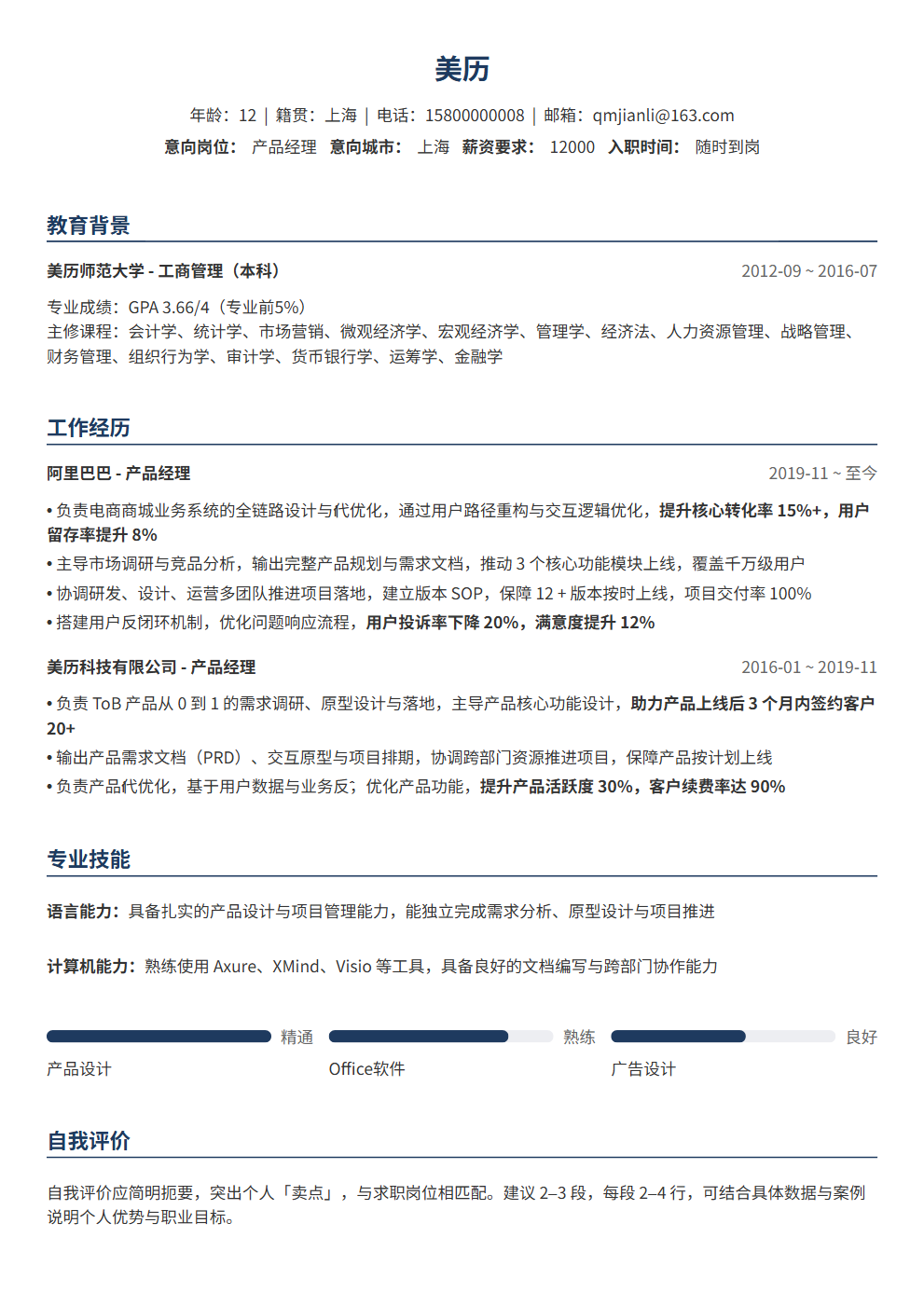
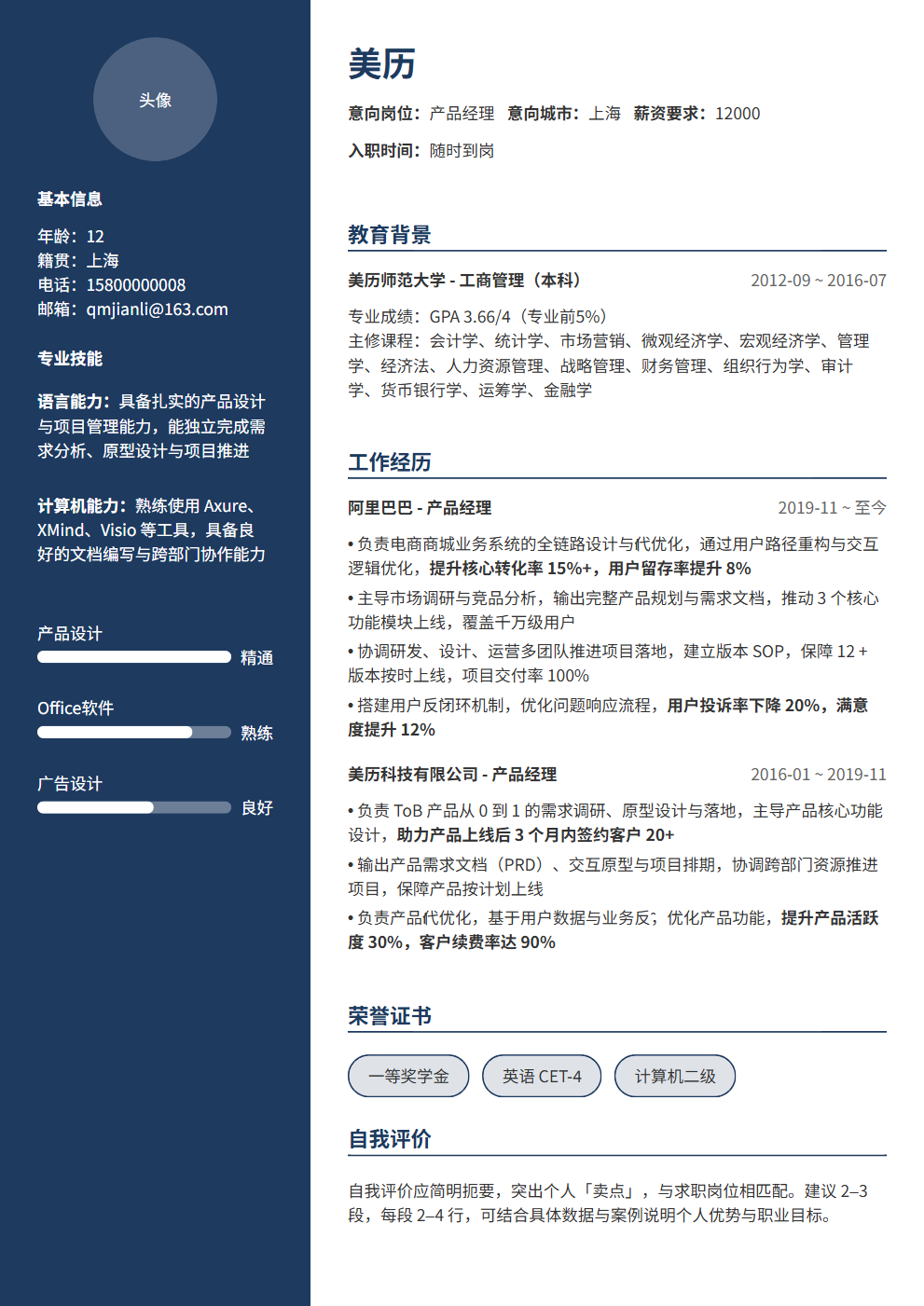
Don't want to fall into traps at the interview table? Start with a great resume. Use BeautyResume to create a professional resume and let good companies come to you — the power of choice stays in your hands, rather than passively accepting whatever toxic companies offer.