How to Write the Education Section on Your Resume? 3 Strategies to Make Your Education a Strength
Your resume education section isn't just listing school names—3 strategies (highlight academic achievements for top degrees, relevant coursework for average degrees, certifications for lower degrees) make education a strength, not a weakness. Includes examples and common mistakes.
A poorly written education section costs you points—top graduates waste their advantage by listing only a school name, average graduates don't know how to package their background, and those with lower degrees want to skip it entirely. The education section isn't just listing school names. 3 strategies help candidates at every education level showcase their competitiveness and turn education from a weakness into a strength.
1. Why You Can't Just List Your School: What HR Is Actually Looking For
Many people think the education section is just filling in a school name, major, and dates—that approach wastes one of the most valuable yet overlooked sections on your resume. When HR reads your education, they're not looking at "what school you attended"—they're looking at "what your educational experience proves about you."
- Education is a credibility signal: A degree from a top university is already a filtering signal—getting into a prestigious school proves strong learning ability, resilience, and self-discipline. But if you only write "XX University, Computer Science, 2019-2023," you're wasting that credibility. HR wants to see what you did, what you learned, and what you achieved—those are the real value of the education section
- Education bridges career transitions: When switching fields, your education connects you to the target role. For example, if you studied mathematics and want to move into data analysis—listing courses like "Probability and Statistics," "Data Mining," and "Statistical Modeling" in your education section immediately tells HR your background is highly relevant. Without listing courses, HR only sees "Mathematics" and won't connect it to data analysis
- Education is the main stage for fresh graduates: Fresh graduates don't have much work experience, so the education section becomes the core of the resume. If you only have 1-2 internships but your education section only lists school and major, your resume feels thin. Enrich your education with courses, projects, competitions, papers, and scholarships—your resume immediately becomes more substantial
- Education isn't a "discrimination label": Some people think lower degrees shouldn't be listed—this is wrong. The education section isn't about showing "how high your degree is" but "what you accumulated during your learning phase." People with lower degrees can still showcase skill certifications, training programs, and self-study achievements in their education section—the key is how you write it, not whether you write it
2. Strategy One: Top Degrees Highlight Academic Achievements—Make Education Your Asset
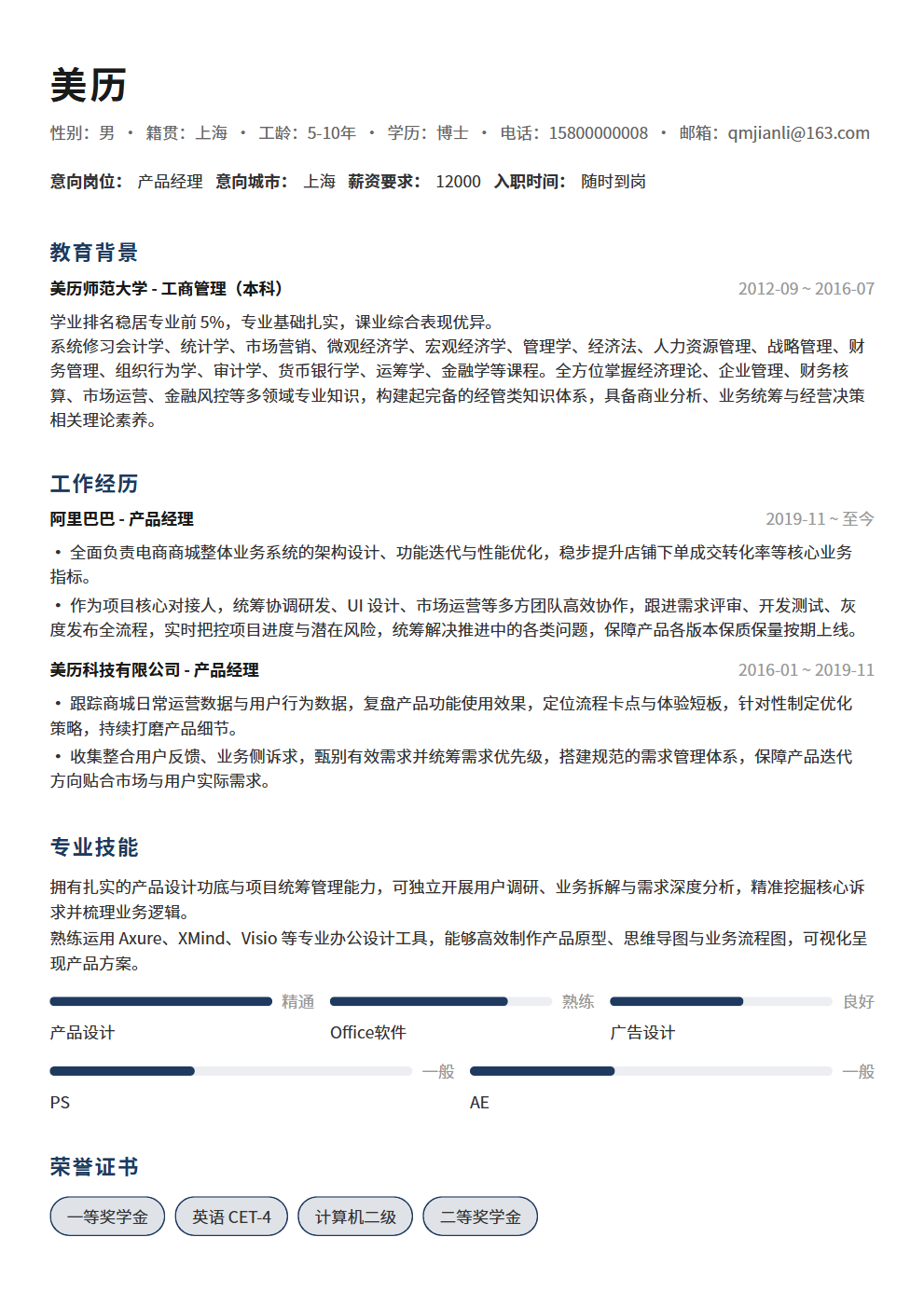
Ivy League, top-tier universities, master's degrees, PhDs—your advanced education is an advantage, but listing only the school name and major diminishes that edge. Candidates with top degrees should highlight academic achievements in the education section, showing HR "this person doesn't just have a high degree—they have strong capabilities."
- Write out core academic achievements: Don't just write "XX University, Computer Science MS, 2021-2024"—add your academic achievements. For example: "XX University, Computer Science MS, 2021-2024 | Thesis: Deep Learning-Based Text Sentiment Analysis Model (Outstanding Thesis) | Published 2 SCI papers (1 first author) | Participated in 1 National Natural Science Foundation project." Academic achievements are the most powerful proof of a top degree—they tell HR "this person has research capability and deep thinking skills"
- Be specific about papers and projects: When listing papers, don't just write "published 2 papers"—include the paper title, journal ranking, and your role. When listing projects, don't just write "participated in XX project"—include the project content, your contribution, and outcomes. For example: "Participated in National Natural Science Foundation project 'Intelligent Recommendation Algorithm Research in XX Direction,' responsible for core algorithm design and experimental validation, results published at XX conference." Specificity creates credibility
- Connect academic achievements to the target role: If your research direction aligns with the target position, make sure to highlight it in your education section. For example, if you study NLP and are applying for an AI Product Manager role—write "Research focus: Natural Language Processing, familiar with LLM principles and applications." HR will think "this person understands both technology and product—a rare hybrid talent." The more relevant your academic direction is to the role, the stronger the education section's impact
- Competitions and scholarships are icing on the cake: National competition awards, university-level scholarships, outstanding graduate honors—these are fine to include, but don't let them overshadow your main achievements. If your papers and projects are impressive enough, place competitions and scholarships last. If academic achievements are limited, you can move them up. Remember the priority: Academic achievements > Project experience > Competition awards > Scholarships
- Common mistake for top degrees: listing only the school name: ❌ "XX University, Management MS, 2021-2024" → ✅ "XX University, Management MS, 2021-2024 | Thesis: Digital Transformation Path Research in XX Industry (Outstanding Thesis) | Participated in 3 consulting projects, developed digital transformation plans for XX Company." Listing only the school name wastes the greatest value of a top degree—proof of academic capability
3. Strategy Two: Average Degrees Highlight Relevant Coursework—Make Your Major a Matching Signal
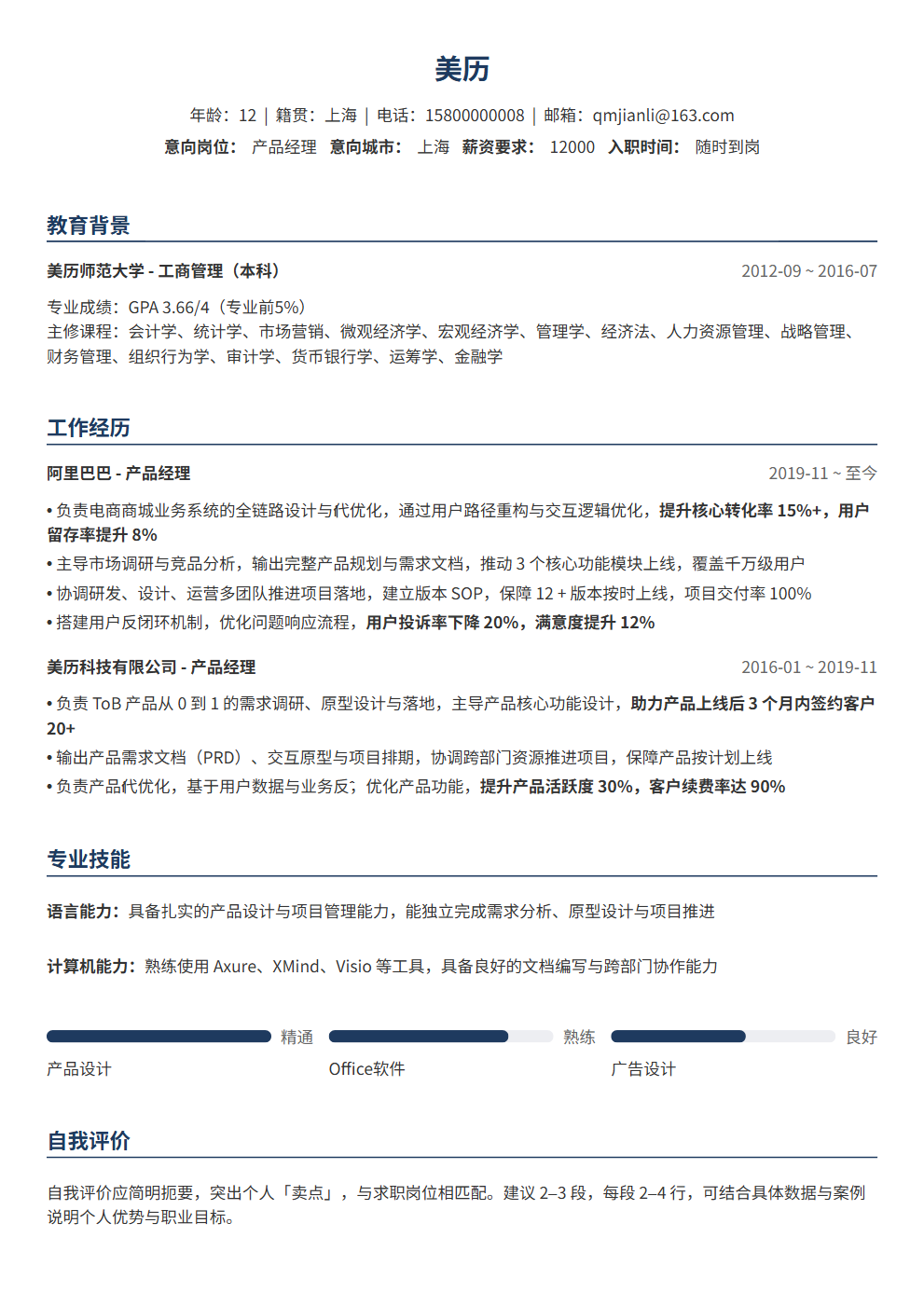
Regular universities, non-prestigious schools—your degree doesn't have a clear advantage, but your coursework might be a "hidden weapon." Highlighting courses relevant to the target role in your education section shows HR "the school may not be top-tier, but the academic background matches the position perfectly."
- Select 3-5 relevant courses: Don't list every course—HR won't read your transcript. Select 3-5 courses most relevant to the target position. For a data analysis role, write "Key Courses: Probability & Statistics, Data Mining, Python Programming, Database Principles, Statistical Modeling"; for a marketing role, write "Key Courses: Consumer Behavior, Market Research, Brand Management, Digital Marketing, Communication Theory." Course names are keywords—when HR searches resumes by keyword, course names can help you get found
- Tailor course selection to each position: Apply for different roles, list different courses. For product manager: "Product Design & Innovation, User Research Methods, Project Management"; for operations: "Internet Product Operations, User Growth Strategy, Data Analysis Fundamentals"; for engineering: "Data Structures & Algorithms, Operating Systems, Computer Networks." Don't use the same course list for every application—course selection itself demonstrates resume tailoring
- Combine courses with projects for more impact: Just listing course names has limited persuasiveness—add course projects and it's a game-changer. For example: "Data Mining (Course Project: Collaborative Filtering-Based E-commerce Recommendation System, 85% accuracy)" or "Market Research (Course Project: XX Brand Consumer Satisfaction Survey, 500+ respondents, report adopted by XX Company)." Course projects prove you didn't just "study" the material—you "applied" it. That's a qualitative difference
- Always list double majors and minors: If you completed a double major or minor, definitely include it—this is a bonus for average degrees. For example: "XX University, Economics BA (Major) + Computer Science Minor, 2019-2023." A double major demonstrates learning ability and cross-domain knowledge. It's even more effective when the minor relates to the target role—applying for fintech with an Economics major + Computer Science minor is practically tailor-made
- Common mistake for average degrees: no courses or too many: ❌ "XX University, Marketing BA, 2019-2023" (no courses, HR doesn't know what you studied) → ✅ "XX University, Marketing BA, 2019-2023 | Key Courses: Consumer Behavior, Digital Marketing, Brand Management, Market Research, Data Analysis." The opposite mistake is listing 15+ courses—HR won't read your entire transcript. 3-5 carefully selected courses are sufficient
4. Strategy Three: Lower Degrees Highlight Certifications—Let Skills Speak Instead of Degrees
Associate degrees, high school diplomas, self-taught qualifications—lower education is a concern for many job seekers. But a lower degree doesn't mean lower ability. The key is using skill certifications and training experience to replace degree emphasis in the education section, showing HR "this person may not have a high degree, but they have strong skills."
- Certifications are the best substitute for lower degrees: A degree proves "what you studied," a certification proves "what you can do." In the education section, place skill certifications in the most prominent position. For example: "XX Technical College, Computer Applications Associate, 2019-2022 | Professional Skills: AWS Solutions Architect Certification, Python Programming (PCEP Certification), MySQL Database Administration." Certifications are more direct than degrees—they tell HR "this person has practical skills, not just theory"
- Industry certifications can outweigh degrees: In IT, finance, accounting, and other fields, industry certifications may carry more weight than degrees. CPA (Certified Public Accountant), CFA (Chartered Financial Analyst), PMP (Project Management Professional), AWS Certifications, Oracle Certifications—these are highly recognized in their industries. With these certifications, your degree becomes less important. If you hold industry certifications, make sure to highlight them prominently in your education section
- Training programs count as "education": If you've completed professional training programs, include them in your education section. For example: "XX Technical College, Marketing Associate, 2019-2022 | Professional Training: Google Analytics Certification Training (2022), New Media Operations Bootcamp (2021, Outstanding Participant)." Training experience demonstrates your willingness to learn and self-drive—someone with a lower degree but a track record of continuous learning is more competitive than someone with a higher degree who stopped learning
- How to write self-study achievements: No certifications or training? Self-study achievements work too. For example: "Self-taught Python Data Analysis (completed 3 Kaggle competition projects, best result Top 10%)" or "Self-taught UI Design (replicated 100+ excellent designs, independently completed 3 full App interface designs)." Self-study achievements may not be as authoritative as certifications, but they at least prove learning ability and self-motivation. The key is making them verifiable—write specific projects, data, and outcomes, not just a vague "self-taught XX"
- Common mistake for lower degrees: skipping the education section entirely: ❌ No education section on the resume → ✅ "XX Technical College, Computer Applications Associate, 2019-2022 | AWS Certification | Python (PCEP) | MySQL Database Administration." Skipping the education section is the worst choice—HR will assume you're "hiding something." Write it openly and use certifications to compensate for the degree gap—that's far better than hiding it
5. Position Strategy: Where Should the Education Section Go?
Where you place the education section on your resume matters—putting it in the wrong position might cause HR to miss your highlights.
- Fresh graduates: Place education before work experience: Fresh graduates have limited work experience, so the education section is the core content—place it first so HR sees your academic achievements right away. If you're from a top school, definitely put it first—the school name itself is a filtering signal, and leading with it is like "playing your trump card first"
- 3+ years of experience: Place education after work experience: For professionals with 3+ years of experience, work history matters more than education—HR cares more about what projects you've handled, teams you've led, and results you've delivered. Place the education section in the latter half of the resume, keeping it concise with just school, major, and dates
- Lower degree but strong skills: Merge education with skills section: If your degree isn't an advantage but your skills are strong, consider merging the education and skills sections—"Education & Professional Skills: XX Technical College, Computer Applications Associate | AWS Certification | Python | MySQL | Docker." After merging, HR sees a "capability portfolio" rather than a "degree label"
- MBA/Part-time graduate from top schools: Label clearly: If you earned an MBA or graduate degree while working, clearly label it as "part-time" or "non-full-time"—don't let HR assume it was full-time. For example: "XX University, MBA (Part-time), 2022-2024." While part-time degrees may carry slightly less weight than full-time ones, they demonstrate ambition and continuous learning—being transparent is better than being vague
6. Formatting Standards: Don't Let Details Undermine Your Professionalism
Great content deserves great formatting. Inconsistent formatting in the education section makes HR think you're "unprofessional"—this is a basic mistake you should never make.
- Consistent date formatting: Keep the date format consistent across all education entries—either "2019.09-2023.06" or "Sep 2019 - Jun 2023," don't mix formats. List entries in reverse chronological order—most recent education first
- Write full school names: Don't use abbreviations—write "Peking University" not "PKU," "Zhejiang University" not "ZJU," "Shanghai Jiao Tong University" not "SJTU." HR may not be familiar with all school abbreviations, so full names are safest
- Use accurate major names: Write the official major name—don't make up your own. For example, "Computer Science and Technology" not just "Computer Science," "Marketing Management" not just "Marketing." Major names are keywords HR uses to search resumes—writing them incorrectly might make you unfindable
- Should you include GPA?: GPA 3.5/4.0 or above (or top 20% of your class) can be included—it's a plus. GPA below 3.0? Don't include it—it exposes a weakness. If your GPA isn't high but you have other highlights (competition awards, project outcomes), prioritize those instead
- Don't include outdated education entries: High school and below generally shouldn't be listed (unless you're a fresh graduate with special high school achievements). Resume space is limited—save it for more valuable content
7. Conclusion: 3 Strategies Turn Education From a Fill-in-the-Blank to a Competitive Advantage
The education section isn't a "fill-in-the-blank" on your resume—written well, it's an asset; written poorly, it's a liability. Three strategies correspond to three education backgrounds: Top degrees highlight academic achievements (papers, projects, research directions), making education proof of capability; Average degrees highlight relevant coursework (3-5 selected courses + course projects), making your major a matching signal; Lower degrees highlight certifications (industry certifications, training programs, self-study achievements), letting skills speak instead of degrees. Combined with position strategy (fresh graduates place it first, experienced professionals place it later, lower degrees merge with skills) and formatting standards (consistent dates, full school names, accurate majors), your education section will never hold you back again. Remember: the core of the education section isn't "what school you attended"—it's "what your educational experience proves about you."
The key to writing a strong education section is transforming your degree into proof of capability. BeautyResume Editor provides a smart education module that automatically recommends the optimal writing strategy based on your education background—top degrees automatically expand into academic achievement templates, average degrees intelligently match relevant course keywords, and lower degrees prioritize skill certification sections. Make every education entry work in your favor—optimize your resume with BeautyResume and make education a strength, not a weakness!